
Pseudaspididae
Mole Snake
HarmlessPseudaspis cana
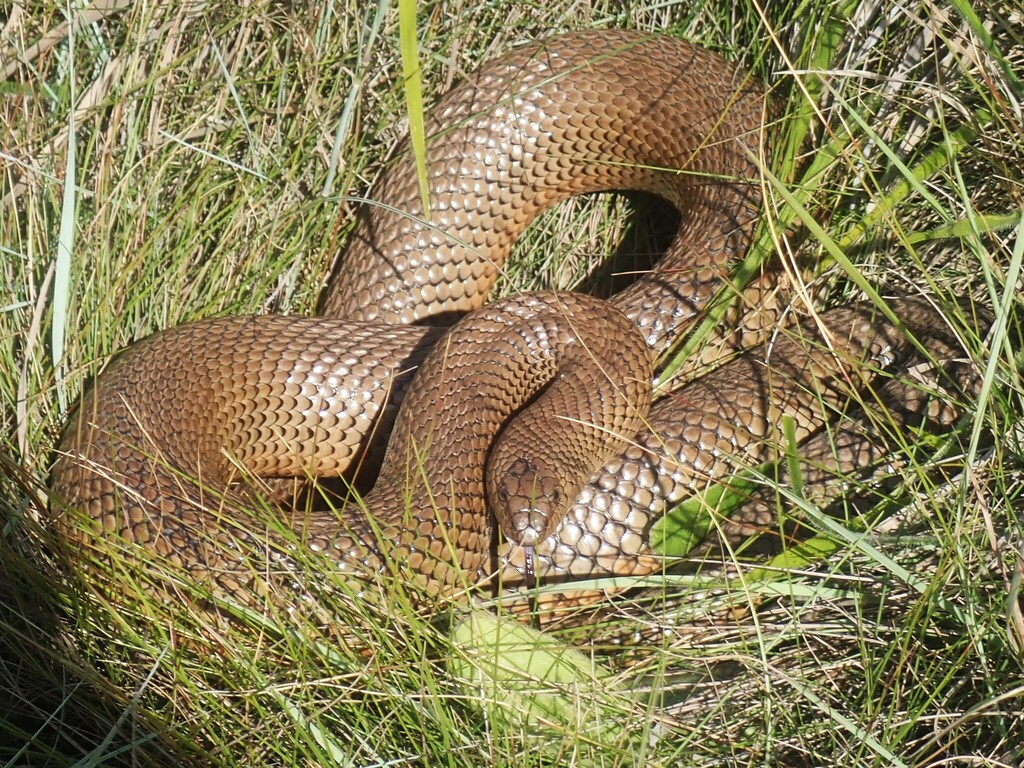
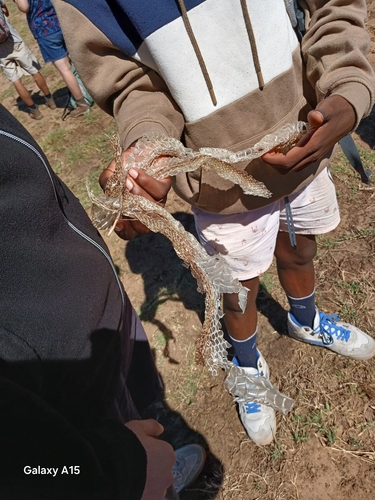
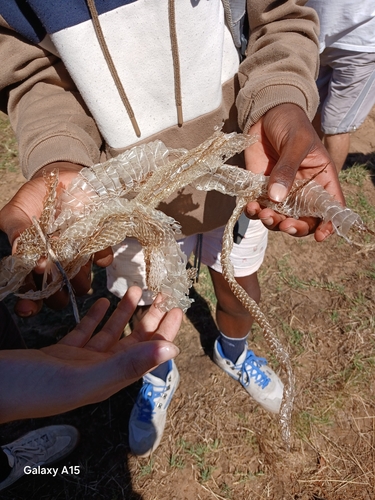
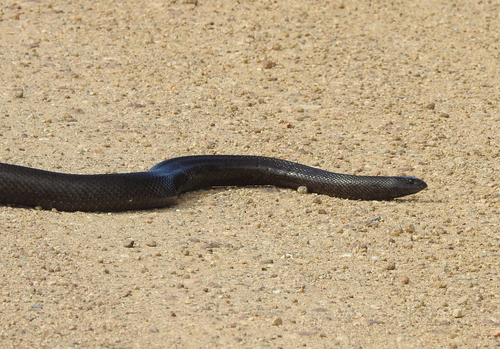
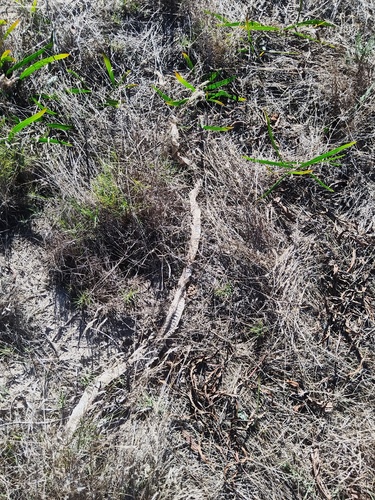
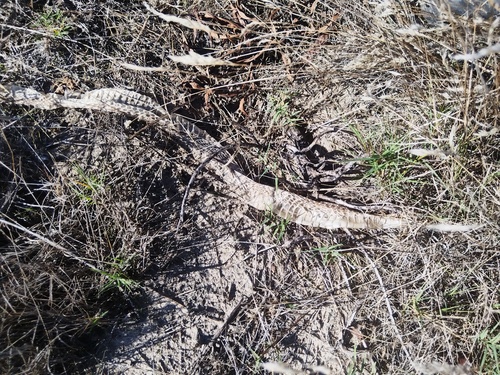
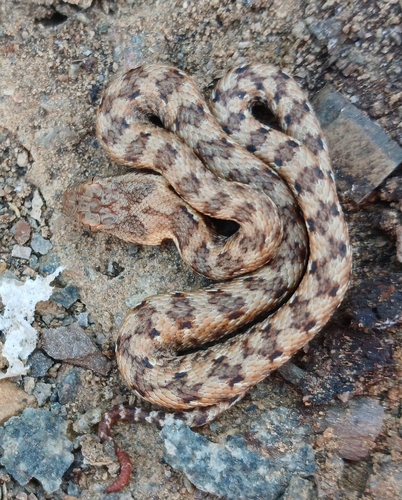
6 photographs of the Mole Snake. © Jimmy Whatmore.
The Mole Snake (Pseudaspis cana) is a non-venomous snake in the Pseudaspididae family, recorded in 17 countries.
- Family
- Pseudaspididae
About the Mole Snake
The mole snake (Pseudaspis cana) is a species of snake. It has been placed in the family Lamprophiidae, and more recently in the family Pseudaspididae, along with the genus Pythonodipsas. It is native to much of southern Africa, and is the only member of the genus Pseudaspis. A study showed that P. cana is caught and consumed by the honey badger, among other species. Remains of the mole snake were found in the faeces, and suggest the consumed individuals were larger specimens.
Taxonomy
P. cana was originally described by Carl Linnaeus in his landmark 1758 10th edition of Systema Naturae. Its original binomial name was Coluber cana. Since then, it has also been called Coronella cana by André Marie Constant Duméril, Gabriel Bibron and Auguste Duméril in 1854, before being reclassified as Pseudaspis cana by Edward Drinker Cope in 1864. P. cana is the only species in genus Pseudaspis. The genus has been placed in the family Lamprophiidae. More recently it has been placed in the family Pseudaspididae, along with the genera Buhoma and Pythonodipsas, although a 2019 study concluded that the status of Pseudaspididae "deserves to be viewed with caution", and Buhoma may not belong in the family.
Description
The mole snake can grow to a total length (including tail) of 2 m (6 ft 7 in). A small head and pointed snout are characteristics of the species. It has a firm, tubular body. Like the majority of the Lamprophiidae, P. cana is not venomous.
In mature individuals, the body is mostly one colour, and may vary from yellow to brown to grey, and in some cases, solid black. The young have dark markings and spots that are gradually lost as the individual ages. Colour may be related to geography; in the south, most specimens are black, whereas specimens found in the northern part of their range are brown, reddish-brown, grey, or yellow.
Diet
The primary food source of P. cana is golden moles (hence the common name), rodents, and other small mammals. For this reason, it is considered useful for the natural control of problem rodents.
Its diet may also include the eggs of seafowl. At Robben Island, mole snakes were observed eating the eggs of Spheniscus demersus (African penguin), Larus hartlaubii (Harlaub's gull), and Numida meleagris (helmeted guinea-fowl). Juveniles were observed eating Strongylopus grayii (clicking stream frogs).
The mole snake is a nest predator of the Karoo prinia (Prinia maculosa). P. cana is one of at least six snake species which cause reproductive loss and decrease of nest success in P. maculosa.
Distribution and habitat
The range of the mole snake encompasses most of southern Africa. P. cana is common in Kalahari Gemsbok National Park. It is widely distributed, with a range stretching from Angola in the north to Kenya in the east to South Africa.
Adapted from Wikipedia, available under CC BY-SA.
Frequently asked: Mole Snake
- Is the Mole Snake venomous?
- No. The Mole Snake (Pseudaspis cana) is non-venomous and is not considered dangerous to humans. Like most snakes, it will retreat rather than bite when given the chance.
- Is the Mole Snake poisonous?
- Snakes are venomous, not poisonous. "Poisonous" means harmful to eat or touch; "venomous" means injecting toxins through a bite. The Mole Snake is neither poisonous nor venomous.
- Is the Mole Snake dangerous?
- The Mole Snake is not dangerous to humans. It has no medically significant venom and bites only defensively if cornered or handled.
- Where does the Mole Snake live?
- The Mole Snake has verified records in 17 countries, including South Africa, Zimbabwe, Namibia. See the distribution section below for its full range.
- What does the Mole Snake eat?
- The primary food source of P. cana is golden moles (hence the common name), rodents, and other small mammals. For this reason, it is considered useful for the natural control of problem rodents. Its diet may also include the eggs of seafowl. At Robben Island, mole snakes were observed eating the eggs of Spheniscus demersus (African penguin), Larus hartlaubii (Harlaub's gull), and Numida meleagris (helmeted guinea-fowl). Juveniles were observed eating Strongylopus grayii (clicking stream frogs).
Where it is found
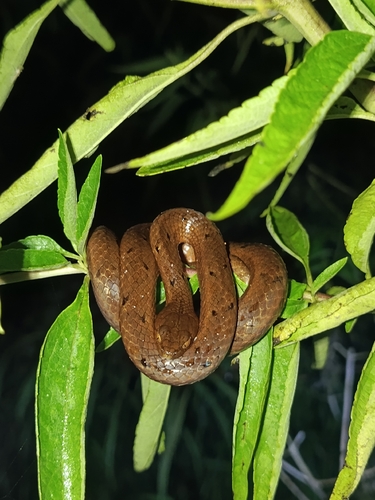
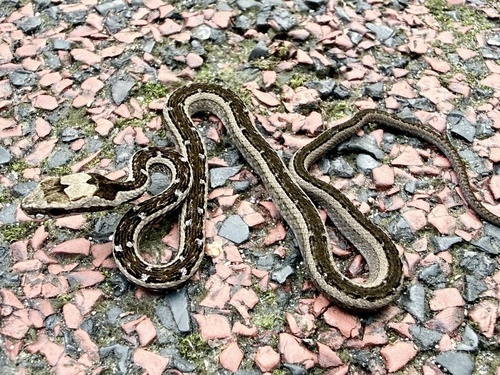
More Pseudaspididae snakes
Classification
How scientists group this snake, from the broadest category down to the exact species. Each step narrows to its closest relatives.
- OrderThe broad group of scaled reptiles: all snakes and lizards
- Squamata
- FamilyA group of related snakes that share key traits
- Pseudaspididae
- GenusA close-knit group of very similar species
- Pseudaspis
- SpeciesThis exact snake, named in the two-part scientific name
- Pseudaspis cana
Keep learning
- What to Do If You Find a SnakeFound a snake at home or on a trail? Here is how to stay calm, give it space, identify it safely, and know when to call a professional.
- Venomous vs Nonvenomous: How to Tell the DifferenceThe folk rules for telling venomous snakes apart, where each one fails, and why location-based identification beats guessing by sight.
- What Is a Snake? Anatomy and the BasicsA clear overview of what makes a snake a snake: limbless body plan, anatomy, evolution from lizards, species diversity, and why they are ectothermic.
- How to Keep Snakes Out of Your Yard and HomeA practical guide to keeping snakes out of your yard and home using habitat changes that work, plus what to skip and what to do if one shows up.
Distribution from GBIF & iNaturalist. Venom status per CDC. Background: Wikipedia. Informational only. Never handle a snake to identify it.