
Pseudaspididae
Western Keeled Snake
HarmlessPythonodipsas carinata
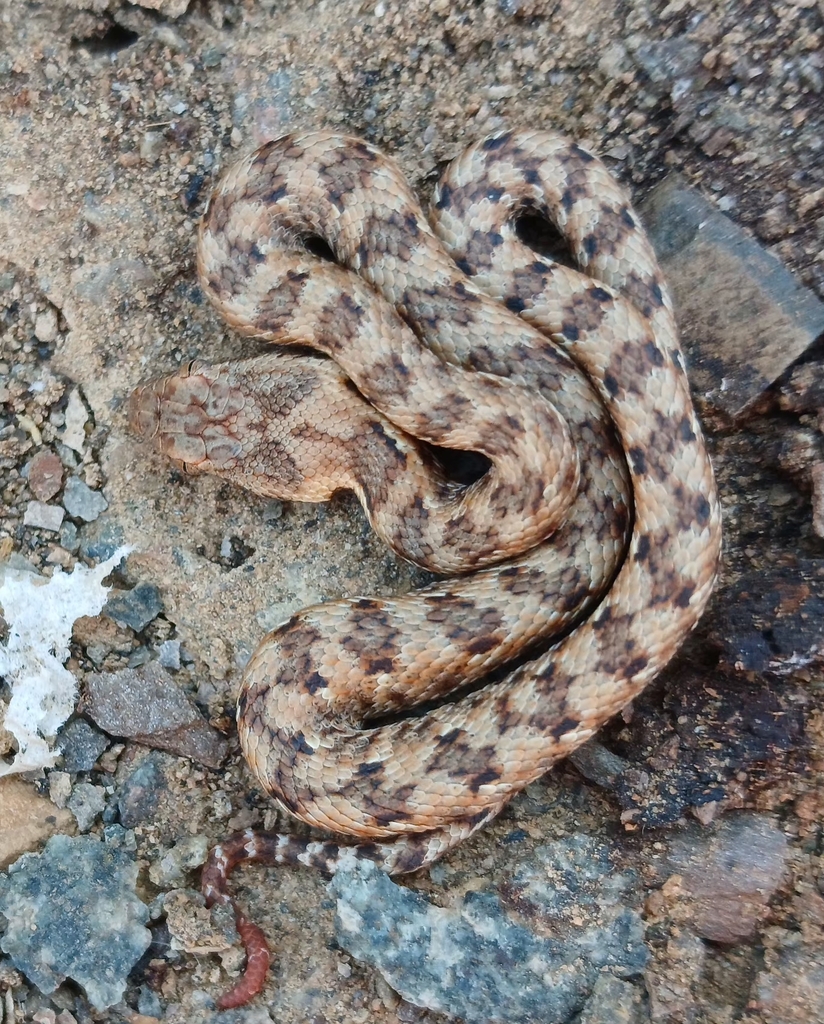
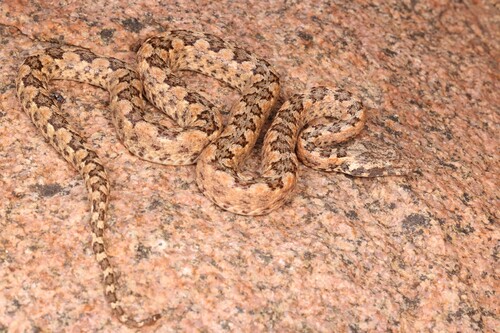
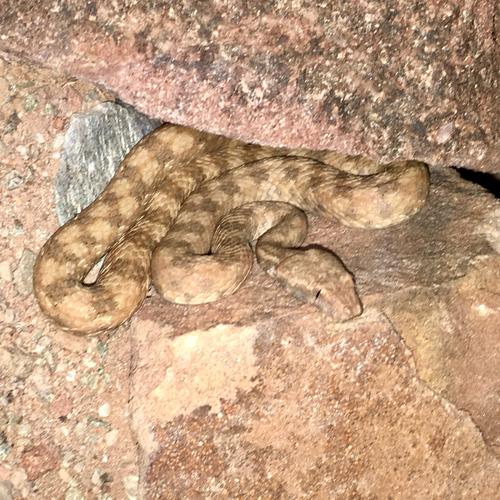
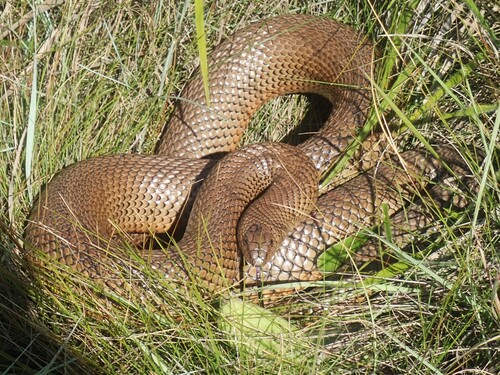
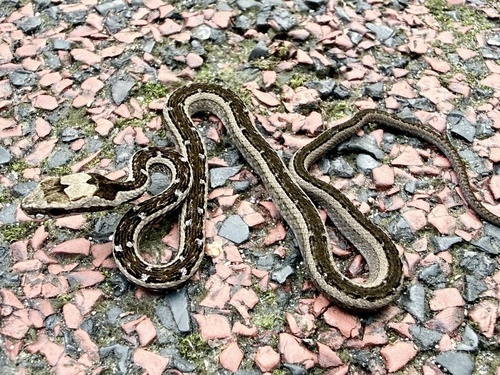
3 photographs of the Western Keeled Snake. (c) Murray Lewis, some rights reserved (CC BY-NC).
The Western Keeled Snake (Pythonodipsas carinata) is a non-venomous snake in the Pseudaspididae family, recorded in 3 countries.
- Family
- Pseudaspididae
About the Western Keeled Snake
The western keeled snake (Pythonodipsas carinata) is a species of snake in the family Pseudaspididae. It is native to western Namibia, southwestern Angola, and southwestern Zambia, and is the only member of the genus Pythonodipsas.
Taxonomy
P. carinata is most closely related to Pseudaspis cana. Together these two monotypic genera make up the subfamily Pseudaspidinae of the family Lamprophiidae.
Pythonodipsas closely resembles the colubrine genus Spalerosophis, although the two are not closely related.
Description
P. carinata is unusual in possessing greatly fragmented head shields, a peculiar maxillary dentition (3rd to 6th largest, posterior-most tooth large and grooved), a reduced number of palatine teeth (including a greatly enlarged "fang"), and hypapophyses developed throughout the vertebral column. It was once thought to be a possible evolutionary intermediate between vipers and non-venomous colubroids, but it is now known not to be closely related to vipers.
Behavior
P. carinata are nocturnal.
Diet
P. carinata eat vertebrates, with lizards comprising 67% of the diet, rodents 25%, birds 4%, and unidentified vertebrate bones 4%. Among lizard prey, geckos (39% of all prey) and skinks (18%) predominated. Both nocturnal (Afroedura, Chondrodactylus, Palmatogecko and Pachydactylus) and diurnal geckos (Rhoptropus and Narudasia) were eaten. All skink prey were Mabuya sp. Mammalian prey were eaten primarily by larger snakes.
Distribution and habitat
P. carinata is a rare snake restricted to gravel plains and arid savannah.
Reproduction
P. carinata lay eggs. Females probably mature between 47.5 and 51.0 cm snout-vent length, and males between 29.0 and 31.0 cm snout-vent length. Juveniles are born at sizes between 16 and 18 cm.
Adapted from Wikipedia, available under CC BY-SA.
Frequently asked: Western Keeled Snake
- Is the Western Keeled Snake venomous?
- No. The Western Keeled Snake (Pythonodipsas carinata) is non-venomous and is not considered dangerous to humans. Like most snakes, it will retreat rather than bite when given the chance.
- Is the Western Keeled Snake poisonous?
- Snakes are venomous, not poisonous. "Poisonous" means harmful to eat or touch; "venomous" means injecting toxins through a bite. The Western Keeled Snake is neither poisonous nor venomous.
- Is the Western Keeled Snake dangerous?
- The Western Keeled Snake is not dangerous to humans. It has no medically significant venom and bites only defensively if cornered or handled.
- Where does the Western Keeled Snake live?
- The Western Keeled Snake has verified records in 3 countries, including Namibia, Angola, Sierra Leone. See the distribution section below for its full range.
- What does the Western Keeled Snake eat?
- P. carinata eat vertebrates, with lizards comprising 67% of the diet, rodents 25%, birds 4%, and unidentified vertebrate bones 4%. Among lizard prey, geckos (39% of all prey) and skinks (18%) predominated. Both nocturnal (Afroedura, Chondrodactylus, Palmatogecko and Pachydactylus) and diurnal geckos (Rhoptropus and Narudasia) were eaten. All skink prey were Mabuya sp. Mammalian prey were eaten primarily by larger snakes.
Where it is found
More Pseudaspididae snakes
Classification
How scientists group this snake, from the broadest category down to the exact species. Each step narrows to its closest relatives.
- OrderThe broad group of scaled reptiles: all snakes and lizards
- Squamata
- FamilyA group of related snakes that share key traits
- Pseudaspididae
- GenusA close-knit group of very similar species
- Pythonodipsas
- SpeciesThis exact snake, named in the two-part scientific name
- Pythonodipsas carinata
Keep learning
- What to Do If You Find a SnakeFound a snake at home or on a trail? Here is how to stay calm, give it space, identify it safely, and know when to call a professional.
- Venomous vs Nonvenomous: How to Tell the DifferenceThe folk rules for telling venomous snakes apart, where each one fails, and why location-based identification beats guessing by sight.
- What Is a Snake? Anatomy and the BasicsA clear overview of what makes a snake a snake: limbless body plan, anatomy, evolution from lizards, species diversity, and why they are ectothermic.
- How to Keep Snakes Out of Your Yard and HomeA practical guide to keeping snakes out of your yard and home using habitat changes that work, plus what to skip and what to do if one shows up.
Distribution from GBIF & iNaturalist. Venom status per CDC. Background: Wikipedia. Informational only. Never handle a snake to identify it.