
Lamprophiidae
Black File Snake
HarmlessGracililima nyassae
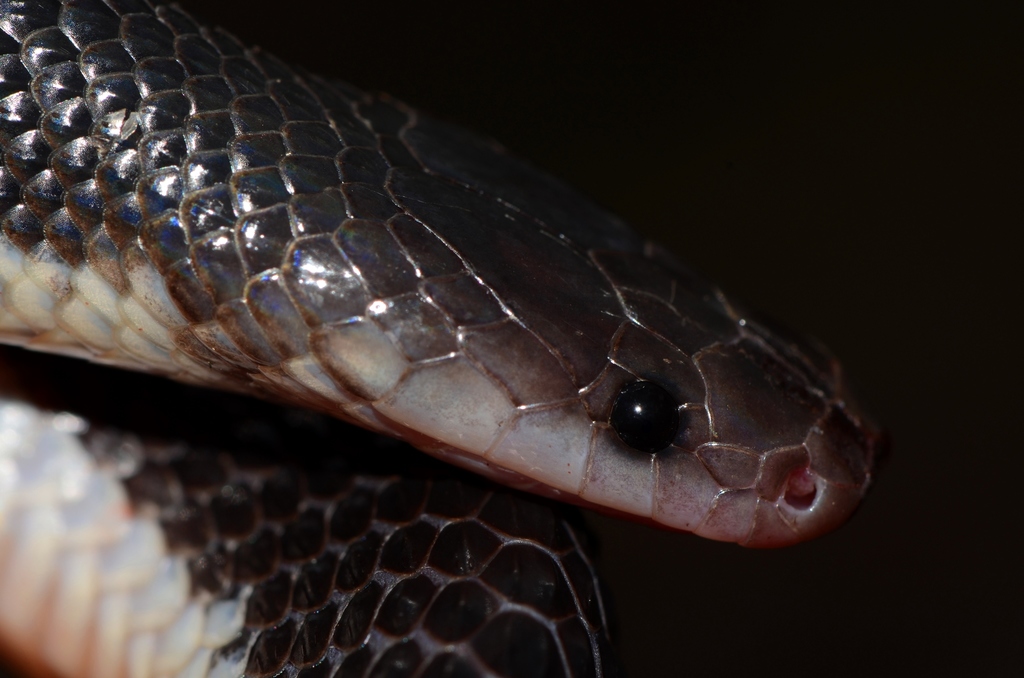
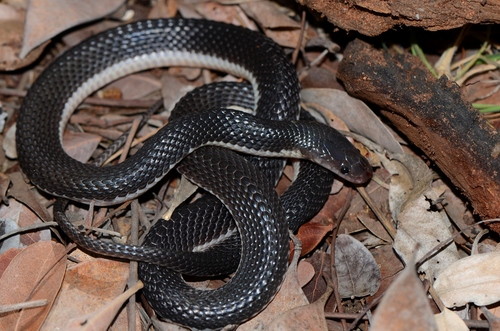

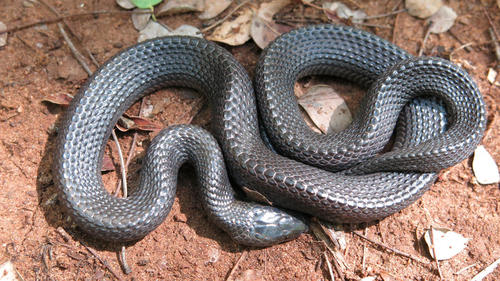
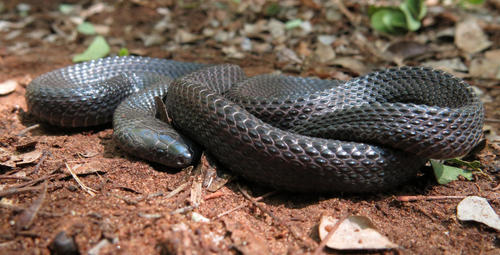
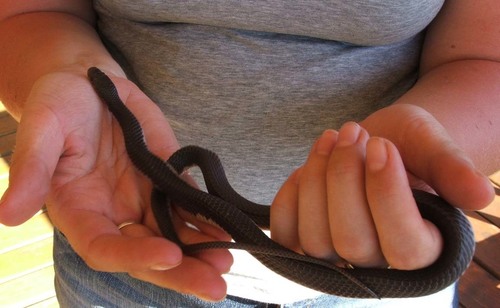
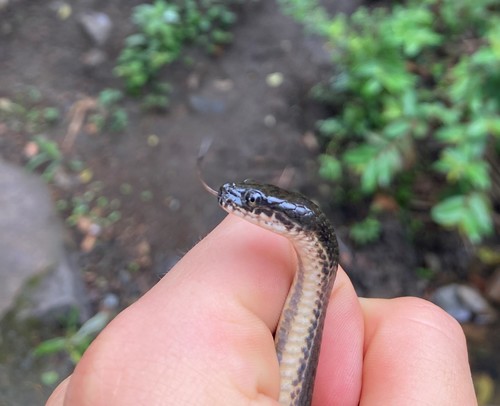
6 photographs of the Black File Snake. © Marius Burger.
The Black File Snake (Gracililima nyassae) is a non-venomous snake in the Lamprophiidae family, recorded in 13 countries.
- Family
- Lamprophiidae
About the Black File Snake
The black file snake (Gracililima nyassae), also known commonly as the dwarf file snake or the Nyassa file snake, is a species of snake in the subfamily Lamprophiinae of the family Lamprophiidae. The species is endemic to Africa.
Taxonomy
Gracililima nyassae is the only species in the genus Gracililima. The species was previously placed in the genera Gonionotophis, Mehelya, and Simocephalus.
Etymology
The generic name, Gracililima is from Latin gracili- meaning "slender" + lima meaning "file". The specific name, nyassae, refers to the type locality, "Lake Nyassa" (= Lake Malawi).
Geographic range
G. nyassae is found in Botswana, Burundi, Democratic Republic of the Congo, Eswatini, Kenya, Malawi, Mozambique, Namibia, Rwanda, Somalia, South Africa, Tanzania, Zambia, and Zimbabwe.
Description
G. nyassae is a small snake. The female may attain a snout-to-vent length (SVL) of 52 cm (20 in). The male is shorter, around 44 cm (17 in) SVL. Dorsally it is dark brown or purplish brown, with pink skin showing between the scales. Unlike the Common File snake, this snake lacks the light dorsal stripe but has the characteristic triangular body, Ventrally it is black to dark olive (uniform phase), or cream-olive to white (bicolored phase).
Diet
G. nyassae preys on skinks and other lizards.
Reproduction
The black file snake is oviparous. The female may lay as many as six eggs.
Adapted from Wikipedia, available under CC BY-SA.
Frequently asked: Black File Snake
- Is the Black File Snake venomous?
- No. The Black File Snake (Gracililima nyassae) is non-venomous and is not considered dangerous to humans. Like most snakes, it will retreat rather than bite when given the chance.
- Is the Black File Snake poisonous?
- Snakes are venomous, not poisonous. "Poisonous" means harmful to eat or touch; "venomous" means injecting toxins through a bite. The Black File Snake is neither poisonous nor venomous.
- Is the Black File Snake dangerous?
- The Black File Snake is not dangerous to humans. It has no medically significant venom and bites only defensively if cornered or handled.
- Where does the Black File Snake live?
- The Black File Snake has verified records in 13 countries, including South Africa, Zimbabwe, Tanzania, United Republic of. See the distribution section below for its full range.
- What does the Black File Snake eat?
- G. nyassae preys on skinks and other lizards.
- Why is it called the Black File Snake?
- The generic name, Gracililima is from Latin gracili- meaning "slender" + lima meaning "file". The specific name, nyassae, refers to the type locality, "Lake Nyassa" (= Lake Malawi).
Where it is found
By U.S. state
More Lamprophiidae snakes
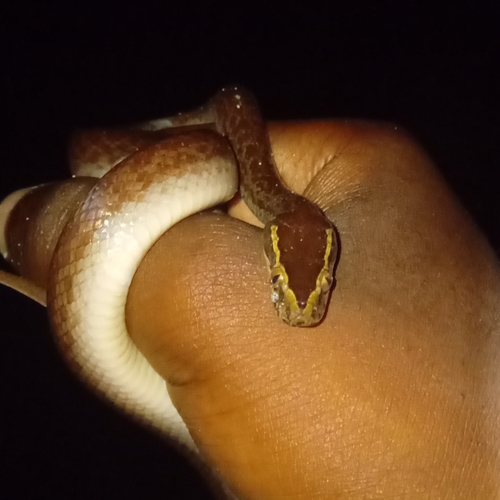 Cape House SnakeBoaedon capensis
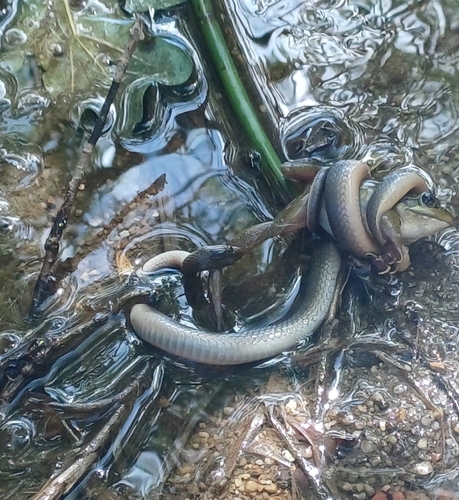 Common Brown Water SnakeLycodonomorphus rufulus
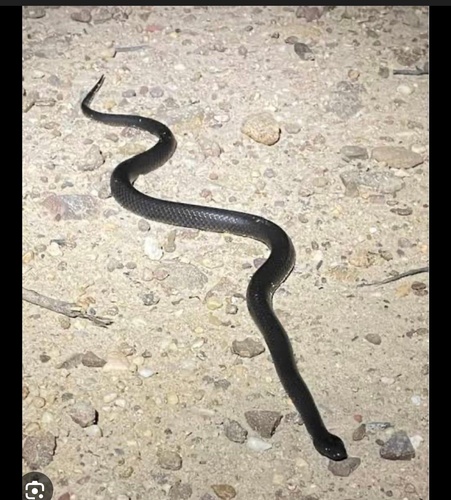 Cape Wolf SnakeLycophidion capense
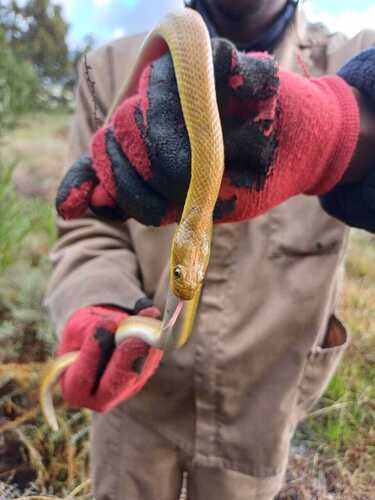 Aurora House SnakeLamprophis aurora
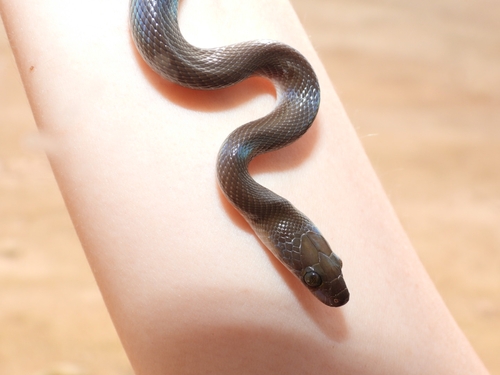 Brown House SnakeBoaedon fuliginosus
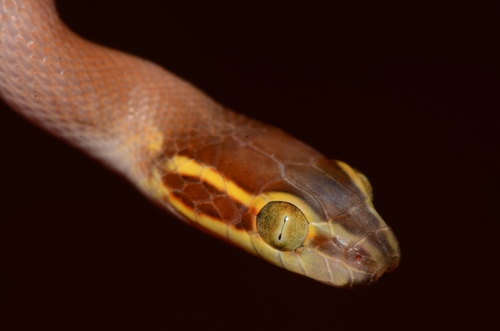 Bug-Eyed House SnakeBoaedon mentalis
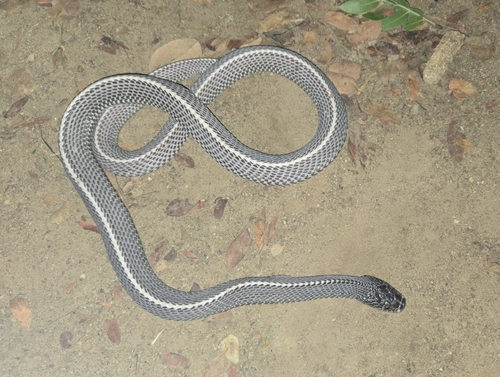 Cape File SnakeLimaformosa capensis
 Dusky-bellied Water SnakeLycodonomorphus laevissimus
Classification
How scientists group this snake, from the broadest category down to the exact species. Each step narrows to its closest relatives.
- OrderThe broad group of scaled reptiles: all snakes and lizards
- Squamata
- FamilyA group of related snakes that share key traits
- Lamprophiidae
- GenusA close-knit group of very similar species
- Gracililima
- SpeciesThis exact snake, named in the two-part scientific name
- Gracililima nyassae
Keep learning
- What to Do If You Find a SnakeFound a snake at home or on a trail? Here is how to stay calm, give it space, identify it safely, and know when to call a professional.
- Venomous vs Nonvenomous: How to Tell the DifferenceThe folk rules for telling venomous snakes apart, where each one fails, and why location-based identification beats guessing by sight.
- What Is a Snake? Anatomy and the BasicsA clear overview of what makes a snake a snake: limbless body plan, anatomy, evolution from lizards, species diversity, and why they are ectothermic.
- How to Keep Snakes Out of Your Yard and HomeA practical guide to keeping snakes out of your yard and home using habitat changes that work, plus what to skip and what to do if one shows up.
Distribution from GBIF & iNaturalist. Venom status per CDC. Background: Wikipedia. Informational only. Never handle a snake to identify it.