
Genus · Lamprophiidae
Gracililima
The genus Gracililima contains a single species. It is not considered dangerous to humans.
About African file snakes
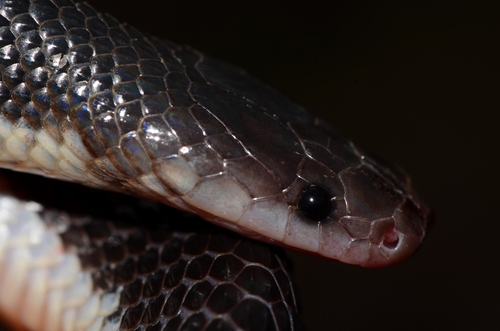
Gracililima is a small African file snake genus in the family Lamprophiidae, harmless constrictors named for the rough, file-like ridge of scales running down the back.
Gracililima is a genus of snakes in the family Lamprophiidae, a large and varied group of mostly African and Madagascan snakes that includes wolf snakes, house snakes, and many other secretive ground dwellers. It is one of the African file snake lineages, a set of snakes long shuffled between the genera Mehelya and Gonionotophis as researchers studied them more closely. Gracililima holds only a small number of species, and our database tracks one of them, the Black File Snake. These are slender, ground-living snakes of sub-Saharan Africa that few people encounter because of their quiet, nocturnal habits.
African file snakes like Gracililima are recognizable in general terms by a distinctive body shape. The body is triangular in cross section with a raised ridge of enlarged scales running along the spine, which gives the back a rough, file-like feel and the group its common name. The scales are often widely spaced with skin showing between them, and the color is usually some shade of dark brown to near black, sometimes with a paler stripe down the back. They are typically modest in size and have small heads that are barely wider than the neck. Confident identification to species usually needs locality data and close inspection rather than color alone, since several file snake lineages look broadly similar.
Gracililima file snakes are nonvenomous and harmless to people. They kill prey by constriction rather than by injecting venom, and they are not rear-fanged. They are best known for feeding on other snakes, including venomous species, along with lizards and other reptiles, a diet that makes them useful members of the ecosystem. Like other Lamprophiidae file snakes, they are egg-laying, secretive, and slow moving, spending most of their time hidden in leaf litter, under cover, or in burrows. A wild file snake will generally try to escape rather than bite, but any wild snake bite should be cleaned and watched for ordinary infection, and the safest choice is always to leave a snake alone and let it move off on its own. If you are ever unsure whether a snake is dangerous, treat it as if it could be, keep your distance, and in a medical emergency contact local emergency services or, in the United States, Poison Control at 1-800-222-1222.
Gracililima belongs to the Lamprophiidae family (African house snakes & allies). Common African snakes, including the familiar house snakes. Variable; many are smooth-scaled, secretive, and active at night.
Danger: Mostly harmless. A few are rear-fanged with mild venom of no medical significance.
All species (1)
Keep learning
- What Is a Snake? Anatomy and the BasicsA clear overview of what makes a snake a snake: limbless body plan, anatomy, evolution from lizards, species diversity, and why they are ectothermic.
- How Snakes Move, Hunt, and EatHow snakes move without legs, hunt as ambushers or active foragers, kill by constriction or venom, and swallow prey wider than their head.
- What Do Snakes Eat?All snakes are carnivores. Learn what snakes eat, how diet changes with size and age, how often they feed, and how they hunt and swallow prey.
- Venomous vs Nonvenomous: How to Tell the DifferenceThe folk rules for telling venomous snakes apart, where each one fails, and why location-based identification beats guessing by sight.