
Colubridae
African Brown Water Snake
HarmlessAfronatrix anoscopus
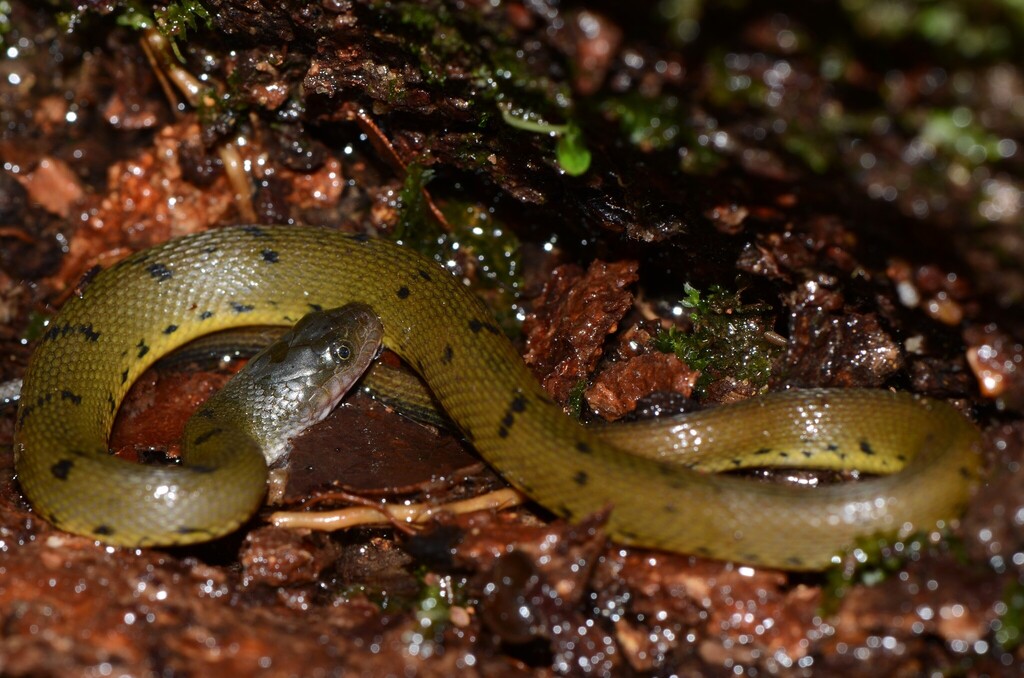
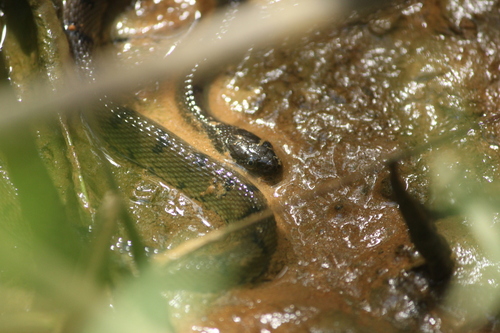
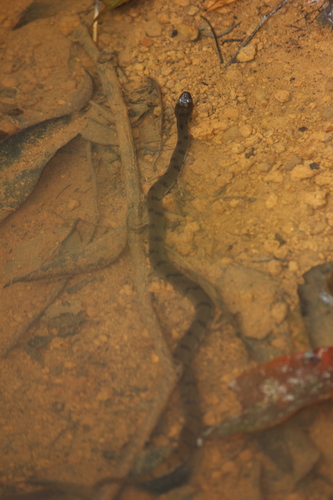
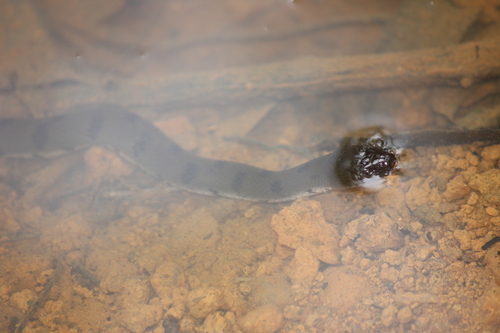
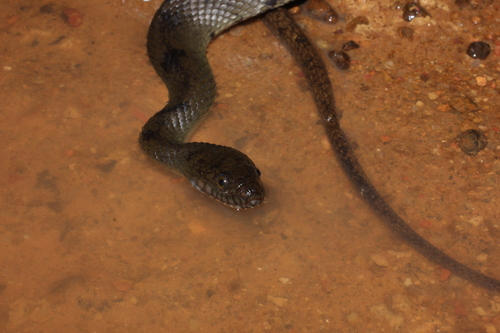
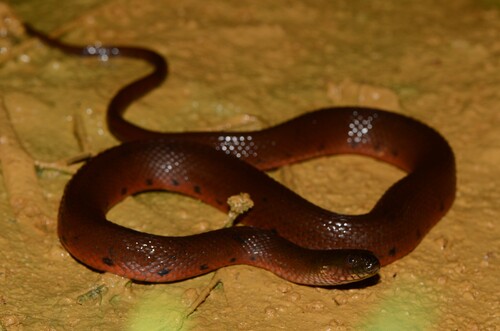
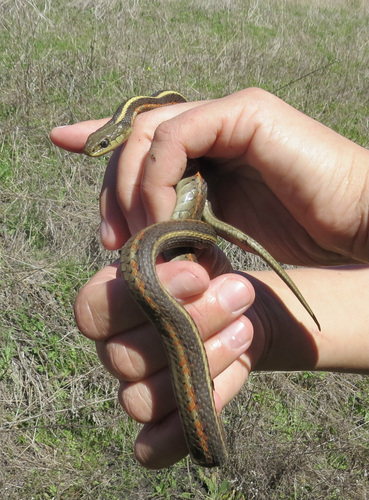
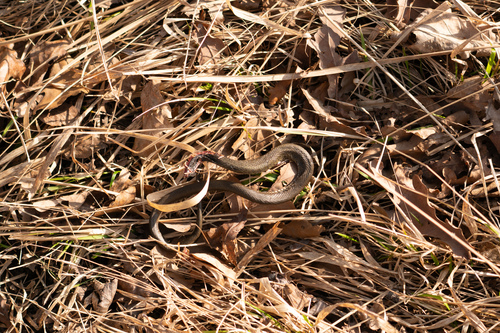
6 photographs of the African Brown Water Snake. © Marius Burger.
The African Brown Water Snake (Afronatrix anoscopus) is a non-venomous snake in the Colubridae family, recorded in 13 countries.
- Family
- Colubridae
About the African Brown Water Snake
The African brown water snake (Afronatrix anoscopus) is a species of non-venomous semiaquatic oviparous snake in the subfamily Natricinae of the family Colubridae. The species, which is monotypic in the genus Afronatrix, is native to West Africa. It is commonly found in many West African countries in freshwater swamps, rivers, streams, ponds, and sometimes brackish bodies of water. This species can grow up to 75 cm, and It preys on other aquatic animals like fish, frogs, tadpoles, and frog eggs.
Geographic distribution
Has a patchy distribution across West Africa, with confirmed records in Liberia, Nigeria, Senegal, Sierra Leone, Côte d'Ivoire, Ghana, Guinea, and Cameroon.It is likely present in other West African countries, but limited survey reports have resulted in a lack of records from these areas. It was reported in 2011 that the African brown water snake is the most abundant snake species in the rainforests of southeastern Guinea. The high population density of this species in many West African streams, along with dietary evidence, indicates that this snake plays a key role as a primary fish predator in these ecosystems.
Diet
A. anoscopus eats fish and amphibians. Studies in Nigeria show that it feeds on frogs, including Silurana tropicalis, Ptychadena spp., and Bufomaculatus, as well as fish like cyprinids and mudskippers. Juveniles eat more tadpoles, while adults consume more fish. This change in diet as the snake grows is similar to patterns seen in some European Natricinae like the grass snake. It hunts in freshwater swamps, rivers, and streams, and sometimes in brackish water.
Size and coloration
A. anoscopus can grow up to 75 cm. (29.5 in.). Its most common color is solid brown to reddish with fewer specimens being yellow-brown with black ocular spots. Typical tail length for this snake is 42 cm (17 in), but there have been reports of lengths reaching 60 cm (24 in). Typical snout-vent length is 14.6–45.5 cm (5.7–17.9 in). Males and females do not have significant differences in average total length.
Morphology
The Afronatrix genus, which includes A. anoscopus, is considered unique when compared to other members of the natricine subfamily in that it has lateral keels on its subcaudals. Additionally, it exhibits subocular scales, and will have a minimum of 21 dorsal scale rows. Its hemipenis anatomy has strong similarity to some Asian natricine snakes in that it is only partially bilobed and asymmetrical. This along with biochemical data suggests a close relationship between the two species. Its dentition is described as syncranterian (firmly fused to the jawbone without sockets).
Habitat use and seasonal movement
Primarily inhabits ponds and freshwater rivers in rainforest zones of West Africa. Its habitat use changes with the seasons, likely in response to water availability. During the wet season, when ponds are full, the species is commonly found in these temporary water bodies. However, as ponds dry out in the dry season, many individuals move to freshwater rivers, where water remains available. This seasonal migration helps the snakes access stable food resources, such as fish and frogs, which are abundant in flooded habitats but scarcer in dried out areas.
Adapted from Wikipedia, available under CC BY-SA.
Frequently asked: African Brown Water Snake
- Is the African Brown Water Snake venomous?
- No. The African Brown Water Snake (Afronatrix anoscopus) is non-venomous and is not considered dangerous to humans. Like most snakes, it will retreat rather than bite when given the chance.
- Is the African Brown Water Snake poisonous?
- Snakes are venomous, not poisonous. "Poisonous" means harmful to eat or touch; "venomous" means injecting toxins through a bite. The African Brown Water Snake is neither poisonous nor venomous.
- Is the African Brown Water Snake dangerous?
- The African Brown Water Snake is not dangerous to humans. It has no medically significant venom and bites only defensively if cornered or handled.
- Where does the African Brown Water Snake live?
- The African Brown Water Snake has verified records in 13 countries, including Cameroon, Liberia, Guinea. See the distribution section below for its full range.
- What does the African Brown Water Snake eat?
- A. anoscopus eats fish and amphibians. Studies in Nigeria show that it feeds on frogs, including Silurana tropicalis, Ptychadena spp., and Bufomaculatus, as well as fish like cyprinids and mudskippers. Juveniles eat more tadpoles, while adults consume more fish. This change in diet as the snake grows is similar to patterns seen in some European Natricinae like the grass snake. It hunts in freshwater swamps, rivers, and streams, and sometimes in brackish water.
Where it is found
More Colubridae snakes
Classification
How scientists group this snake, from the broadest category down to the exact species. Each step narrows to its closest relatives.
- OrderThe broad group of scaled reptiles: all snakes and lizards
- Squamata
- FamilyA group of related snakes that share key traits
- Colubridae
- GenusA close-knit group of very similar species
- Afronatrix
- SpeciesThis exact snake, named in the two-part scientific name
- Afronatrix anoscopus
Keep learning
- What to Do If You Find a SnakeFound a snake at home or on a trail? Here is how to stay calm, give it space, identify it safely, and know when to call a professional.
- Venomous vs Nonvenomous: How to Tell the DifferenceThe folk rules for telling venomous snakes apart, where each one fails, and why location-based identification beats guessing by sight.
- What Is a Snake? Anatomy and the BasicsA clear overview of what makes a snake a snake: limbless body plan, anatomy, evolution from lizards, species diversity, and why they are ectothermic.
- How to Keep Snakes Out of Your Yard and HomeA practical guide to keeping snakes out of your yard and home using habitat changes that work, plus what to skip and what to do if one shows up.
Distribution from GBIF & iNaturalist. Venom status per CDC. Background: Wikipedia. Informational only. Never handle a snake to identify it.