
Garter / Ribbon snake
Western Ribbon Snake
HarmlessThamnophis proximus
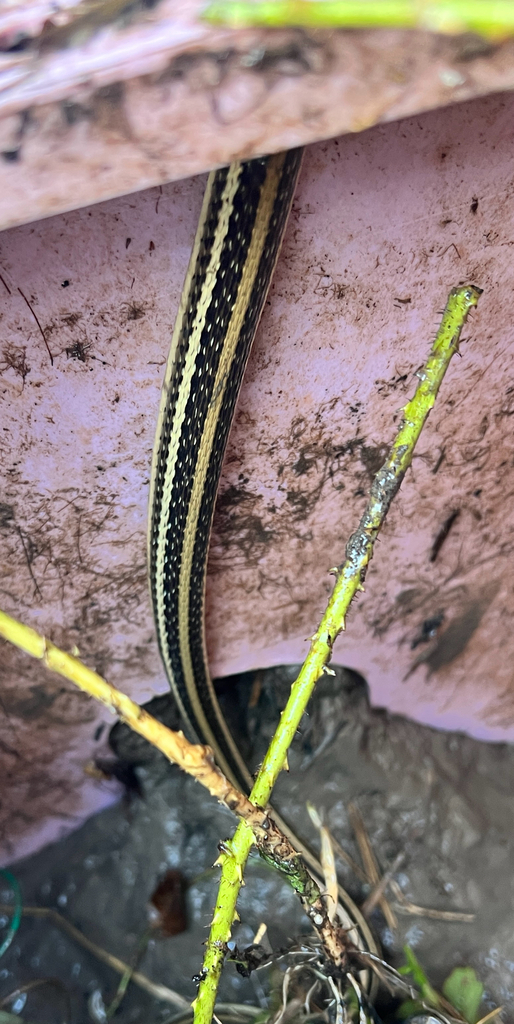
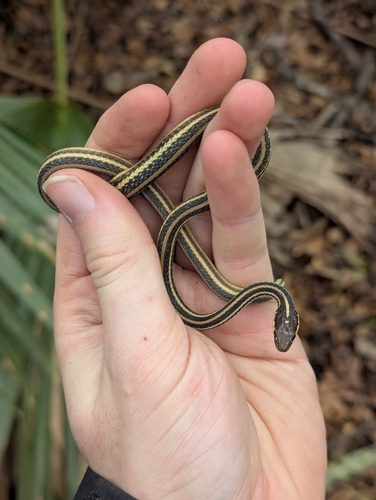
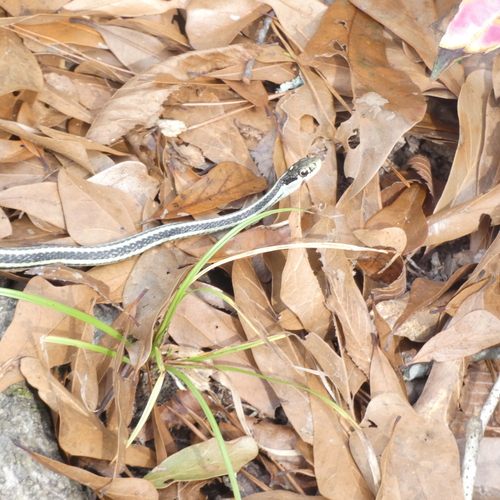
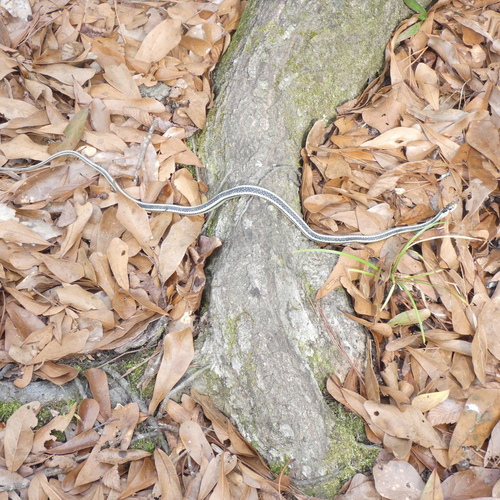
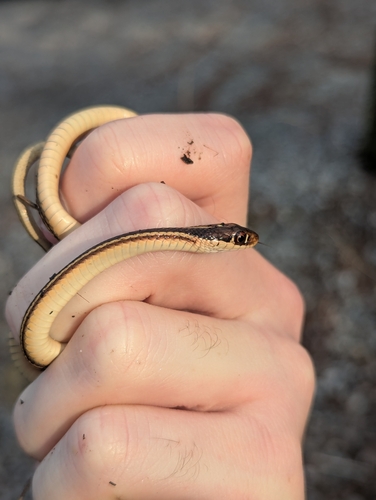
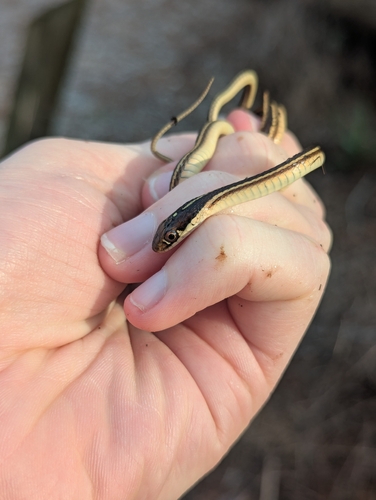
6 photographs of the Western Ribbon Snake. © Rich Sommer.
The Western Ribbon Snake (Thamnophis proximus) is a non-venomous snake in the Colubridae family, recorded in 9 countries.
- Also called
- Garter / Ribbon snake
- Family
- Colubridae
- Size
- Slender, 1.5–3 ft.
- Habitat
- Almost anywhere with moisture — gardens, fields, wetlands, and streamsides.
- Behavior
- Harmless and active by day; may release musk if handled. The most commonly seen snakes across most of the U.S.
- Identify
- Slender body with three light stripes running the length of a darker back.
About the Western Ribbon Snake
Thamnophis proximus, commonly known as the western ribbon snake or western ribbonsnake, is a species of garter snake in the subfamily Natricinae of the family Colubridae. The species is found in the central and southern United States, Mexico, and Central America south to central Costa Rica. The species has six recognized subspecies.
Description
T. proximus is a slender snake with a very long tail, approximately one-third of the total length of the body. Dorsally, T. proximus is blackish, brown, or olive with three light-colored stripes. Ventrally, it is greenish-white or yellowish-white. The upper labials are whitish and unmarked, contrasting with the dark top and sides of the head. The specific name, proximus, describes the species' similarity to T. saurita.
Adults measure 17–50 in (43–127 cm) in total length (including the tail).
Subspecies
Six subspecies of the western ribbon snake (T. proximus) are recognized as being valid, including the nominate subspecies.
T. p. alpinus Rossman, 1963 – Chiapas Highlands ribbon snake
T. p. diabolicus Rossman, 1963 – arid land ribbon snake
T. p. orarius Rossman, 1963 – Gulf Coast ribbon snake
T. p. proximus (Say, 1823) – orangestripe ribbon snake, western ribbon snake
T. p. rubrilineatus Rossman, 1963 – redstripe ribbon snake
T. p. rutiloris (Cope, 1885) – Mexican ribbon snake
Nota bene: A trinomial authority in parentheses indicates that the subspecies was originally described in a genus other than Thamnophis.
Ecology
T. proximus is a semiaquatic snake that occurs in a wide range of habitats, usually not far from water. It can be found from sea level to nearly 2,500 m (8,200 ft). It feeds on a range of invertebrates (earthworms, crayfish) and small vertebrates (lizards, fishes, and frogs, including tadpoles).
Adapted from Wikipedia, available under CC BY-SA.
Frequently asked: Western Ribbon Snake
- Is the Western Ribbon Snake venomous?
- No. The Western Ribbon Snake (Thamnophis proximus) is non-venomous and is not considered dangerous to humans. Like most snakes, it will retreat rather than bite when given the chance.
- Is the Western Ribbon Snake poisonous?
- Snakes are venomous, not poisonous. "Poisonous" means harmful to eat or touch; "venomous" means injecting toxins through a bite. The Western Ribbon Snake is neither poisonous nor venomous.
- Is the Western Ribbon Snake dangerous?
- The Western Ribbon Snake is not dangerous to humans. It has no medically significant venom and bites only defensively if cornered or handled.
- Where does the Western Ribbon Snake live?
- The Western Ribbon Snake has verified records in 9 countries, including United States of America, Mexico, Honduras. See the distribution section below for its full range.
- How do I identify the Western Ribbon Snake?
- Slender body with three light stripes running the length of a darker back.
- How big does the Western Ribbon Snake get?
- Slender, 1.5–3 ft.
Where it is found
More Colubridae snakes
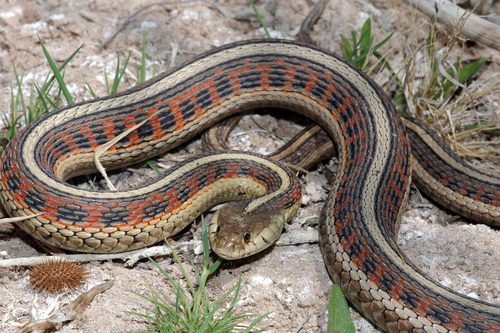 Common Garter SnakeThamnophis sirtalis
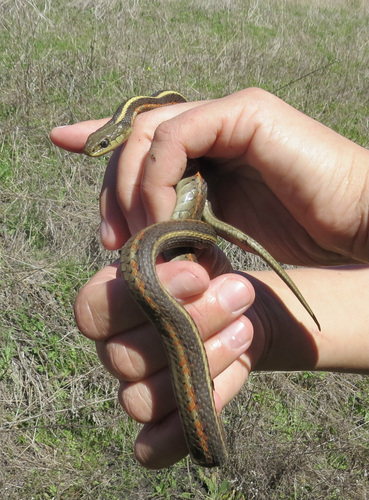 Western Terrestrial Garter SnakeThamnophis elegans
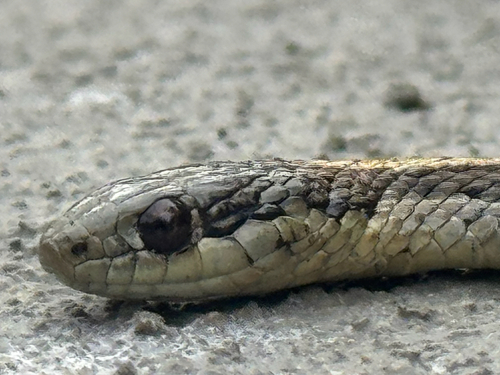 Northwestern Garter SnakeThamnophis ordinoides
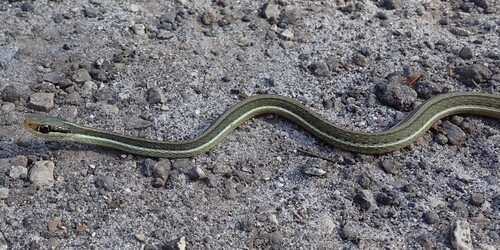 Common Ribbon SnakeThamnophis saurita
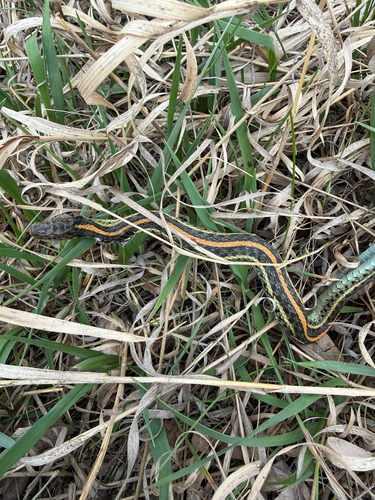 Plains Garter SnakeThamnophis radix
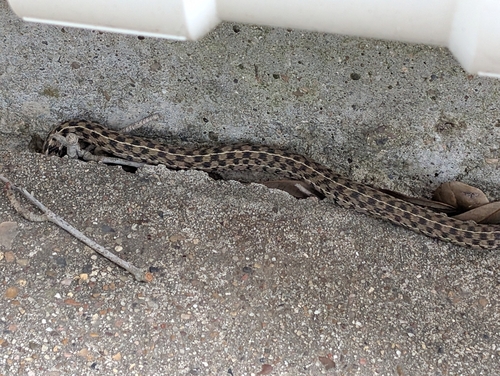 Checkered Garter SnakeThamnophis marcianus
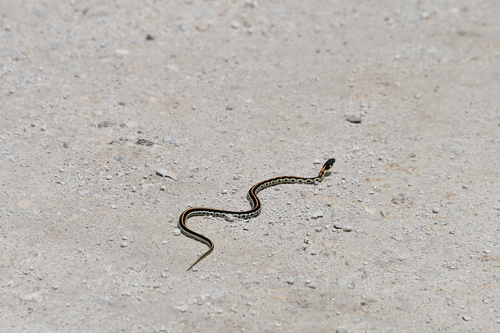 Black-necked Garter SnakeThamnophis cyrtopsis
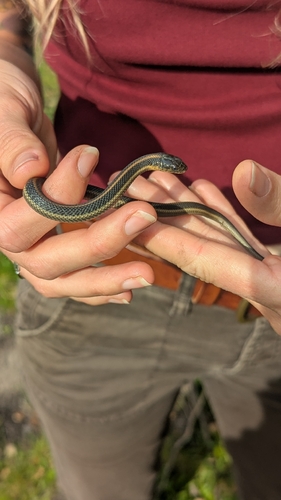 Aquatic Garter SnakeThamnophis atratus
Classification
How scientists group this snake, from the broadest category down to the exact species. Each step narrows to its closest relatives.
- OrderThe broad group of scaled reptiles: all snakes and lizards
- Squamata
- FamilyA group of related snakes that share key traits
- Colubridae
- GenusA close-knit group of very similar species
- Thamnophis
- SpeciesThis exact snake, named in the two-part scientific name
- Thamnophis proximus
Keep learning
- What to Do If You Find a SnakeFound a snake at home or on a trail? Here is how to stay calm, give it space, identify it safely, and know when to call a professional.
- Venomous vs Nonvenomous: How to Tell the DifferenceThe folk rules for telling venomous snakes apart, where each one fails, and why location-based identification beats guessing by sight.
- What Is a Snake? Anatomy and the BasicsA clear overview of what makes a snake a snake: limbless body plan, anatomy, evolution from lizards, species diversity, and why they are ectothermic.
- How to Keep Snakes Out of Your Yard and HomeA practical guide to keeping snakes out of your yard and home using habitat changes that work, plus what to skip and what to do if one shows up.
Distribution from GBIF & iNaturalist. Venom status per CDC. Background: Wikipedia. Informational only. Never handle a snake to identify it.