
Garter / Ribbon snake
Northwestern Garter Snake
HarmlessThamnophis ordinoides
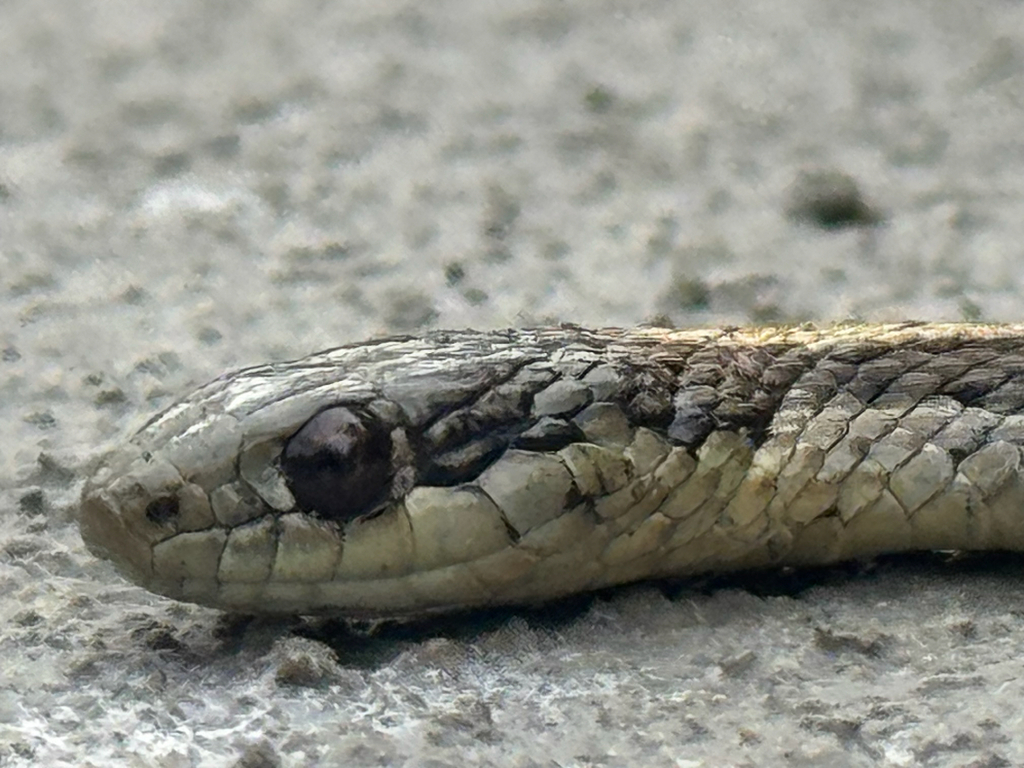


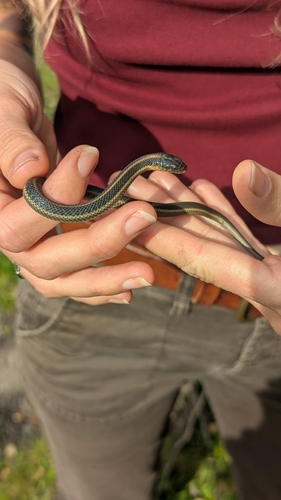
6 photographs of the Northwestern Garter Snake. © Michele Wiseman.
The Northwestern Garter Snake (Thamnophis ordinoides) is a non-venomous snake in the Colubridae family, recorded in 4 countries.
The Northwestern Garter Snake (Thamnophis ordinoides) is a small, slender garter snake of the Pacific Northwest, found in British Columbia, Washington, Oregon and northern California. It is not venomous and poses no meaningful danger to people.
- Also called
- Garter / Ribbon snake
- Family
- Colubridae
- Size
- Slender, 1.5 to 3 ft.
- Habitat
- Almost anywhere with moisture, gardens, fields, wetlands, and streamsides.
- Behavior
- Harmless and active by day; may release musk if handled. The most commonly seen snakes across most of the U.S.
- Identify
- Slender body with three light stripes running the length of a darker back.
How to identify the Northwestern Garter Snake
Look for a small, slender, striped snake with a small head in a sunny meadow edge or garden in the Pacific Northwest. It usually has a light stripe down the middle of the back and one along each side, though color varies a great deal.
- Pattern
- Usually three light stripes run the length of a darker back: one down the center and one low on each side.
- Back stripe
- The center stripe is often red, orange or yellow, but it can be faint or missing on some individuals.
- Color
- This is one of the most variable snakes in the world, with body colors ranging from brown and olive to gray or nearly black.
- Head
- The head is small and only slightly wider than the neck, giving the snake a narrow, uniform look.
- Size
- Adults are small and slim, usually about 13 to 38 inches (33 to 97 cm) in total length.
- Scales
- The scales are keeled, so the skin looks slightly rough rather than glossy.
Have a photo? Identify it from your photo and location.
Is the Northwestern Garter Snake dangerous?
Not venomous
This species is not venomous and is no real risk to people. A defensive snap may cause small scratches, and it may release musk if picked up.
If you find one
- Give it space and let it move off on its own.
- Do not try to pick it up or handle it.
- Keep pets back and leave cover like logs and stumps in place so it has somewhere to go.
Habitat and behavior
- Habitat
- It is most often found on the edges of meadows bordered by forest, where it can reach sunshine. It also turns up in gardens, fields and damp areas near water. It shelters under stumps and other cover when it gets too hot.
- Behavior
- It is harmless and active by day, and usually tries to slip away into cover when approached. If grabbed, it may release a foul-smelling musk.
- Diet
- It eats slugs, salamanders and frogs.
- When active
- It is active during the day in the warmer months and spends winter inactive.
Further reading: Northwestern Garter Snake on Wikipedia.
Frequently asked: Northwestern Garter Snake
- Is the Northwestern Garter Snake venomous?
- No. It is a non-venomous garter snake that poses no meaningful danger to people. It may musk or nip if grabbed, so it is best left alone.
- Where does the Northwestern Garter Snake live?
- It lives in the Pacific Northwest: British Columbia in Canada, and Washington, Oregon and California in the United States. It favors meadow edges near forest, gardens and damp areas.
- How big does a Northwestern Garter Snake get?
- It is a small species, with adults usually about 13 to 38 inches (33 to 97 cm) long. It has a slender body and a small head.
- Why does this garter snake look different from others I have seen?
- The Northwestern Garter Snake is one of the most variable snakes in the world. Its back stripe can be red, orange, yellow or missing, and its body color ranges from brown to nearly black.
- Is the Northwestern Garter Snake poisonous?
- Snakes are venomous, not poisonous. "Poisonous" means harmful to eat or touch; "venomous" means injecting toxins through a bite. The Northwestern Garter Snake is neither poisonous nor venomous.
- Is the Northwestern Garter Snake dangerous?
- The Northwestern Garter Snake is not dangerous to humans. It has no medically significant venom and bites only defensively if cornered or handled.
- How do I identify the Northwestern Garter Snake?
- Slender body with three light stripes running the length of a darker back.
Where it is found
More Colubridae snakes
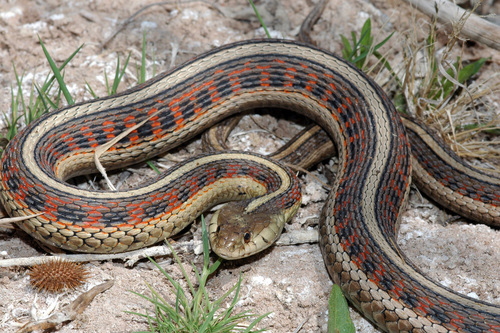 Common Garter SnakeThamnophis sirtalis
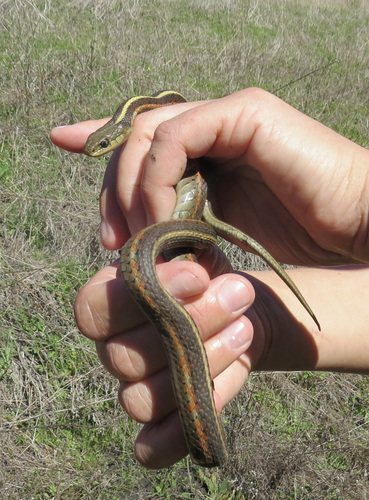 Western Terrestrial Garter SnakeThamnophis elegans
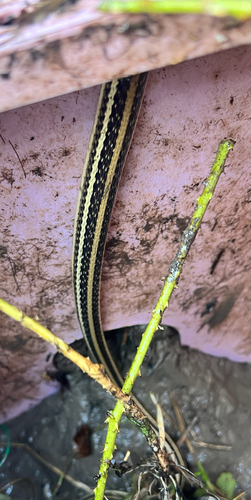 Western Ribbon SnakeThamnophis proximus
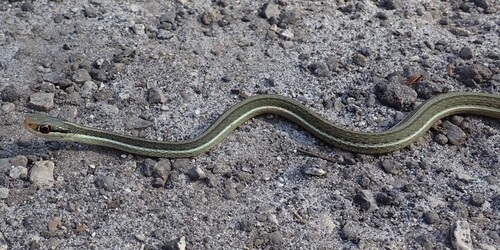 Common Ribbon SnakeThamnophis saurita
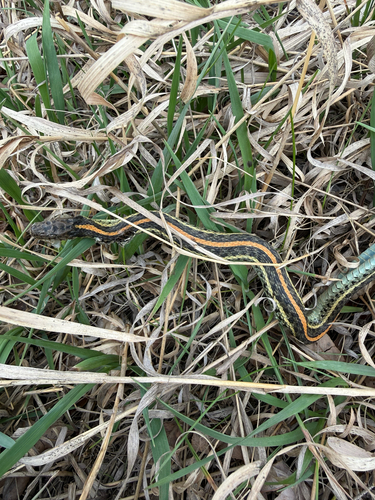 Plains Garter SnakeThamnophis radix
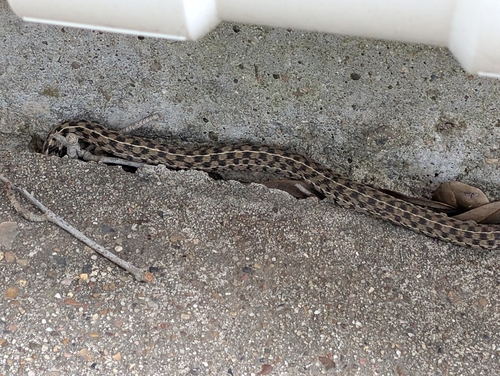 Checkered Garter SnakeThamnophis marcianus
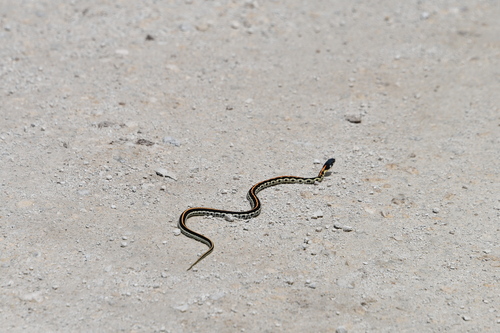 Black-necked Garter SnakeThamnophis cyrtopsis
 Aquatic Garter SnakeThamnophis atratus
Classification
How scientists group this snake, from the broadest category down to the exact species. Each step narrows to its closest relatives.
- OrderThe broad group of scaled reptiles: all snakes and lizards
- Squamata
- FamilyA group of related snakes that share key traits
- Colubridae
- GenusA close-knit group of very similar species
- Thamnophis
- SpeciesThis exact snake, named in the two-part scientific name
- Thamnophis ordinoides
Keep learning
- What to Do If You Find a SnakeFound a snake at home or on a trail? Here is how to stay calm, give it space, identify it safely, and know when to call a professional.
- Venomous vs Nonvenomous: How to Tell the DifferenceThe folk rules for telling venomous snakes apart, where each one fails, and why location-based identification beats guessing by sight.
- What Is a Snake? Snake Facts, Body Plan and How They Differ From LizardsA clear overview of what makes a snake a snake: limbless body plan, anatomy, evolution from lizards, species diversity, and why they are ectothermic.
- How to Keep Snakes Out of Your Yard and HomeA practical guide to keeping snakes out of your yard and home using habitat changes that work, plus what to skip and what to do if one shows up.
Distribution from GBIF & iNaturalist. Venom status per CDC. Background: Wikipedia. Informational only. Never handle a snake to identify it.