
Colubridae
Tiger Keelback
VenomousRhabdophis tigrinus
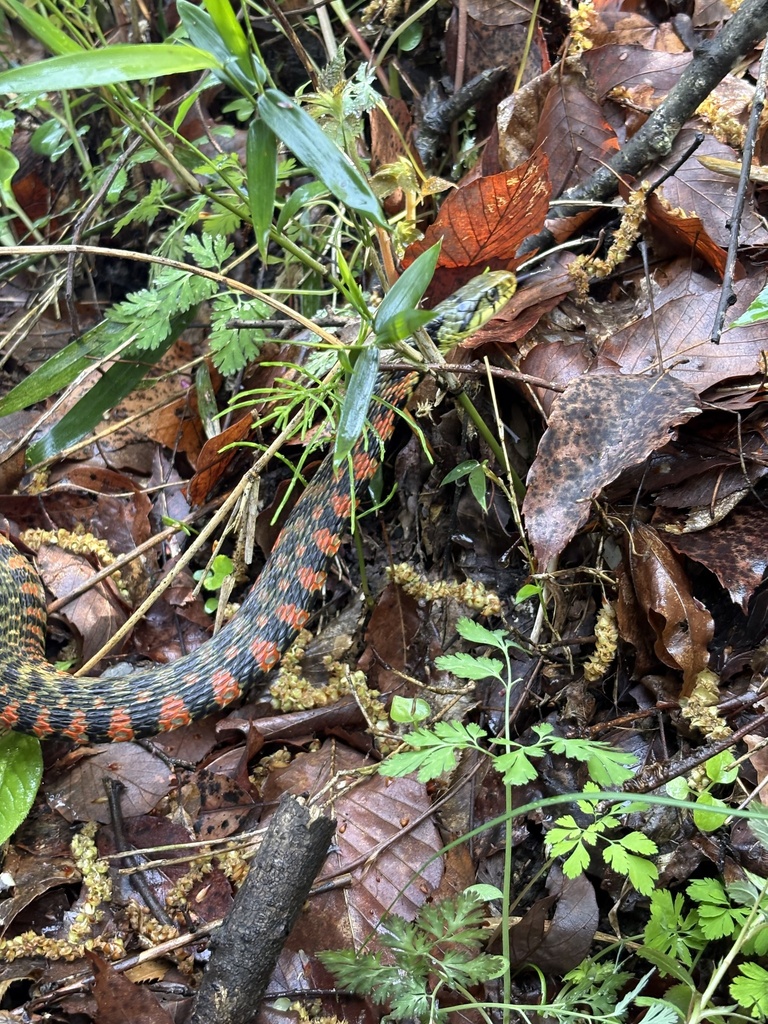
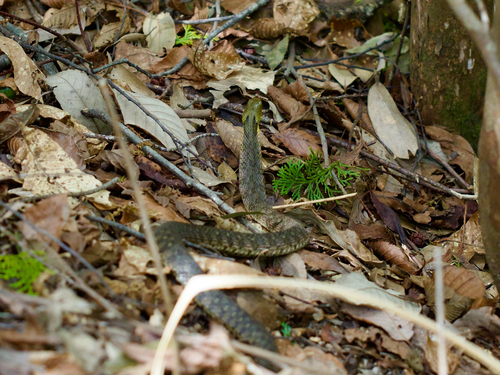
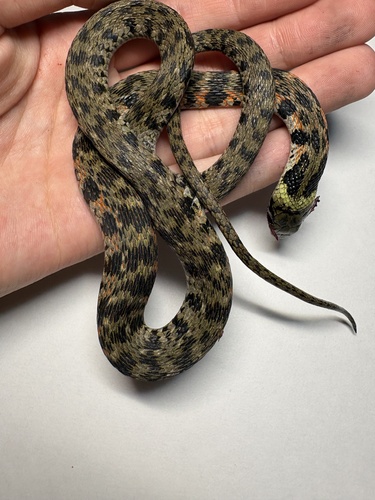
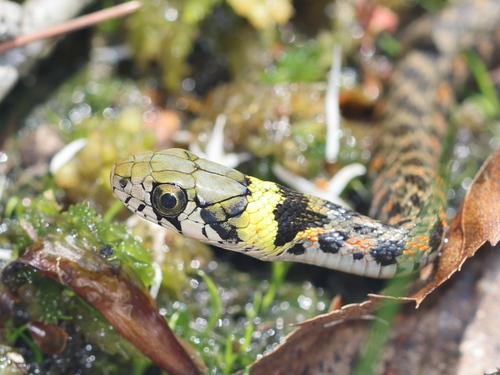
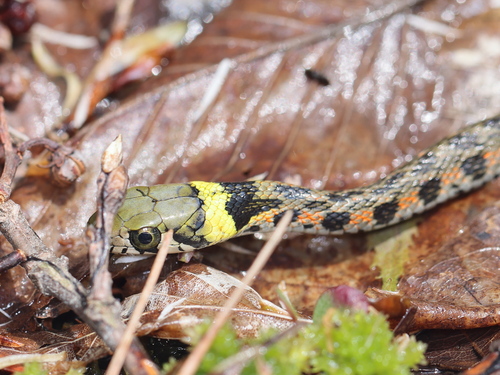
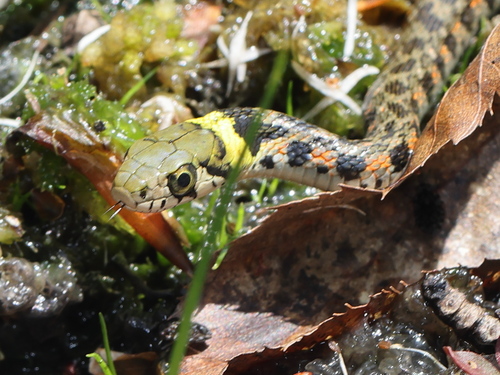
6 photographs of the Tiger Keelback. © TAIGA.
The Tiger Keelback (Rhabdophis tigrinus) is a venomous snake in the Colubridae family, recorded in 11 countries.
If you are bitten
This is a venomous snake. Treat any bite as a medical emergency: stay calm, keep the bitten limb still and roughly level with the heart, remove rings and tight clothing, and get to emergency care immediately. Do not apply a tourniquet, cut the wound, apply ice, or try to suck out venom. Call your local emergency number or poison center.
- Family
- Colubridae
- Danger
- high
About the Tiger Keelback
Rhabdophis tigrinus, also known commonly as the tiger keelback, yamakagashi, or kkotbaem, is a species of venomous snake in the subfamily Natricinae of the family Colubridae. The species is native to East Asia and Southeast Asia. Many sources, though not ITIS, recognize one subspecies, Rhabdophis tigrinus formosanus of Taiwan.
Description
The dorsal color pattern of R. tigrinus is olive-drab green, with black and bright orange crossbars or spots from the neck down the first third of the body. The belly is whitish. The average total length (including tail) is usually 60–100 cm (24–39 in).
Geographic range
R. tigrinus is found in eastern Russia (Primorskiy and Khabarovsk territories), North and South Korea, China (widespread, except in the western third and the extreme south; Zhejiang, Fujian, Jiangxi, Hubei, Guizhou, Sichuan, Gansu, Shaanxi and Inner Mongolia), on the island of Taiwan, in Vietnam and in Japan (Yakushima, Tanegashima, Kyūshū, Shikoku, Honshu, Osaka and in the Ryukyu Islands). The type locality given is "Japan".
Diet
The diet of R. tigrinus consists mainly of small vertebrates, especially frogs and toads. It forages using both chemical (smell/tongue) and visual cues to find its prey. Rhabdophis tigrinus has specialized nuchal glands on the back of the neck that are used to store cardiotonic steroids (bufadienolides) sequestered from the toads in their diet. Rhabdophis tigrinus are resistant to the toxic effects of these chemicals. This is different from their venom, which is produced in oral glands and is not known to contain bufadienolides or other sequestered toxins. Female Rhabdophis tigrinus can pass sequestered chemicals to their offspring, both by deposition in egg yolk and by transfer across the egg membranes within the oviduct, late in gestation.
Defensive behavior
Rhabdophis tigrinus has two rows of glands in its neck that provide protection from predators by releasing steroidal toxins that are sequestered from ingested poisonous toads, referred to as kleptotoxisism. When this species is challenged at cooler temperatures it tends to demonstrate passive anti-predator responses such as flattening the neck and body and lying still, while at higher temperatures it more frequently flees instead. This snake thus appears to rely more heavily on the deterrence provided by these glands at low ambient temperatures. Although venomous, few deaths have been recorded due to its tendency to display one of these other behaviors as opposed to striking. This hesitancy to strike at a predator in turn may be because its fangs are located in the back of the mouth, making a successful strike on a large object difficult.
Adapted from Wikipedia, available under CC BY-SA.
Local and regional names
The Tiger Keelback is known by these names across the regions where it lives:
- Chinese
- 虎斑頸槽蛇, 虎斑颈槽蛇
- Czech
- užovka tygří
- Danish
- Japansk Tigersnog
- English
- Japanese Keelback
- German
- Tiger-Wassernatter, Tigernatter, Yamakagashi
- Japanese
- ヤマカガシ
- Korean
- 유혈목이, 일본유혈목이
- Polish
- zaskroniec tygrysi
- Portuguese
- Dorso-de-quilha-tigre
- Russian
- Тигровый уж
Frequently asked: Tiger Keelback
- Is the Tiger Keelback venomous?
- Yes. The Tiger Keelback (Rhabdophis tigrinus) is venomous and belongs to the Colubridae family (keelback (rear-fanged)). Its bite is considered high risk to people. Treat any bite as a medical emergency.
- Is the Tiger Keelback poisonous?
- Snakes are venomous, not poisonous. "Poisonous" means harmful to eat or touch; "venomous" means injecting toxins through a bite. The Tiger Keelback is venomous, delivering venom through a bite.
- Is the Tiger Keelback dangerous?
- This is a venomous snake. Treat any bite as a medical emergency: stay calm, keep the bitten limb still and roughly level with the heart, remove rings and tight clothing, and get to emergency care immediately. Do not apply a tourniquet, cut the wound, apply ice, or try to suck out venom. Call your local emergency number or poison center.
- Where does the Tiger Keelback live?
- The Tiger Keelback has verified records in 11 countries, including Korea, Republic of, Japan, China. See the distribution section below for its full range.
- What does the Tiger Keelback eat?
- The diet of R. tigrinus consists mainly of small vertebrates, especially frogs and toads. It forages using both chemical (smell/tongue) and visual cues to find its prey. Rhabdophis tigrinus has specialized nuchal glands on the back of the neck that are used to store cardiotonic steroids (bufadienolides) sequestered from the toads in their diet. Rhabdophis tigrinus are resistant to the toxic effects of these chemicals. This is different from their venom, which is produced in oral glands and is not known to contain bufadienolides or other sequestered toxins.
If you are bitten by the Tiger Keelback
Do
- Get away from the snake and stay calm. Most bites worsen when people panic or try again to handle the snake.
- Call 911 or Poison Control (1-800-222-1222) right away. Antivenom works best when given early.
- Note the time of the bite and, from a safe distance, the snake's color and pattern, a phone photo is enough. Do not chase it.
- Keep the bitten limb still and at roughly heart level. Sit or lie down and limit movement.
- Remove rings, watches, and tight clothing near the bite before swelling starts.
- Gently wash the bite with soap and water and cover it with a clean, dry dressing.
Do not
- Do not cut the wound or try to suck out the venom.
- Do not apply a tourniquet or ice.
- Do not drink alcohol or caffeine.
- Do not take aspirin or ibuprofen, they can worsen bleeding. Acetaminophen is safer for pain.
- Do not try to catch or kill the snake. A dead snake can still bite by reflex.
First-aid guidance adapted from the U.S. Centers for Disease Control and Prevention (CDC NIOSH), Venomous Snakes. Educational only; always follow the instructions of emergency responders.
Where it is found
More Colubridae snakes
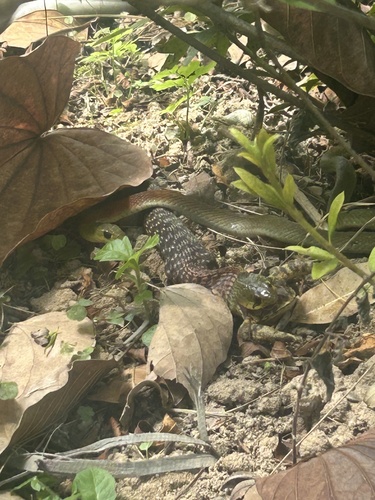 Heller's Red-necked KeelbackRhabdophis helleri
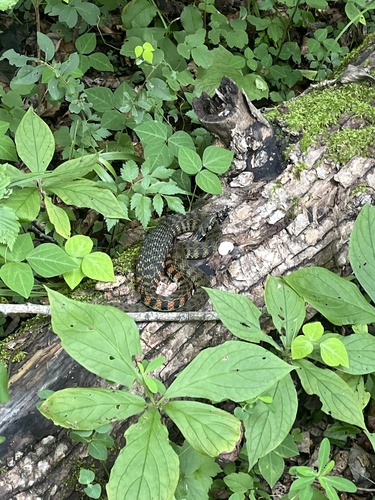 Chinese Tiger KeelbackRhabdophis lateralis
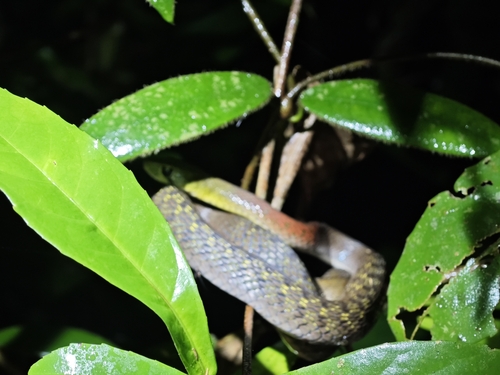 Siamese Red-necked KeelbackRhabdophis siamensis
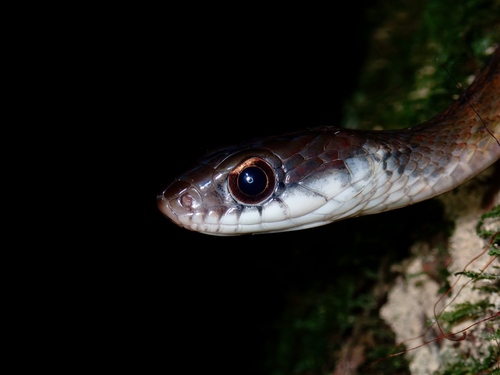 Specklebelly KeelbackRhabdophis chrysargos
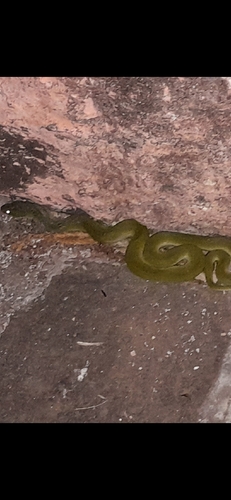 Green KeelbackRhabdophis plumbicolor
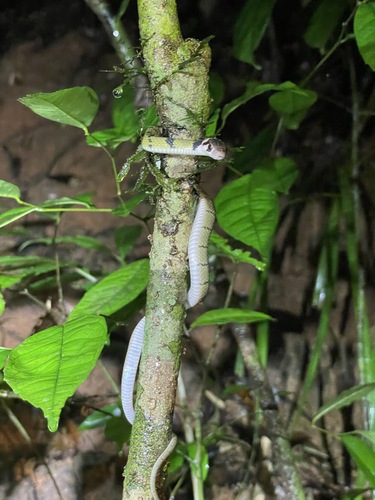 Banded KeelbackRhabdophis nigrocinctus
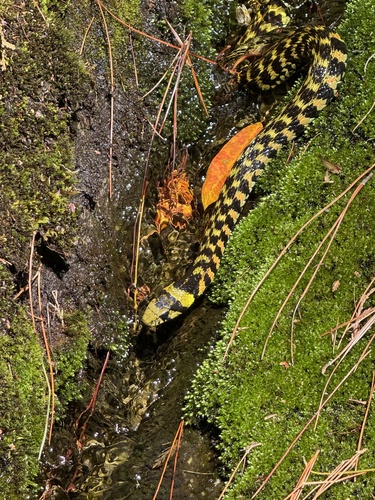 Taiwan tiger keelbackRhabdophis formosanus
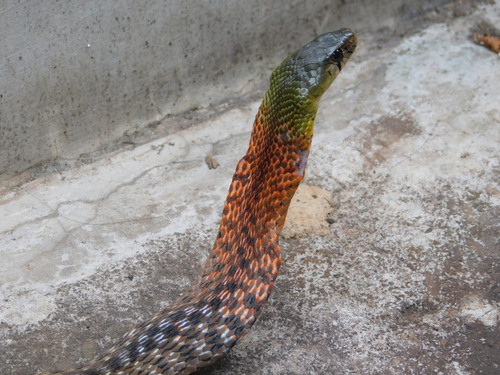 Red-necked KeelbackRhabdophis subminiatus
Classification
How scientists group this snake, from the broadest category down to the exact species. Each step narrows to its closest relatives.
- OrderThe broad group of scaled reptiles: all snakes and lizards
- Squamata
- FamilyA group of related snakes that share key traits
- Colubridae
- GenusA close-knit group of very similar species
- Rhabdophis
- SpeciesThis exact snake, named in the two-part scientific name
- Rhabdophis tigrinus
Keep learning
- Are Snakes Dangerous? The Real Risk, in PerspectiveMost snakes are harmless and avoid people. Here is the honest picture of snakebite risk worldwide and how to lower your own.
- Snakebite First Aid: What to Do (and What Never to Do)A clear, CDC-based guide to snakebite first aid: the steps that help, the popular myths that hurt, and how to tell a serious bite from a minor one.
- Venomous vs Nonvenomous: How to Tell the DifferenceThe folk rules for telling venomous snakes apart, where each one fails, and why location-based identification beats guessing by sight.
- What to Do If You Find a SnakeFound a snake at home or on a trail? Here is how to stay calm, give it space, identify it safely, and know when to call a professional.
Distribution from GBIF & iNaturalist. Venom status per CDC. Background: Wikipedia. Informational only. Never handle a snake to identify it.