
Genus · Colubridae
Types of keelbacks
30+ species make up the genus Rhabdophis, the snakes commonly called keelbacks. All of them are venomous.
About keelbacks
Asian keelbacks look like harmless water snakes but carry two separate weapon systems, including borrowed toad toxins stored in the neck.
Rhabdophis is a genus of snakes in the family Colubridae, the largest snake family and the one that contains most of the world's so-called typical snakes. Members are commonly called keelbacks because of the raised ridge, or keel, running down the center of each dorsal scale, which gives the body a rough, matte texture rather than a smooth shine. Our database lists 30+ species, including Heller's Red-necked Keelback, the Tiger Keelback, the Chinese Tiger Keelback, and the Siamese Red-necked Keelback. The repeated use of red necks and tiger-like banding in those names points to the bold collar and crossbar patterns common in the group.
These are snakes of eastern and southeastern Asia, ranging across regions such as Japan, Korea, China, and into Southeast Asia. They are strongly tied to water and damp ground, turning up around rice paddies, marshes, pond edges, ditches, streams, and wet meadows. This is a semi-aquatic, terrestrial group rather than a tree-dwelling one. Most are slender to moderately built, medium-sized snakes with round pupils and the keeled scales described above. Many species show a distinctive band of red, orange, or yellow on the neck just behind the head, which is one of the most reliable field cues for the group, though color and pattern vary widely between species.
Honest safety framing matters here, because keelbacks break the usual rule that colubrids are harmless. Several Rhabdophis species, the Tiger Keelback most famously, are rear-fanged and genuinely dangerous. They have enlarged grooved teeth at the back of the upper jaw and a Duvernoy's gland that produces a venom affecting blood clotting. Serious bites can cause internal bleeding and have caused human deaths. On top of that, many species sequester defensive toxins from the toads they eat and store them in specialized nuchal glands in the neck, so that a predator biting the neck gets a dose of toad poison. Because of this, no Rhabdophis should be treated as a safe snake to pick up. Do not handle a wild keelback, and if a bite occurs seek emergency medical care immediately.
Ecologically, keelbacks are active hunters of cold, wet-skinned prey. Amphibians are the core of the diet, especially frogs and toads, which is exactly why some species can recycle toad toxins for their own defense. Fish and tadpoles are also taken, and the diet can shift with age and season as different prey become available. They are mostly diurnal to crepuscular, foraging by day and in the cooler hours near water.
Reproduction in the genus is egg-laying. Females deposit clutches of eggs in moist, sheltered spots such as leaf litter, soil, or rotting vegetation, and the young hatch already equipped with the genus's neck defenses, sometimes even drawing on toxins passed from the mother. When threatened, a keelback may flatten and raise its neck to flash the bright collar and present its toxic nuchal region toward an attacker rather than fleeing, a warning display that doubles as a delivery system for the stored poison.
Rhabdophis belongs to the Colubridae family (Colubrids). The largest snake family, and the one most snakes you meet belong to. Typically round pupils, a head only slightly wider than the neck, and no heat-sensing facial pit or rattle. Scales may be smooth and glossy or keeled and matte depending on the species.
Danger: Almost all colubrids are harmless. A small number are rear-fanged with medically significant venom, the boomslang and the twig (vine) snakes of Africa being the dangerous exceptions. Most colubrids will flee or bluff rather than bite.
All species (31)
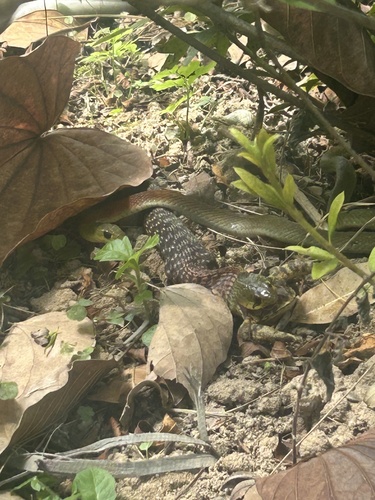 Heller's Red-necked KeelbackRhabdophis helleriVenomous
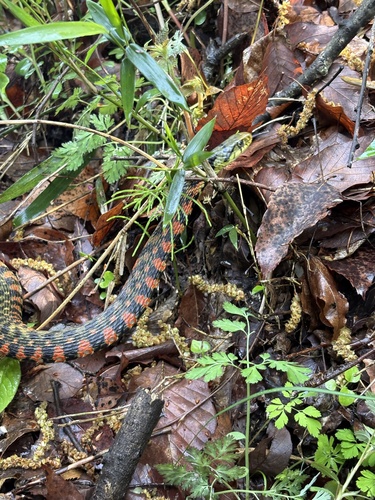 Tiger KeelbackRhabdophis tigrinusVenomous
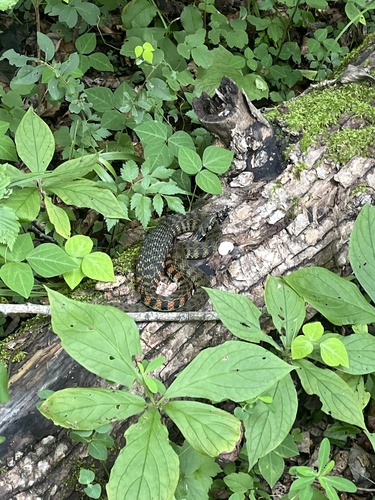 Chinese Tiger KeelbackRhabdophis lateralisVenomous
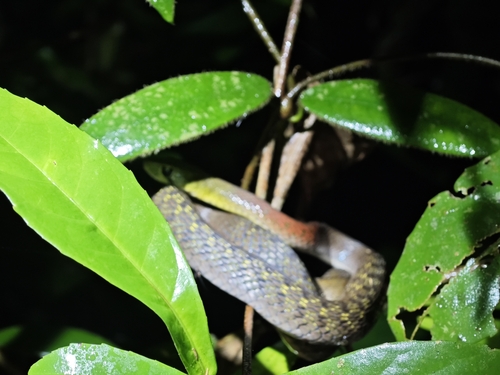 Siamese Red-necked KeelbackRhabdophis siamensisVenomous
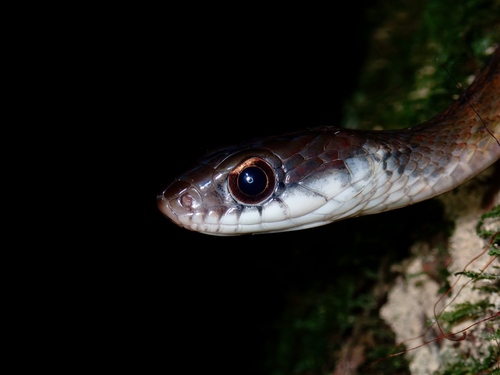 Specklebelly KeelbackRhabdophis chrysargosVenomous
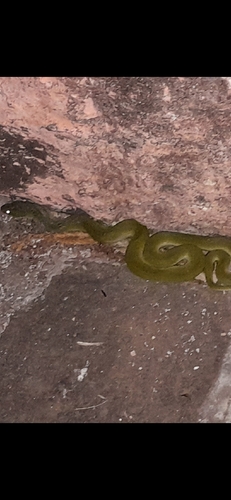 Green KeelbackRhabdophis plumbicolorVenomous
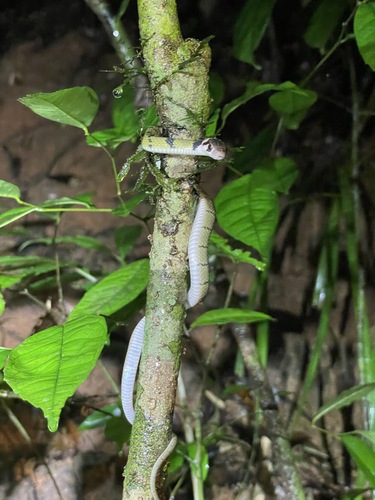 Banded KeelbackRhabdophis nigrocinctusVenomous
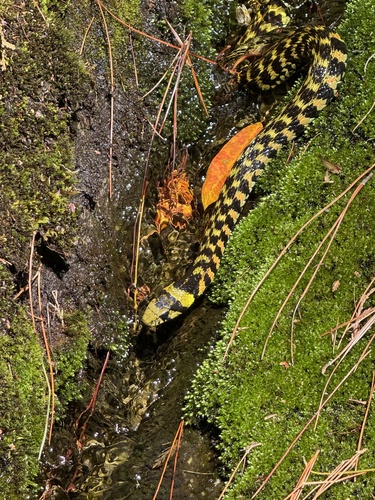 Taiwan tiger keelbackRhabdophis formosanusVenomous
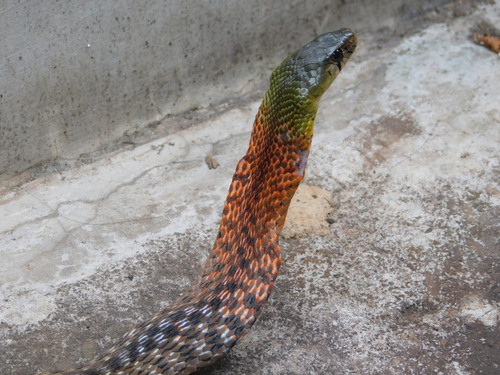 Red-necked KeelbackRhabdophis subminiatusVenomous
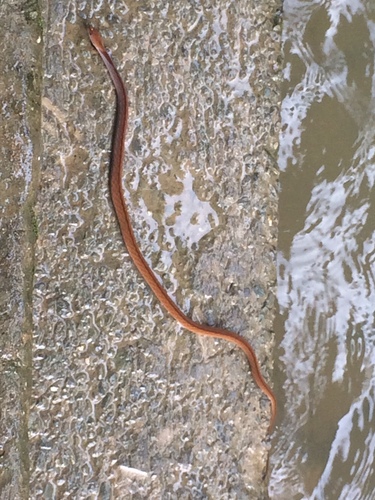 Blue-necked KeelbackRhabdophis rhodomelasVenomous
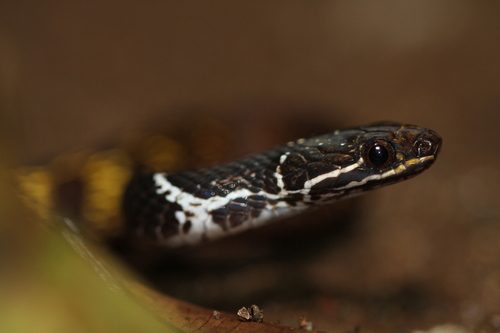 Red-bellied KeelbackRhabdophis conspicillatusVenomous
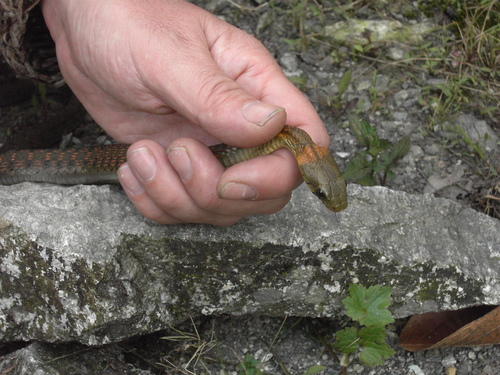 Orange-collared KeelbackRhabdophis himalayanusVenomous
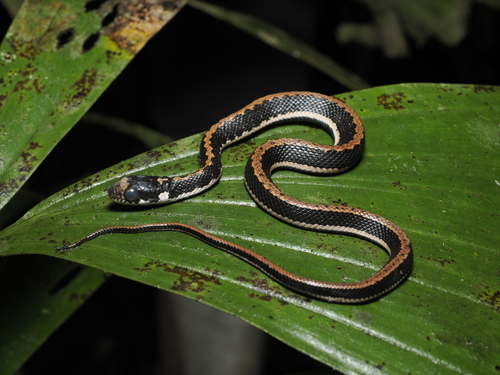 Günther's KeelbackRhabdophis chrysargoidesVenomous
 Taiwan KeelbackRhabdophis swinhonisVenomous
 Orange-lipped KeelbackRhabdophis flavicepsVenomous
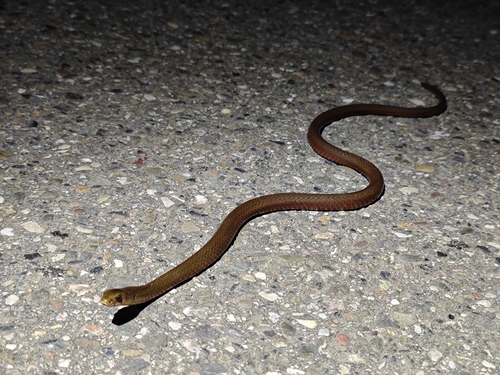 Chiwen keelbackRhabdophis chiwenVenomous
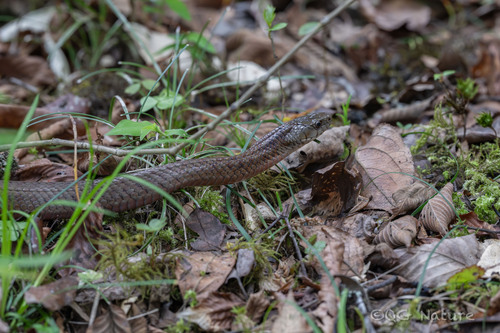 Leonard's KeelbackRhabdophis leonardiVenomous
 Groove-necked Keel-backRhabdophis nuchalisVenomous
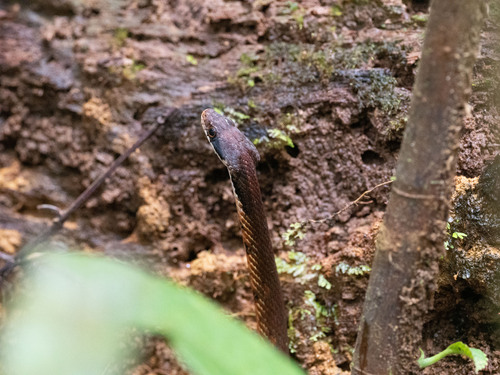 Blossom KraitRhabdophis ceylonensisVenomous
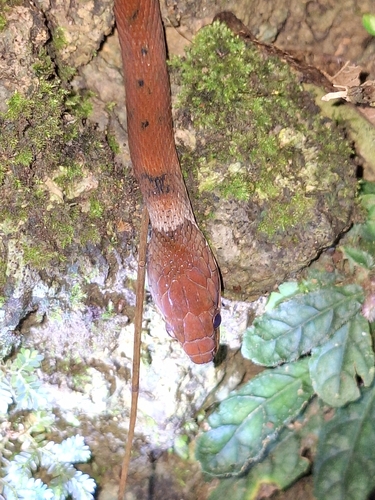 Zigzag-lined Water SnakeRhabdophis lineatusVenomous
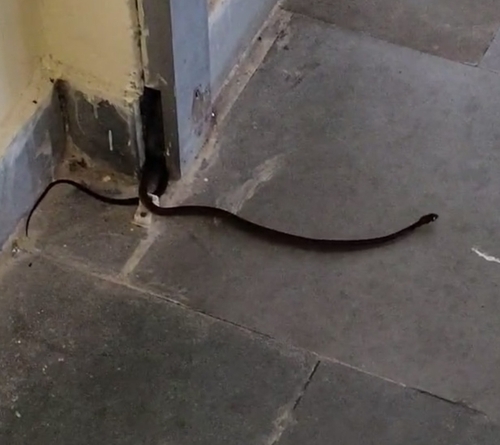 Bindee keelbackRhabdophis bindiVenomous
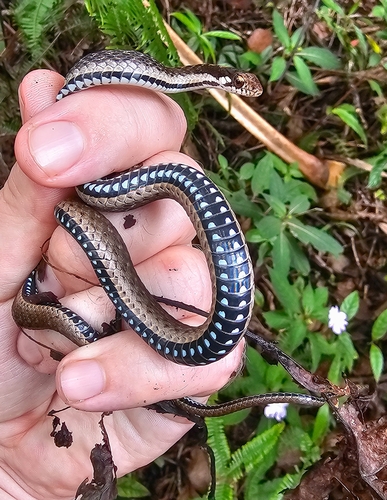 White-lined Water SnakeRhabdophis auriculatusVenomous
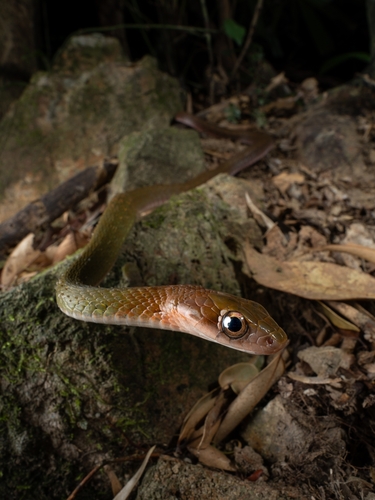 Adler's KeelbackRhabdophis adleriVenomous
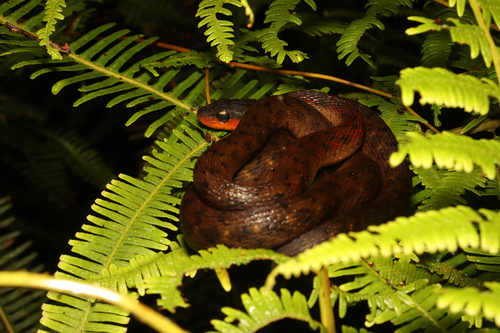 Gunung Murud KeelbackRhabdophis murudensisVenomous
- Mount Gongga KeelbackRhabdophis pentasupralabialisVenomous
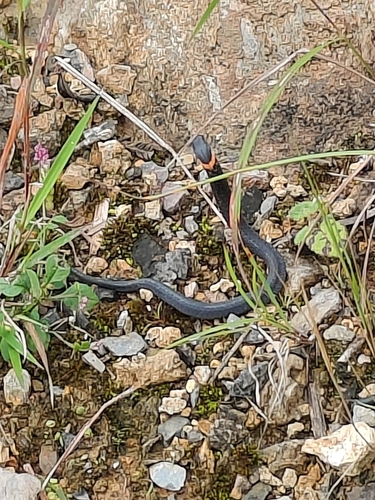 H’mong keelbackRhabdophis hmongorumVenomous
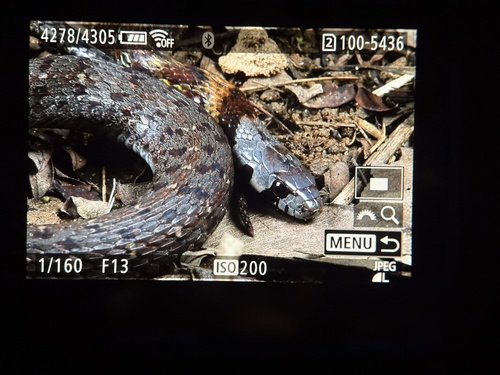 Angel’s KeelbackRhabdophis angeliVenomous
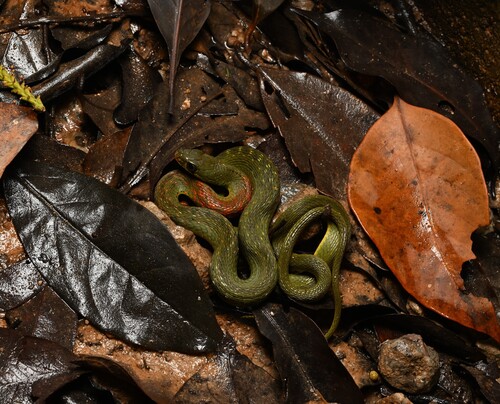 Hainan KeelbackRhabdophis confususVenomous
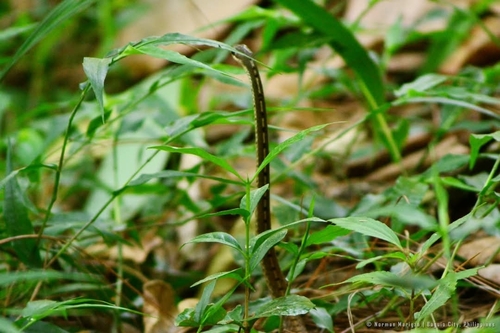 Barbour's Water SnakeRhabdophis barbouriVenomous
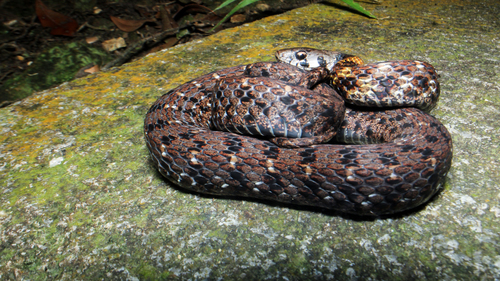 Guangdong keelbackRhabdophis guangdongensisVenomous
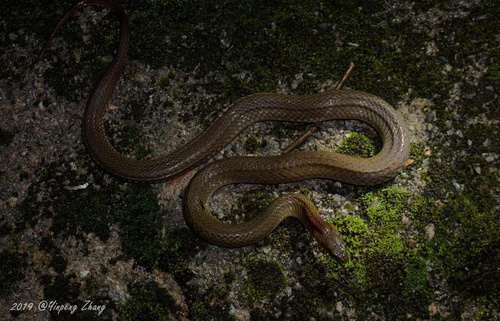 Rhabdophis kaiyuanensisVenomous
Keep learning
- Venomous vs Nonvenomous: How to Tell the DifferenceThe folk rules for telling venomous snakes apart, where each one fails, and why location-based identification beats guessing by sight.
- Are Snakes Dangerous? The Real Risk, in PerspectiveMost snakes are harmless and avoid people. Here is the honest picture of snakebite risk worldwide and how to lower your own.
- Snake Venom Explained: How It Works and WhyWhat snake venom actually is, why it evolved, the main venom types, fang delivery, how antivenom works, and why ranking the most venomous snake is hard.
- How Snakes Move, Hunt, and EatHow snakes move without legs, hunt as ambushers or active foragers, kill by constriction or venom, and swallow prey wider than their head.