
Colubridae
Banded Keelback
VenomousRhabdophis nigrocinctus
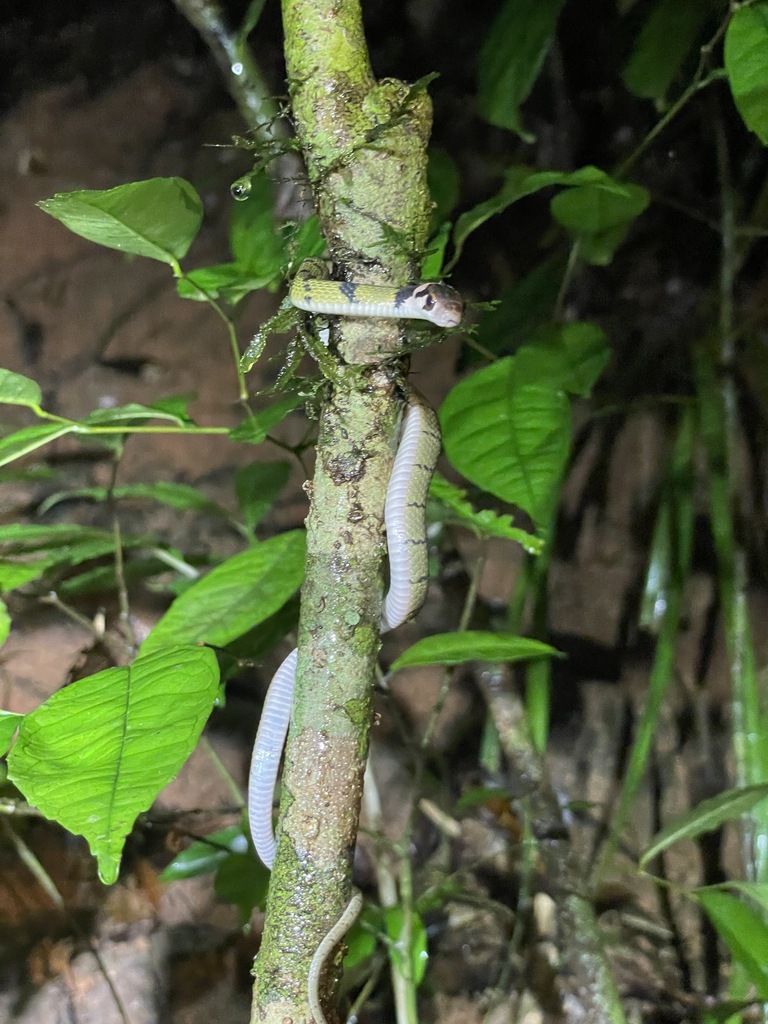
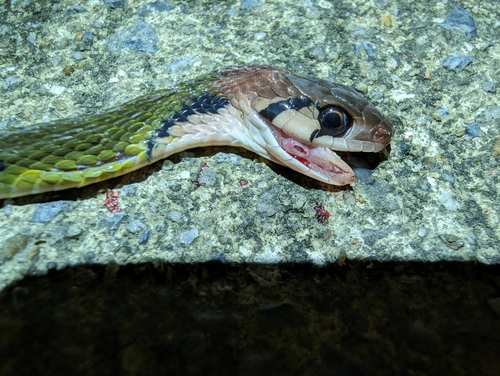
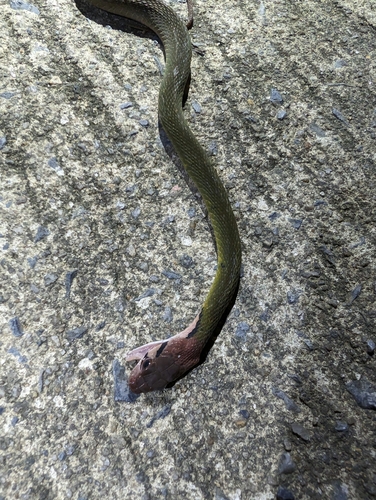
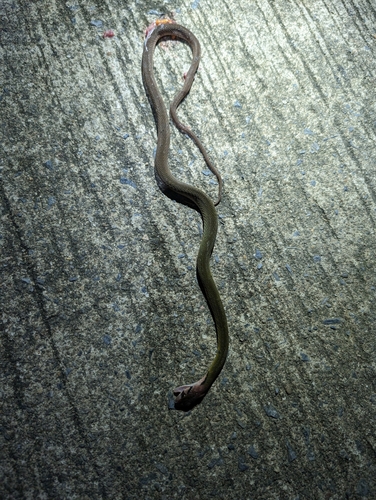
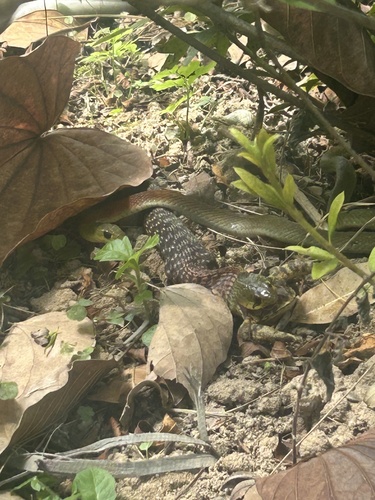
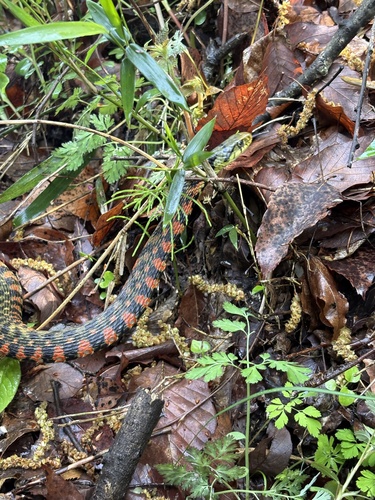
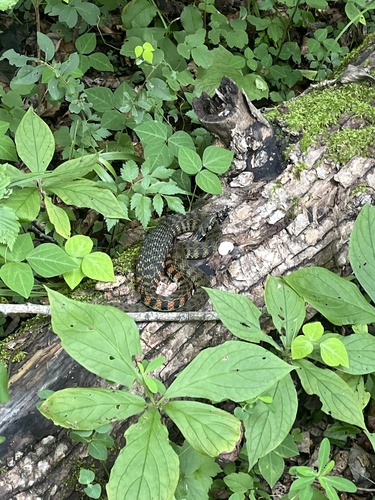
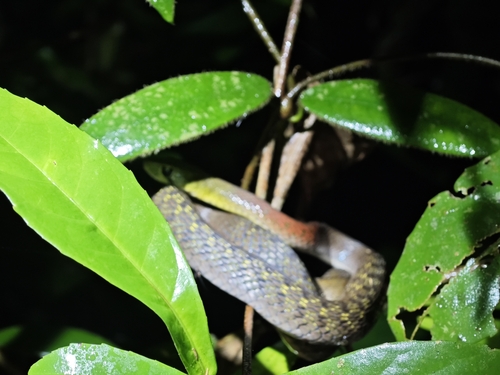
4 photographs of the Banded Keelback. © Lawrence Hylton.
The Banded Keelback (Rhabdophis nigrocinctus) is a venomous snake in the Colubridae family, recorded in 6 countries.
If you are bitten
This is a venomous snake. Treat any bite as a medical emergency: stay calm, keep the bitten limb still and roughly level with the heart, remove rings and tight clothing, and get to emergency care immediately. Do not apply a tourniquet, cut the wound, apply ice, or try to suck out venom. Call your local emergency number or poison center.
- Family
- Colubridae
- Danger
- high
About the Banded Keelback
Rhabdophis nigrocinctus, also known as the black-striped keelback, green keelback, or banded keelback, is a keelback snake in the family Colubridae found in Myanmar, Thailand, Laos, Cambodia, Vietnam, and Yunnan (SW China).
Adapted from Wikipedia, available under CC BY-SA.
Local and regional names
The Banded Keelback is known by these names across the regions where it lives:
- Chinese
- 黑紋頸槽蛇, 黑纹颈槽蛇
- Danish
- Sortbåndet Kølsnog
- English
- Black-banded Keelback, Green Keelback
- German
- Gebänderte Wassernatter, Schwarzgebänderte Wassernatter
- Khmer
- ពស់ព្រៃខ្លួនក្រហម-បៃតង
- Portuguese
- Dorso-de-quilha-verde
- Russian
- Чернопоясный длиннозубый уж
- Thai
- งูลายสาบเขียวขวั้นดำ
- Vietnamese
- Rắn hoa cỏ đai
Frequently asked: Banded Keelback
- Is the Banded Keelback venomous?
- Yes. The Banded Keelback (Rhabdophis nigrocinctus) is venomous and belongs to the Colubridae family (keelback (rear-fanged)). Its bite is considered high risk to people. Treat any bite as a medical emergency.
- Is the Banded Keelback poisonous?
- Snakes are venomous, not poisonous. "Poisonous" means harmful to eat or touch; "venomous" means injecting toxins through a bite. The Banded Keelback is venomous, delivering venom through a bite.
- Is the Banded Keelback dangerous?
- This is a venomous snake. Treat any bite as a medical emergency: stay calm, keep the bitten limb still and roughly level with the heart, remove rings and tight clothing, and get to emergency care immediately. Do not apply a tourniquet, cut the wound, apply ice, or try to suck out venom. Call your local emergency number or poison center.
- Where does the Banded Keelback live?
- The Banded Keelback has verified records in 6 countries, including Thailand, Myanmar, China. See the distribution section below for its full range.
If you are bitten by the Banded Keelback
Do
- Get away from the snake and stay calm. Most bites worsen when people panic or try again to handle the snake.
- Call 911 or Poison Control (1-800-222-1222) right away. Antivenom works best when given early.
- Note the time of the bite and, from a safe distance, the snake's color and pattern, a phone photo is enough. Do not chase it.
- Keep the bitten limb still and at roughly heart level. Sit or lie down and limit movement.
- Remove rings, watches, and tight clothing near the bite before swelling starts.
- Gently wash the bite with soap and water and cover it with a clean, dry dressing.
Do not
- Do not cut the wound or try to suck out the venom.
- Do not apply a tourniquet or ice.
- Do not drink alcohol or caffeine.
- Do not take aspirin or ibuprofen, they can worsen bleeding. Acetaminophen is safer for pain.
- Do not try to catch or kill the snake. A dead snake can still bite by reflex.
First-aid guidance adapted from the U.S. Centers for Disease Control and Prevention (CDC NIOSH), Venomous Snakes. Educational only; always follow the instructions of emergency responders.
Where it is found
More Colubridae snakes
 Heller's Red-necked KeelbackRhabdophis helleri
 Tiger KeelbackRhabdophis tigrinus
 Chinese Tiger KeelbackRhabdophis lateralis
 Siamese Red-necked KeelbackRhabdophis siamensis
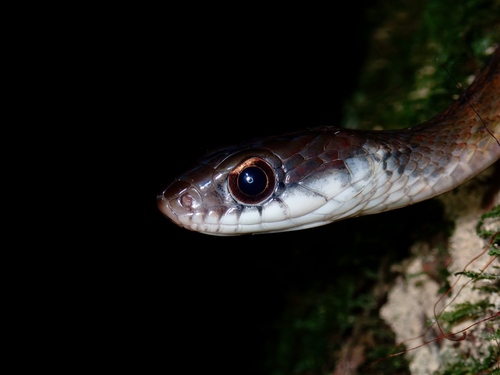 Specklebelly KeelbackRhabdophis chrysargos
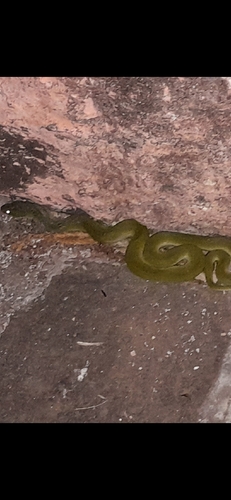 Green KeelbackRhabdophis plumbicolor
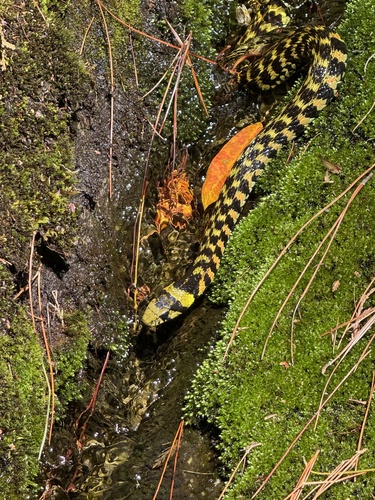 Taiwan tiger keelbackRhabdophis formosanus
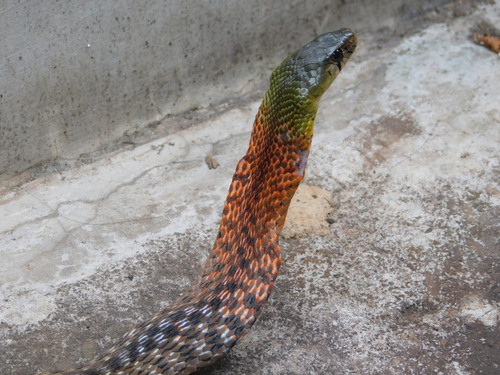 Red-necked KeelbackRhabdophis subminiatus
Classification
How scientists group this snake, from the broadest category down to the exact species. Each step narrows to its closest relatives.
- OrderThe broad group of scaled reptiles: all snakes and lizards
- Squamata
- FamilyA group of related snakes that share key traits
- Colubridae
- GenusA close-knit group of very similar species
- Rhabdophis
- SpeciesThis exact snake, named in the two-part scientific name
- Rhabdophis nigrocinctus
Keep learning
- Are Snakes Dangerous? The Real Risk, in PerspectiveMost snakes are harmless and avoid people. Here is the honest picture of snakebite risk worldwide and how to lower your own.
- Snakebite First Aid: What to Do (and What Never to Do)A clear, CDC-based guide to snakebite first aid: the steps that help, the popular myths that hurt, and how to tell a serious bite from a minor one.
- Venomous vs Nonvenomous: How to Tell the DifferenceThe folk rules for telling venomous snakes apart, where each one fails, and why location-based identification beats guessing by sight.
- What to Do If You Find a SnakeFound a snake at home or on a trail? Here is how to stay calm, give it space, identify it safely, and know when to call a professional.
Distribution from GBIF & iNaturalist. Venom status per CDC. Background: Wikipedia. Informational only. Never handle a snake to identify it.