
Kingsnake / Milksnake
Prairie Kingsnake
HarmlessLampropeltis calligaster
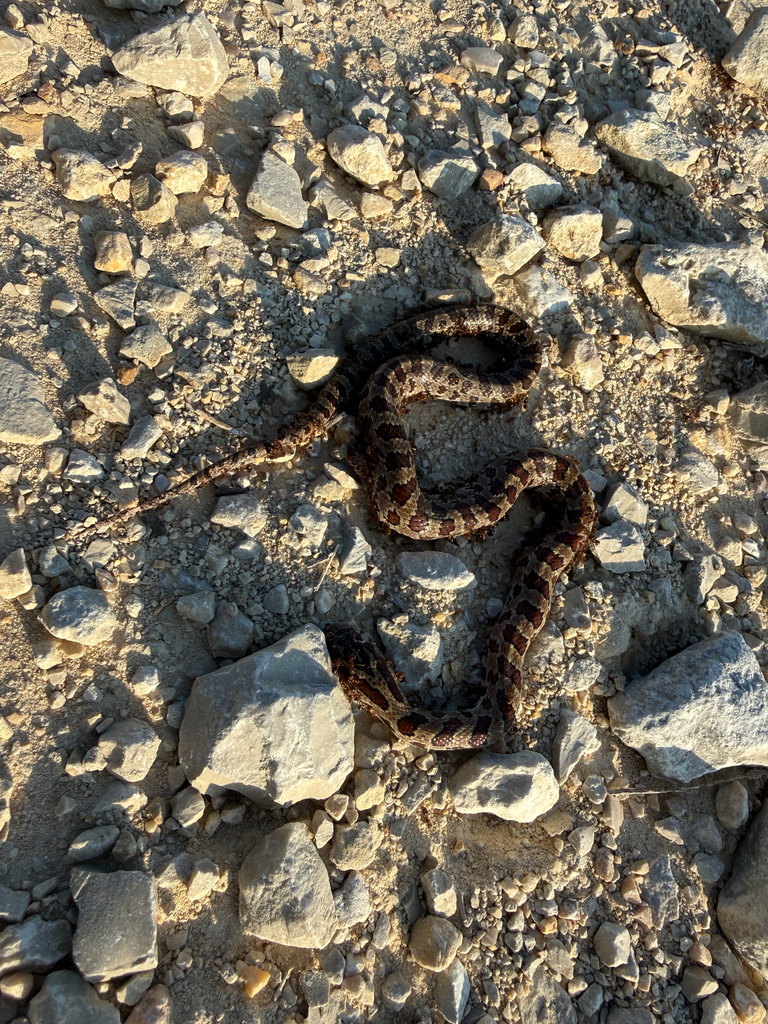
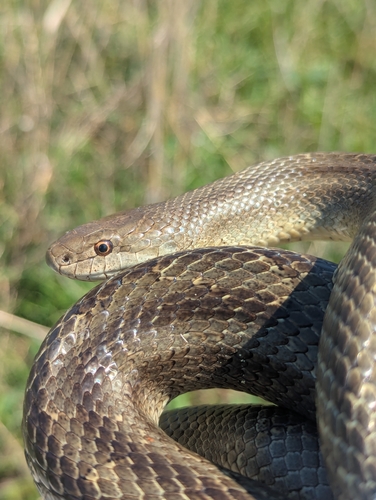
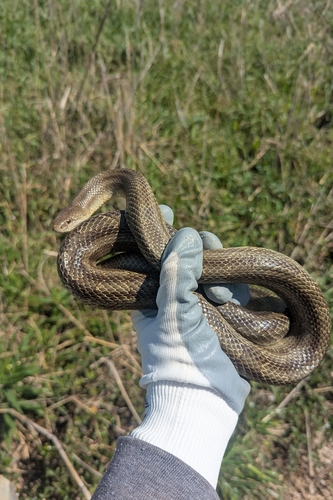
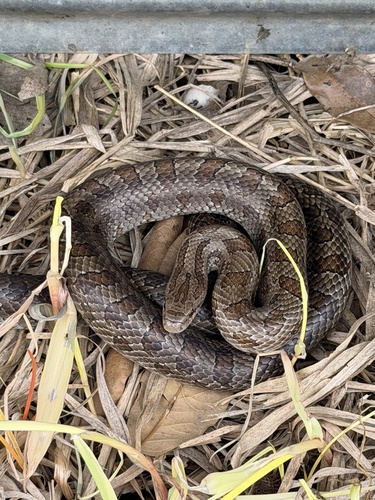
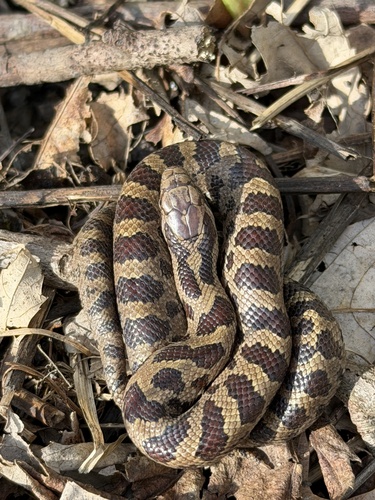
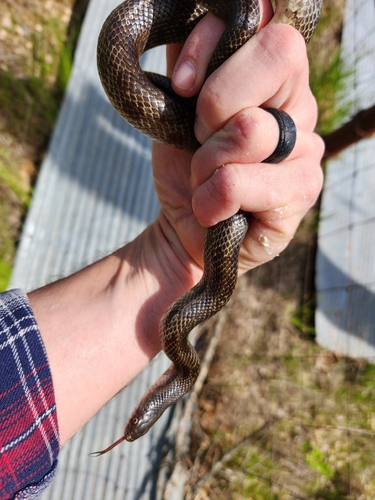
6 photographs of the Prairie Kingsnake. © Rajan Rao.
The Prairie Kingsnake (Lampropeltis calligaster) is a non-venomous snake in the Colubridae family, recorded in 2 countries.
- Also called
- Kingsnake / Milksnake
- Family
- Colubridae
- Size
- 2–5 ft.
- Habitat
- Forests, farmland, grasslands, and suburbs.
- Behavior
- Powerful constrictors that eat other snakes — including venomous ones; gentle but may musk or vibrate the tail.
- Identify
- Smooth, glossy scales with bold bands or chain-like patterns. Milksnakes mimic coral snakes, but red touches black.
About the Prairie Kingsnake
Lampropeltis calligaster is a species of kingsnake known commonly as the prairie kingsnake or yellow-bellied kingsnake.
Geographic range
Prairie kingsnakes are found across 13 states in the midwestern and southern United States.
Description
Prairie kingsnakes are light brown or grey-brown in color, with dark reddish-brown blotching down the dorsal length of their bodies. Their ventral side is pale or yellowish. They are capable of growing to lengths of 76–110 cm (30–43 in), with males longer and heavier on average than females. They are easily mistaken for some species of colubrid snakes of the genus Pantherophis, which can have similar markings. Dorsal marking may fade with age. The mole kingsnake (Lampropeltis rhombomaculata) and the South Florida mole kingsnake (Lampropeltis occipitolineata) were previously considered subspecies, but DNA analysis found them to be distinct species.
Etymology
The generic name, Lampropeltis, is derived from Greek Lampros, meaning "shiny", and pelta, meaning "shield", likely in reference to the genus' smooth and shiny dorsal scales. The specific name, calligaster, is derived from Greek Kallos, for "beauty", and gaster, for "belly".
Diet
Fitch (1978) found that prairie voles were most commonly consumed, but prairie kingsnakes also ate other small mammals, reptiles, and northern bobwhite eggs. Prairie kingsnakes are nonvenomous constrictors, so they coil around their prey and suffocate it until dead.
Behavior
They are typically docile. Like most colubrids, if harassed they will shake their tail, which, if in dry leaf litter, can sound like a rattlesnake. They are not typically prone to biting and may excrete a foul-smelling musk if handled. In central Illinois, they emerge from hibernation in late March and enter hibernation mid-October. Females maintain an average body temperature nearly two degrees Celsius higher than males, which may help females grow faster, reach earlier reproductive maturity, or develop larger clutch sizes. When aboveground, prairie kingsnakes can maintain an average body temperature that is similar regardless of whether they are exposed or under cover, indicating that they can thermoregulate under cover while being concealed from predators.
Richardson et al. (2006) radio-tracked prairie kingsnakes in Illinois and found that they were usually underground during the day, so they are probably mostly nocturnal. Richardson et al. (2006) also found that home ranges of male prairie kingsnakes averaged over four times larger than those of females, home ranges often included the individual's hibernation site, and home ranges were the same from one year to the next. Males and females move with the same frequency and travel equivalent distances per move. Prairie kingsnakes may use road embankments, rock ledges, and mammal burrows in grasslands that are indistinguishable from those used throughout their active period to individually hibernate.
Habitat
Adapted from Wikipedia, available under CC BY-SA.
Frequently asked: Prairie Kingsnake
- Is the Prairie Kingsnake venomous?
- No. The Prairie Kingsnake (Lampropeltis calligaster) is non-venomous and is not considered dangerous to humans. Like most snakes, it will retreat rather than bite when given the chance.
- Is the Prairie Kingsnake poisonous?
- Snakes are venomous, not poisonous. "Poisonous" means harmful to eat or touch; "venomous" means injecting toxins through a bite. The Prairie Kingsnake is neither poisonous nor venomous.
- Is the Prairie Kingsnake dangerous?
- The Prairie Kingsnake is not dangerous to humans. It has no medically significant venom and bites only defensively if cornered or handled.
- Where does the Prairie Kingsnake live?
- The Prairie Kingsnake has verified records in 2 countries, including United States of America, Mexico. See the distribution section below for its full range.
- How do I identify the Prairie Kingsnake?
- Smooth, glossy scales with bold bands or chain-like patterns. Milksnakes mimic coral snakes, but red touches black.
- How big does the Prairie Kingsnake get?
- 2–5 ft.
- What does the Prairie Kingsnake eat?
- Fitch (1978) found that prairie voles were most commonly consumed, but prairie kingsnakes also ate other small mammals, reptiles, and northern bobwhite eggs. Prairie kingsnakes are nonvenomous constrictors, so they coil around their prey and suffocate it until dead.
- Why is it called the Prairie Kingsnake?
- The generic name, Lampropeltis, is derived from Greek Lampros, meaning "shiny", and pelta, meaning "shield", likely in reference to the genus' smooth and shiny dorsal scales. The specific name, calligaster, is derived from Greek Kallos, for "beauty", and gaster, for "belly".
Where it is found
More Colubridae snakes
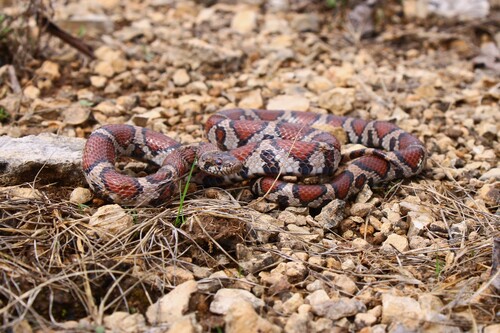 Eastern MilksnakeLampropeltis triangulum
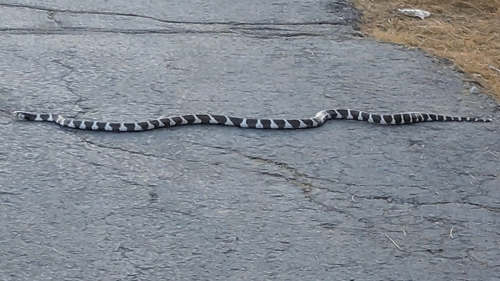 California King SnakeLampropeltis californiae
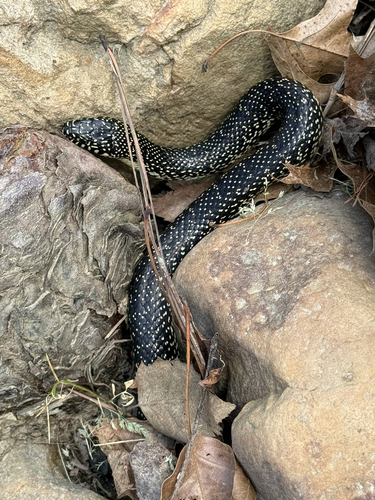 Speckled KingsnakeLampropeltis holbrooki
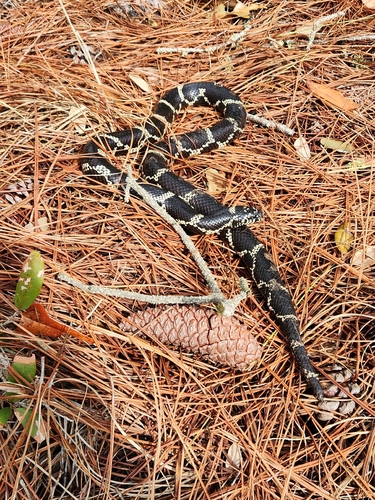 Eastern KingsnakeLampropeltis getula
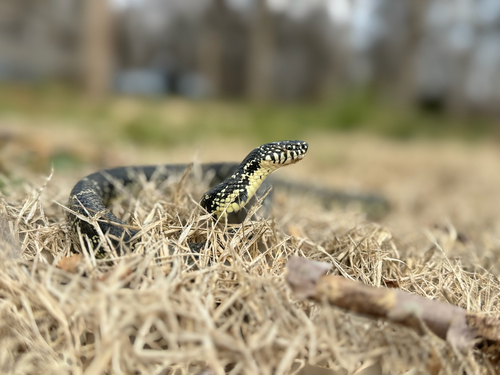 Black KingsnakeLampropeltis nigra
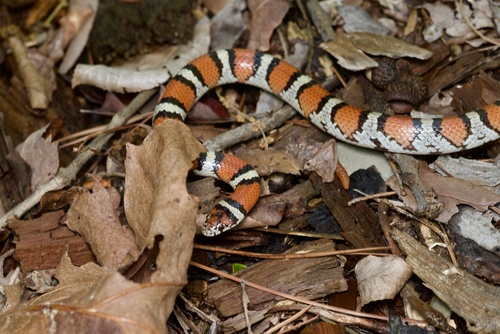 Western MilksnakeLampropeltis gentilis
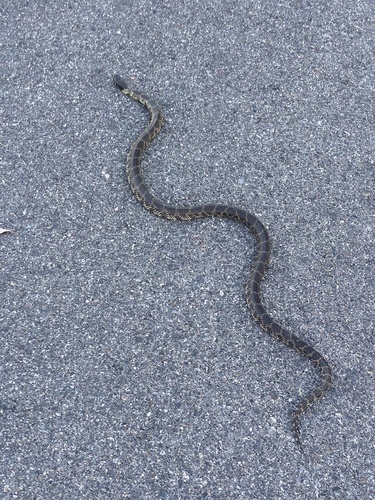 Desert KingsnakeLampropeltis splendida
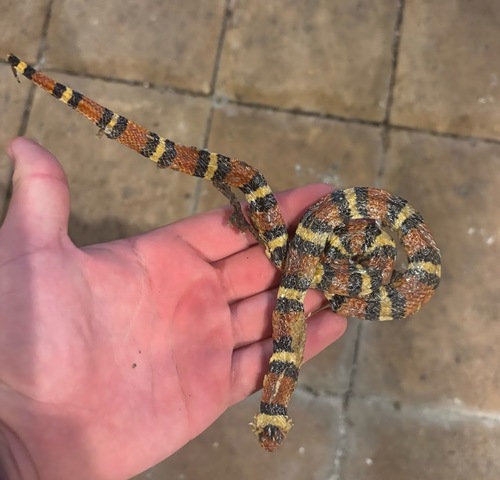 Scarlet KingsnakeLampropeltis elapsoides
Classification
How scientists group this snake, from the broadest category down to the exact species. Each step narrows to its closest relatives.
- OrderThe broad group of scaled reptiles: all snakes and lizards
- Squamata
- FamilyA group of related snakes that share key traits
- Colubridae
- GenusA close-knit group of very similar species
- Lampropeltis
- SpeciesThis exact snake, named in the two-part scientific name
- Lampropeltis calligaster
Keep learning
- What to Do If You Find a SnakeFound a snake at home or on a trail? Here is how to stay calm, give it space, identify it safely, and know when to call a professional.
- Venomous vs Nonvenomous: How to Tell the DifferenceThe folk rules for telling venomous snakes apart, where each one fails, and why location-based identification beats guessing by sight.
- What Is a Snake? Anatomy and the BasicsA clear overview of what makes a snake a snake: limbless body plan, anatomy, evolution from lizards, species diversity, and why they are ectothermic.
- How to Keep Snakes Out of Your Yard and HomeA practical guide to keeping snakes out of your yard and home using habitat changes that work, plus what to skip and what to do if one shows up.
Distribution from GBIF & iNaturalist. Venom status per CDC. Background: Wikipedia. Informational only. Never handle a snake to identify it.