
Kingsnake / Milksnake
Eastern Kingsnake
HarmlessLampropeltis getula
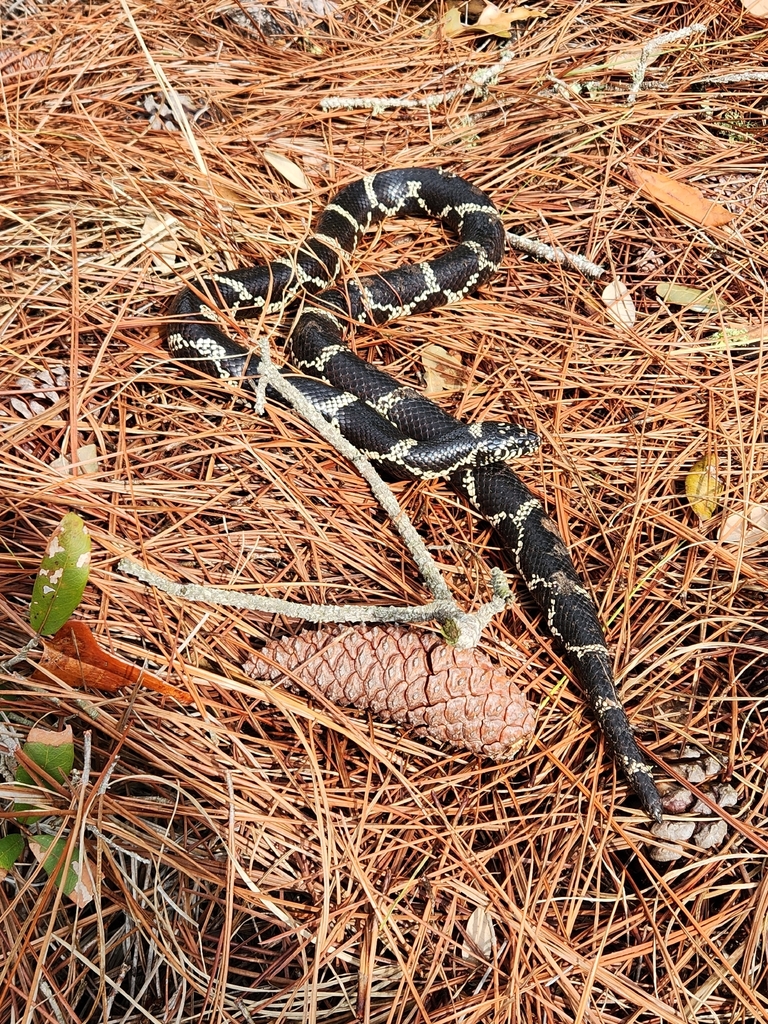
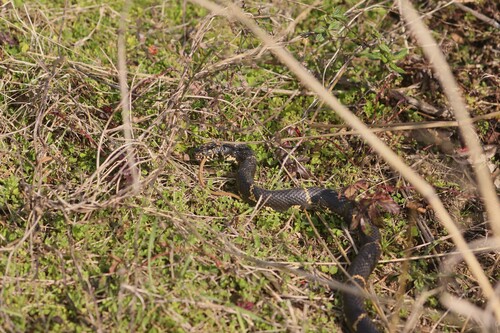
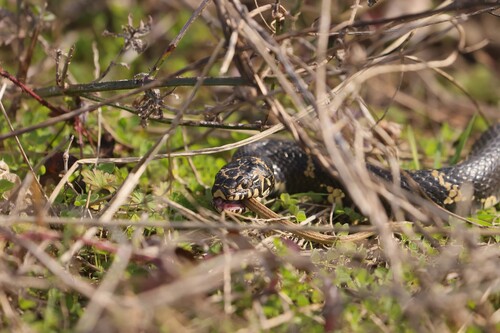
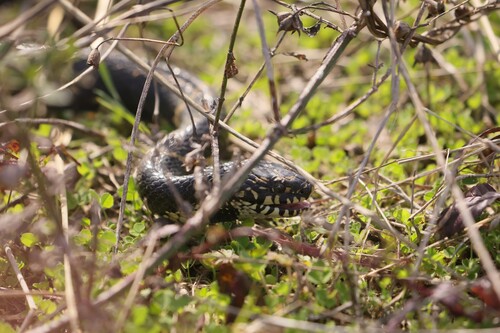
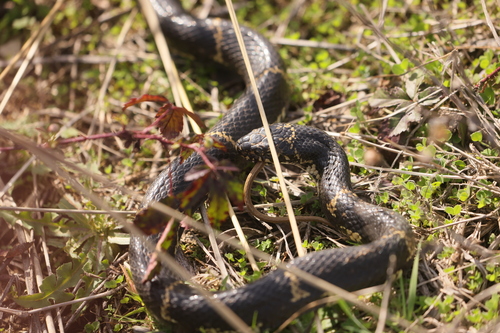
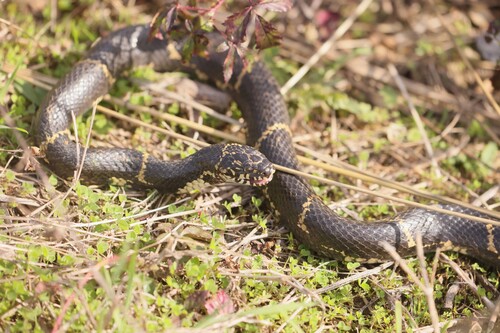
6 photographs of the Eastern Kingsnake. © Craig Williamson.
The Eastern Kingsnake (Lampropeltis getula) is a non-venomous snake in the Colubridae family, recorded in 6 countries.
- Also called
- Kingsnake / Milksnake
- Family
- Colubridae
- Size
- 2–5 ft.
- Habitat
- Forests, farmland, grasslands, and suburbs.
- Behavior
- Powerful constrictors that eat other snakes — including venomous ones; gentle but may musk or vibrate the tail.
- Identify
- Smooth, glossy scales with bold bands or chain-like patterns. Milksnakes mimic coral snakes, but red touches black.
About the Eastern Kingsnake
Lampropeltis getula, commonly known as the eastern kingsnake, the common kingsnake, and the chain kingsnake, is a species of harmless snake in the subfamily Colubrinae of the family Colubridae. The species is native to the southeastern United States. It has long been a favorite among collectors. Four subspecies are recognized as being valid, including the nominate subspecies described here. All of these taxa had originally been described as distinct species and recognized as such for more than a century.
Description
Adult specimens of the speckled kingsnake, Lampropeltis getula holbrooki, are the smallest race at 91.5 cm (36.0 in) in snout-to-vent length (SVL) on average, while L. g. getula is the largest subspecies at 107 cm (42 in) SVL on average. Specimens up to 208.2 cm (82.0 in) in total length (including tail) have been recorded. Weight can vary from 285 g (10.1 oz) in a small specimen of 87.2 cm (34.3 in) in total length, to 2,268 g (80.0 oz) in large specimens, of over 153 cm (60 in) in total length.
The color pattern consists of a glossy black, blue black, or dark brown ground color, overlaid with a series of 23–52 white chain-like rings. Variation is found in their patterns across geographic ranges. Kingsnakes from the coastal plains have wider bands, while those found in mountainous areas have thinner bands or may be completely black.
Common names
Common names for Lampropeltis getula include eastern kingsnake, common kingsnake, chain kingsnake, kingsnake, Carolina kingsnake, chain snake, bastard horn snake, black kingsnake, black moccasin, common chain snake, cow sucker, horse racer, master snake, North American kingsnake, oakleaf rattler, pied snake, pine snake, racer, rattlesnake pilot, thunder-and-lightning snake, thunderbolt, thunder snake, wamper, wampum snake.
Geographic range
Lampropeltis getula is found in the southeastern United States from southern New Jersey to Florida.
Habitat
The preferred habitats of Lampropeltis getula are open areas, particularly grassland, but also chaparral, oak woodland, abandoned farms, desert, low mountains, sand, and any type of riparian zone, including swamps, canals, and streams. A study on the habitat use of the eastern kingsnake found that overall it prefers and can be found in sites with a thick layer of leaf litter and dense shrubbery. From observations, researchers found that 79% of tracked specimen spent the majority of their time concealed under the cover of soil and leaf litter.
Although commonly described as diurnal, some reports suggest that the eastern kingsnake is crepuscular or nocturnal during the hottest parts of the year. It will often retreat into rodent burrows as nocturnal retreats.
Adapted from Wikipedia, available under CC BY-SA.
Frequently asked: Eastern Kingsnake
- Is the Eastern Kingsnake venomous?
- No. The Eastern Kingsnake (Lampropeltis getula) is non-venomous and is not considered dangerous to humans. Like most snakes, it will retreat rather than bite when given the chance.
- Is the Eastern Kingsnake poisonous?
- Snakes are venomous, not poisonous. "Poisonous" means harmful to eat or touch; "venomous" means injecting toxins through a bite. The Eastern Kingsnake is neither poisonous nor venomous.
- Is the Eastern Kingsnake dangerous?
- The Eastern Kingsnake is not dangerous to humans. It has no medically significant venom and bites only defensively if cornered or handled.
- Where does the Eastern Kingsnake live?
- The Eastern Kingsnake has verified records in 6 countries, including United States of America, Mexico, Argentina. See the distribution section below for its full range.
- How do I identify the Eastern Kingsnake?
- Smooth, glossy scales with bold bands or chain-like patterns. Milksnakes mimic coral snakes, but red touches black.
- How big does the Eastern Kingsnake get?
- 2–5 ft.
- What does the Eastern Kingsnake eat?
- Lampropeltis getula eats other snakes, including venomous snakes such as the copperhead (Agkistrodon contortrix), which is responsible for more venomous snakebites than any other in the United States, as well as coral snakes (genera Micruroides and Micrurus), the massasauga (Sistrurus catenatus), and other rattlesnakes (genera Crotalus and Sistrurus).
- Why is it called the Eastern Kingsnake?
- Common names for Lampropeltis getula include eastern kingsnake, common kingsnake, chain kingsnake, kingsnake, Carolina kingsnake, chain snake, bastard horn snake, black kingsnake, black moccasin, common chain snake, cow sucker, horse racer, master snake, North American kingsnake, oakleaf rattler, pied snake, pine snake, racer, rattlesnake pilot, thunder-and-lightning snake, thunderbolt, thunder snake, wamper, wampum snake.
Where it is found
More Colubridae snakes
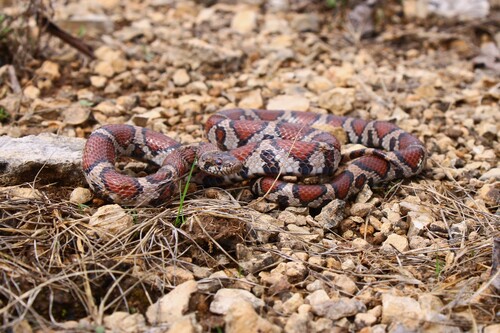 Eastern MilksnakeLampropeltis triangulum
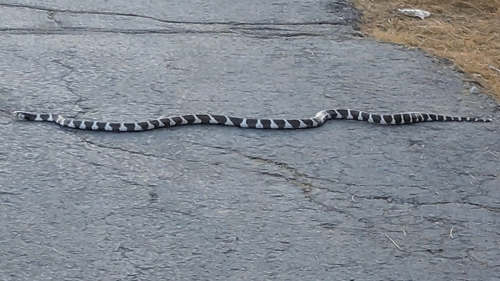 California King SnakeLampropeltis californiae
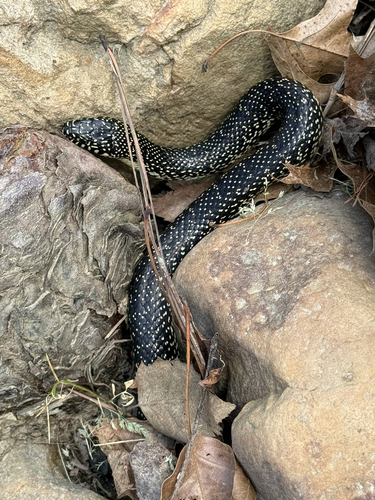 Speckled KingsnakeLampropeltis holbrooki
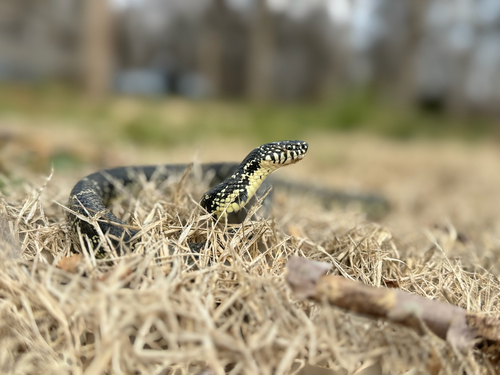 Black KingsnakeLampropeltis nigra
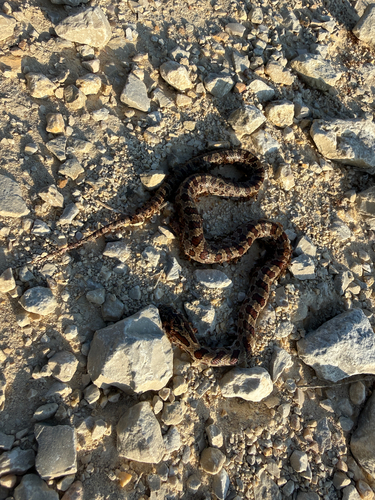 Prairie KingsnakeLampropeltis calligaster
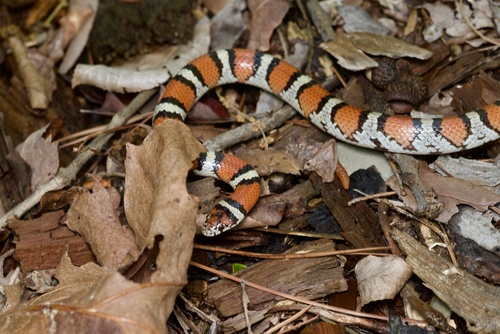 Western MilksnakeLampropeltis gentilis
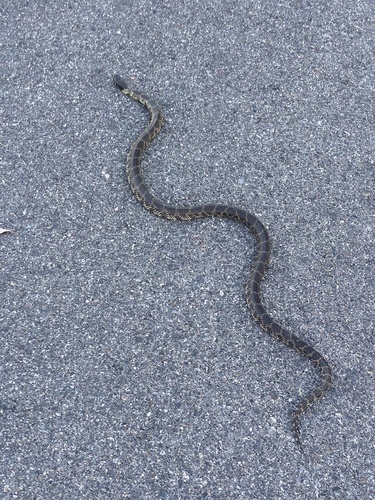 Desert KingsnakeLampropeltis splendida
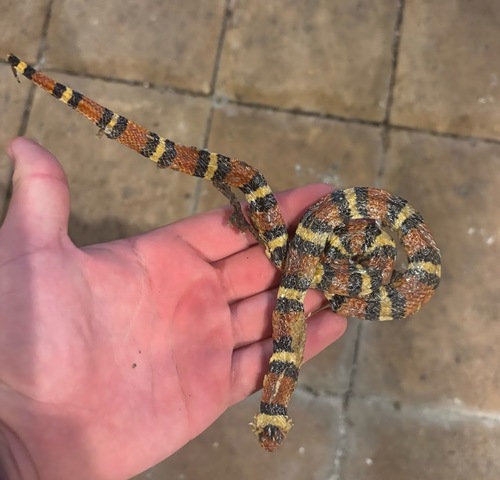 Scarlet KingsnakeLampropeltis elapsoides
Classification
How scientists group this snake, from the broadest category down to the exact species. Each step narrows to its closest relatives.
- OrderThe broad group of scaled reptiles: all snakes and lizards
- Squamata
- FamilyA group of related snakes that share key traits
- Colubridae
- GenusA close-knit group of very similar species
- Lampropeltis
- SpeciesThis exact snake, named in the two-part scientific name
- Lampropeltis getula
Keep learning
- What to Do If You Find a SnakeFound a snake at home or on a trail? Here is how to stay calm, give it space, identify it safely, and know when to call a professional.
- Venomous vs Nonvenomous: How to Tell the DifferenceThe folk rules for telling venomous snakes apart, where each one fails, and why location-based identification beats guessing by sight.
- What Is a Snake? Anatomy and the BasicsA clear overview of what makes a snake a snake: limbless body plan, anatomy, evolution from lizards, species diversity, and why they are ectothermic.
- How to Keep Snakes Out of Your Yard and HomeA practical guide to keeping snakes out of your yard and home using habitat changes that work, plus what to skip and what to do if one shows up.
Distribution from GBIF & iNaturalist. Venom status per CDC. Background: Wikipedia. Informational only. Never handle a snake to identify it.