
Kingsnake / Milksnake
Desert Kingsnake
HarmlessLampropeltis splendida
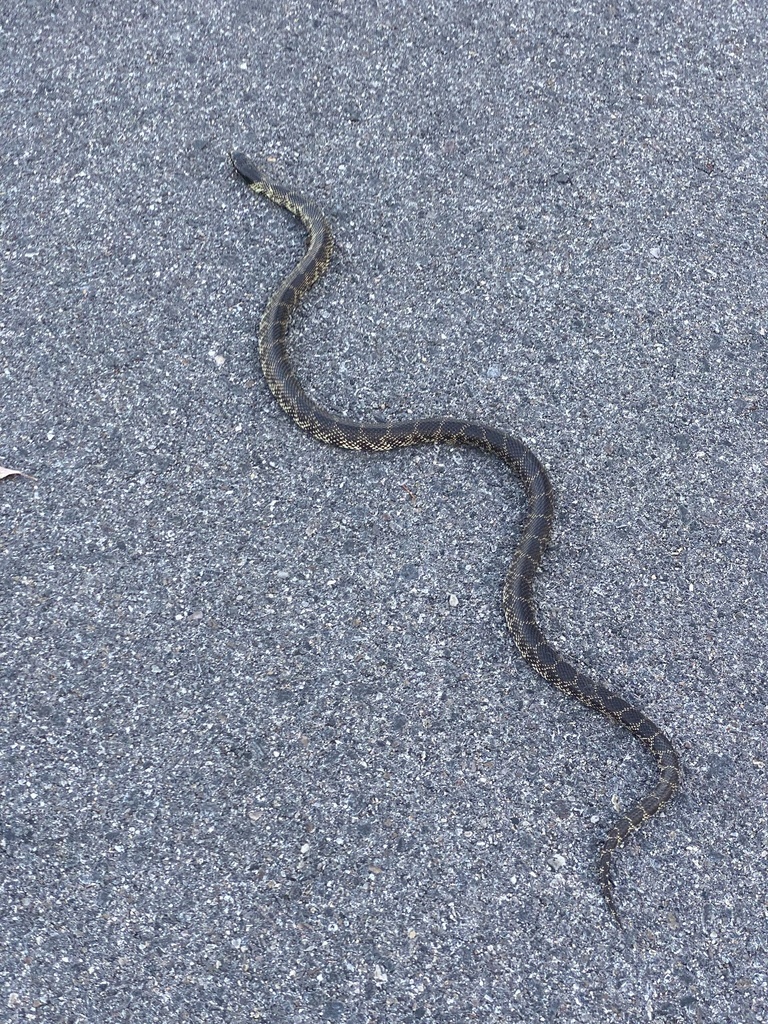
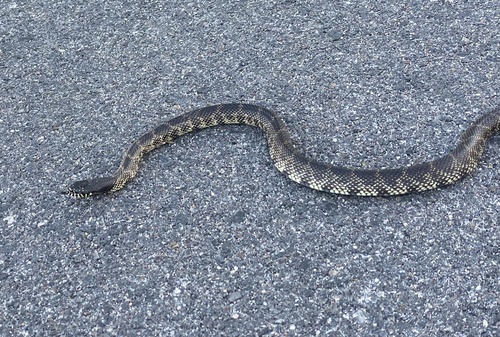
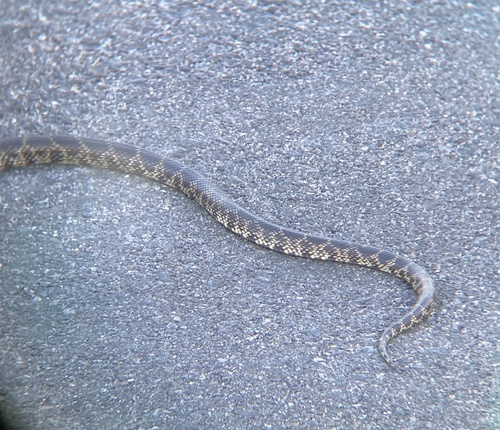
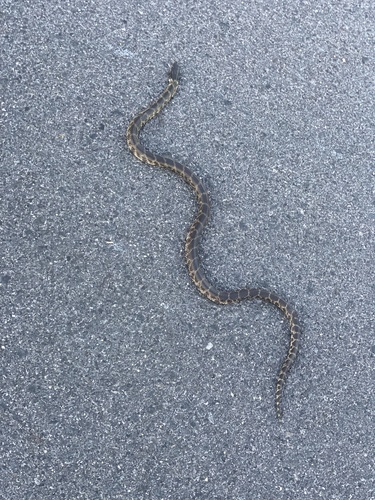
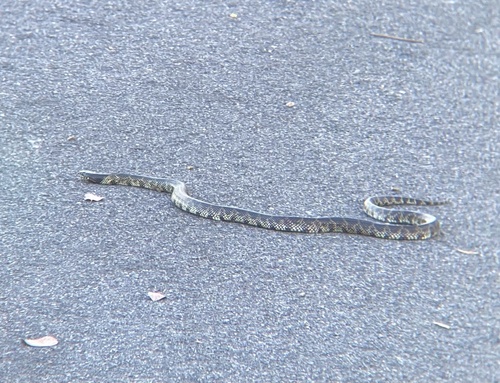
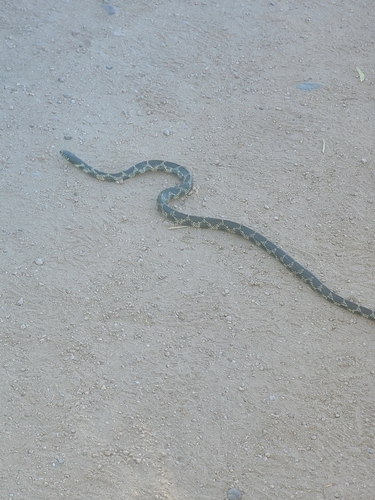
6 photographs of the Desert Kingsnake. © Tristan A. McKnight.
The Desert Kingsnake (Lampropeltis splendida) is a non-venomous snake in the Colubridae family, recorded in 2 countries.
- Also called
- Kingsnake / Milksnake
- Family
- Colubridae
- Size
- 2–5 ft.
- Habitat
- Forests, farmland, grasslands, and suburbs.
- Behavior
- Powerful constrictors that eat other snakes — including venomous ones; gentle but may musk or vibrate the tail.
- Identify
- Smooth, glossy scales with bold bands or chain-like patterns. Milksnakes mimic coral snakes, but red touches black.
About the Desert Kingsnake
The desert kingsnake (Lampropeltis splendida) is a species of kingsnake native to Texas, Arizona, and New Mexico, United States. It is not venomous, colored yellow and black. The desert kingsnake's diet consists of rodents, lizards, and smaller snakes, including rattlesnakes. They normally grow 3–4 ft long, but have been known to grow up to 6.8 ft. They are docile creatures when confronted by humans. If they do not try to escape, often they "play dead" by flipping over onto their backs and lying motionless. Some who domesticate kingsnakes, such as ranchers, do so in the hopes that the kingsnakes will feed on other snakes, which might present more of a threat. It was previously considered a subspecies of the common kingsnake. The desert kingsnake belongs to the Colubridae family, which is the largest family of snakes in the world.
Appearance
The snake's glossy dorsum is black or very dark brown colored, finely speckled with off-white or yellow. These pale flecks form dimly defined narrow vertebral crossbands, between which the intervening rectangular areas are black. Pale yellow scales may predominate along the lower sides. The abdomens of both adult and young snakes are mostly black, with white or pale yellow blotches marking the outer ends of the ventral plates. The smooth dorsal scales are arranged in 23 to 25 rows at midbody and the anal plate is undivided.
Family
The desert kingsnake belongs to the Colubridae or Colubrid family, the largest family of snakes in the world.
Habitat
The desert kingsnake may occur in any rural habitat within its range. Despite its common name, it is most likely to be found in mesic areas, especially near water tanks or within riparian corridors.
Prey
This snake is known to be a powerful constrictor; its diet consists of mostly mice if domestic, and other rodents if wild. It also can feed on reptile eggs detected beneath the surface via smell. In part because of its resistance to pitviper venom, the desert kingsnake is able to consume young diamondback rattlesnakes that are common within its range, and at the scent of L. getula even adult western diamondbacks edge hastily backward, shielding their heads with defensive loops.
Reproduction
As with most reptiles, L. splendida lays eggs. Courtship and copulation occur between March and June, with clutches of 5 to 12 adhesive-surfaced eggs deposited in late June or July, sometimes buried as deeply as a foot to prevent drying through their moisture-permeable shells. After about 60 days of incubation, the 8- to 10-inch-long hatchlings, weighing about a fifth of an ounce, emerge. Brightly yellow-speckled in vertebral cross-lines, they also exhibit a lateral row of large, dark brown spots, which as they mature, are gradually fragmented by encroaching yellow flecks.
Adapted from Wikipedia, available under CC BY-SA.
Frequently asked: Desert Kingsnake
- Is the Desert Kingsnake venomous?
- No. The Desert Kingsnake (Lampropeltis splendida) is non-venomous and is not considered dangerous to humans. Like most snakes, it will retreat rather than bite when given the chance.
- Is the Desert Kingsnake poisonous?
- Snakes are venomous, not poisonous. "Poisonous" means harmful to eat or touch; "venomous" means injecting toxins through a bite. The Desert Kingsnake is neither poisonous nor venomous.
- Is the Desert Kingsnake dangerous?
- The Desert Kingsnake is not dangerous to humans. It has no medically significant venom and bites only defensively if cornered or handled.
- Where does the Desert Kingsnake live?
- The Desert Kingsnake has verified records in 2 countries, including United States of America, Mexico. See the distribution section below for its full range.
- How do I identify the Desert Kingsnake?
- Smooth, glossy scales with bold bands or chain-like patterns. Milksnakes mimic coral snakes, but red touches black.
- How big does the Desert Kingsnake get?
- 2–5 ft.
- What does the Desert Kingsnake eat?
- This snake is known to be a powerful constrictor; its diet consists of mostly mice if domestic, and other rodents if wild. It also can feed on reptile eggs detected beneath the surface via smell. In part because of its resistance to pitviper venom, the desert kingsnake is able to consume young diamondback rattlesnakes that are common within its range, and at the scent of L. getula even adult western diamondbacks edge hastily backward, shielding their heads with defensive loops.
Where it is found
By U.S. state
More Colubridae snakes
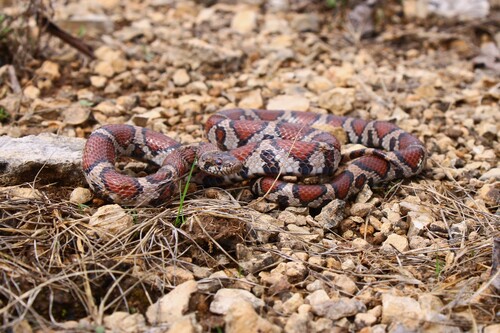 Eastern MilksnakeLampropeltis triangulum
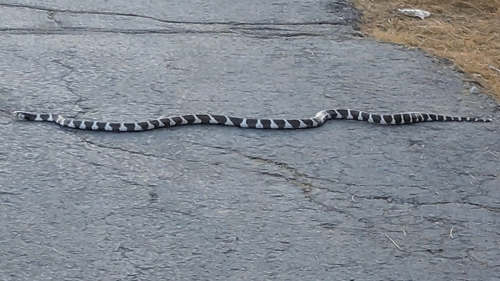 California King SnakeLampropeltis californiae
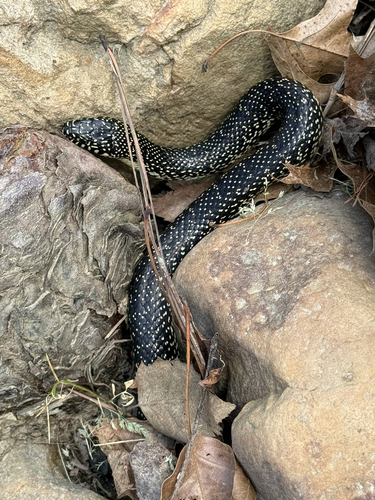 Speckled KingsnakeLampropeltis holbrooki
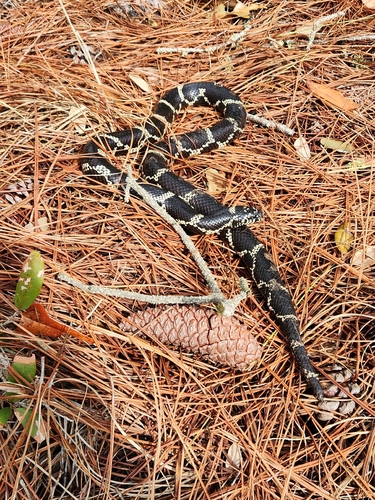 Eastern KingsnakeLampropeltis getula
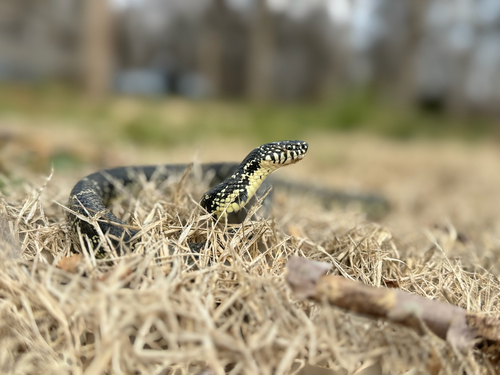 Black KingsnakeLampropeltis nigra
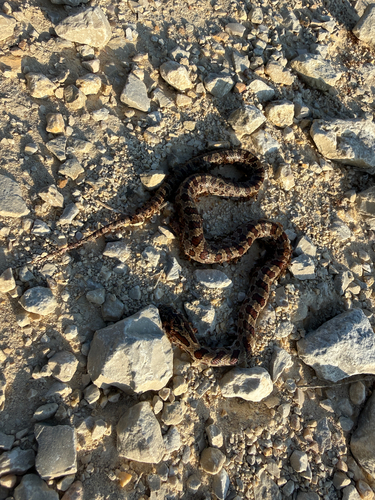 Prairie KingsnakeLampropeltis calligaster
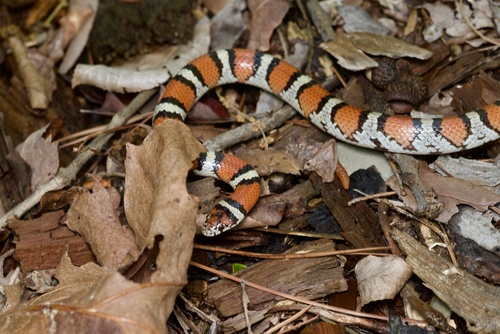 Western MilksnakeLampropeltis gentilis
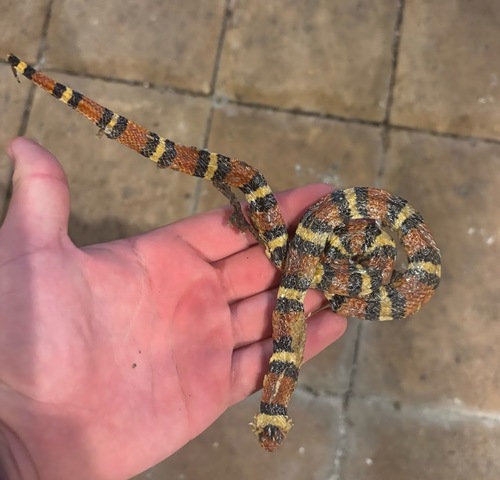 Scarlet KingsnakeLampropeltis elapsoides
Classification
How scientists group this snake, from the broadest category down to the exact species. Each step narrows to its closest relatives.
- OrderThe broad group of scaled reptiles: all snakes and lizards
- Squamata
- FamilyA group of related snakes that share key traits
- Colubridae
- GenusA close-knit group of very similar species
- Lampropeltis
- SpeciesThis exact snake, named in the two-part scientific name
- Lampropeltis splendida
Keep learning
- What to Do If You Find a SnakeFound a snake at home or on a trail? Here is how to stay calm, give it space, identify it safely, and know when to call a professional.
- Venomous vs Nonvenomous: How to Tell the DifferenceThe folk rules for telling venomous snakes apart, where each one fails, and why location-based identification beats guessing by sight.
- What Is a Snake? Anatomy and the BasicsA clear overview of what makes a snake a snake: limbless body plan, anatomy, evolution from lizards, species diversity, and why they are ectothermic.
- How to Keep Snakes Out of Your Yard and HomeA practical guide to keeping snakes out of your yard and home using habitat changes that work, plus what to skip and what to do if one shows up.
Distribution from GBIF & iNaturalist. Venom status per CDC. Background: Wikipedia. Informational only. Never handle a snake to identify it.