
Kingsnake / Milksnake
Black Kingsnake
HarmlessLampropeltis nigra
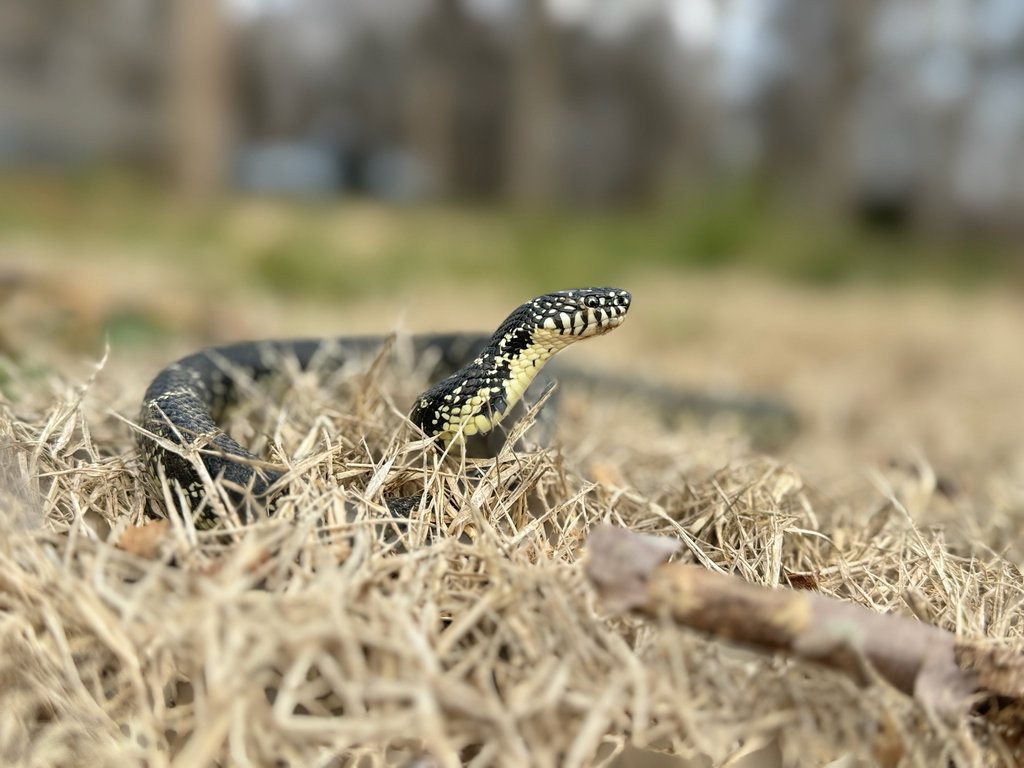
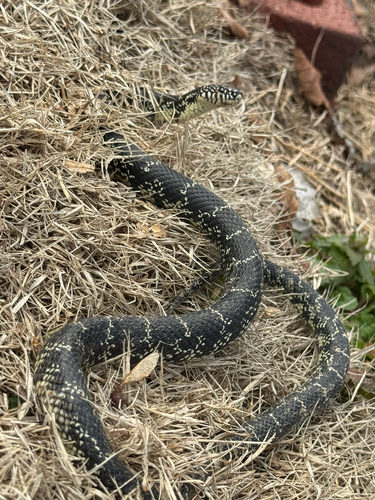
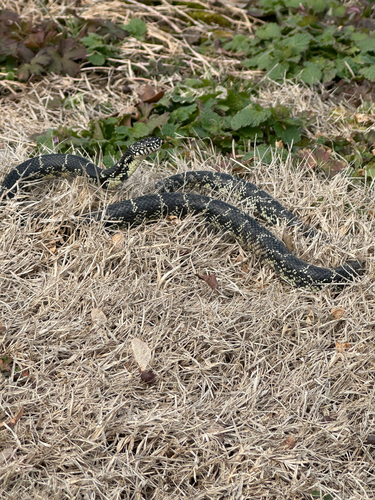
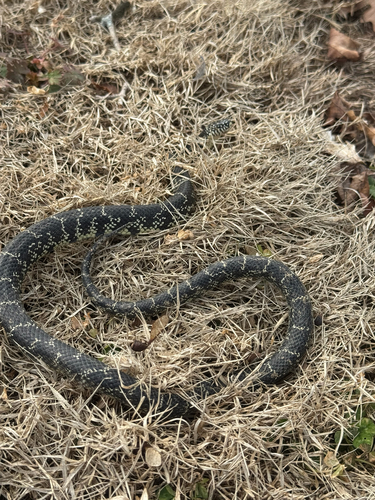
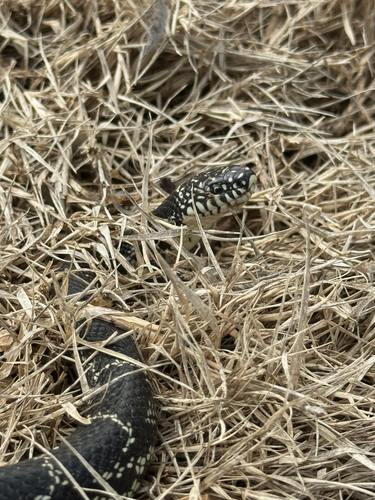
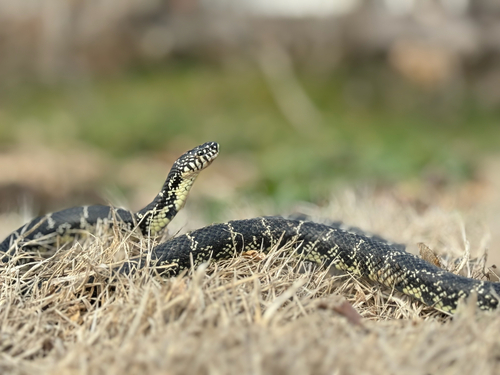
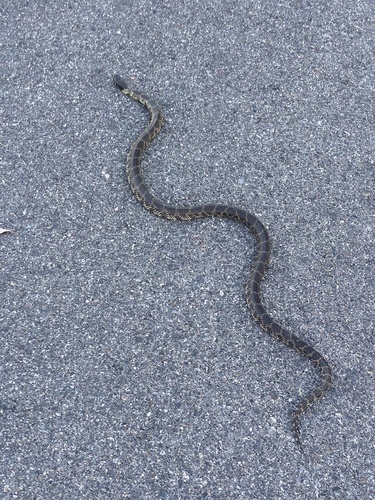
6 photographs of the Black Kingsnake. © Shelby Lyn Sanders.
The Black Kingsnake (Lampropeltis nigra) is a non-venomous snake in the Colubridae family, recorded in 2 countries.
- Also called
- Kingsnake / Milksnake
- Family
- Colubridae
- Size
- 2–5 ft.
- Habitat
- Forests, farmland, grasslands, and suburbs.
- Behavior
- Powerful constrictors that eat other snakes — including venomous ones; gentle but may musk or vibrate the tail.
- Identify
- Smooth, glossy scales with bold bands or chain-like patterns. Milksnakes mimic coral snakes, but red touches black.
About the Black Kingsnake
Lampropeltis nigra, commonly known as the black kingsnake, is a species of nonvenomous colubrid snake indigenous to the United States. It is a species of kingsnake.
Description
The black kingsnake is a large to medium constrictor. Adult specimens attain an average size of 90 to 122 centimetres (35 to 48 in) in total length, with some reaching maximum total lengths of 147 to 183 centimetres (58 to 72 in). It is generally similar to L. getula getula, although it can be distinguished by its geography and appearance. It has a black body that is interspersed with widely spaced yellow or cream-colored speckles, larger and more numerous along the sides. The dorsum in some is unpatterned and in others crossbanded. The venter displays a checked black and yellow (or cream) pattern. Ventral scales range from 197 to 222 in both sexes, with subcaudal scales ranging from 45 to 59 in males and 37 to 51 in females.
Black kingsnakes are also ophiophagous (snake-eating) and are immune to the venom of some snake species.
Geographic range
The black kingsnake is found in the southeastern quarter of the United States, ranging from southern Illinois to Ohio, then down along the foothills of the Appalachian Mountains and the Alabama River watershed to the northern Gulf Coast in south Alabama and along the coast to the Mississippi River in Louisiana.
Habitat
Black kingsnakes occupy a wide variety of habitats and are one of the most frequently encountered species by humans in some states. Preferred habitats include abandoned farmsteads, debris piles, edges of floodplains, and thick brush around streams and swamps.
Adapted from Wikipedia, available under CC BY-SA.
Frequently asked: Black Kingsnake
- Is the Black Kingsnake venomous?
- No. The Black Kingsnake (Lampropeltis nigra) is non-venomous and is not considered dangerous to humans. Like most snakes, it will retreat rather than bite when given the chance.
- Is the Black Kingsnake poisonous?
- Snakes are venomous, not poisonous. "Poisonous" means harmful to eat or touch; "venomous" means injecting toxins through a bite. The Black Kingsnake is neither poisonous nor venomous.
- Is the Black Kingsnake dangerous?
- The Black Kingsnake is not dangerous to humans. It has no medically significant venom and bites only defensively if cornered or handled.
- Where does the Black Kingsnake live?
- The Black Kingsnake has verified records in 2 countries, including United States of America, Mexico. See the distribution section below for its full range.
- How do I identify the Black Kingsnake?
- Smooth, glossy scales with bold bands or chain-like patterns. Milksnakes mimic coral snakes, but red touches black.
- How big does the Black Kingsnake get?
- 2–5 ft.
Where it is found
More Colubridae snakes
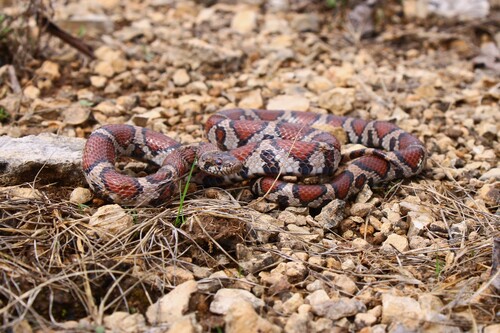 Eastern MilksnakeLampropeltis triangulum
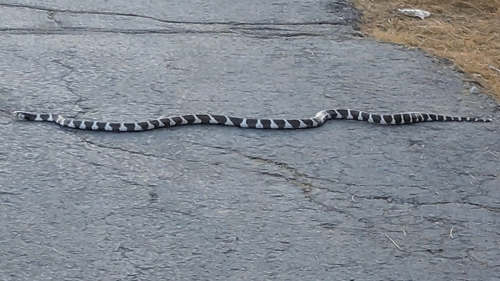 California King SnakeLampropeltis californiae
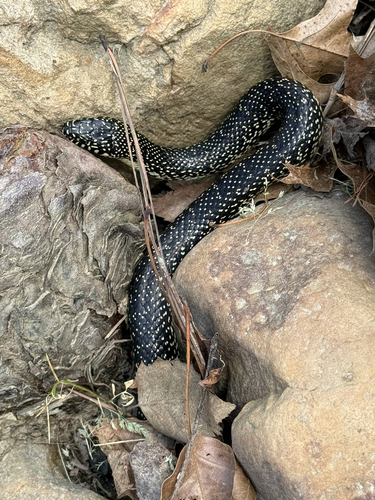 Speckled KingsnakeLampropeltis holbrooki
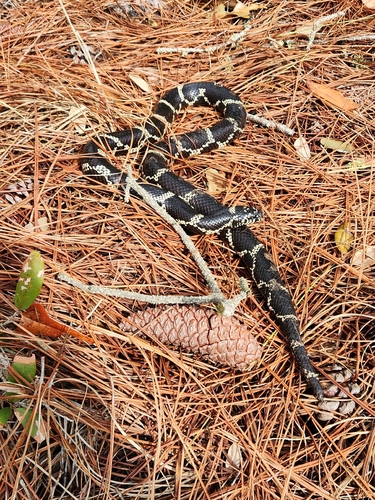 Eastern KingsnakeLampropeltis getula
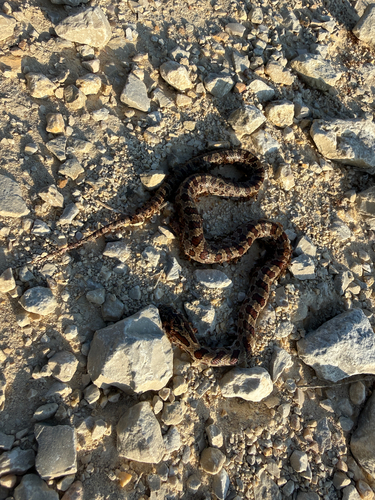 Prairie KingsnakeLampropeltis calligaster
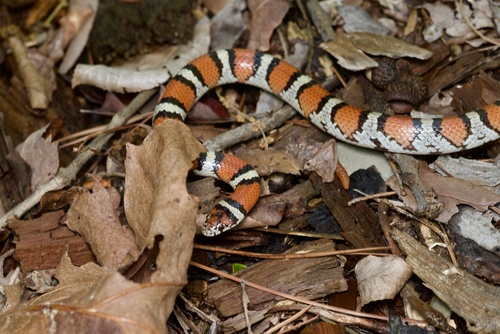 Western MilksnakeLampropeltis gentilis
 Desert KingsnakeLampropeltis splendida
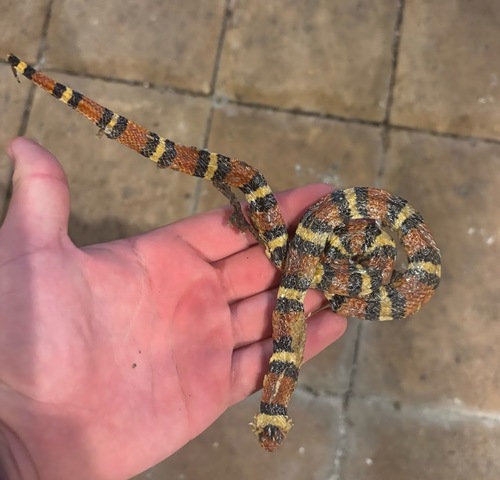 Scarlet KingsnakeLampropeltis elapsoides
Classification
How scientists group this snake, from the broadest category down to the exact species. Each step narrows to its closest relatives.
- OrderThe broad group of scaled reptiles: all snakes and lizards
- Squamata
- FamilyA group of related snakes that share key traits
- Colubridae
- GenusA close-knit group of very similar species
- Lampropeltis
- SpeciesThis exact snake, named in the two-part scientific name
- Lampropeltis nigra
Keep learning
- What to Do If You Find a SnakeFound a snake at home or on a trail? Here is how to stay calm, give it space, identify it safely, and know when to call a professional.
- Venomous vs Nonvenomous: How to Tell the DifferenceThe folk rules for telling venomous snakes apart, where each one fails, and why location-based identification beats guessing by sight.
- What Is a Snake? Anatomy and the BasicsA clear overview of what makes a snake a snake: limbless body plan, anatomy, evolution from lizards, species diversity, and why they are ectothermic.
- How to Keep Snakes Out of Your Yard and HomeA practical guide to keeping snakes out of your yard and home using habitat changes that work, plus what to skip and what to do if one shows up.
Distribution from GBIF & iNaturalist. Venom status per CDC. Background: Wikipedia. Informational only. Never handle a snake to identify it.