
Elapidae
Red Spitting Cobra
VenomousNaja pallida
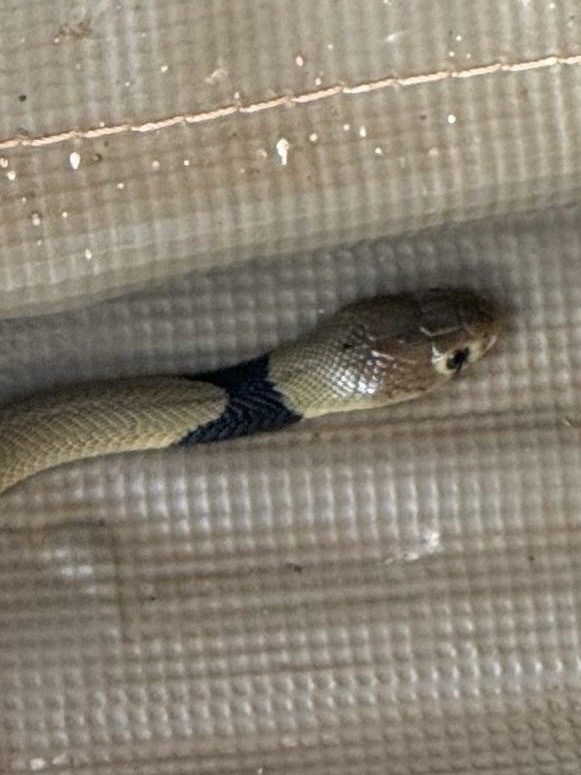
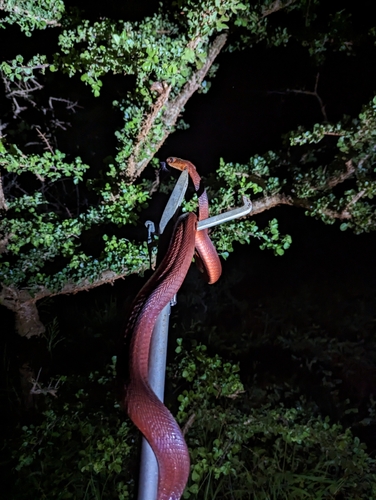
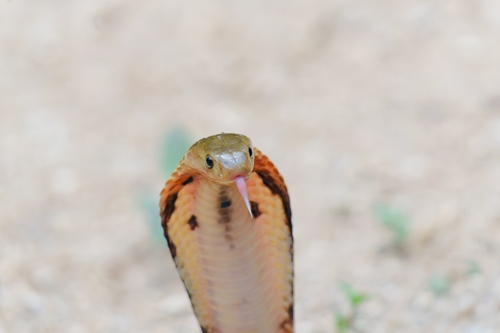
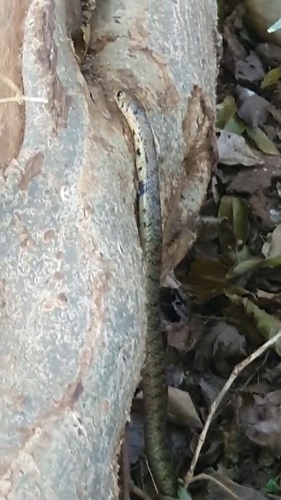
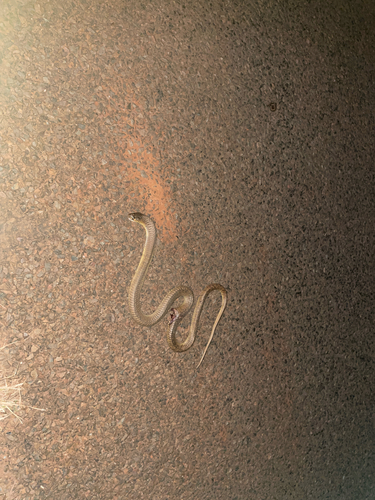
2 photographs of the Red Spitting Cobra. (c) Stephanie Dolrenry, some rights reserved (CC BY-SA).
The Red Spitting Cobra (Naja pallida) is a venomous snake in the Elapidae family, recorded in 8 countries.
If you are bitten
This is a venomous snake. Treat any bite as a medical emergency: stay calm, keep the bitten limb still and roughly level with the heart, remove rings and tight clothing, and get to emergency care immediately. Do not apply a tourniquet, cut the wound, apply ice, or try to suck out venom. Call your local emergency number or poison center.
- Family
- Elapidae
- Danger
- high
About the Red Spitting Cobra
The red spitting cobra (Naja pallida) is a species of spitting cobra native to Africa.
Description
This medium-sized cobra attains lengths between 0.7 and 1.2 metres (2 and 4 ft), but may grow to a maximum length of around 1.5 metres (5 ft) in very rare cases. It is often thought of as an attractive species; it is usually bright salmon-red contrasted with a broad black throat band and subocular teardrop markings. However, the colour of this species does vary, which usually depends on where in Africa a particular specimen is found. For example, specimens from southern Kenya and northern Tanzania have an orange-red colour, with a broad, dark blue or black throat band. Some specimens may have two or three throat bands, but this is uncommon for specimens from East Africa. The ventral side is also reddish in colour, sometimes the throat area may be a creamy white. Specimens from other areas can be yellow, pinkish, pink-grey, pale red or steel grey. Most specimens will have a throat band, but it will fade or even sometimes disappear in larger adults. The true red specimens will become reddish-brown in colour as they age and grow in size. The body of this snake is slightly depressed, tapered and moderately slender with a medium-length tail. It is slightly compressed dorsoventrally and subcylindrical posteriorly. The head is broad, flattened and slightly distinct from the neck. The canthus is distinct and the snout is rounded. The eyes are medium to large in size with round pupils. Dorsal scales are smooth and strongly oblique.
Scalation
Dorsal scales on the midbody are in 21–27, ventrals are in 197–228, and subcaudals are in 61–72 rows, subscales are paired, and the anal scale is single. There are seven upper labials, one upper labial enters the eye; two preoculars, three postoculars, and the lower labials are usually eight in number (range 7-9).
Distribution and habitat
The red spitting cobra is mainly found in East Africa, including Djibouti, Eritrea, Somalia, southern Egypt, northern and eastern Ethiopia, and northern Tanzania and northern Sudan. It is also widespread in the dry country of eastern, southern and northern Kenya. It primarily inhabits dry savanna and semidesert areas of East Africa up to an elevation of about 1,200 metres (3,900 ft) above sea level. They can usually be found near water holes.
Behaviour
Red spitting cobras are terrestrial, fast and alert snakes. Adult specimens of this species are nocturnal, while juveniles are more active during the day. Adults like to hide in termite mounds, old logs, holes, brush piles or any other ground cover during the day. They are also known to be cannibalistic; this could be the reason juveniles and smaller specimens are diurnal, while adults are nocturnal.
Adapted from Wikipedia, available under CC BY-SA.
Local and regional names
The Red Spitting Cobra is known by these names across the regions where it lives:
- Arabic
- الناشر الأحمر البصَّاق
- Chinese
- 紅射毒眼鏡蛇
- Czech
- kobra červená
- English
- African Cobra
- Finnish
- Sylkeväpunakobra
- French
- Cobra cracheur rouge
- German
- Rote Speikobra
- Hungarian
- vörös köpködőkobra
- Italian
- Cobra sputatore rosso
- Polish
- czerwona kobra plująca
- Russian
- Красная плюющаяся кобра
- Spanish
- Cobra escupidora roja
- Ukrainian
- Кобра червона плююча
Frequently asked: Red Spitting Cobra
- Is the Red Spitting Cobra venomous?
- Yes. The Red Spitting Cobra (Naja pallida) is venomous and belongs to the Elapidae family (cobra, mamba, coral or sea snake). Its bite is considered high risk to people. Treat any bite as a medical emergency.
- Is the Red Spitting Cobra poisonous?
- Snakes are venomous, not poisonous. "Poisonous" means harmful to eat or touch; "venomous" means injecting toxins through a bite. The Red Spitting Cobra is venomous, delivering venom through a bite.
- Is the Red Spitting Cobra dangerous?
- This is a venomous snake. Treat any bite as a medical emergency: stay calm, keep the bitten limb still and roughly level with the heart, remove rings and tight clothing, and get to emergency care immediately. Do not apply a tourniquet, cut the wound, apply ice, or try to suck out venom. Call your local emergency number or poison center.
- Where does the Red Spitting Cobra live?
- The Red Spitting Cobra has verified records in 8 countries, including Kenya, Egypt, Ethiopia. See the distribution section below for its full range.
- What does the Red Spitting Cobra eat?
- This species has a wide range of prey, but they prefer amphibians such as toads and frogs, if and when they are available. However, they will prey on rodents, birds and probably other snakes. They are known to raid chickens in the region.
If you are bitten by the Red Spitting Cobra
Do
- Get away from the snake and stay calm. Most bites worsen when people panic or try again to handle the snake.
- Call 911 or Poison Control (1-800-222-1222) right away. Antivenom works best when given early.
- Note the time of the bite and, from a safe distance, the snake's color and pattern, a phone photo is enough. Do not chase it.
- Keep the bitten limb still and at roughly heart level. Sit or lie down and limit movement.
- Remove rings, watches, and tight clothing near the bite before swelling starts.
- Gently wash the bite with soap and water and cover it with a clean, dry dressing.
Do not
- Do not cut the wound or try to suck out the venom.
- Do not apply a tourniquet or ice.
- Do not drink alcohol or caffeine.
- Do not take aspirin or ibuprofen, they can worsen bleeding. Acetaminophen is safer for pain.
- Do not try to catch or kill the snake. A dead snake can still bite by reflex.
First-aid guidance adapted from the U.S. Centers for Disease Control and Prevention (CDC NIOSH), Venomous Snakes. Educational only; always follow the instructions of emergency responders.
Where it is found
More Elapidae snakes
Classification
How scientists group this snake, from the broadest category down to the exact species. Each step narrows to its closest relatives.
Keep learning
- Are Snakes Dangerous? The Real Risk, in PerspectiveMost snakes are harmless and avoid people. Here is the honest picture of snakebite risk worldwide and how to lower your own.
- Snakebite First Aid: What to Do (and What Never to Do)A clear, CDC-based guide to snakebite first aid: the steps that help, the popular myths that hurt, and how to tell a serious bite from a minor one.
- Venomous vs Nonvenomous: How to Tell the DifferenceThe folk rules for telling venomous snakes apart, where each one fails, and why location-based identification beats guessing by sight.
- What to Do If You Find a SnakeFound a snake at home or on a trail? Here is how to stay calm, give it space, identify it safely, and know when to call a professional.
Distribution from GBIF & iNaturalist. Venom status per CDC. Background: Wikipedia. Informational only. Never handle a snake to identify it.