
Colubridae
Trinket Snake
HarmlessCoelognathus helena
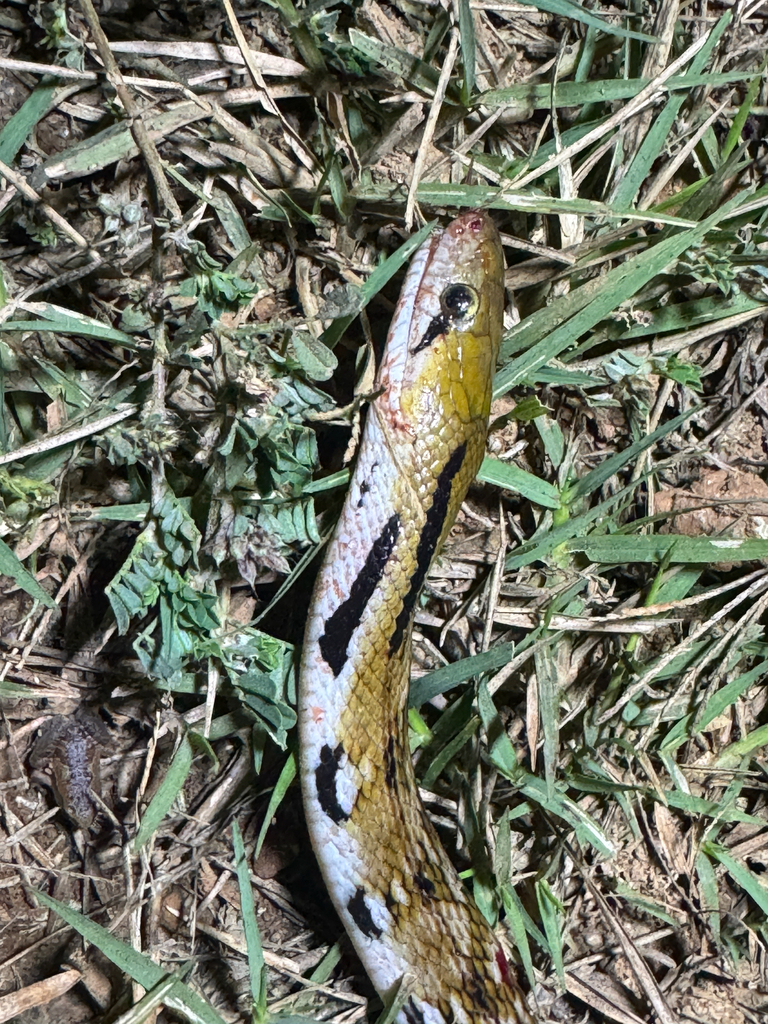
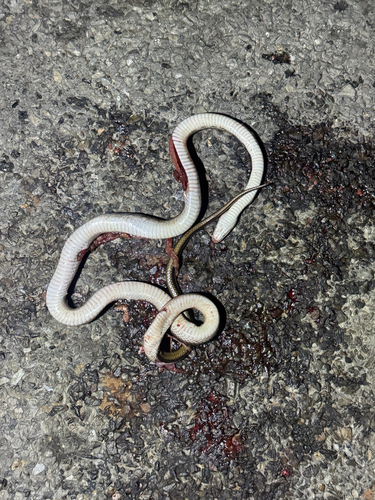
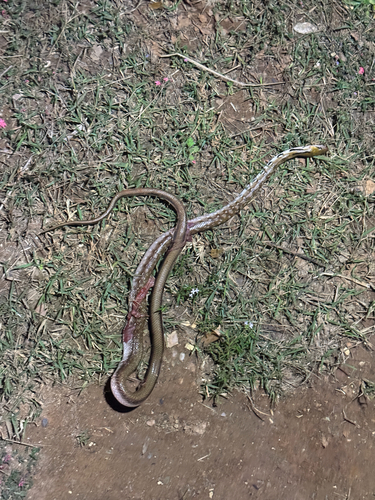
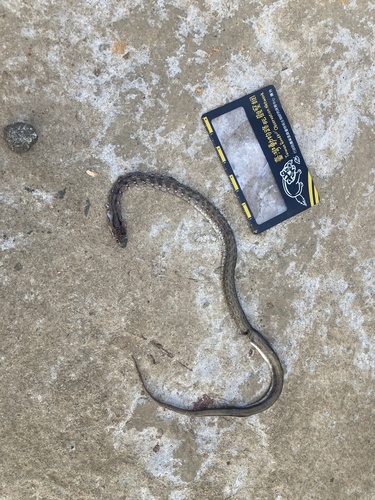
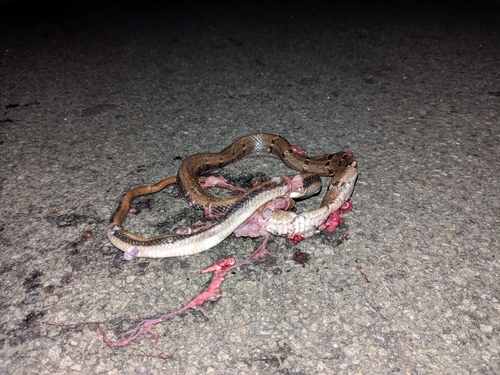
6 photographs of the Trinket Snake. © Teja Yantrapalli.
The Trinket Snake (Coelognathus helena) is a non-venomous snake in the Colubridae family, recorded in 9 countries.
- Family
- Colubridae
About the Trinket Snake
The trinket snake (Coelognathus helena), also known commonly as the common trinket snake, is a species of nonvenomous constricting snake in the family Colubridae. The species is native to southern Central Asia.
Etymology
The specific name of this snake, helena, is thought to be a reference to Helen of Troy, considered by many to be the epitome of female beauty and the most beautiful woman in the world.
Geographic range
C. helena is found in Sri Lanka, southern India, Pakistan (Shangla), Nepal, and Bangladesh.
Its type locality is "India: Vishakhapatnam" (Daudin, 1803).
Description
See snake scales for terms used.
C. helena has the following scalation. The rostral is a little broader than deep, and visible from above. The suture between the internasals is much shorter than that between the prefrontals. The frontal is as long as its distance from the end of the snout, but shorter than the parietals. The loreal is somewhat longer than deep. One large preocular and two postoculars are present. The temporals are arranged 2+2 or 2+3. There are 9 (exceptionally 10 or 11) upper labials, and the fifth and sixth (or fourth, fifth, and sixth) enter the eye. There are 5 or 6 lower labials in contact with the anterior chin shields. The anterior chin shields are as long as or a little longer than the posterior chin shields.
The dorsal scales are in 23 to 27 rows at midbody, smooth, or feebly keeled on the posterior part of the body and on the tail. The ventrals number 220-265; the anal plate is entire; and the subcaudals number 75-94.
The young are pale brown above, with black crossbands, each crossband enclosing four to six white ocelli. The adults are darker brown, with a transverse series of squarish black spots, or with more or less distinct traces of the color pattern of the young. There is a vertical black streak below the eye, and an oblique black streak behind the eye. Some specimens have a white, black-edged collar; others have two black longitudinal streaks on the head; and others are intermediate in this respect. The lower parts are yellowish, with or without a few small black spots, sometimes with a more or less distinct festooned marking on each side.
Adults may attain a total length of 4.5 ft (1.4 m), which includes a tail 10 in (25 cm) long.
Subspecies
Three subspecies of C. helena are recognized as being valid, including the nominotypical subspecies.
C. h. helena (Daudin, 1803)
C. h. monticollaris (Schulz, 1992)
C. h. nigriangularis Mohapatra, Schulz, Helfenberger, Hofmann & Dutta, 2016
Nota bene: A trinomial authority in parentheses indicates that the subspecies was originally described in a genus other than Coelognathus.
Habitat
Adapted from Wikipedia, available under CC BY-SA.
Frequently asked: Trinket Snake
- Is the Trinket Snake venomous?
- No. The Trinket Snake (Coelognathus helena) is non-venomous and is not considered dangerous to humans. Like most snakes, it will retreat rather than bite when given the chance.
- Is the Trinket Snake poisonous?
- Snakes are venomous, not poisonous. "Poisonous" means harmful to eat or touch; "venomous" means injecting toxins through a bite. The Trinket Snake is neither poisonous nor venomous.
- Is the Trinket Snake dangerous?
- The Trinket Snake is not dangerous to humans. It has no medically significant venom and bites only defensively if cornered or handled.
- Where does the Trinket Snake live?
- The Trinket Snake has verified records in 9 countries, including India, Sri Lanka, Nepal. See the distribution section below for its full range.
- What does the Trinket Snake eat?
- The trinket snake preys upon rodents (mice, rats, squirrels), small snakes, geckos, and frogs.
- Why is it called the Trinket Snake?
- The specific name of this snake, helena, is thought to be a reference to Helen of Troy, considered by many to be the epitome of female beauty and the most beautiful woman in the world.
Where it is found
More Colubridae snakes
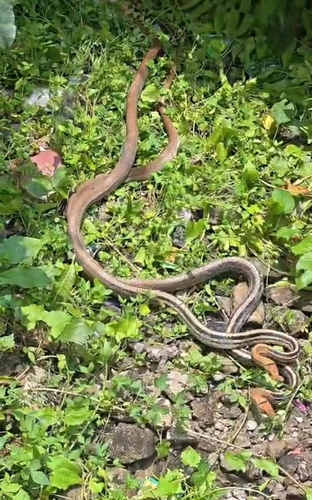 Copperhead Rat SnakeCoelognathus radiatus
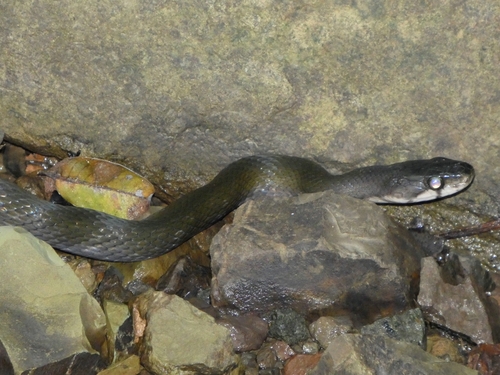 Black Copper Rat SnakeCoelognathus flavolineatus
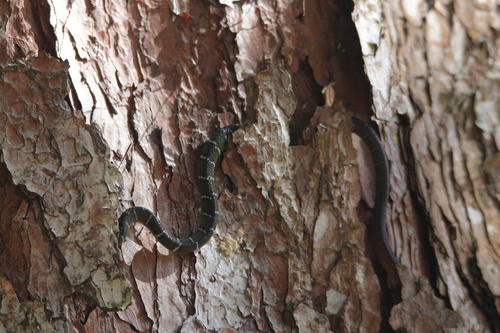 Reddish Rat SnakeCoelognathus erythrurus
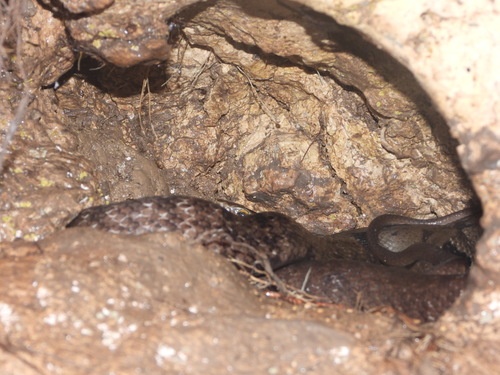 Sunda Rat SnakeCoelognathus subradiatus
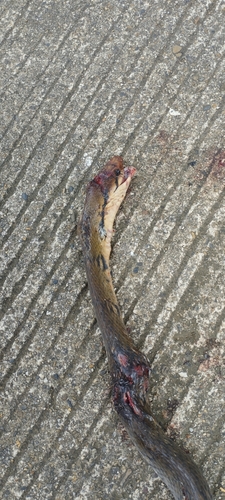 Palawan rat snakeCoelognathus philippinus
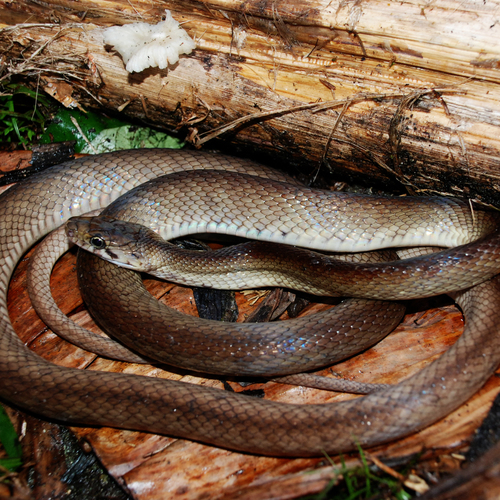 Enggano Rat SnakeCoelognathus enganensis
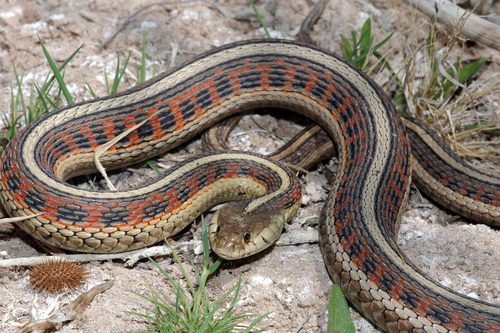 Common Garter SnakeThamnophis sirtalis
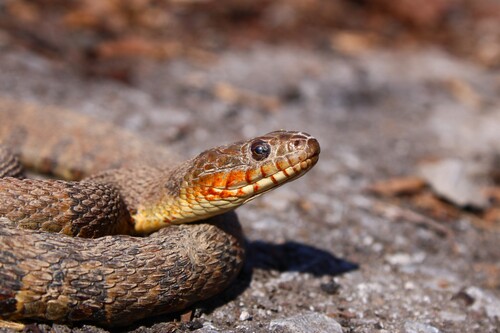 Common WatersnakeNerodia sipedon
Classification
How scientists group this snake, from the broadest category down to the exact species. Each step narrows to its closest relatives.
- OrderThe broad group of scaled reptiles: all snakes and lizards
- Squamata
- FamilyA group of related snakes that share key traits
- Colubridae
- GenusA close-knit group of very similar species
- Coelognathus
- SpeciesThis exact snake, named in the two-part scientific name
- Coelognathus helena
Keep learning
- What to Do If You Find a SnakeFound a snake at home or on a trail? Here is how to stay calm, give it space, identify it safely, and know when to call a professional.
- Venomous vs Nonvenomous: How to Tell the DifferenceThe folk rules for telling venomous snakes apart, where each one fails, and why location-based identification beats guessing by sight.
- What Is a Snake? Anatomy and the BasicsA clear overview of what makes a snake a snake: limbless body plan, anatomy, evolution from lizards, species diversity, and why they are ectothermic.
- How to Keep Snakes Out of Your Yard and HomeA practical guide to keeping snakes out of your yard and home using habitat changes that work, plus what to skip and what to do if one shows up.
Distribution from GBIF & iNaturalist. Venom status per CDC. Background: Wikipedia. Informational only. Never handle a snake to identify it.