
Pythonidae
Pygmy Python
HarmlessAntaresia perthensis
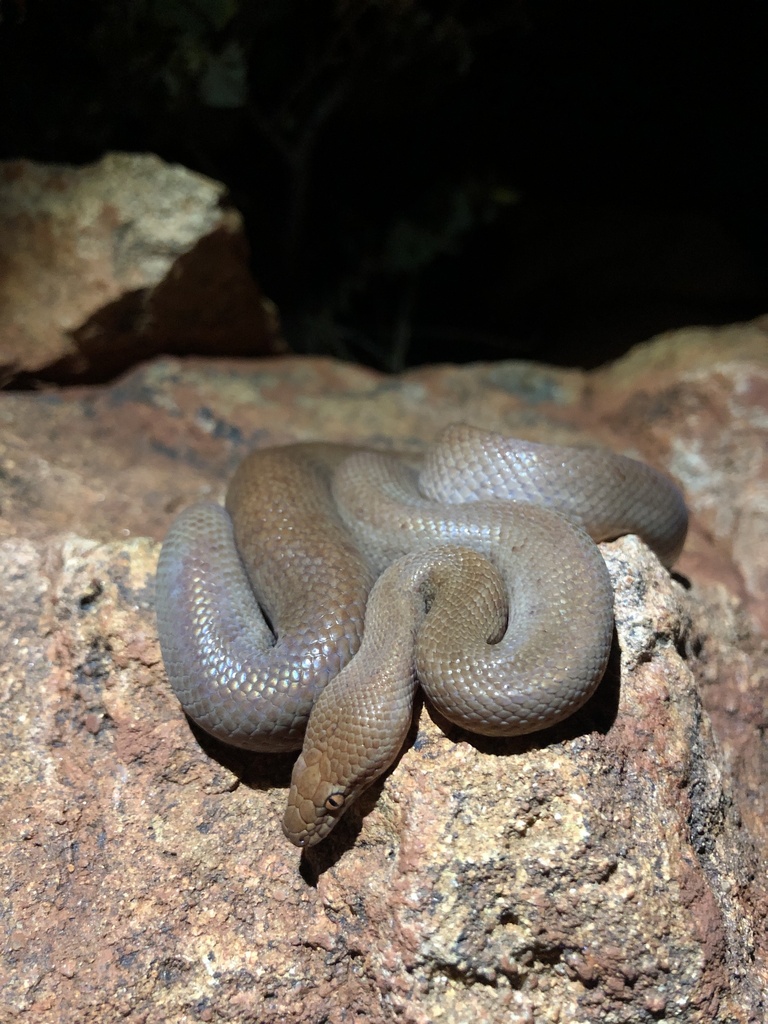
The Pygmy Python (Antaresia perthensis) is a non-venomous snake in the Pythonidae family, recorded in 1 country.
The pygmy python, also called the anthill python, is the smallest member of the python family. It lives in northwestern Western Australia and on some nearby coastal islands, and it is not venomous and poses no real danger to people.
- Family
- Pythonidae
How to identify the Pygmy Python
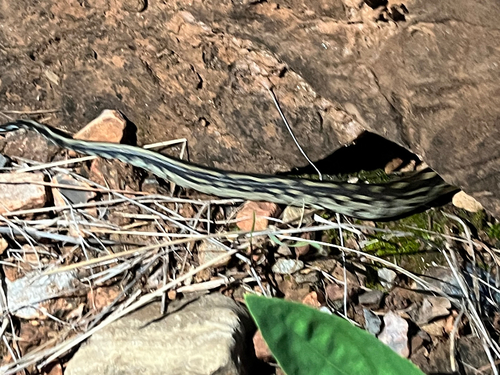
Look for a very small python, about 50 cm long as an adult, with a reddish ground color and spots that look faded or blurred. It is often found in or around termite mounds in the Pilbara region of Western Australia.
- Size
- Adults reach about 50 cm (19.5 in), and newborns are only about 20 cm (8 in) long.
- Color
- The background color is usually reddish, redder than in related Australian pythons.
- Pattern
- Adults have darker spots that fade or become indistinct with age, so the pattern often looks washed out.
- Juveniles
- Young snakes tend to show clearer spotting than adults.
- Head
- Like other pythons, it has heat-sensing pits along the lip scales.
- Build
- It is a slender, small-bodied snake, weighing only about 210 g as an adult.
Have a photo? Identify it from your photo and location.
Is the Pygmy Python dangerous?
Not venomous
The pygmy python is not venomous. A bite from such a small snake causes at most minor punctures and is not medically significant, but it should still be left alone.
If you find one
- Keep your distance and let it move away on its own.
- Do not try to pick it up or poke into termite mounds where it may be sheltering.
- Keep pets away until the snake has left the area.
Habitat and behavior
- Habitat
- It is found mainly in northwestern Western Australia, with records from places such as Karijini National Park, the Hamersley Range, Cape Range National Park, Port Hedland, Dampier and the Burrup Peninsula. It is often found in termite mounds, which is where the name anthill python comes from. Despite its scientific name, it does not occur near Perth.
- Behavior
- This is a small, secretive snake that spends much of its time hidden in termite mounds and similar shelter. When disturbed it will usually try to retreat, but like any wild snake it may bite if grabbed or cornered.
- Diet
- It eats small prey that it kills by constriction, such as lizards and small mammals.
- When active
- It is mostly active at night and hides during the heat of the day.
Further reading: Pygmy Python on Wikipedia.
Frequently asked: Pygmy Python
- Is the pygmy python venomous?
- No. The pygmy python is a non-venomous constrictor. It can bite if handled roughly, but the bite is minor and of no medical significance.
- Why is it called the anthill python?
- It is often found living in termite mounds, which people commonly call anthills. These mounds give it shelter in the hot, dry country of northwestern Western Australia.
- Does the pygmy python live in Perth?
- No. The scientific name refers to Perth because of an error in the original specimen's recorded location. The species lives far to the north, with the nearest recorded sighting near Reedy, about 680 km north of Perth.
- How big does a pygmy python get?
- Adults grow to about 50 cm (19.5 in) and weigh around 210 g, which makes it the smallest python in the world. Hatchlings are only about 20 cm long and weigh about 4 g.
- Is the Pygmy Python poisonous?
- Snakes are venomous, not poisonous. "Poisonous" means harmful to eat or touch; "venomous" means injecting toxins through a bite. The Pygmy Python is neither poisonous nor venomous.
- Is the Pygmy Python dangerous?
- The Pygmy Python is not dangerous to humans. It has no medically significant venom and bites only defensively if cornered or handled.
- Where does the Pygmy Python live?
- The Pygmy Python has verified records in 1 country, including Australia. See the distribution section below for its full range.
Where it is found
More Pythonidae snakes
Classification
How scientists group this snake, from the broadest category down to the exact species. Each step narrows to its closest relatives.
- OrderThe broad group of scaled reptiles: all snakes and lizards
- Squamata
- FamilyA group of related snakes that share key traits
- Pythonidae
- GenusA close-knit group of very similar species
- Antaresia
- SpeciesThis exact snake, named in the two-part scientific name
- Antaresia perthensis
Keep learning
- What to Do If You Find a SnakeFound a snake at home or on a trail? Here is how to stay calm, give it space, identify it safely, and know when to call a professional.
- Venomous vs Nonvenomous: How to Tell the DifferenceThe folk rules for telling venomous snakes apart, where each one fails, and why location-based identification beats guessing by sight.
- What Is a Snake? Snake Facts, Body Plan and How They Differ From LizardsA clear overview of what makes a snake a snake: limbless body plan, anatomy, evolution from lizards, species diversity, and why they are ectothermic.
- How to Keep Snakes Out of Your Yard and HomeA practical guide to keeping snakes out of your yard and home using habitat changes that work, plus what to skip and what to do if one shows up.
Distribution from GBIF & iNaturalist. Venom status per CDC. Background: Wikipedia. Informational only. Never handle a snake to identify it.