
Colubridae
Split Keelback
HarmlessAtretium schistosum
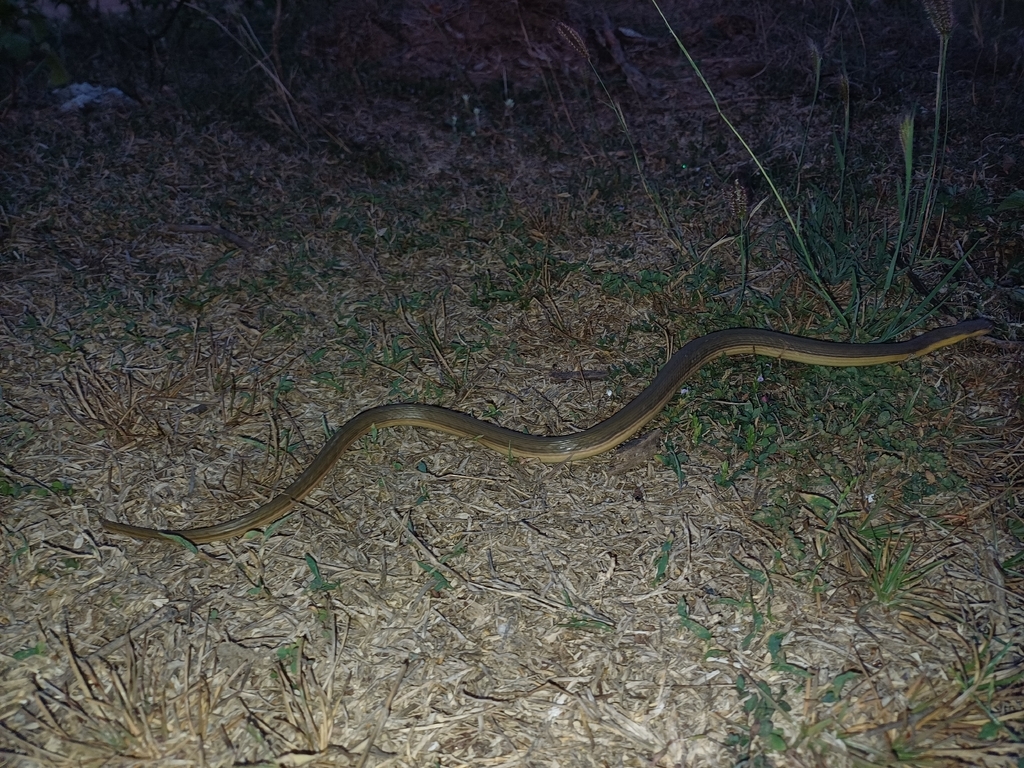
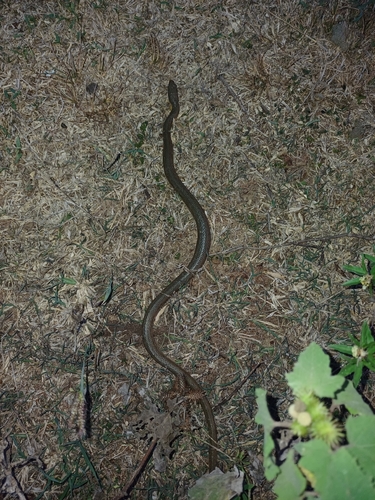
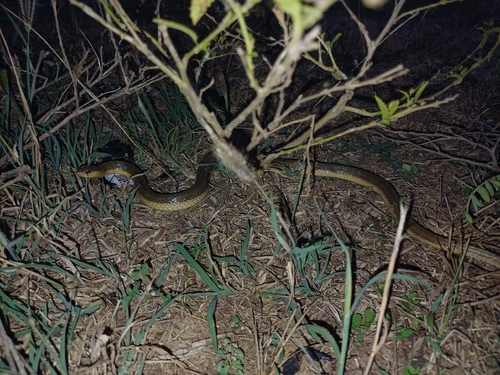
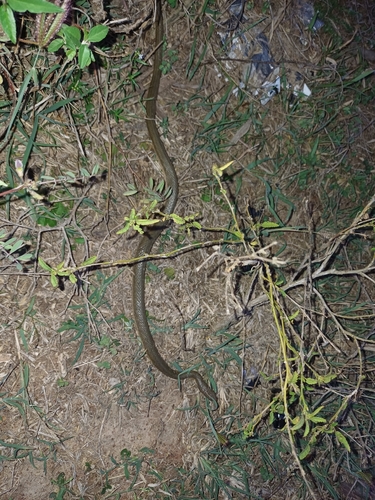
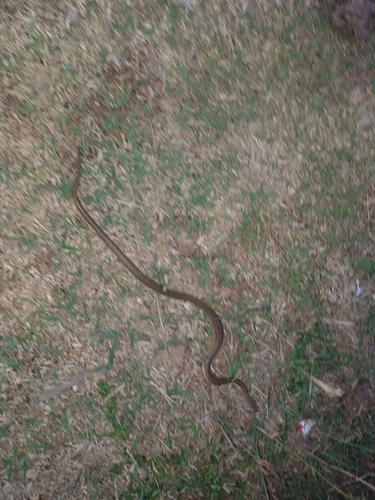
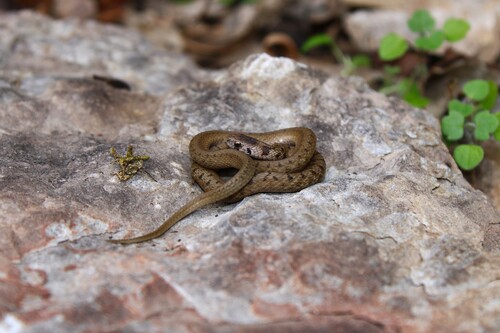
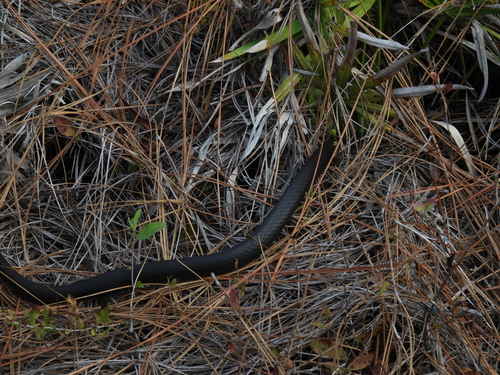
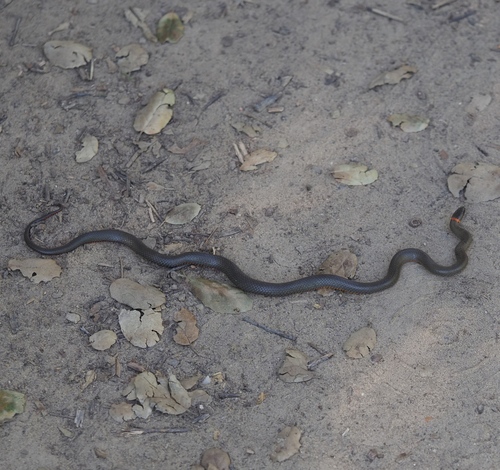
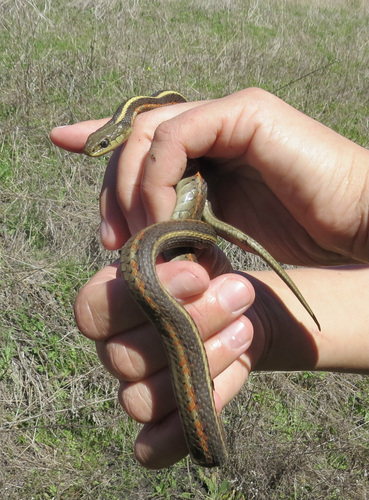
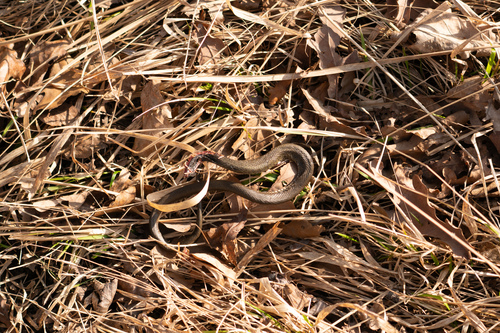
5 photographs of the Split Keelback. © Hopeland.
The Split Keelback (Atretium schistosum) is a non-venomous snake in the Colubridae family, recorded in 8 countries.
- Family
- Colubridae
About the Split Keelback
Atretium schistosum, also known commonly as the split keelback and the olive keelback wart snake, is a species of snake in the subfamily Natricinae of the family Colubridae. The species, which is the sole species in the genus Atretium, is native to South Asia.
It is a common and harmless watersnake.
Geographic range
A. schistosum is found in Sri Lanka, India, Bangladesh and Nepal.
In India it occurs in peninsular India south of latitude 15 degrees north and along the east coast to Uttarakhand. It is reported to be very common around Bangalore, North Arcot district (Tamil Nadu) and Kakinada area in Andhra Pradesh. Occurs up to 1000 m (3280 ft) above sea level. Absent from most of North India.
Description
A. schistosum is a small, robust snake with thin head, short snout and slit nostrils placed rather high. The snake is olive-green and yellow to orange below. It is sometimes tinged with pink or purplish on the flanks. The length of the tail is one third to one-fourth of the total length.
The dorsal scales are rough because they are keeled. Specimens from South India have a distinct reddish line along the 5th and 6th or the 4th and 5th up to the vent. This line is brighter in the males. The females are between 70 and 75 cm long, and the males between 50 and 60 cm. The longest measured snake is 87 cm long.
Identifying characteristics
A. schistosum is distinguished by a number of scale characteristics:
Single internasal.
Nineteen rows of costals.
8 or 9 supralabials (upper lip shields).
It can easily be confused with olive forest snake (Rhabdops olivaceus).
Habits
A. schistosum lives in water or among the surrounding vegetation.
A diurnal snake, it is seen at night also. The snake rarely bites when handled. It is known to aestivate in the summer.
The olive keelback feeds mainly on frogs, tadpoles, fish and crabs which it catches with a side-stroke motion that is characteristic of watersnakes. The snake swims past the prey and suddenly snaps its head to the side. The olive keelback is also known to eat mosquito larvae.
Sometimes, referred to as a water-cobra, the olive keelback is nevertheless tolerated by people.
Reproduction
A. schistosum is oviparous (egg laying). It breeds in the monsoon. The eggs, which are white, soft and 30–35 mm (1.2–1.4 in) in length, are laid in clutches of 10 to 32 in the months January to April. The newly hatched snakes measure 16.6–17.5 cm (6.5–6.9 in) in length.
Local names
Malayalam - Pacha neerkoli
Tamil - Koraipaambu or Pachai thanneer paambu
Kannada – Barmmya
Telugu – Nalla wahlagillee
Sinhala – Diya warnaya
Bangla – Mete shap.
Adapted from Wikipedia, available under CC BY-SA.
Frequently asked: Split Keelback
- Is the Split Keelback venomous?
- No. The Split Keelback (Atretium schistosum) is non-venomous and is not considered dangerous to humans. Like most snakes, it will retreat rather than bite when given the chance.
- Is the Split Keelback poisonous?
- Snakes are venomous, not poisonous. "Poisonous" means harmful to eat or touch; "venomous" means injecting toxins through a bite. The Split Keelback is neither poisonous nor venomous.
- Is the Split Keelback dangerous?
- The Split Keelback is not dangerous to humans. It has no medically significant venom and bites only defensively if cornered or handled.
- Where does the Split Keelback live?
- The Split Keelback has verified records in 8 countries, including India, Sri Lanka, Nepal. See the distribution section below for its full range.
- Why is it called the Split Keelback?
- Malayalam - Pacha neerkoli Tamil - Koraipaambu or Pachai thanneer paambu Kannada – Barmmya Telugu – Nalla wahlagillee Sinhala – Diya warnaya Bangla – Mete shap.
Where it is found
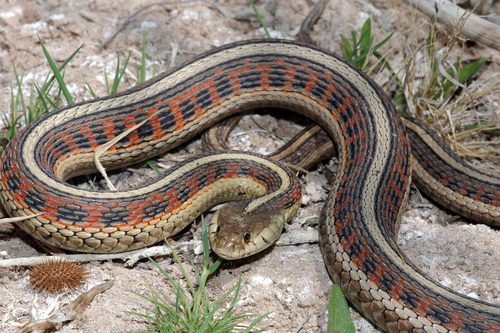
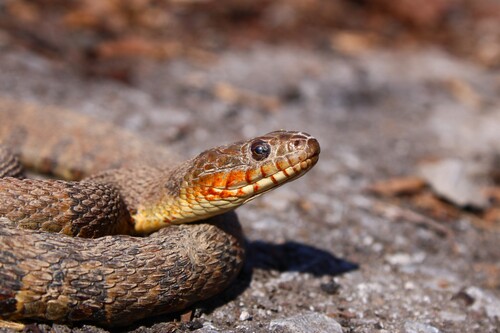
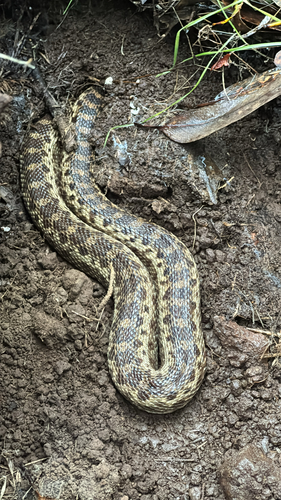
More Colubridae snakes
Classification
How scientists group this snake, from the broadest category down to the exact species. Each step narrows to its closest relatives.
- OrderThe broad group of scaled reptiles: all snakes and lizards
- Squamata
- FamilyA group of related snakes that share key traits
- Colubridae
- GenusA close-knit group of very similar species
- Atretium
- SpeciesThis exact snake, named in the two-part scientific name
- Atretium schistosum
Keep learning
- What to Do If You Find a SnakeFound a snake at home or on a trail? Here is how to stay calm, give it space, identify it safely, and know when to call a professional.
- Venomous vs Nonvenomous: How to Tell the DifferenceThe folk rules for telling venomous snakes apart, where each one fails, and why location-based identification beats guessing by sight.
- What Is a Snake? Anatomy and the BasicsA clear overview of what makes a snake a snake: limbless body plan, anatomy, evolution from lizards, species diversity, and why they are ectothermic.
- How to Keep Snakes Out of Your Yard and HomeA practical guide to keeping snakes out of your yard and home using habitat changes that work, plus what to skip and what to do if one shows up.
Distribution from GBIF & iNaturalist. Venom status per CDC. Background: Wikipedia. Informational only. Never handle a snake to identify it.