
Genus · Colubridae
Atretium
The genus Atretium contains a single species. It is not considered dangerous to humans.
About keelbacks
Atretium are slender, water-loving Asian colubrids built for life in rice paddies, ponds, and slow streams.
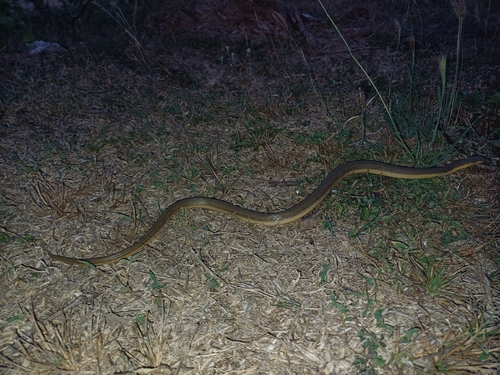
Atretium is a small genus in the family Colubridae, the largest and most diverse snake family on Earth. The genus is best known from the Split Keelback (Atretium schistosum), a semi-aquatic snake of South Asia. The name keelback refers to the raised ridge, or keel, running along each dorsal scale, a texture shared by several unrelated Asian water snakes. Atretium sits among the freshwater colubrids of the region, close in habits to the more familiar Xenochrophis and Rhabdophis groups, though it is a distinct lineage.
These snakes live in and around standing or slow-moving fresh water across parts of India and Sri Lanka, including rice fields, marshes, ponds, canals, and stream margins. You would recognize a member of this genus by its moderate, evenly tapered body, keeled scales that give a rough or matte look, eyes set fairly high on the head for an animal that spends time partly submerged, and often an olive to brownish back with lighter or reddish tones along the lower sides. They are active by day and rarely stray far from water.
Atretium snakes are non-venomous and considered harmless to people. They are not constrictors in the powerful sense and pose no medical threat, feeding mainly on fish, frogs, tadpoles, and other small aquatic prey, which they swallow alive. Like many colubrids they may flatten the body, release musk, or bite defensively if grabbed, but they are not dangerous. As a general rule, leave any wild snake alone and observe from a distance rather than handling it, since correct field identification is difficult and a calm, undisturbed snake will simply move off. If a snakebite of any kind occurs, treat it as a medical matter: keep the person still, do not cut or apply ice, and contact US Poison Control at 1-800-222-1222 or local emergency services.
Atretium belongs to the Colubridae family (Colubrids). The largest snake family, and the one most snakes you meet belong to. Typically round pupils, a head only slightly wider than the neck, and no heat-sensing facial pit or rattle. Scales may be smooth and glossy or keeled and matte depending on the species.
Danger: Almost all colubrids are harmless. A small number are rear-fanged with medically significant venom, the boomslang and the twig (vine) snakes of Africa being the dangerous exceptions. Most colubrids will flee or bluff rather than bite.
All species (1)
Keep learning
- What Is a Snake? Anatomy and the BasicsA clear overview of what makes a snake a snake: limbless body plan, anatomy, evolution from lizards, species diversity, and why they are ectothermic.
- How Snakes Move, Hunt, and EatHow snakes move without legs, hunt as ambushers or active foragers, kill by constriction or venom, and swallow prey wider than their head.
- What Do Snakes Eat?All snakes are carnivores. Learn what snakes eat, how diet changes with size and age, how often they feed, and how they hunt and swallow prey.
- Venomous vs Nonvenomous: How to Tell the DifferenceThe folk rules for telling venomous snakes apart, where each one fails, and why location-based identification beats guessing by sight.