
Watersnake
Saltmarsh Snake
HarmlessNerodia clarkii
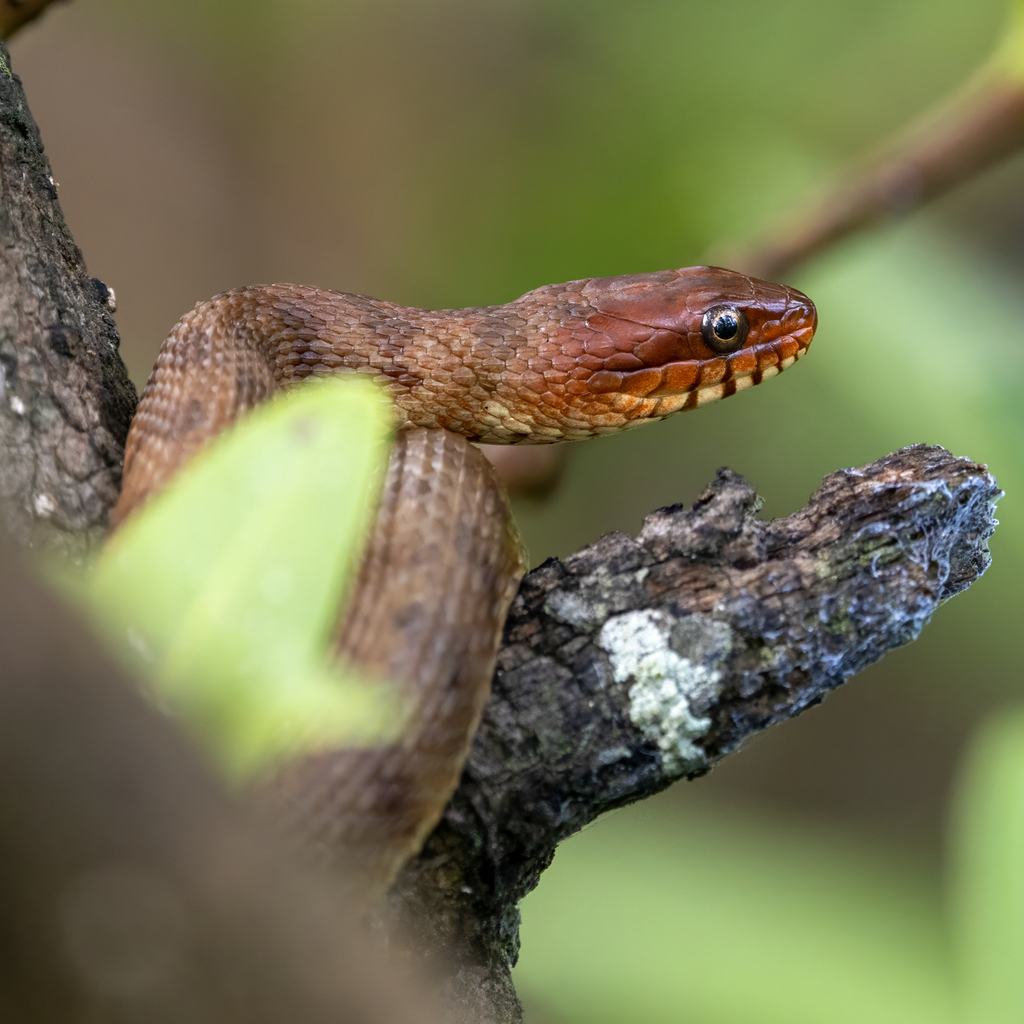
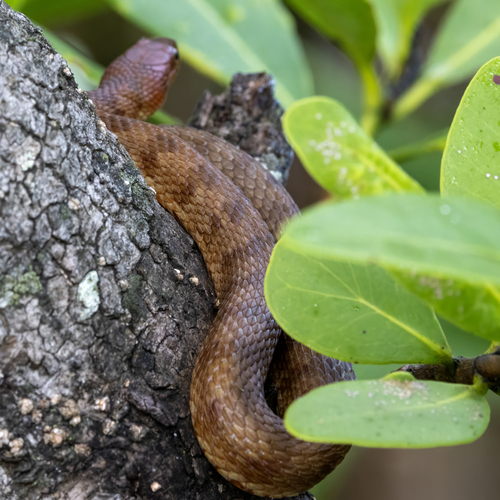
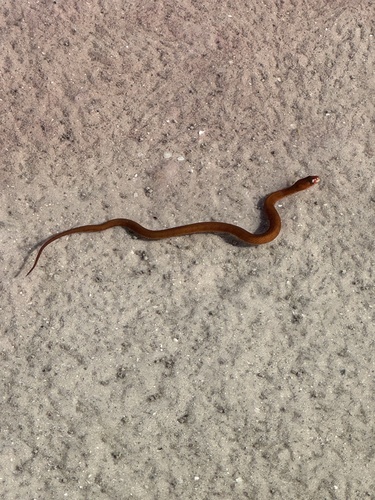
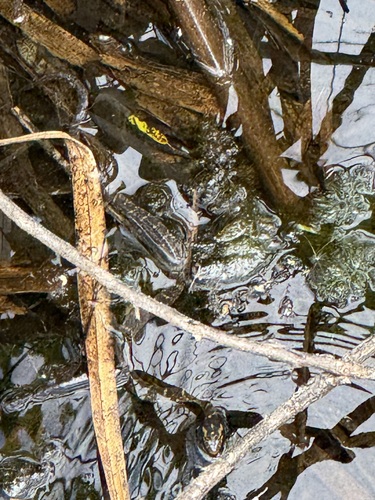
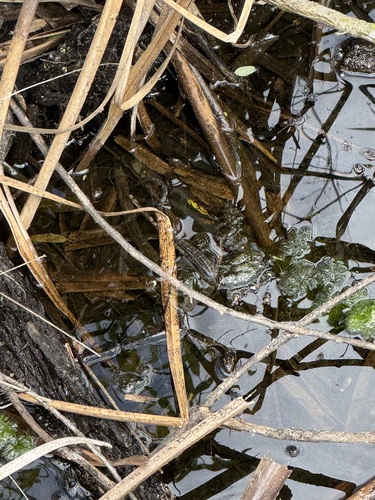
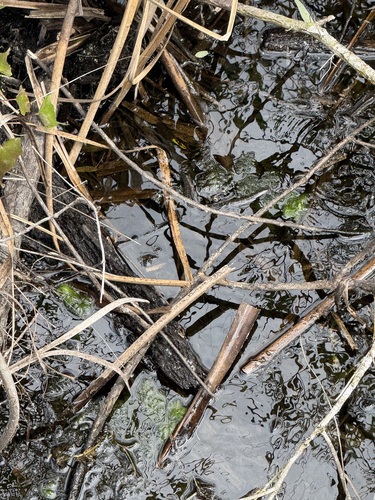
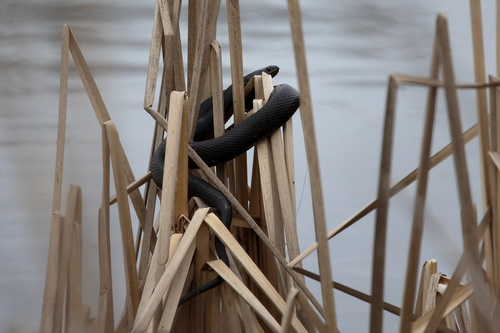
6 photographs of the Saltmarsh Snake. © Dan Vickers.
The Saltmarsh Snake (Nerodia clarkii) is a non-venomous snake in the Colubridae family, recorded in 4 countries.
- Also called
- Watersnake
- Family
- Colubridae
- Size
- Heavy-bodied, 2–4.5 ft.
- Habitat
- Lakes, rivers, ponds, swamps, and ditches.
- Behavior
- Strong swimmers that flee into water but will bite and musk if cornered. Very frequently mistaken for cottonmouths.
- Identify
- Heavy banded or blotched body, round pupils, and a narrow head — unlike the cottonmouth's broad, blocky head.
About the Saltmarsh Snake
Nerodia clarkii, commonly known as the salt marsh snake or the saltmarsh watersnake, is a species of semi-aquatic, nonvenomous, colubrid snake found in the southeastern United States. Their range extends along the tidal salt marshes of the Gulf of Mexico and the Atlantic Coast from Texas to Florida, with an additional population in northern Cuba. The three subspecies of this snake are primarily distinguished by color pattern and geographic range.
Salt marsh snakes are the only U.S. snake species indigenous to saltwater habitats, being reported as common on coastal barrier islands without freshwater (Allen 1932).
Etymology
The specific name, clarkii, is in honor of American surveyor and naturalist John Henry Clark (1830–1885).
Description and subspecies
General description
Salt marsh snakes grow to a total length (including tail) of 15–30 inches (38–76 cm). They are also highly variable in both pattern and coloration. Found most commonly in coastal salt marshes, this snake inhabits brackish and saltwater habitats; it is also found hiding in crab burrows. Though salt marsh snakes are common in appropriate habitat, they have a tendency to be wary and secretive, so they are rarely seen. All members of this species reproduce via live birth, and all are semi-aquatic. Furthermore, all forms of this species may be distinguished as having either 21 or 23 rows of scales.
The seawater they inhabit exerts a continual draw on their tissue's electrolyte balance, due to osmosis. Its scaly reptilian skin acts as a barrier against external dehydration, but, if ingested, seawater draws the less-salty fluid from blood and tissues into the stomach. N. clarkii is the only species to establish itself in this saline niche, drinking only rainwater when it is available, and at other times swallowing nothing but prey animals with the same diluted body fluids as their own. All water species of snake (including N. clarkii) are typically considered to be non-venomous, though they do employ a complex series of enzymes in their saliva, resulting in some inflammation and edema to those who have been bitten.
Subspecies
The salt marsh snake has three subspecies, all of which were first discovered and classified in the mid to late 1800s. They are as follows:
Gulf salt marsh snake (N. c. clarkii)
The Gulf salt marsh snake is the nominate race of N. clarkii and has the largest geographic distribution. Populations of the Gulf salt marsh snake range along the northern coast of the Gulf of Mexico from the vicinity of Corpus Christi, Texas eastward to the Gulf Hammock region of Florida. They are characterized by their prominent longitudinal striping; members of this race can be black, brown, gray, or reddish but all exhibit three lighter longitudinal stripes which run from the back of their neck to their tail. The venter is dark with a central light line of cream-colored oval blotches, sometimes flanked by a row of pale spots. The scales are in either 21 or 23 rows (usually 21), and the anal plate is divided. There is little ontogenetic difference between juvenile to fully adult snakes. Individuals subsist on a diet of primarily fish, and especially shallows-living species such as killifish and small mullet, as well as crayfish and shrimp. Members of this race are primarily nocturnal during hot summer nights, but may be found basking and foraging during daylight hours in cool weather. Sexual maturity is reached at three years.
Mangrove salt marsh snake (N. c. compressicauda)
Adapted from Wikipedia, available under CC BY-SA.
Frequently asked: Saltmarsh Snake
- Is the Saltmarsh Snake venomous?
- No. The Saltmarsh Snake (Nerodia clarkii) is non-venomous and is not considered dangerous to humans. Like most snakes, it will retreat rather than bite when given the chance.
- Is the Saltmarsh Snake poisonous?
- Snakes are venomous, not poisonous. "Poisonous" means harmful to eat or touch; "venomous" means injecting toxins through a bite. The Saltmarsh Snake is neither poisonous nor venomous.
- Is the Saltmarsh Snake dangerous?
- The Saltmarsh Snake is not dangerous to humans. It has no medically significant venom and bites only defensively if cornered or handled.
- Where does the Saltmarsh Snake live?
- The Saltmarsh Snake has verified records in 4 countries, including United States of America, Cuba, Mexico. See the distribution section below for its full range.
- How do I identify the Saltmarsh Snake?
- Heavy banded or blotched body, round pupils, and a narrow head — unlike the cottonmouth's broad, blocky head.
- How big does the Saltmarsh Snake get?
- Heavy-bodied, 2–4.5 ft.
- Why is it called the Saltmarsh Snake?
- The specific name, clarkii, is in honor of American surveyor and naturalist John Henry Clark (1830–1885).
Where it is found
By U.S. state
Snakes it is confused with
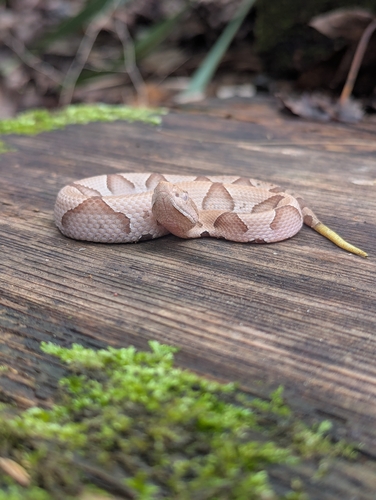 Eastern CopperheadVenomous
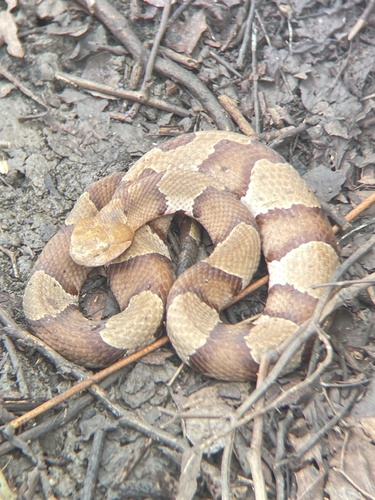
Harmless watersnakes are sometimes mistaken for copperheads near water; watersnakes have round pupils and banded, not hourglass, markings.
Saltmarsh Snake vs Eastern Copperhead→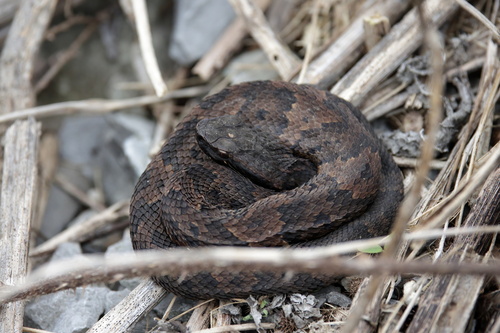 Northern CottonmouthVenomous
Harmless watersnakes are constantly mistaken for the venomous cottonmouth. Watersnakes have round heads and round pupils and flee into the water.
Saltmarsh Snake vs Northern Cottonmouth→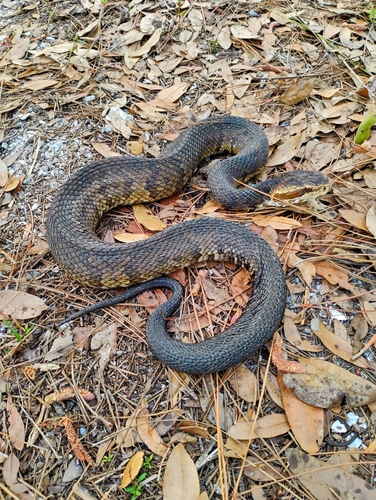
More Colubridae snakes
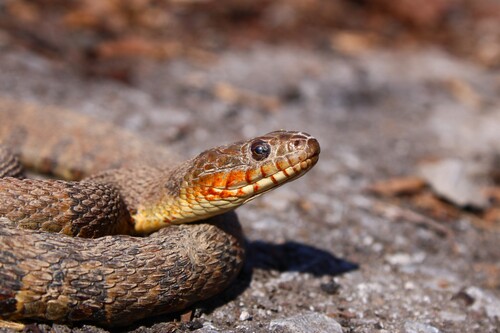 Common WatersnakeNerodia sipedon
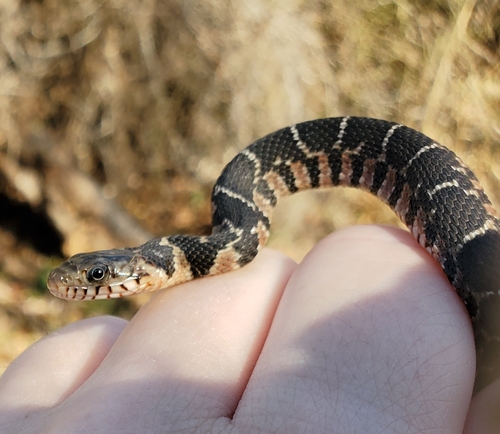 Plain-bellied WatersnakeNerodia erythrogaster
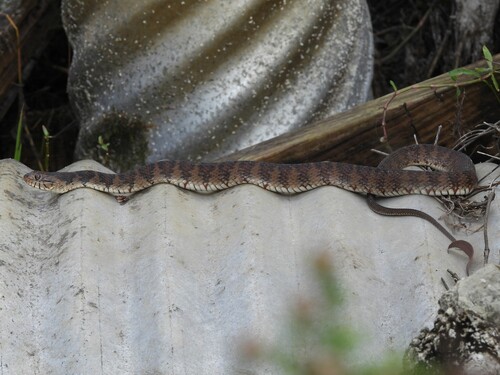 Banded WatersnakeNerodia fasciata
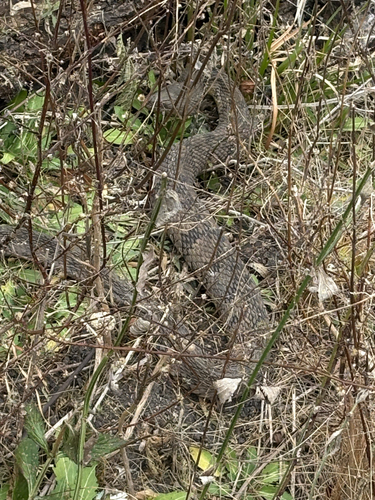 Diamondback WatersnakeNerodia rhombifer
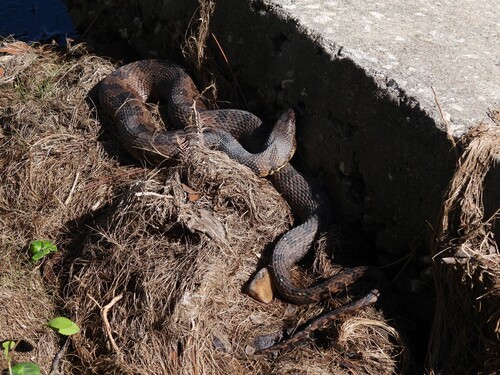 Brown WatersnakeNerodia taxispilota
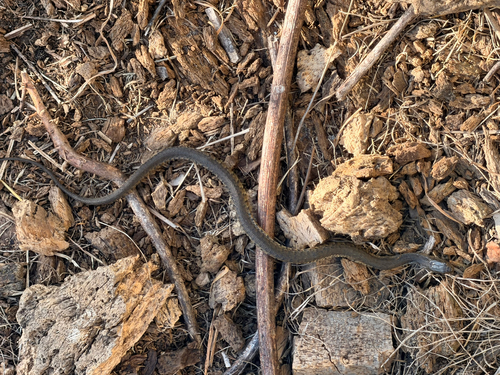 Florida Green WatersnakeNerodia floridana
 Mississippi Green WatersnakeNerodia cyclopion
 Brazos River WatersnakeNerodia harteri
Classification
How scientists group this snake, from the broadest category down to the exact species. Each step narrows to its closest relatives.
- OrderThe broad group of scaled reptiles: all snakes and lizards
- Squamata
- FamilyA group of related snakes that share key traits
- Colubridae
- GenusA close-knit group of very similar species
- Nerodia
- SpeciesThis exact snake, named in the two-part scientific name
- Nerodia clarkii
Keep learning
- What to Do If You Find a SnakeFound a snake at home or on a trail? Here is how to stay calm, give it space, identify it safely, and know when to call a professional.
- Venomous vs Nonvenomous: How to Tell the DifferenceThe folk rules for telling venomous snakes apart, where each one fails, and why location-based identification beats guessing by sight.
- What Is a Snake? Anatomy and the BasicsA clear overview of what makes a snake a snake: limbless body plan, anatomy, evolution from lizards, species diversity, and why they are ectothermic.
- How to Keep Snakes Out of Your Yard and HomeA practical guide to keeping snakes out of your yard and home using habitat changes that work, plus what to skip and what to do if one shows up.
Distribution from GBIF & iNaturalist. Venom status per CDC. Background: Wikipedia. Informational only. Never handle a snake to identify it.