
Genus · Colubridae
Types of watersnakes
10 species make up the genus Nerodia, the snakes commonly called watersnakes. None are considered dangerous to humans.
About watersnakes
Nerodia is the genus of North American watersnakes: non-venomous, semi-aquatic colubrids that live in and around lakes, rivers, ponds, and wetlands across eastern and central North America. They are among the most frequently encountered snakes near water, and among the most frequently misidentified.
Watersnakes in the genus Nerodia belong to the family Colubridae. They are heavy-bodied for colubrids but still slimmer than the venomous snakes they are often confused with, and they spend much of their lives in or beside fresh water. Our database lists 10 species in the genus, and none of them are venomous. They range across eastern and central North America, favoring slow rivers, lake edges, ponds, swamps, and other wetlands, where they are commonly seen swimming or basking on branches and rocks over the water.
The single most important practical fact about this genus is that harmless watersnakes are very commonly mistaken for venomous cottonmouths (also called water moccasins) and killed needlessly as a result. Both groups live in the same wet habitats, and a thick, dark snake near the water sets off alarm in many people. The confusion is understandable, but it costs the lives of countless harmless animals every year. Learning to tell the two apart, from a safe distance, prevents that.
There are general differences that can help, though none should ever be tested by picking a snake up. Watersnakes tend to be slimmer with a more uniform taper, have round pupils, and usually flee into the water when approached, often dropping from a basking branch. Cottonmouths tend to be stouter with a blockier head, and when threatened they may hold their ground and gape open a startlingly white mouth as a warning display. These are tendencies, not guarantees, and lighting, distance, and the animal's behavior all blur them. The only safe rule is to observe from a distance and never handle a wild snake to check what it is.
Ecologically, Nerodia watersnakes are active hunters of fish and amphibians, which keeps them tied to the water's edge. They give birth to live young rather than laying eggs. When grabbed or cornered they defend themselves vigorously: they flatten the body to look larger, strike and bite hard, and release a foul-smelling musk. This dramatic defensive behavior adds to their fearsome reputation and reinforces the mistaken belief that they are dangerous.
On honest safety: watersnakes are non-venomous and not dangerous to people. They have no venom and pose no threat when left alone. That said, a large watersnake can deliver a defensive bite that bleeds more than expected, because their saliva contains a mild anticoagulant. This is a nuisance, not a medical emergency, and it only happens to people who grab the animal. Give a watersnake space and it will almost always retreat into the water on its own.
Nerodia belongs to the Colubridae family (Colubrids). The largest snake family, and the one most snakes you meet belong to. Typically round pupils, a head only slightly wider than the neck, and no heat-sensing facial pit or rattle. Scales may be smooth and glossy or keeled and matte depending on the species.
Danger: Almost all colubrids are harmless. A small number are rear-fanged with medically significant venom, the boomslang and the twig (vine) snakes of Africa being the dangerous exceptions. Most colubrids will flee or bluff rather than bite.
All species (10)
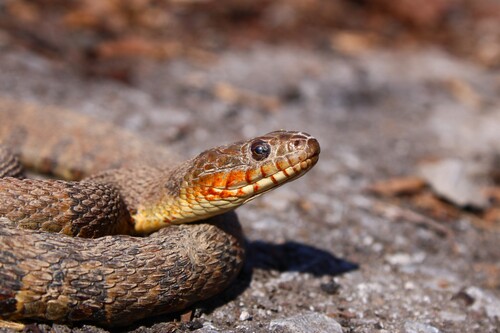 Common WatersnakeNerodia sipedonHarmless
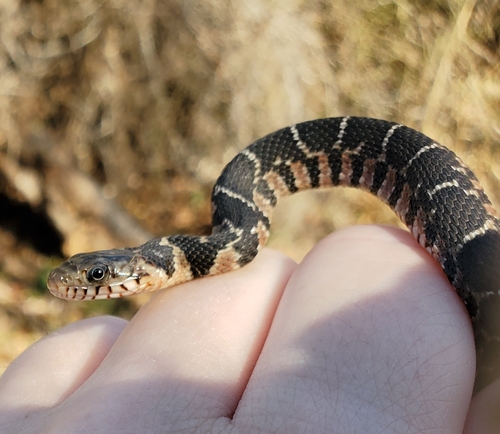 Plain-bellied WatersnakeNerodia erythrogasterHarmless
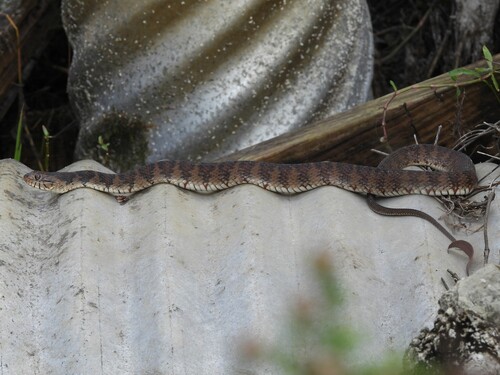 Banded WatersnakeNerodia fasciataHarmless
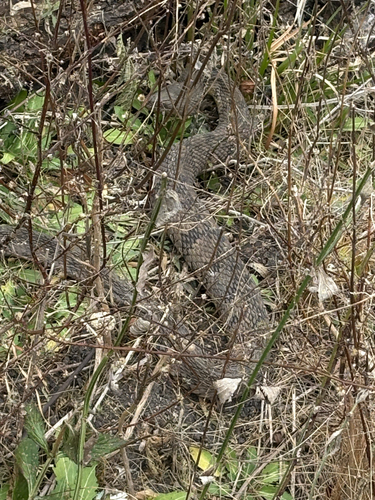 Diamondback WatersnakeNerodia rhombiferHarmless
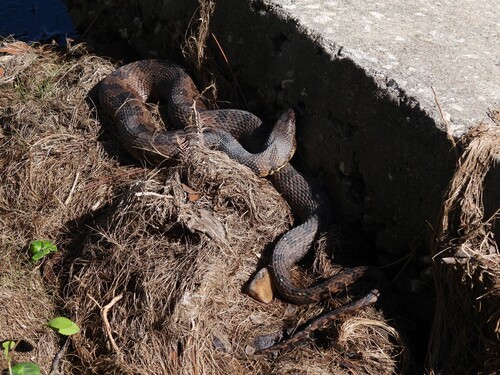 Brown WatersnakeNerodia taxispilotaHarmless
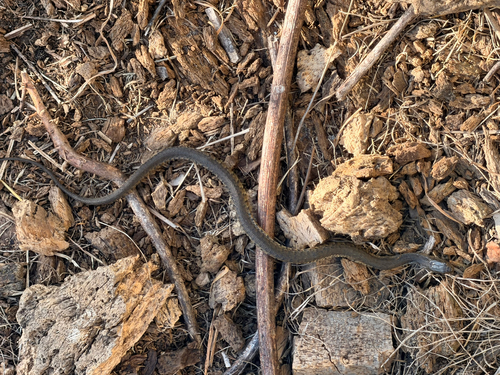 Florida Green WatersnakeNerodia floridanaHarmless
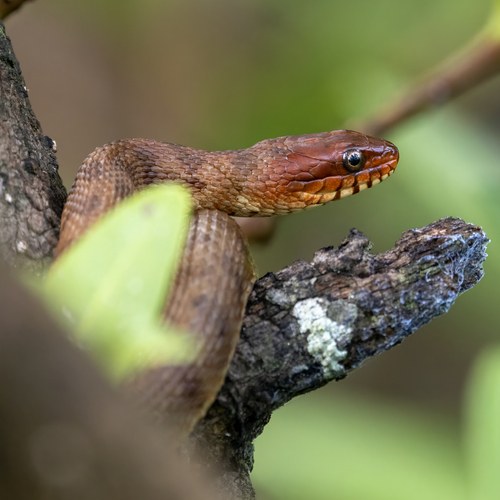 Saltmarsh SnakeNerodia clarkiiHarmless
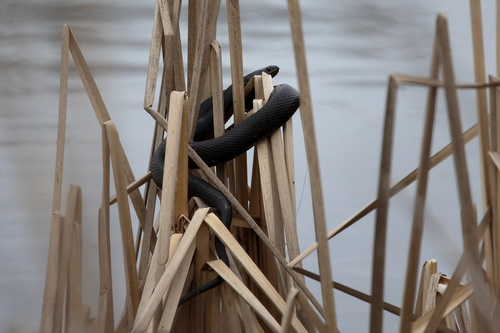 Mississippi Green WatersnakeNerodia cyclopionHarmless
 Brazos River WatersnakeNerodia harteriHarmless
 Concho WatersnakeNerodia paucimaculataHarmless
Keep learning
- What Is a Snake? Anatomy and the BasicsA clear overview of what makes a snake a snake: limbless body plan, anatomy, evolution from lizards, species diversity, and why they are ectothermic.
- How Snakes Move, Hunt, and EatHow snakes move without legs, hunt as ambushers or active foragers, kill by constriction or venom, and swallow prey wider than their head.
- What Do Snakes Eat?All snakes are carnivores. Learn what snakes eat, how diet changes with size and age, how often they feed, and how they hunt and swallow prey.
- Venomous vs Nonvenomous: How to Tell the DifferenceThe folk rules for telling venomous snakes apart, where each one fails, and why location-based identification beats guessing by sight.