
Watersnake
Plain-bellied Watersnake
HarmlessNerodia erythrogaster
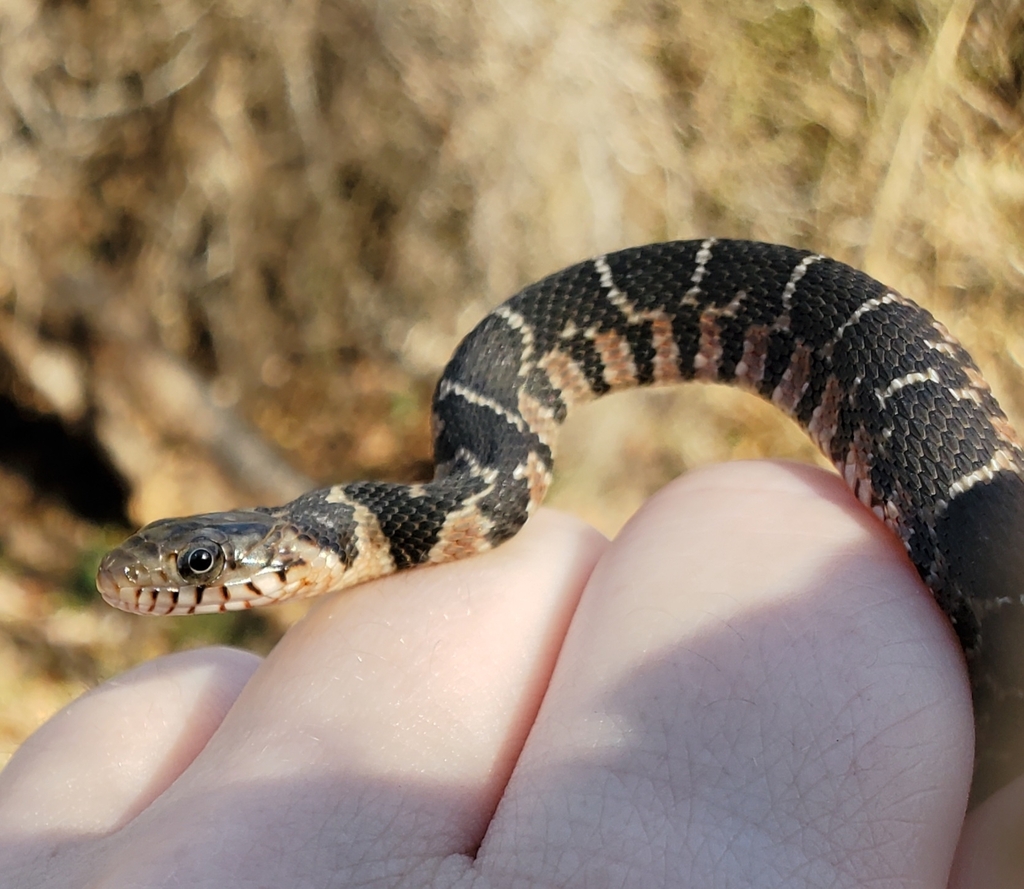
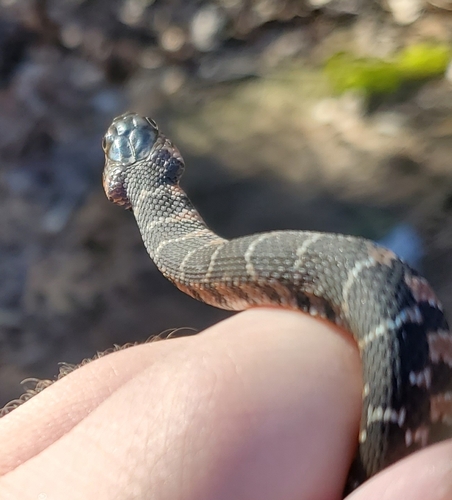
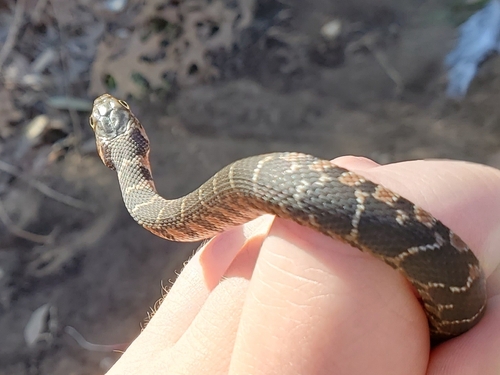
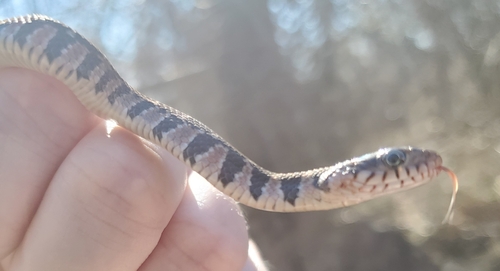
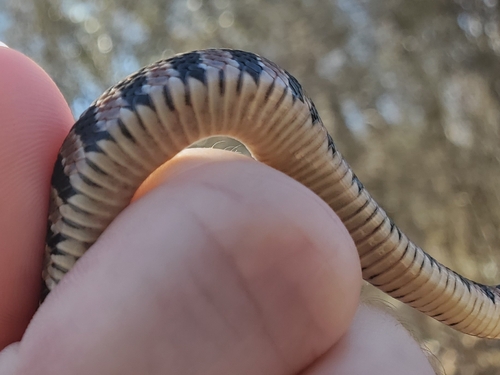
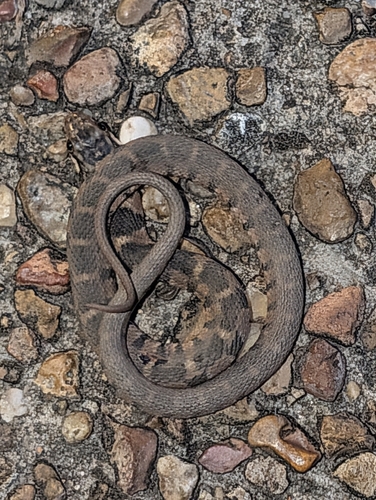
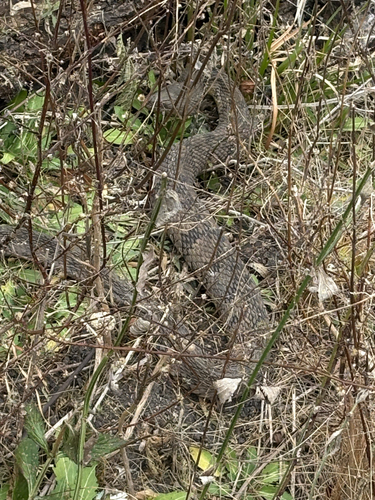
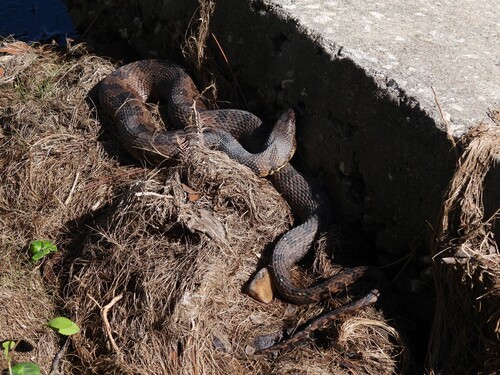
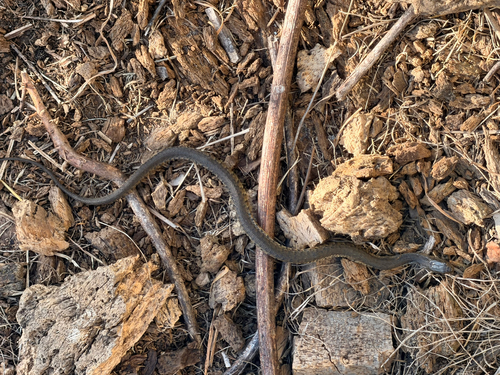
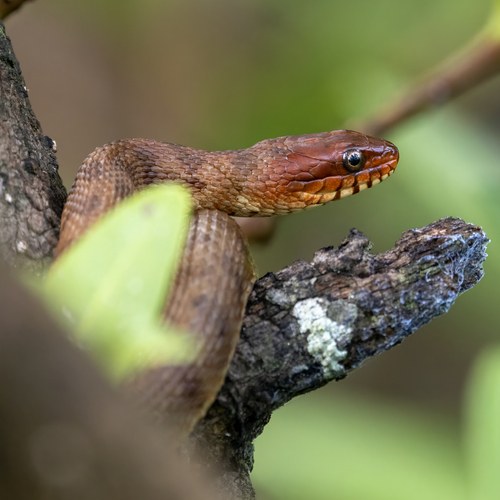
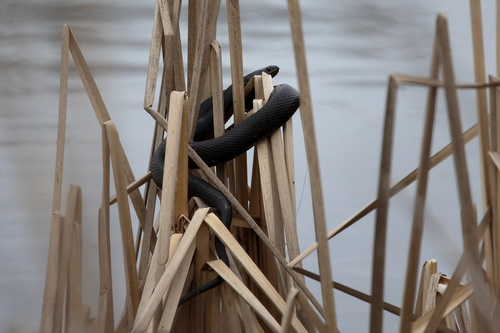
6 photographs of the Plain-bellied Watersnake. © shinylatias.
The Plain-bellied Watersnake (Nerodia erythrogaster) is a non-venomous snake in the Colubridae family, recorded in 2 countries.
- Also called
- Watersnake
- Family
- Colubridae
- Size
- Heavy-bodied, 2–4.5 ft.
- Habitat
- Lakes, rivers, ponds, swamps, and ditches.
- Behavior
- Strong swimmers that flee into water but will bite and musk if cornered. Very frequently mistaken for cottonmouths.
- Identify
- Heavy banded or blotched body, round pupils, and a narrow head — unlike the cottonmouth's broad, blocky head.
About the Plain-bellied Watersnake
Nerodia erythrogaster, also known as the plain-bellied water snake or plainbelly water snake, is a common species of semi-aquatic, non-venomous colubrid snake endemic to the United States.
Description
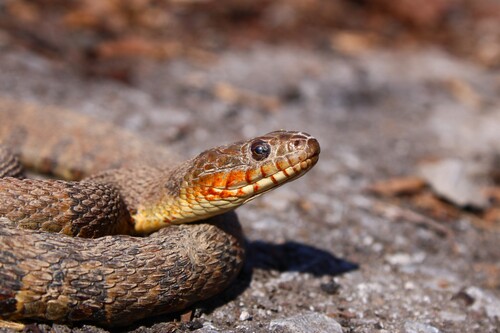
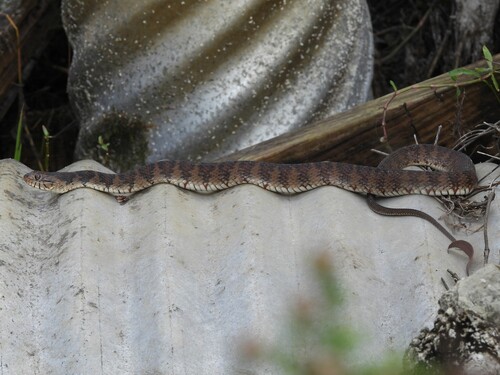
The plain-bellied water snake is a large, thick-bodied, mostly patternless snake, with a generally beige underside. Some snakes display a thin, white line between the pale belly and their darker top scales. Subspecies can range from dark brown, gray, and olive-green to greenish-gray or blackish in color. Some lighter-colored individuals have dark dorsal patterns. Plain-bellied water snakes can be distinguished from other water snakes by their "plain", patternless undersides, which vary in color from light reddish hues to beige; this is where they get the common name "plain-bellied", as they typically have no notable markings on their bellies. There used to be recognized subspecies of the plain-bellied water snake, although scientists often had a hard time differentiating between them. This has led to these subspecies no longer being recognized.
The scientific name erythrogaster comes from the Greek word "erythros" (meaning 'red') and "gaster" (meaning 'belly'). This species exhibits geographically-distinct, phenotypic variations which result in a number of unique subspecies. Adults vary in size from 24 to 40 inches (76–122 cm) in total length. Juvenile snakes feature patterns similar to banded water snakes, but can be identified by their unmarked bellies.
Distribution and habitat
Plain-bellied water snakes are found in every southeastern state of the U.S., except for the higher elevations in the Appalachian Mountains (thus excluding them from eastern Tennessee and western North Carolina). On the east coast, they are found across Florida, north to southeastern Virginia, as well as western Tennessee. They are found at lower elevations from Georgia and west across the Gulf States, extending as far west as Oklahoma and Texas. The snakes are almost always found near a permanent freshwater source, usually several feet deep, and not necessarily clear or fast-moving waters, either. They can often be observed resting on branches or foliage directly over the water, for an easy escape route. In their natural geographic range, the snakes are adapted to a wetland lifestyle, often found at or near creeks, rivers, swamps, floodplains, lakes, and ponds, as well as man-made reservoirs, dams, and canals.
Behavior and diet
Plain-bellied water snakes are active in the warmest months of the year. During the hottest months of summer, they will be active both during the day and at night. In warmer months, they are typically found basking on logs or near bodies of water, swimming, or traveling over land. During hot, humid weather, they will travel long distances away from water. Nerodia erythrogaster is found no further than (approximately) 318 feet (97 m) away from a freshwater source, but do travel over dry land, around 98–108 feet (30–33 m) in a single day. Unfortunately, their migration leads to high mortality rates on roads, with mortality rates reaching up to sixty percent. They tend to spend more time in terrestrial habitats than other species of Nerodia. They hibernate during the coldest months of the winter.
Adapted from Wikipedia, available under CC BY-SA.
Frequently asked: Plain-bellied Watersnake
- Is the Plain-bellied Watersnake venomous?
- No. The Plain-bellied Watersnake (Nerodia erythrogaster) is non-venomous and is not considered dangerous to humans. Like most snakes, it will retreat rather than bite when given the chance.
- Is the Plain-bellied Watersnake poisonous?
- Snakes are venomous, not poisonous. "Poisonous" means harmful to eat or touch; "venomous" means injecting toxins through a bite. The Plain-bellied Watersnake is neither poisonous nor venomous.
- Is the Plain-bellied Watersnake dangerous?
- The Plain-bellied Watersnake is not dangerous to humans. It has no medically significant venom and bites only defensively if cornered or handled.
- Where does the Plain-bellied Watersnake live?
- The Plain-bellied Watersnake has verified records in 2 countries, including United States of America, Mexico. See the distribution section below for its full range.
- How do I identify the Plain-bellied Watersnake?
- Heavy banded or blotched body, round pupils, and a narrow head — unlike the cottonmouth's broad, blocky head.
- How big does the Plain-bellied Watersnake get?
- Heavy-bodied, 2–4.5 ft.
- What does the Plain-bellied Watersnake eat?
- Plain-bellied water snakes are active in the warmest months of the year. During the hottest months of summer, they will be active both during the day and at night. In warmer months, they are typically found basking on logs or near bodies of water, swimming, or traveling over land. During hot, humid weather, they will travel long distances away from water. Nerodia erythrogaster is found no further than (approximately) 318 feet (97 m) away from a freshwater source, but do travel over dry land, around 98–108 feet (30–33 m) in a single day.
Where it is found
Snakes it is confused with
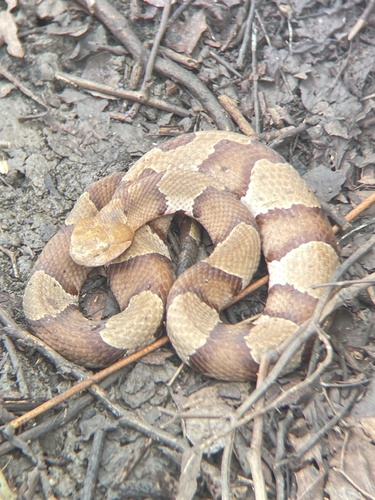
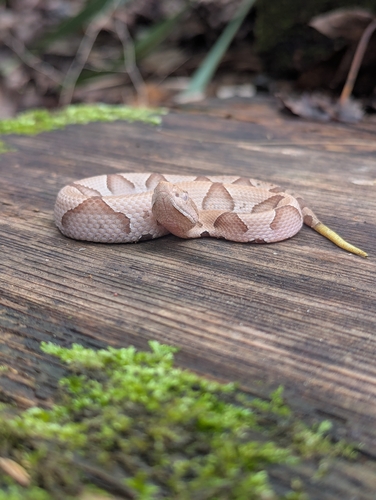 Eastern CopperheadVenomous
Harmless watersnakes are sometimes mistaken for copperheads near water; watersnakes have round pupils and banded, not hourglass, markings.
Plain-bellied Watersnake vs Eastern Copperhead→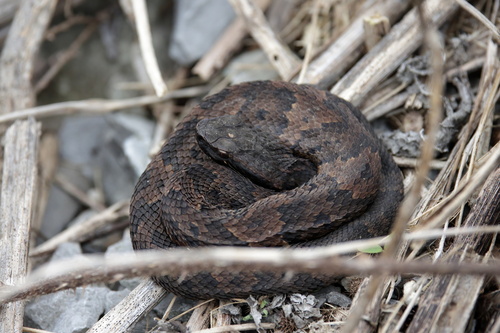 Northern CottonmouthVenomous
Harmless watersnakes are constantly mistaken for the venomous cottonmouth. Watersnakes have round heads and round pupils and flee into the water.
Plain-bellied Watersnake vs Northern Cottonmouth→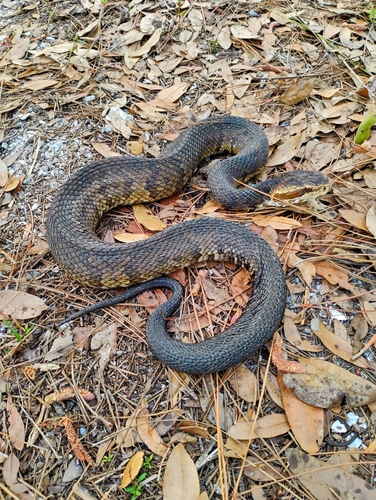
More Colubridae snakes

Classification
How scientists group this snake, from the broadest category down to the exact species. Each step narrows to its closest relatives.
- OrderThe broad group of scaled reptiles: all snakes and lizards
- Squamata
- FamilyA group of related snakes that share key traits
- Colubridae
- GenusA close-knit group of very similar species
- Nerodia
- SpeciesThis exact snake, named in the two-part scientific name
- Nerodia erythrogaster
Keep learning
- What to Do If You Find a SnakeFound a snake at home or on a trail? Here is how to stay calm, give it space, identify it safely, and know when to call a professional.
- Venomous vs Nonvenomous: How to Tell the DifferenceThe folk rules for telling venomous snakes apart, where each one fails, and why location-based identification beats guessing by sight.
- What Is a Snake? Anatomy and the BasicsA clear overview of what makes a snake a snake: limbless body plan, anatomy, evolution from lizards, species diversity, and why they are ectothermic.
- How to Keep Snakes Out of Your Yard and HomeA practical guide to keeping snakes out of your yard and home using habitat changes that work, plus what to skip and what to do if one shows up.
Distribution from GBIF & iNaturalist. Venom status per CDC. Background: Wikipedia. Informational only. Never handle a snake to identify it.