
Watersnake
Mississippi Green Watersnake
HarmlessNerodia cyclopion
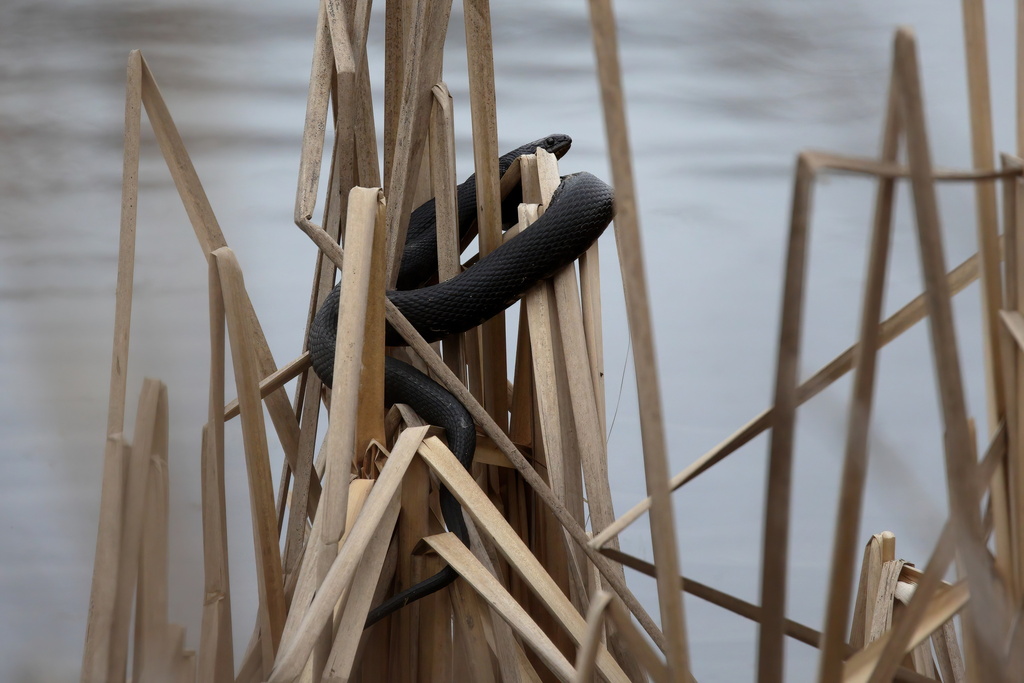
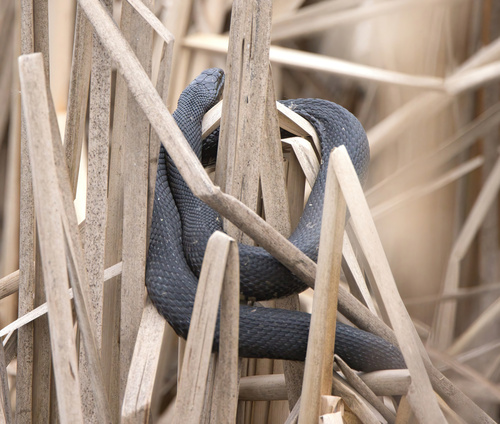
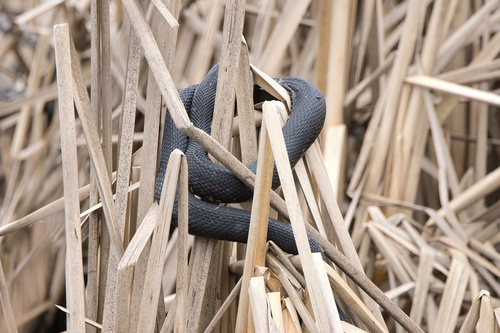
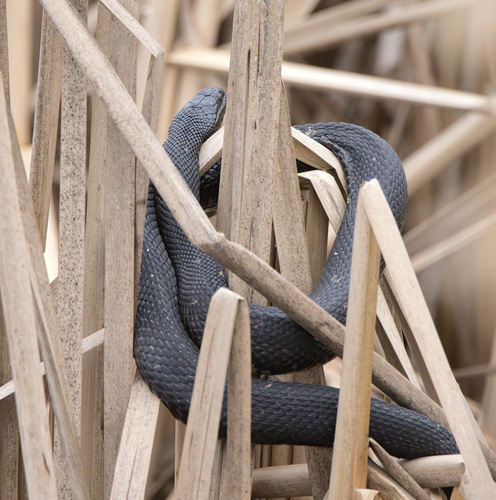
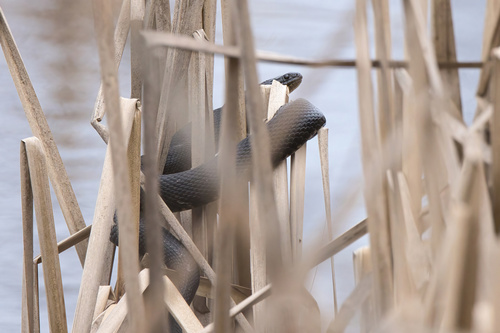
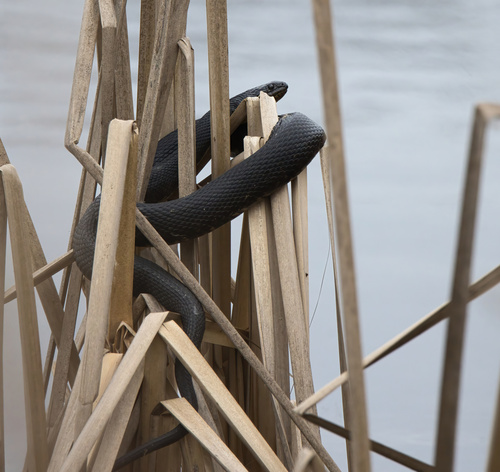
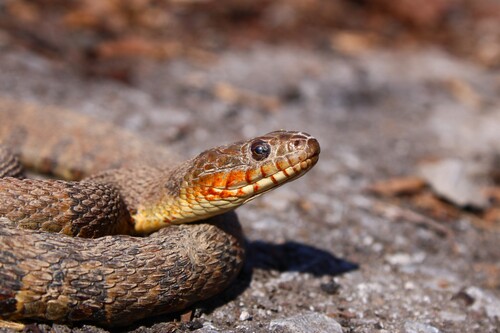
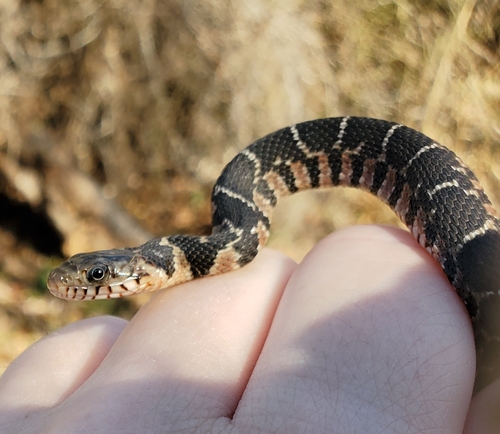
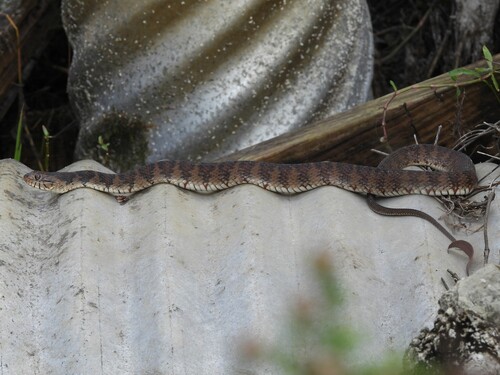
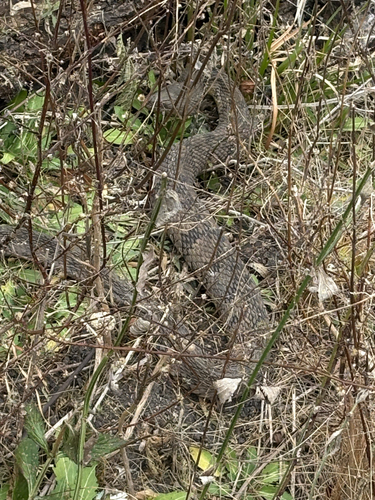
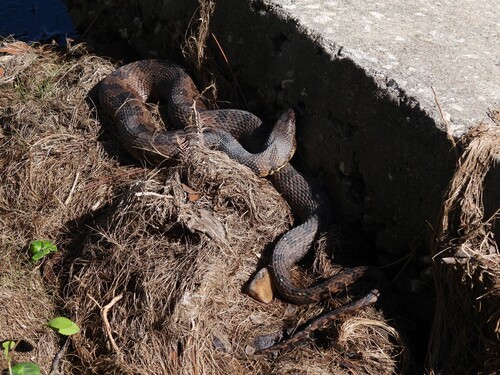
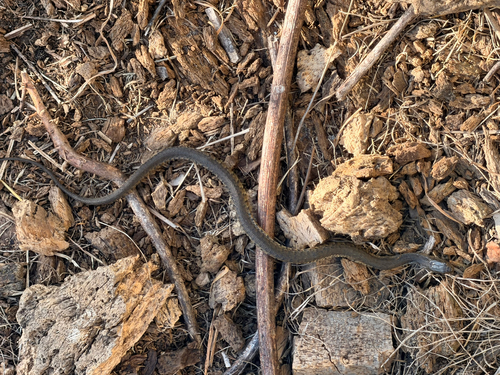
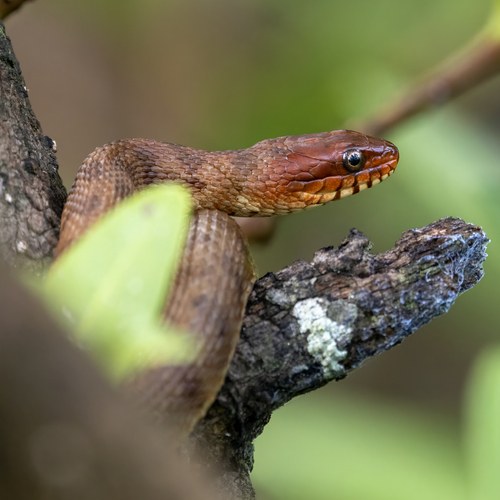
6 photographs of the Mississippi Green Watersnake. © Kim.
The Mississippi Green Watersnake (Nerodia cyclopion) is a non-venomous snake in the Colubridae family, recorded in 1 country.
- Also called
- Watersnake
- Family
- Colubridae
- Size
- Heavy-bodied, 2–4.5 ft.
- Habitat
- Lakes, rivers, ponds, swamps, and ditches.
- Behavior
- Strong swimmers that flee into water but will bite and musk if cornered. Very frequently mistaken for cottonmouths.
- Identify
- Heavy banded or blotched body, round pupils, and a narrow head — unlike the cottonmouth's broad, blocky head.
About the Mississippi Green Watersnake
The green water snake (Nerodia cyclopion) is a common species of nonvenomous natricine snake endemic to the southeastern United States.
Geographic range
N. cyclopion is distributed from the Florida panhandle westward to Louisiana, and northward through the Mississippi Valley into southern Illinois.
More precisely, it is found in southwestern Alabama, southeastern Arkansas, northwestern Florida, southern Illinois, southwestern Indiana, western Kentucky, Louisiana, southern Mississippi, southeastern Missouri, western Tennessee, and southeastern Texas.
The type locality is New Orleans, Louisiana.
Description
N. cyclopion differs from most other species of North American water snakes by having one or more small scales under the eye, giving the appearance of a ring of small plates around the eye, a character shared with the species N. floridana.
A heavy-bodied snake, N. cyclopion is dark green, olive, or brown dorsally. Ventrally, it is yellowish on the anterior third, and the on remainder dark brown with yellow or white semicircles.
N. cyclopion averages 76–140 cm (30-55 inches) in total length (including tail).
Nomenclature and subspecies
N. cyclopion is commonly known as both the green water snake and the Mississippi green water snake, or the Mississippi green watersnake.
The former subspecies, Nerodia cyclopion floridana (Goff, 1936), also known commonly as the Florida green water snake, has been elevated to a full species known as Nerodia floridana.
Habitat
N. cyclopion prefers still waters such as bayous, lakes, marshes, ponds, sluggish streams, and swamps. It is sometimes found in brackish water.
Diet
N. cyclopion preys most commonly on fish, though it also feeds on crayfish, frogs, and salamanders. It typically forages during early evening, though hot weather causes it to forage at night.
Reproduction
The green water snake is ovoviviparous. Mating takes place on land in April. The young are born in July or August, and are about 25 cm (10 in) long. Brood size varies from 7 to 101, depending on the size of the female. The females, which are larger than the males and have two more dorsal scale rows, may weigh over 4.1 kg (9 lb).
Adapted from Wikipedia, available under CC BY-SA.
Frequently asked: Mississippi Green Watersnake
- Is the Mississippi Green Watersnake venomous?
- No. The Mississippi Green Watersnake (Nerodia cyclopion) is non-venomous and is not considered dangerous to humans. Like most snakes, it will retreat rather than bite when given the chance.
- Is the Mississippi Green Watersnake poisonous?
- Snakes are venomous, not poisonous. "Poisonous" means harmful to eat or touch; "venomous" means injecting toxins through a bite. The Mississippi Green Watersnake is neither poisonous nor venomous.
- Is the Mississippi Green Watersnake dangerous?
- The Mississippi Green Watersnake is not dangerous to humans. It has no medically significant venom and bites only defensively if cornered or handled.
- Where does the Mississippi Green Watersnake live?
- The Mississippi Green Watersnake has verified records in 1 country, including United States of America. See the distribution section below for its full range.
- How do I identify the Mississippi Green Watersnake?
- Heavy banded or blotched body, round pupils, and a narrow head — unlike the cottonmouth's broad, blocky head.
- How big does the Mississippi Green Watersnake get?
- Heavy-bodied, 2–4.5 ft.
- What does the Mississippi Green Watersnake eat?
- N. cyclopion preys most commonly on fish, though it also feeds on crayfish, frogs, and salamanders. It typically forages during early evening, though hot weather causes it to forage at night.
Where it is found
Snakes it is confused with
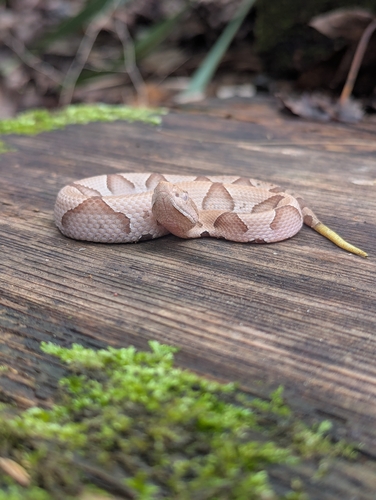 Eastern CopperheadVenomous
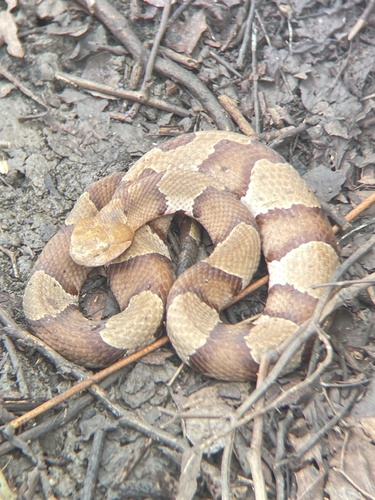
Harmless watersnakes are sometimes mistaken for copperheads near water; watersnakes have round pupils and banded, not hourglass, markings.
Mississippi Green Watersnake vs Eastern Copperhead→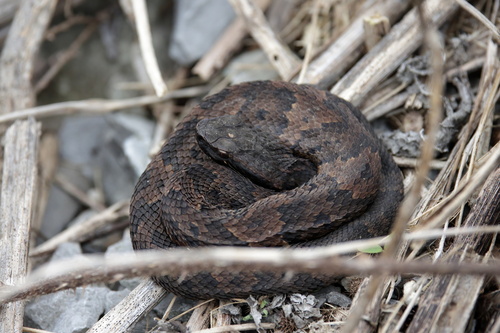 Northern CottonmouthVenomous
Harmless watersnakes are constantly mistaken for the venomous cottonmouth. Watersnakes have round heads and round pupils and flee into the water.
Mississippi Green Watersnake vs Northern Cottonmouth→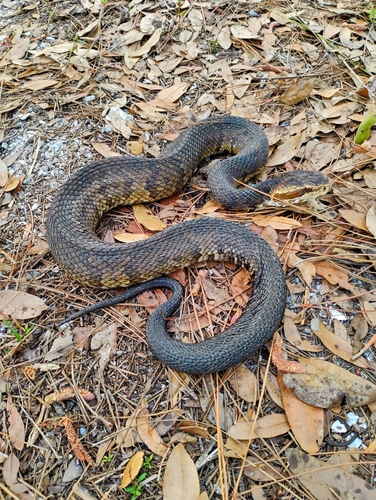
More Colubridae snakes

Classification
How scientists group this snake, from the broadest category down to the exact species. Each step narrows to its closest relatives.
- OrderThe broad group of scaled reptiles: all snakes and lizards
- Squamata
- FamilyA group of related snakes that share key traits
- Colubridae
- GenusA close-knit group of very similar species
- Nerodia
- SpeciesThis exact snake, named in the two-part scientific name
- Nerodia cyclopion
Keep learning
- What to Do If You Find a SnakeFound a snake at home or on a trail? Here is how to stay calm, give it space, identify it safely, and know when to call a professional.
- Venomous vs Nonvenomous: How to Tell the DifferenceThe folk rules for telling venomous snakes apart, where each one fails, and why location-based identification beats guessing by sight.
- What Is a Snake? Anatomy and the BasicsA clear overview of what makes a snake a snake: limbless body plan, anatomy, evolution from lizards, species diversity, and why they are ectothermic.
- How to Keep Snakes Out of Your Yard and HomeA practical guide to keeping snakes out of your yard and home using habitat changes that work, plus what to skip and what to do if one shows up.
Distribution from GBIF & iNaturalist. Venom status per CDC. Background: Wikipedia. Informational only. Never handle a snake to identify it.