
Watersnake
Diamondback Watersnake
HarmlessNerodia rhombifer
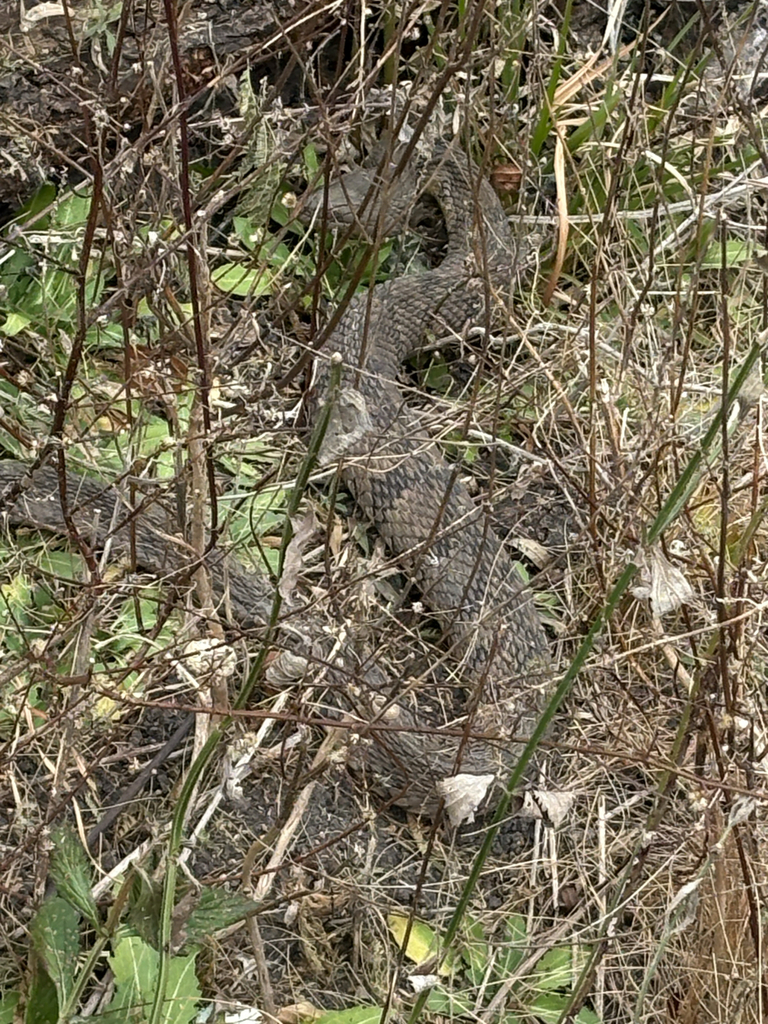
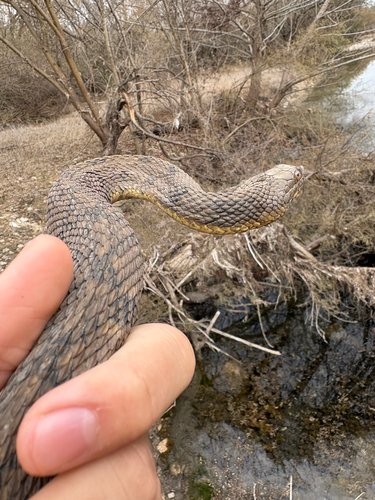
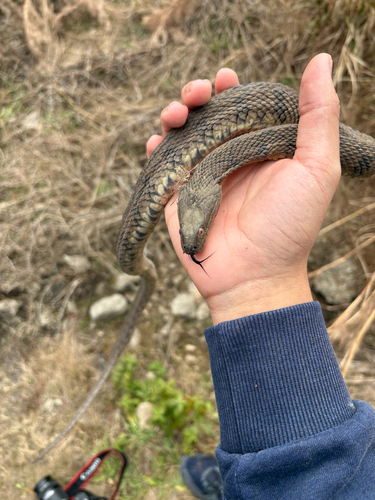
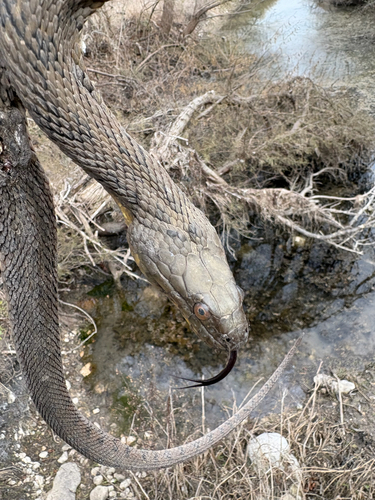
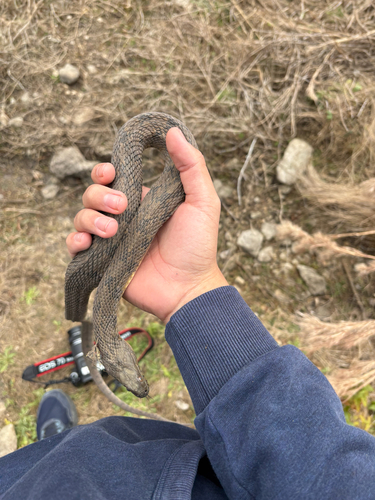
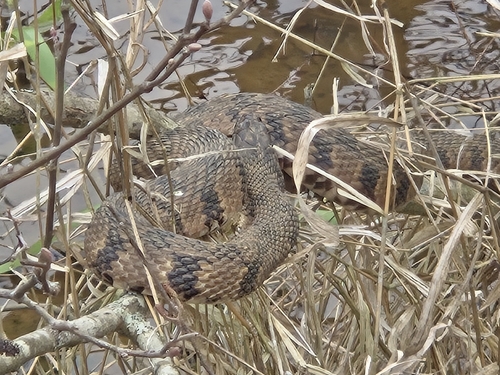
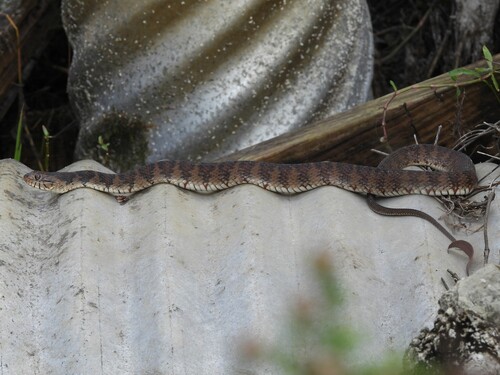
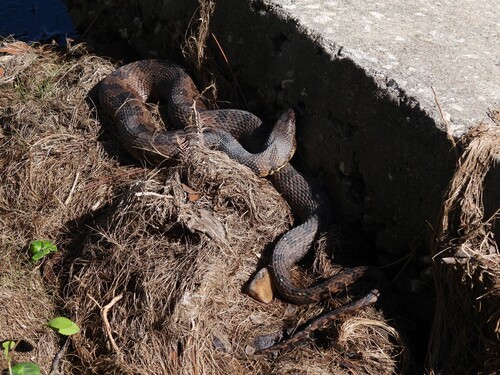
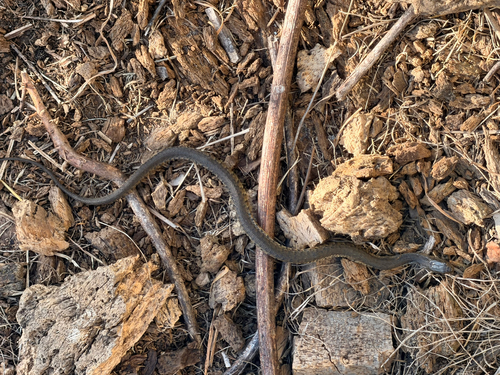
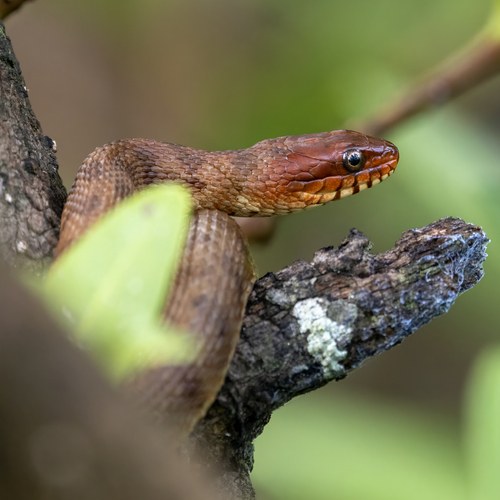
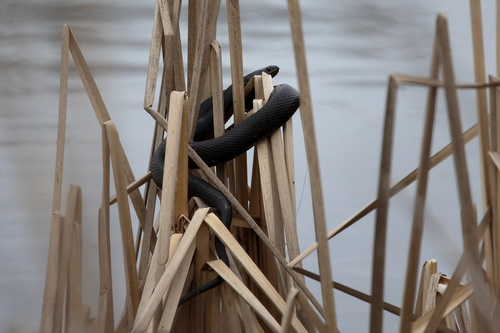
6 photographs of the Diamondback Watersnake. © Dylan Liu.
The Diamondback Watersnake (Nerodia rhombifer) is a non-venomous snake in the Colubridae family, recorded in 4 countries.
- Also called
- Watersnake
- Family
- Colubridae
- Size
- Heavy-bodied, 2–4.5 ft.
- Habitat
- Lakes, rivers, ponds, swamps, and ditches.
- Behavior
- Strong swimmers that flee into water but will bite and musk if cornered. Very frequently mistaken for cottonmouths.
- Identify
- Heavy banded or blotched body, round pupils, and a narrow head — unlike the cottonmouth's broad, blocky head.
About the Diamondback Watersnake
Nerodia rhombifer, commonly known as the diamondback water snake, is a species of nonvenomous natricine colubrid endemic to the central United States and northern Mexico. There are three recognized subspecies of N. rhombifer, including the nominotypical subspecies.
Taxonomy and systematics
The species was first described as Tropidonotus rhombifer by Edward Hallowell in 1852.
Description
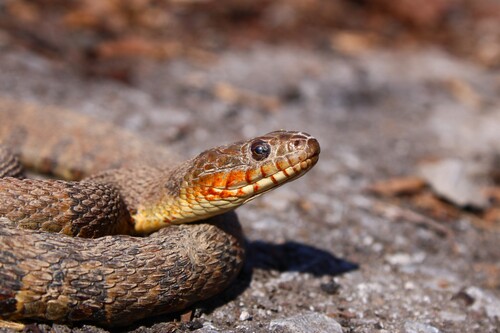
The diamondback water snake is predominantly brown, dark brown, or dark olive green in color, with a black net-like pattern along the back, with each spot being vaguely diamond-shaped. Dark vertical bars and lighter coloring are often present down the sides of the snake. In typical counter-colored fashion, the underside is generally a yellow or lighter brown color, often with black blotching.
The dorsal scales are heavily keeled, giving the snake a rough texture. The dorsal scales are arranged in 25 or 27 rows at midbody. There are usually 3 postoculars.
Adult males have multiple papillae (tubercles) on the under surface of the chin, which are not found on any other species of snake in the United States.
Nerodia rhombifer grows to an average total length (including tail) of 76–122 cm (30–48 inches). The record total length is 180 cm (69 inches).
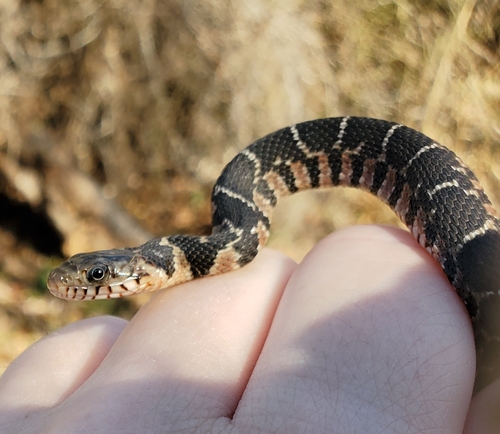
Neonates are often lighter in color, making their patterns more pronounced, and they darken with age.
Habitat
The diamondback water snake is one of the most common species of snake within its range. It is found predominantly near slow-moving bodies of water such as streams, rivers, ponds, or swamps.
Behavior
When foraging for food the diamondback water snake will hang on branches suspended over the water, dipping its head under the surface of the water, until it encounters a fish or other prey. It is frequently found basking on branches over water, and when approached, it will quickly drop into the water and swim away. If cornered, it will often hiss, and flatten the head and body to appear larger. It only typically resorts to biting if physically harassed or handled. Its bite is known to be quite painful due to its sharp teeth meant to keep hold of slippery fish, as well as the slight hemotoxin in its saliva that causes increased bleeding. This snake is not considered venomous due to the very small amount of toxins in its bite, as well as the toxin not being injected through the teeth, but entering the bite wound from the snake's saliva. This defensive behavior is frequently misinterpreted as aggression and often leads to its being mistaken for the venomous cottonmouth (Agkistrodon piscivorus), with which it does share habitat in some places. The brown/tan coloration and diamond-shaped pattern also causes it to be mistaken for rattlesnakes, especially when encountered on land by individuals unfamiliar with snakes.
Geographic range
Adapted from Wikipedia, available under CC BY-SA.
Frequently asked: Diamondback Watersnake
- Is the Diamondback Watersnake venomous?
- No. The Diamondback Watersnake (Nerodia rhombifer) is non-venomous and is not considered dangerous to humans. Like most snakes, it will retreat rather than bite when given the chance.
- Is the Diamondback Watersnake poisonous?
- Snakes are venomous, not poisonous. "Poisonous" means harmful to eat or touch; "venomous" means injecting toxins through a bite. The Diamondback Watersnake is neither poisonous nor venomous.
- Is the Diamondback Watersnake dangerous?
- The Diamondback Watersnake is not dangerous to humans. It has no medically significant venom and bites only defensively if cornered or handled.
- Where does the Diamondback Watersnake live?
- The Diamondback Watersnake has verified records in 4 countries, including United States of America, Mexico, Canada. See the distribution section below for its full range.
- How do I identify the Diamondback Watersnake?
- Heavy banded or blotched body, round pupils, and a narrow head — unlike the cottonmouth's broad, blocky head.
- How big does the Diamondback Watersnake get?
- Heavy-bodied, 2–4.5 ft.
Where it is found
Snakes it is confused with
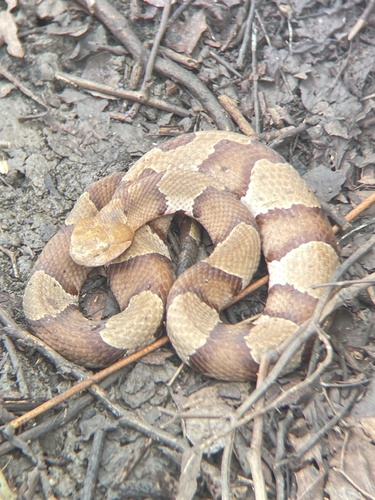
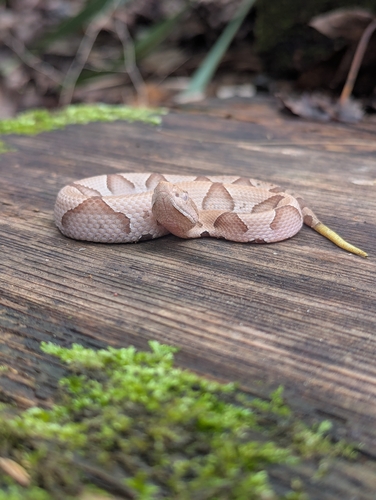 Eastern CopperheadVenomous
Harmless watersnakes are sometimes mistaken for copperheads near water; watersnakes have round pupils and banded, not hourglass, markings.
Diamondback Watersnake vs Eastern Copperhead→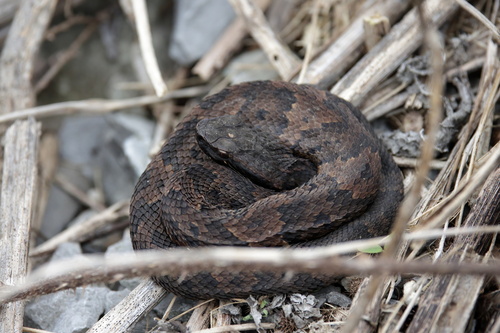 Northern CottonmouthVenomous
Harmless watersnakes are constantly mistaken for the venomous cottonmouth. Watersnakes have round heads and round pupils and flee into the water.
Diamondback Watersnake vs Northern Cottonmouth→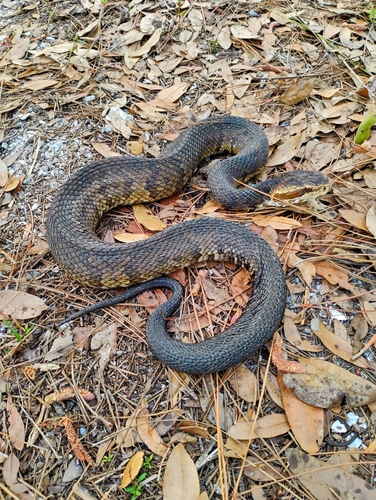
More Colubridae snakes

Classification
How scientists group this snake, from the broadest category down to the exact species. Each step narrows to its closest relatives.
- OrderThe broad group of scaled reptiles: all snakes and lizards
- Squamata
- FamilyA group of related snakes that share key traits
- Colubridae
- GenusA close-knit group of very similar species
- Nerodia
- SpeciesThis exact snake, named in the two-part scientific name
- Nerodia rhombifer
Keep learning
- What to Do If You Find a SnakeFound a snake at home or on a trail? Here is how to stay calm, give it space, identify it safely, and know when to call a professional.
- Venomous vs Nonvenomous: How to Tell the DifferenceThe folk rules for telling venomous snakes apart, where each one fails, and why location-based identification beats guessing by sight.
- What Is a Snake? Anatomy and the BasicsA clear overview of what makes a snake a snake: limbless body plan, anatomy, evolution from lizards, species diversity, and why they are ectothermic.
- How to Keep Snakes Out of Your Yard and HomeA practical guide to keeping snakes out of your yard and home using habitat changes that work, plus what to skip and what to do if one shows up.
Distribution from GBIF & iNaturalist. Venom status per CDC. Background: Wikipedia. Informational only. Never handle a snake to identify it.