
Copperhead
Broad-banded Copperhead
VenomousAgkistrodon laticinctus
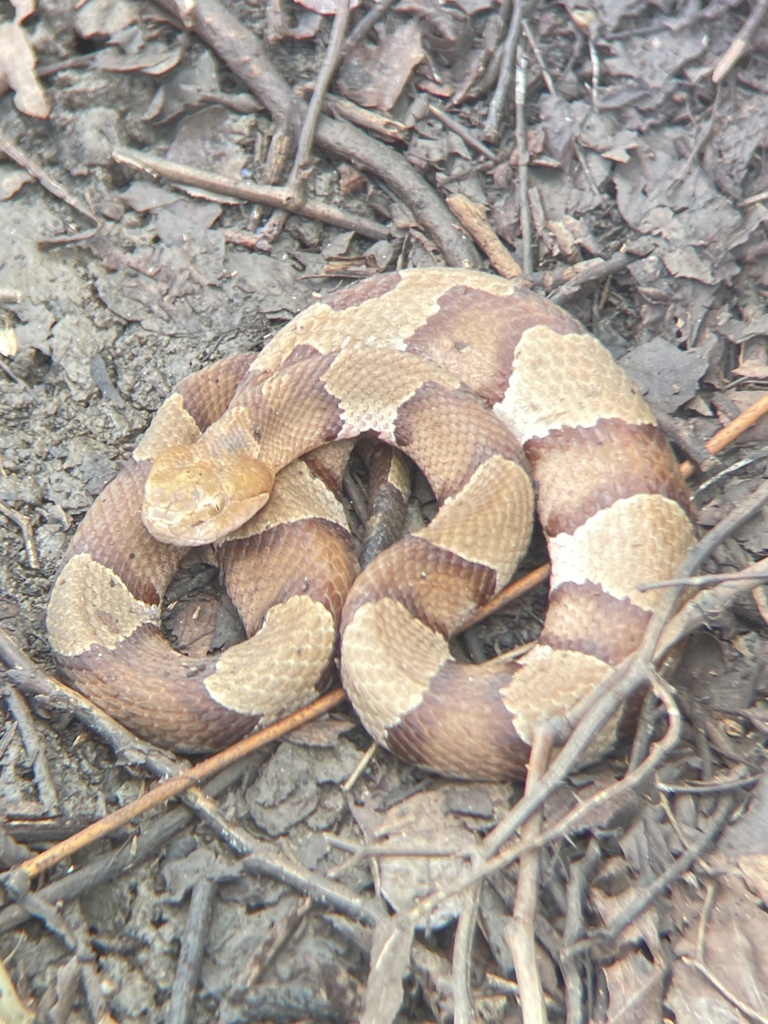
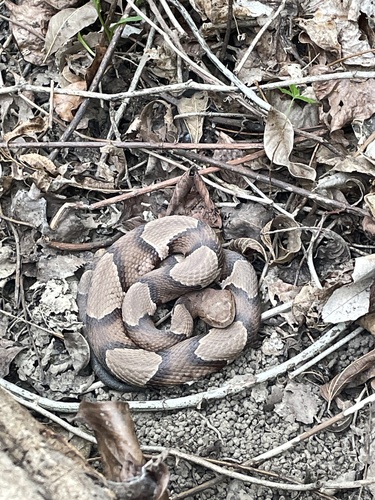
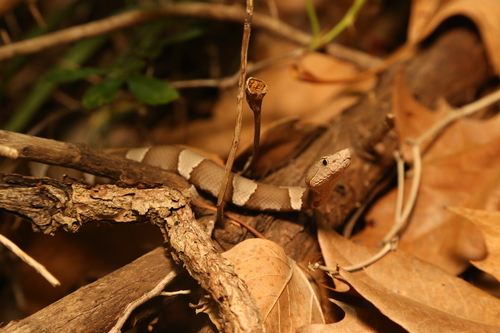
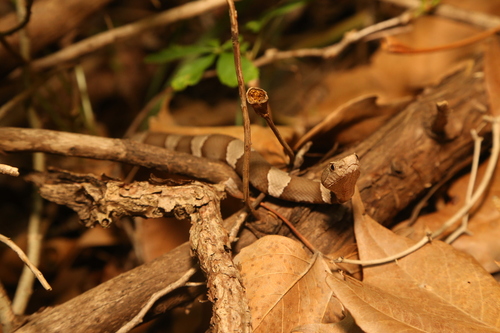
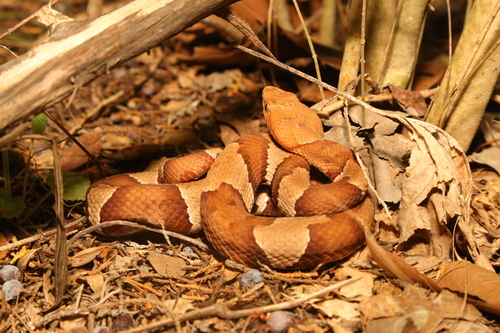
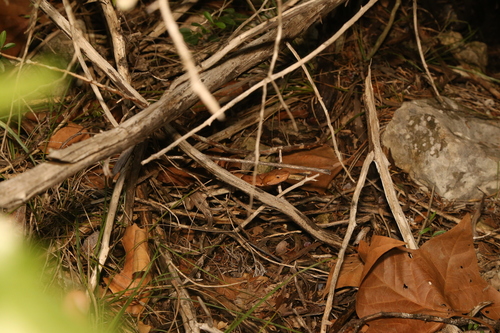
6 photographs of the Broad-banded Copperhead. © Nathan May.
The Broad-banded Copperhead (Agkistrodon laticinctus) is a venomous snake in the Viperidae family, recorded in 2 countries.
If you are bitten
Copperhead and cottonmouth bites are painful and need medical care but are rarely fatal with prompt treatment (cottonmouth venom is the more potent of the two). Stay calm, keep the limb still, remove tight items, and go to an emergency room. Do not use a tourniquet or cut the wound. Call Poison Control at 1-800-222-1222 or 911 in the US, or your local emergency number. (Source: CDC.)
- Also called
- Copperhead
- Family
- Viperidae
- Size
- Usually 2–4 ft, heavy-bodied.
- Habitat
- Copperheads favor forests and rocky hillsides; cottonmouths favor swamps, marshes, and slow water.
- Behavior
- Pit vipers that often hold their ground; cottonmouths gape to flash a white mouth lining when threatened.
- Identify
- Heavy body, triangular head, vertical pupils, and a heat-sensing pit between each eye and nostril.
- Danger
- moderate-high
About the Broad-banded Copperhead
Agkistrodon laticinctus, commonly known as the broad-banded copperhead, is a venomous pit viper species, formerly considered a subspecies of Agkistrodon contortrix, which is found in the central United States, from Kansas, through Oklahoma and throughout central Texas.
Etymology and nomenclature
Agkistrodon is from the Greek words ancistro which means "hook", and odon meaning "tooth" referring to the snake's fangs. The discrepancy between the spelling ancistro (correct) versus agkistro (incorrect), originates from a typographical error or misspelling in the original description of the genus published in 1799. The name laticinctus is from the Latin lati meaning "broad" or "wide", and cinctus meaning a girdle, belt, or waistcloth, in reference to the broad bands of the dorsal pattern of the species, and relative to the contorted or twisted dorsal pattern of the eastern copperhead (Agkistrodon contortrix).
The standardized English name of Agkistrodon laticinctus is Broad-banded copperhead. As the Latin name, the English name emphasizes the broad bands that readily distinguishes this species from the eastern copperhead (Agkistrodon contortrix). Colloquial names for the broad-banded copperhead include: copperhead moccasin, copperhead snake, dry-land moccasin, highland moccasin, moccasin, rattlesnake pilot, red eye, Texas copperhead and thunder snake.
Description
This form is typically a light tan in color, with darker brown, wide crossbands - which gives it its common name. The actual color varies, by locality, from a red-brown, to a gray-brown. It overlaps with the eastern copperhead (A. contortrix) in the southern reaches of its range, making specimens there difficult to distinguish, but generally A. contortrix has banding that narrows at the spine, creating hourglass shapes, whereas A. laticinctus has even bands. As juveniles, all species of Agkistrodon have a bright green-yellow color to their tail tips, believed to be used as a lure to attract prey items to approach within striking range. The color fades to a grey or brown at about a year of age.
Size: Adults typically range from 45‒75 cm (17.7‒29.5 in) in total body length, with a record individual of 94.6 cm (37.25 in) for the species. Agkistrodon laticinctus are sexually dimorphic, with males ranging slightly larger than females in total body length. One study measured 161 male and 119 female, adult specimens (>30 cm), and found 62.7% of the males ranged 50‒75 cm. (19.7‒29.5 in), and 76.5% of the females ranged 45‒65 cm (17.7‒25.6 in) in total body length. The same study found the tail length of males was only slightly longer than females, with tails ranging from 11‒17% (13.9) of total body length in males, and 11‒16% (13.3) in females, and Trans-Pecos populations averaging slightly longer tails, 15.3% for males and 14.6% for females. Copperheads tend to exhibit an east to west reduction in size, with the eastern copperhead (A. contortrix) averaging slightly larger in total body length than the broad-banded copperhead (A. laticinctus), and populations of A. laticinctus from Oklahoma and central Texas averaging slightly larger than those from the Trans-Pecos region and Mexico.
Adapted from Wikipedia, available under CC BY-SA.
Local and regional names
The Broad-banded Copperhead is known by these names across the regions where it lives:
- Chinese
- 寬斑銅頭蝮
- German
- Breitband-Kupferkopf, Breitbandkupferkopf, Trans-Pecos-Kupferkopf
- Spanish
- Cabeza de Cobre Central
Frequently asked: Broad-banded Copperhead
- Is the Broad-banded Copperhead venomous?
- Yes. The Broad-banded Copperhead (Agkistrodon laticinctus) is venomous and belongs to the Viperidae family (copperhead/cottonmouth). Its bite is considered moderate-high risk to people. Treat any bite as a medical emergency.
- Is the Broad-banded Copperhead poisonous?
- Snakes are venomous, not poisonous. "Poisonous" means harmful to eat or touch; "venomous" means injecting toxins through a bite. The Broad-banded Copperhead is venomous, delivering venom through a bite.
- Is the Broad-banded Copperhead dangerous?
- Copperhead and cottonmouth bites are painful and need medical care but are rarely fatal with prompt treatment (cottonmouth venom is the more potent of the two). Stay calm, keep the limb still, remove tight items, and go to an emergency room. Do not use a tourniquet or cut the wound. Call Poison Control at 1-800-222-1222 or 911 in the US, or your local emergency number. (Source: CDC.)
- Where does the Broad-banded Copperhead live?
- The Broad-banded Copperhead has verified records in 2 countries, including United States of America, Mexico. See the distribution section below for its full range.
- How do I identify the Broad-banded Copperhead?
- Heavy body, triangular head, vertical pupils, and a heat-sensing pit between each eye and nostril.
- How big does the Broad-banded Copperhead get?
- Usually 2–4 ft, heavy-bodied.
- What does the Broad-banded Copperhead eat?
- The diet of A. laticinctus can differ between various populations and the available prey. They are largely ambush predators, but actively forage on occasion, particularly juveniles. Odor, sight, and heat are the primary methods of locating prey. As with many species of snakes, juveniles tend to opportunistically feed on wider variety of prey, becoming more discriminating with maturity. Scavenging has been recorded in the species. Females usually fast, or eat significantly less, when gravid.
- Why is it called the Broad-banded Copperhead?
- Agkistrodon is from the Greek words ancistro which means "hook", and odon meaning "tooth" referring to the snake's fangs. The discrepancy between the spelling ancistro (correct) versus agkistro (incorrect), originates from a typographical error or misspelling in the original description of the genus published in 1799.
If you are bitten by the Broad-banded Copperhead
Do
- Get away from the snake and stay calm. Most bites worsen when people panic or try again to handle the snake.
- Call 911 or Poison Control (1-800-222-1222) right away. Antivenom works best when given early.
- Note the time of the bite and, from a safe distance, the snake's color and pattern, a phone photo is enough. Do not chase it.
- Keep the bitten limb still and at roughly heart level. Sit or lie down and limit movement.
- Remove rings, watches, and tight clothing near the bite before swelling starts.
- Gently wash the bite with soap and water and cover it with a clean, dry dressing.
Do not
- Do not cut the wound or try to suck out the venom.
- Do not apply a tourniquet or ice.
- Do not drink alcohol or caffeine.
- Do not take aspirin or ibuprofen, they can worsen bleeding. Acetaminophen is safer for pain.
- Do not try to catch or kill the snake. A dead snake can still bite by reflex.
First-aid guidance adapted from the U.S. Centers for Disease Control and Prevention (CDC NIOSH), Venomous Snakes. Educational only; always follow the instructions of emergency responders.
Where it is found
Snakes it is confused with
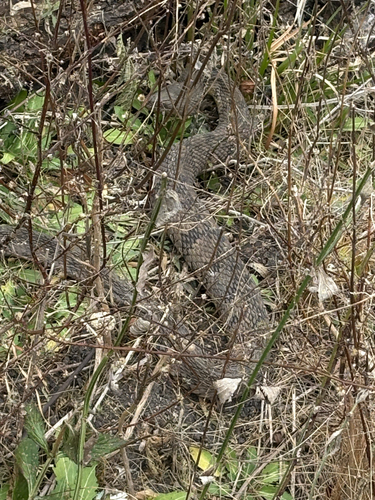
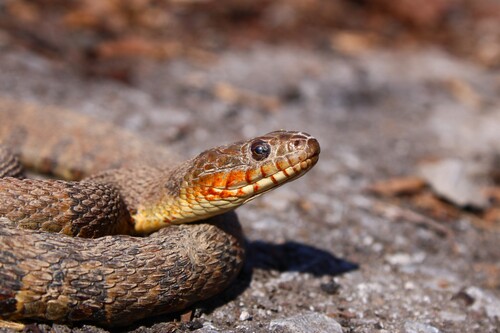 Common WatersnakeHarmless
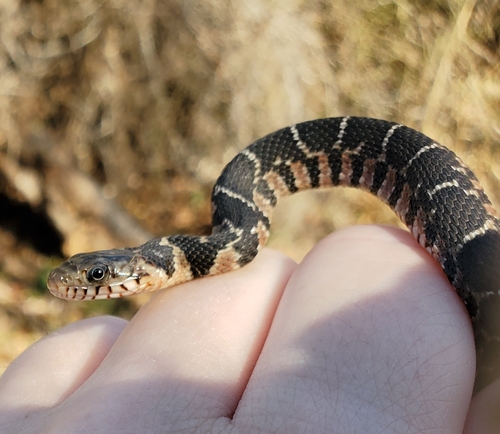
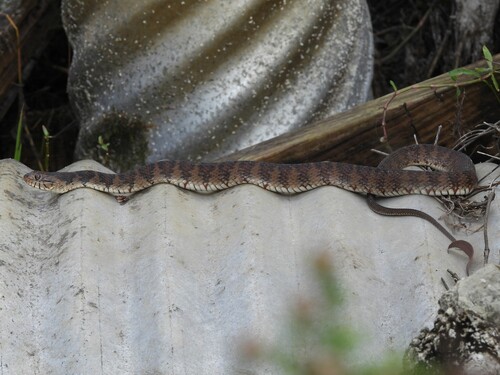
The venomous copperhead can be confused with watersnakes; copperheads have hourglass crossbands and a facial pit.
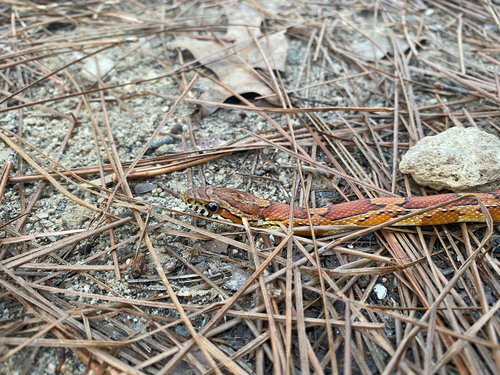
Broad-banded Copperhead vs Common Watersnake→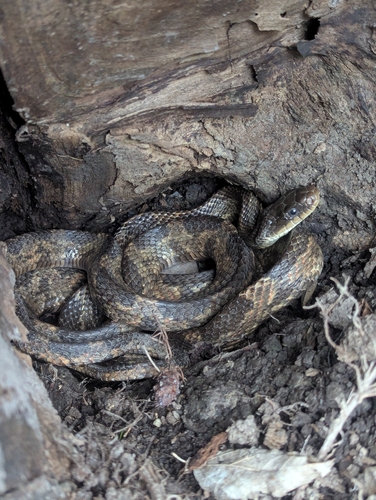 Western RatsnakeHarmless
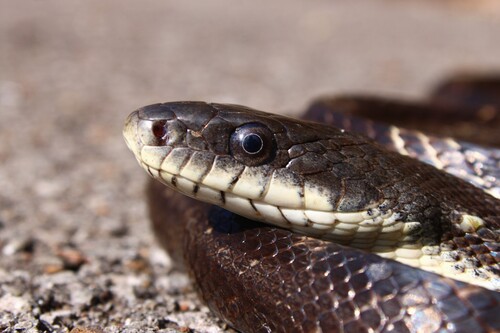
The venomous copperhead is sometimes confused with harmless ratsnakes and cornsnakes; look for its hourglass crossbands and facial pit.
Broad-banded Copperhead vs Western Ratsnake→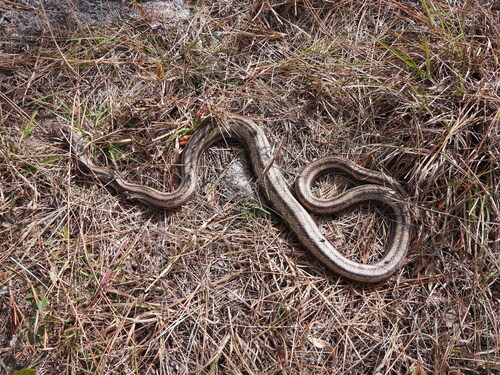
More Viperidae snakes
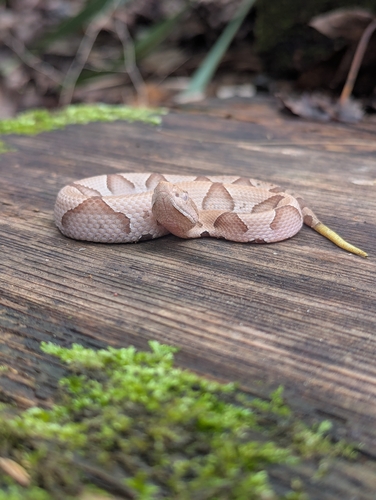 Eastern CopperheadAgkistrodon contortrix
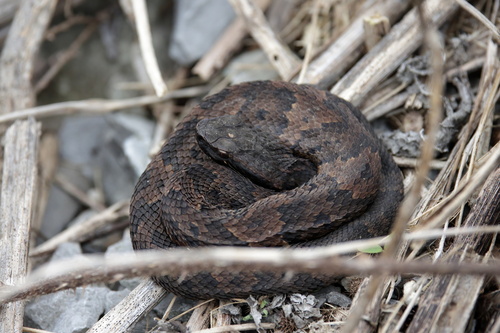 Northern CottonmouthAgkistrodon piscivorus
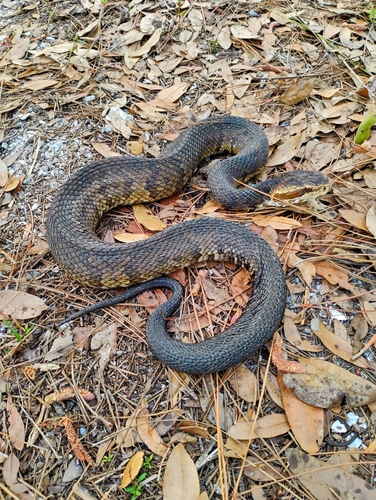 Florida CottonmouthAgkistrodon conanti
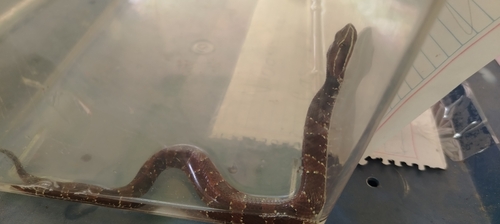 Mexican CantilAgkistrodon bilineatus
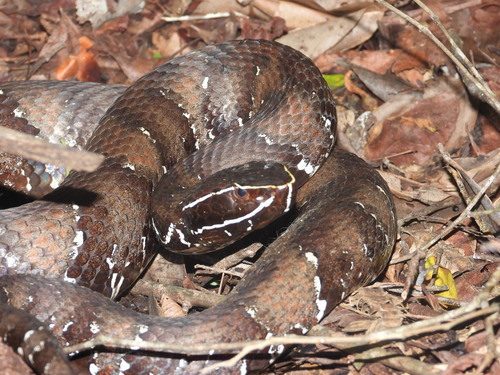 Yucatecan CantilAgkistrodon russeolus
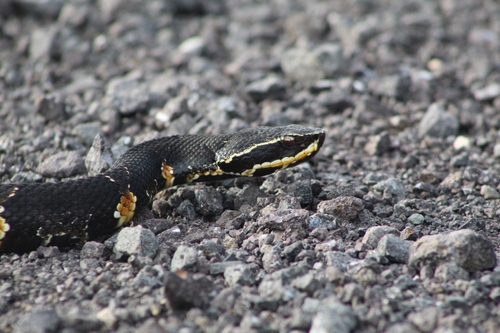 Taylor's CantilAgkistrodon taylori
 Southern CantilAgkistrodon howardgloydi
 Western RattlesnakeCrotalus oreganus
Classification
How scientists group this snake, from the broadest category down to the exact species. Each step narrows to its closest relatives.
- OrderThe broad group of scaled reptiles: all snakes and lizards
- Squamata
- FamilyA group of related snakes that share key traits
- Viperidae
- GenusA close-knit group of very similar species
- Agkistrodon
- SpeciesThis exact snake, named in the two-part scientific name
- Agkistrodon laticinctus
Keep learning
- Are Snakes Dangerous? The Real Risk, in PerspectiveMost snakes are harmless and avoid people. Here is the honest picture of snakebite risk worldwide and how to lower your own.
- Snakebite First Aid: What to Do (and What Never to Do)A clear, CDC-based guide to snakebite first aid: the steps that help, the popular myths that hurt, and how to tell a serious bite from a minor one.
- Venomous vs Nonvenomous: How to Tell the DifferenceThe folk rules for telling venomous snakes apart, where each one fails, and why location-based identification beats guessing by sight.
- What to Do If You Find a SnakeFound a snake at home or on a trail? Here is how to stay calm, give it space, identify it safely, and know when to call a professional.
Distribution from GBIF & iNaturalist. Venom status per CDC. Background: Wikipedia. Informational only. Never handle a snake to identify it.