
Cottonmouth
Northern Cottonmouth
VenomousAgkistrodon piscivorus
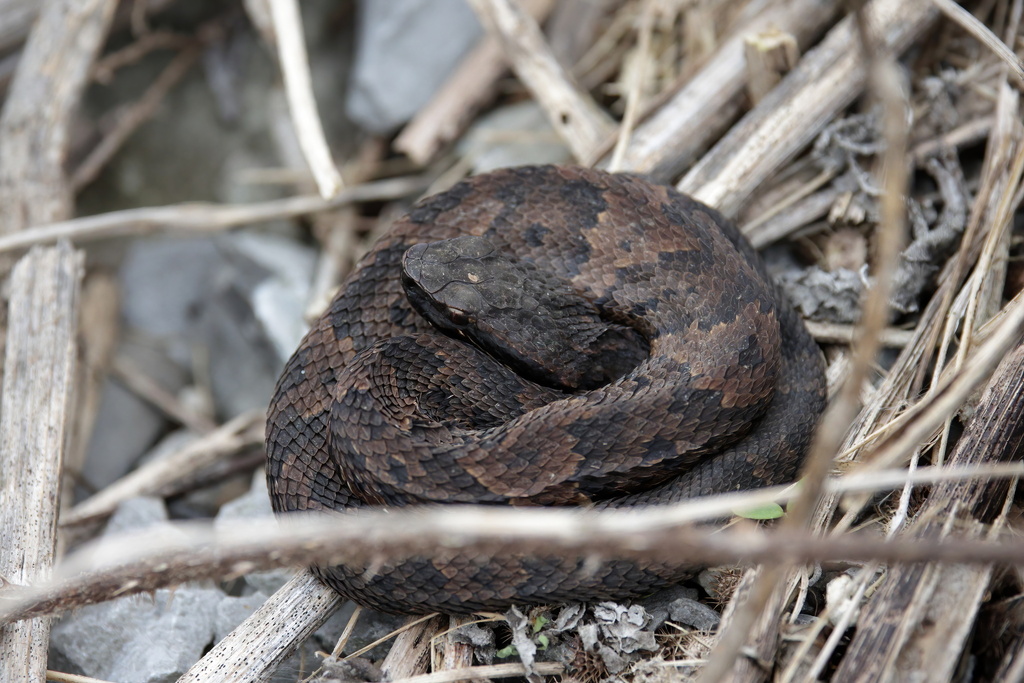
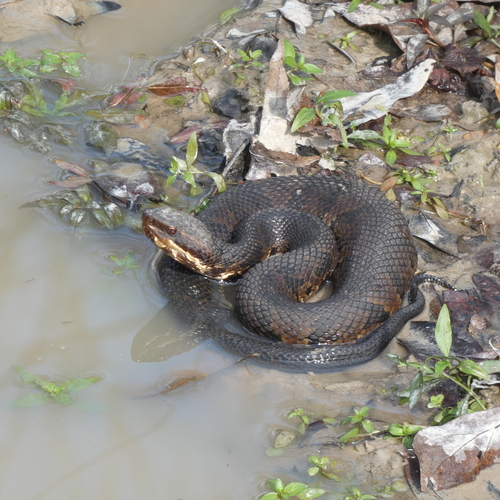
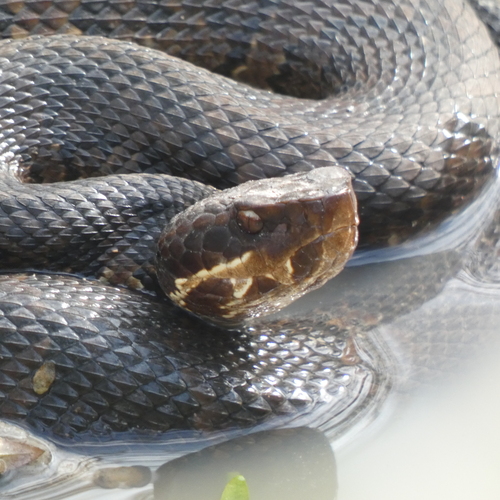
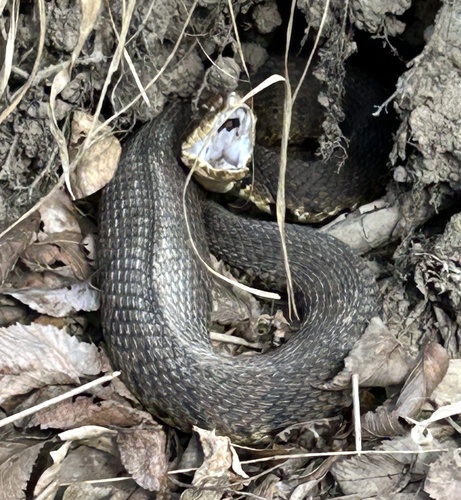
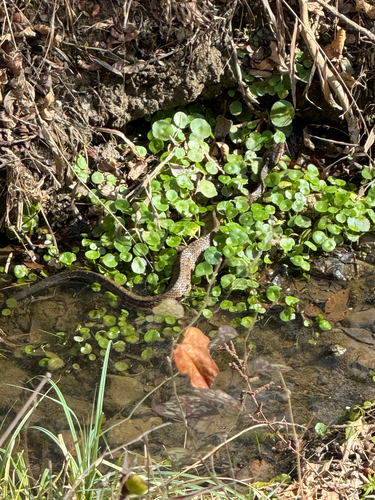
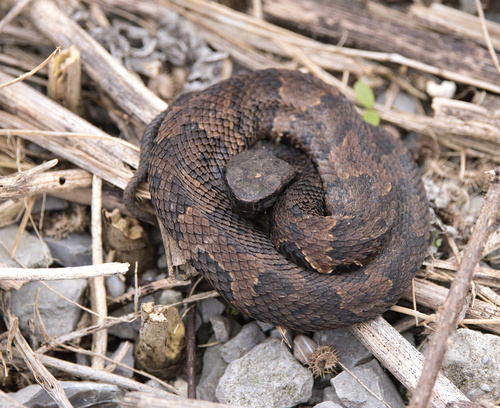
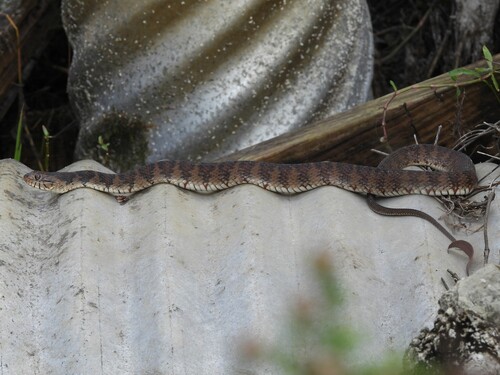
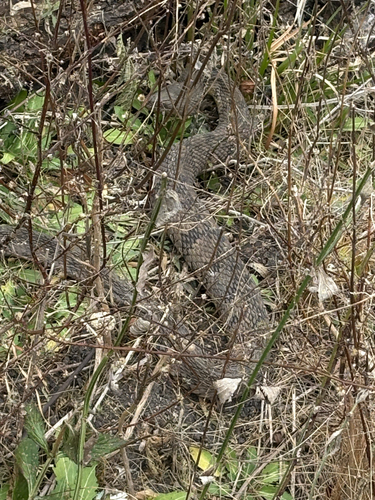
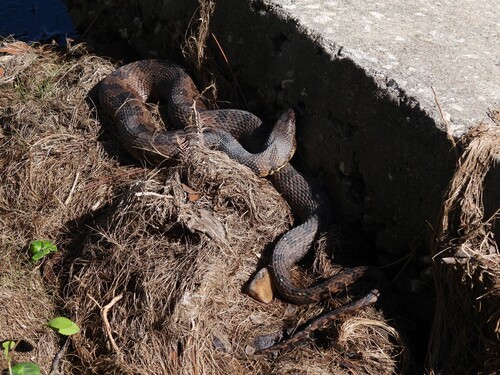
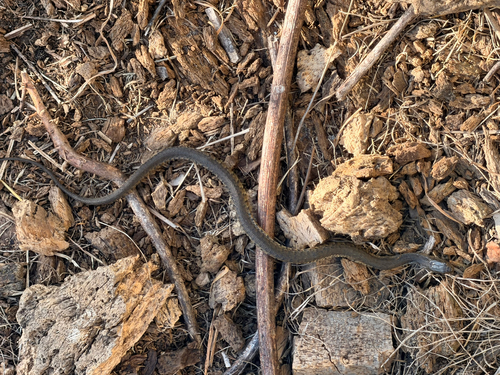
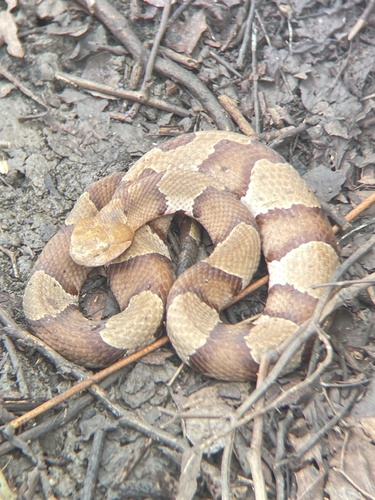
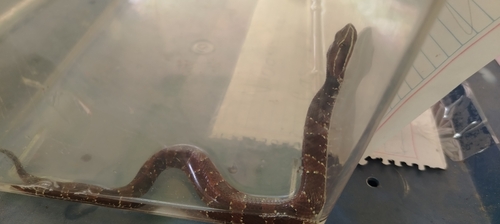
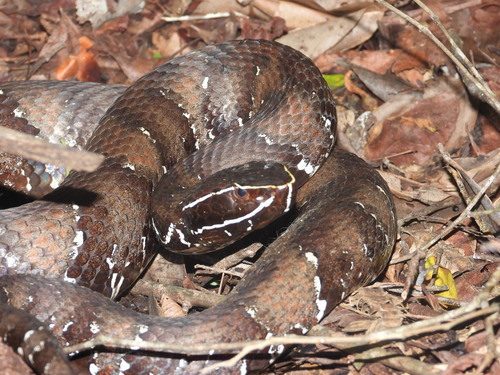
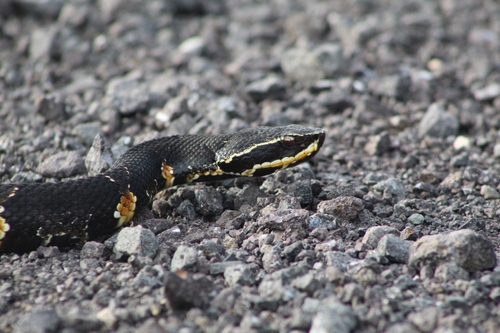
6 photographs of the Northern Cottonmouth. © Kim.
The Northern Cottonmouth (Agkistrodon piscivorus) is a venomous snake in the Viperidae family, recorded in 2 countries.
If you are bitten
Copperhead and cottonmouth bites are painful and need medical care but are rarely fatal with prompt treatment (cottonmouth venom is the more potent of the two). Stay calm, keep the limb still, remove tight items, and go to an emergency room. Do not use a tourniquet or cut the wound. Call Poison Control at 1-800-222-1222 or 911 in the US, or your local emergency number. (Source: CDC.)
- Also called
- Cottonmouth
- Family
- Viperidae
- Size
- Usually 2–4 ft, heavy-bodied.
- Habitat
- Copperheads favor forests and rocky hillsides; cottonmouths favor swamps, marshes, and slow water.
- Behavior
- Pit vipers that often hold their ground; cottonmouths gape to flash a white mouth lining when threatened.
- Identify
- Heavy body, triangular head, vertical pupils, and a heat-sensing pit between each eye and nostril.
- Danger
- moderate-high
About the Northern Cottonmouth
Agkistrodon piscivorus is a species of venomous snake, a pit viper in the subfamily Crotalinae of the family Viperidae. It is one of the world's few semiaquatic vipers (along with the Florida cottonmouth), and is native to the Southeastern United States. As an adult, it is large and capable of delivering a painful and potentially fatal bite. When threatened, it may respond by coiling its body and displaying its fangs. Individuals may bite when feeling threatened or being handled in any way. It tends to be found in or near water, particularly in slow-moving and shallow lakes, streams, and marshes. It is a capable swimmer, and like several species of snakes, is known to occasionally enter bays and estuaries and swim between barrier islands and the mainland.
The generic name is derived from the Greek words ἄγκιστρον agkistron "fish-hook, hook" and ὀδών odon "tooth", and the specific name comes from the Latin piscis 'fish' and voro '(I) eat greedily, devour'; thus, the scientific name translates to "hook-toothed fish-eater". Common names include cottonmouth, northern cottonmouth, water moccasin, swamp moccasin, black moccasin, and simply viper. Many of the common names refer to the threat display, in which this species often stands its ground and gapes at an intruder, exposing the white lining of its mouth. Many scientists dislike the use of the term water moccasin since it can lead to confusion between the venomous cottonmouth and nonvenomous water snakes.
Taxonomy and etymology
Common names
This is a list of common names for A. piscivorus, some of which also refer to other species:
Subspecies and taxonomic history
For many decades, one species with three subspecies were formally recognized: eastern cottonmouth, A. p. piscivorus (Lacépède, 1789); western cottonmouth, A. p. leucostoma (Troost, 1836); and Florida cottonmouth, A. p. conanti Gloyd, 1969. However, a molecular DNA-based study was published in 2014, applying phylogenetic theories (one implication being no subspecies are recognized), changing the long-standing taxonomy. The resulting and current taxonomic arrangement recognizes two species and no subspecies. The western cottonmouth (A. p. leucostoma) was synonymized with the eastern cottonmouth (A. p. piscivorus) into one species (with the oldest published name, A. p. piscivorus, having priority). The Florida cottonmouth (A. p. conanti) is now recognized as a separate species.
Agkistrodon piscivorus (Lacépéde, 1789), northern cottonmouth
Agkistrodon conanti Gloyd, 1969, Florida cottonmouth (south Georgia and Florida peninsula)
Anatomy and description
Agkistrodon piscivorus is the largest species of the genus Agkistrodon. Adults commonly exceed 80 cm (31 in) in total length (including tail); females are typically smaller than males. Total length, per one study of adults, was 65 to 90 cm (26 to 35 in). Average body mass has been found to be 292.5 to 579.6 g (10.32 to 20.44 oz) in males and 201.1 to 254.1 g (7.09 to 8.96 oz) in females. Occasionally, individuals may exceed 180 cm (71 in) in total length, especially in the eastern part of the range, with a record specimen of 189.2 cm (74.5 in).
Adapted from Wikipedia, available under CC BY-SA.
Local and regional names
The Northern Cottonmouth is known by these names across the regions where it lives:
- Chinese
- 食魚蝮
- Czech
- ploskolebec vodní
- Danish
- Vandmokkasin
- Dutch
- Watermoccasinslang
- English
- Cotton-mouth, Cottonmouth, Eastern Cottonmouth, Water Moccasin
- French
- Mocassin d'eau, Mocassin d’eau
- German
- Wasser-Mokassinotter, Wassermokassinotter, Wassermokassinschlange, Westliche Wassermokassinotter, Östliche Wasser-Mokassinotter
- Hungarian
- vízi mokaszinkígyó
- Italian
- Bocca di cotone
- Japanese
- コットンマウス, ヌママムシ
- Polish
- mokasyn błotny
- Russian
- Водяной щитомордник, Щитомордник-рыбоед
- Spanish
- Boca de Algodón
- Turkish
- Su makoseni
Frequently asked: Northern Cottonmouth
- Is the Northern Cottonmouth venomous?
- Yes. The Northern Cottonmouth (Agkistrodon piscivorus) is venomous and belongs to the Viperidae family (copperhead/cottonmouth). Its bite is considered moderate-high risk to people. Treat any bite as a medical emergency.
- Is the Northern Cottonmouth poisonous?
- Snakes are venomous, not poisonous. "Poisonous" means harmful to eat or touch; "venomous" means injecting toxins through a bite. The Northern Cottonmouth is venomous, delivering venom through a bite.
- Is the Northern Cottonmouth dangerous?
- Copperhead and cottonmouth bites are painful and need medical care but are rarely fatal with prompt treatment (cottonmouth venom is the more potent of the two). Stay calm, keep the limb still, remove tight items, and go to an emergency room. Do not use a tourniquet or cut the wound. Call Poison Control at 1-800-222-1222 or 911 in the US, or your local emergency number. (Source: CDC.)
- Where does the Northern Cottonmouth live?
- The Northern Cottonmouth has verified records in 2 countries, including United States of America, Mexico. See the distribution section below for its full range.
- How do I identify the Northern Cottonmouth?
- Heavy body, triangular head, vertical pupils, and a heat-sensing pit between each eye and nostril.
- How big does the Northern Cottonmouth get?
- Usually 2–4 ft, heavy-bodied.
If you are bitten by the Northern Cottonmouth
Do
- Get away from the snake and stay calm. Most bites worsen when people panic or try again to handle the snake.
- Call 911 or Poison Control (1-800-222-1222) right away. Antivenom works best when given early.
- Note the time of the bite and, from a safe distance, the snake's color and pattern, a phone photo is enough. Do not chase it.
- Keep the bitten limb still and at roughly heart level. Sit or lie down and limit movement.
- Remove rings, watches, and tight clothing near the bite before swelling starts.
- Gently wash the bite with soap and water and cover it with a clean, dry dressing.
Do not
- Do not cut the wound or try to suck out the venom.
- Do not apply a tourniquet or ice.
- Do not drink alcohol or caffeine.
- Do not take aspirin or ibuprofen, they can worsen bleeding. Acetaminophen is safer for pain.
- Do not try to catch or kill the snake. A dead snake can still bite by reflex.
First-aid guidance adapted from the U.S. Centers for Disease Control and Prevention (CDC NIOSH), Venomous Snakes. Educational only; always follow the instructions of emergency responders.
Where it is found
Snakes it is confused with
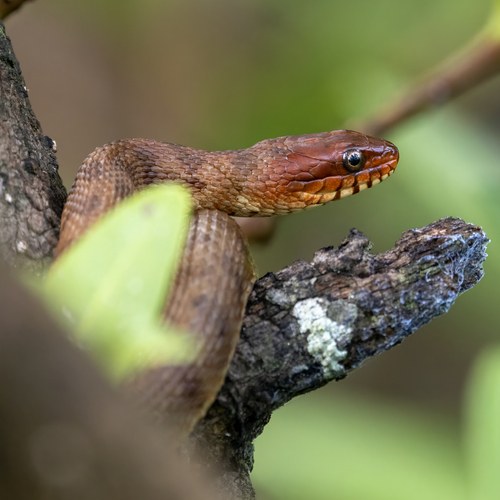
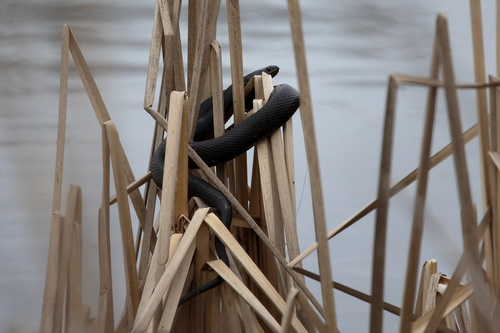
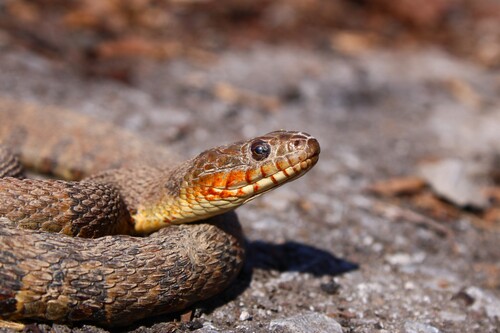 Common WatersnakeHarmless
The venomous cottonmouth is often confused with harmless watersnakes. The cottonmouth has a blocky head, vertical pupils, and gapes to show a white mouth.
Northern Cottonmouth vs Common Watersnake→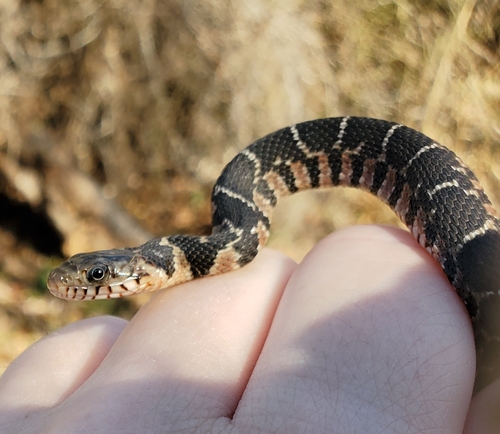
More Viperidae snakes
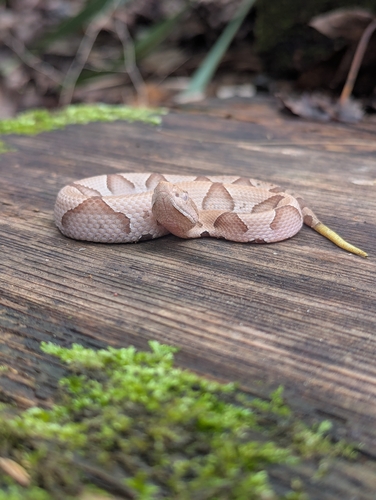 Eastern CopperheadAgkistrodon contortrix
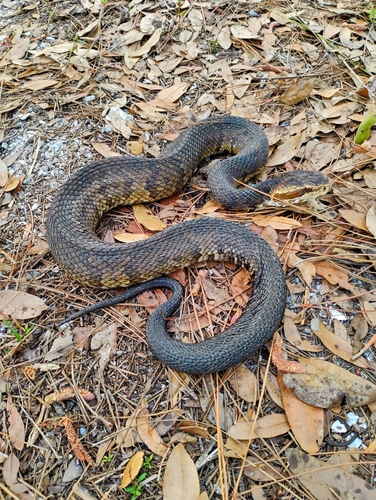 Florida CottonmouthAgkistrodon conanti
 Broad-banded CopperheadAgkistrodon laticinctus
 Mexican CantilAgkistrodon bilineatus
 Yucatecan CantilAgkistrodon russeolus
 Taylor's CantilAgkistrodon taylori
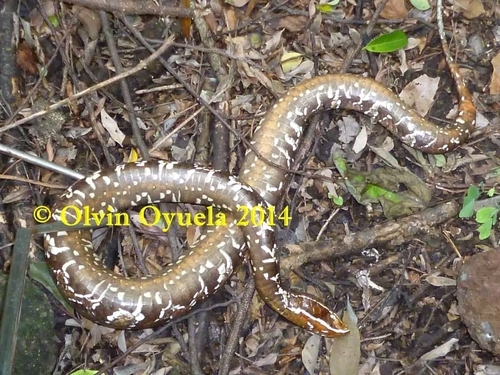 Southern CantilAgkistrodon howardgloydi
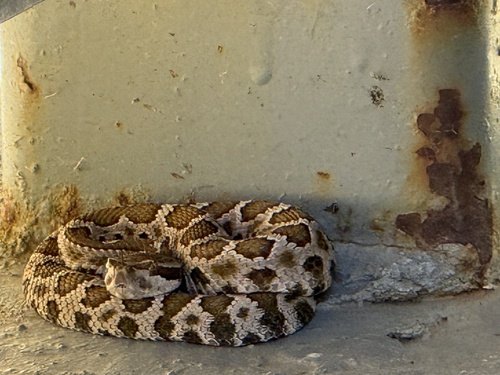 Western RattlesnakeCrotalus oreganus
Classification
How scientists group this snake, from the broadest category down to the exact species. Each step narrows to its closest relatives.
- OrderThe broad group of scaled reptiles: all snakes and lizards
- Squamata
- FamilyA group of related snakes that share key traits
- Viperidae
- GenusA close-knit group of very similar species
- Agkistrodon
- SpeciesThis exact snake, named in the two-part scientific name
- Agkistrodon piscivorus
Keep learning
- Are Snakes Dangerous? The Real Risk, in PerspectiveMost snakes are harmless and avoid people. Here is the honest picture of snakebite risk worldwide and how to lower your own.
- Snakebite First Aid: What to Do (and What Never to Do)A clear, CDC-based guide to snakebite first aid: the steps that help, the popular myths that hurt, and how to tell a serious bite from a minor one.
- Venomous vs Nonvenomous: How to Tell the DifferenceThe folk rules for telling venomous snakes apart, where each one fails, and why location-based identification beats guessing by sight.
- What to Do If You Find a SnakeFound a snake at home or on a trail? Here is how to stay calm, give it space, identify it safely, and know when to call a professional.
Distribution from GBIF & iNaturalist. Venom status per CDC. Background: Wikipedia. Informational only. Never handle a snake to identify it.