
Boidae
Puerto Rican Boa
HarmlessChilabothrus inornatus
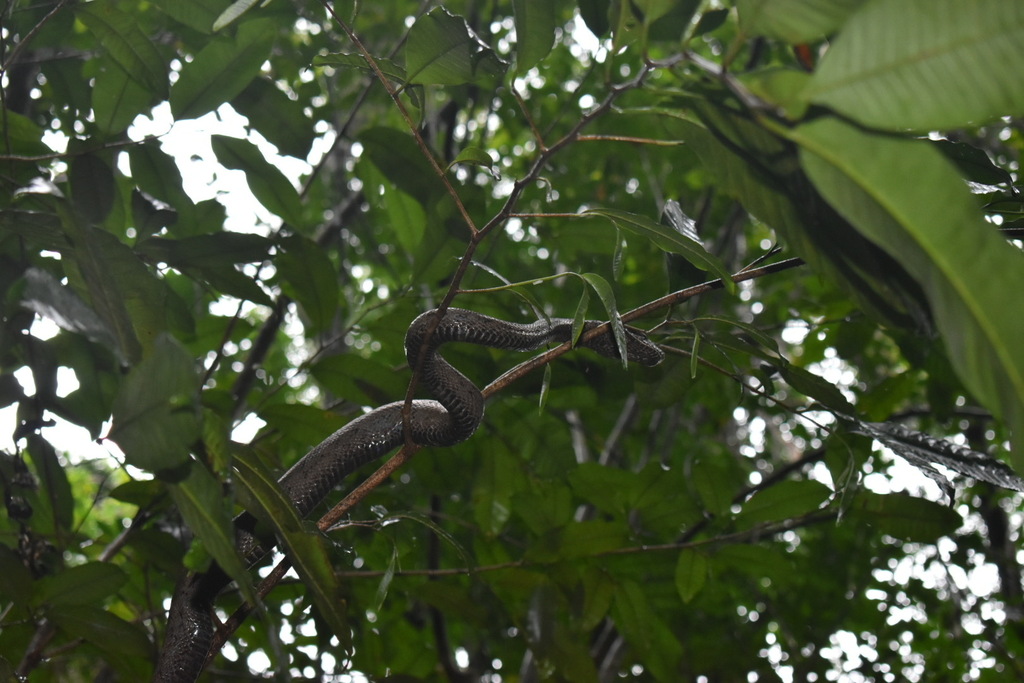
The Puerto Rican Boa (Chilabothrus inornatus) is a non-venomous snake in the Boidae family, recorded in 9 countries.
- Family
- Boidae
About the Puerto Rican Boa
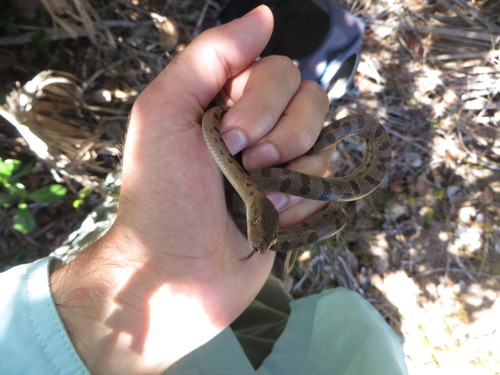
The Puerto Rican boa (Chilabothrus inornatus), most commonly known as Culebrón ("big snake"), is a large species of boa endemic to Puerto Rico. It is a terrestrial and arboreal snake with a pale brown to dark brown coloration. It grows to 1.9 m (6.2 ft) in length. It feeds on small mammals such as rodents and bats, birds and sometimes anole lizards. Like most boas, it is viviparous (bearing live young) and kills its prey using constriction.
Taxonomy
It is extremely similar to the Jamaican boa (Chilabothrus subflavus) which was seen as conspecific for some fifty years until they were split in 1901 by Leonhard Hess Stejneger.
The taxon Piesigaster boettgeri was described from Mindanao in the Philippines, by the Spaniard es:Víctor López Seoane in 1881, but was identified as a synonym of this species by Stejneger. Seoane's brother was an officer in the Spanish Navy and thus the localities of the group of specimens Seoane had obtained were confused during their passage to Spain.
Although it has been known under the name E. inornatus for over a century, having been moved to the genus Epicrates (which had been created in 1830 by Johann Georg Wagler) by the Belgian zoologist George Albert Boulenger in 1893 when cataloguing the specimens in the Natural History Museum, London, a number of authors decided to it move to Chilabothrus inornatus in 2013. It had first been moved to Chilabothrus inornatus from the genus Boa in 1844 by either the French herpetologists André Marie Constant Duméril and Gabriel Bibron, or the Italian snake expert Giorgio Jan, only a year after it had been described in that genus by the Dane Johannes Theodor Reinhardt in 1843. Reinhardt had three snakes of this species to study for his description, these are the syntypes and are stored in Copenhagen. They were collected by a certain Dr. Ravn from Puerto Rico. It is often still known as Epicrates inornatus in many publications.
Etymology
The specific epithet inornatus is from the Latin negation of ornatus, meaning 'adorned', thus the boa is 'unadorned'.
Description
A characteristic of the species is the irregular parietal scales. It can grow to some 1.9 m (6.2 ft), with 261 to 271 ventral scales and 67 to 75 caudal scales, according to Stejneger in 1904, who only knew of at least twelve specimens at the time. The colours of the three live specimens he knew of were variable; two he describes as "bistre" (deep, dark, grayish brown), the other as "chestnut" with a darker colour near the tail, the first had a darker ventral surface, the second he describes as "slate" coloured, and the last had a lighter slate-brown underside with the ventral scales having paler edges. The first was patterned with seventy to eighty indistinct dusky cross bars consisting of a row of spots, these cross bars increasing in width to the end of the snake; in the second these patterns were much more distinct, with the crossbars having pale centres but being outlined in blackish colour, the lateral spots being so aligned as to form a blackish line in the front third of its body, but in the last snake there was little evidence of patterning with only a few scattered and obscure darkish spots on its sides. The iris he describes as "silvery gray clouded with dusky".
Adapted from Wikipedia, available under CC BY-SA.
Frequently asked: Puerto Rican Boa
- Is the Puerto Rican Boa venomous?
- No. The Puerto Rican Boa (Chilabothrus inornatus) is non-venomous and is not considered dangerous to humans. Like most snakes, it will retreat rather than bite when given the chance.
- Is the Puerto Rican Boa poisonous?
- Snakes are venomous, not poisonous. "Poisonous" means harmful to eat or touch; "venomous" means injecting toxins through a bite. The Puerto Rican Boa is neither poisonous nor venomous.
- Is the Puerto Rican Boa dangerous?
- The Puerto Rican Boa is not dangerous to humans. It has no medically significant venom and bites only defensively if cornered or handled.
- Where does the Puerto Rican Boa live?
- The Puerto Rican Boa has verified records in 9 countries, including Puerto Rico, Jamaica, United States of America. See the distribution section below for its full range.
- What does the Puerto Rican Boa eat?
- The boa feeds by seizing the prey in its jaws, wrapping several coils around it, and then constricting until the prey has suffocated. The prey is then swallowed headfirst. The feeding habits of the very young are unknown. However, locals claim they eat small lizards, other small vertebrates and some insects. This species is a sit-and-wait predator as opposed to an active hunter of prey. It is a nocturnal, terrestrial hunter which is not found often in trees.
- Why is it called the Puerto Rican Boa?
- The specific epithet inornatus is from the Latin negation of ornatus, meaning 'adorned', thus the boa is 'unadorned'.
Where it is found
More Boidae snakes
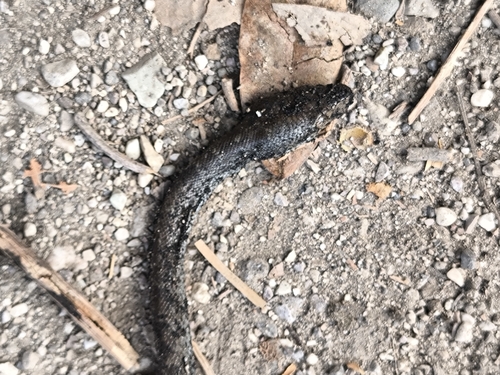 Hispaniolan BoaChilabothrus striatus
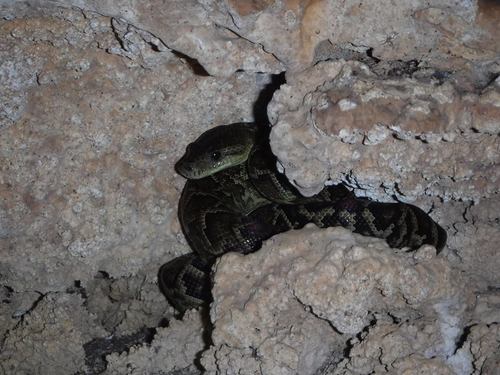 Cuban Tree BoaChilabothrus angulifer
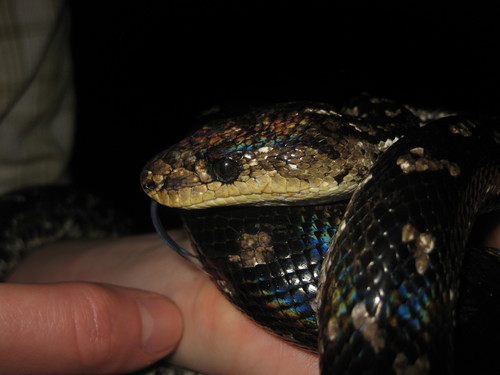 Bahamian BoaChilabothrus strigilatus
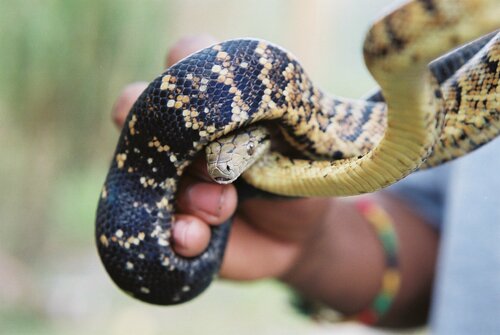 Jamaican BoaChilabothrus subflavus
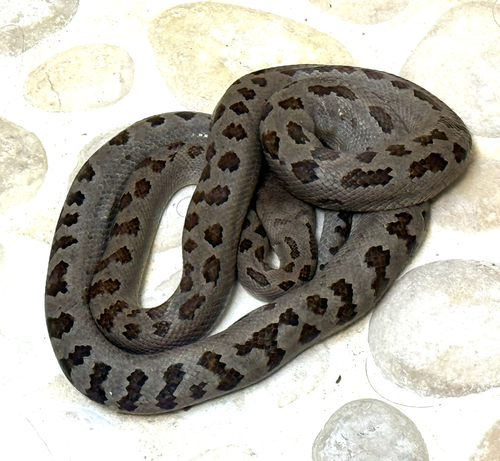 Southern Bahamas boaChilabothrus chrysogaster
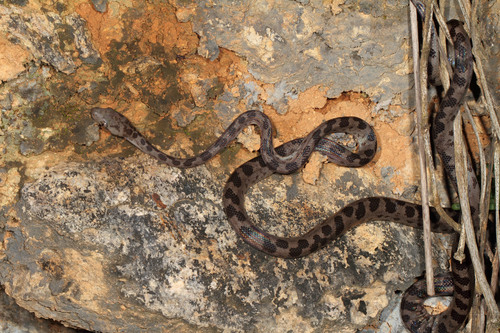 Hispaniolan Gracile BoaChilabothrus gracilis
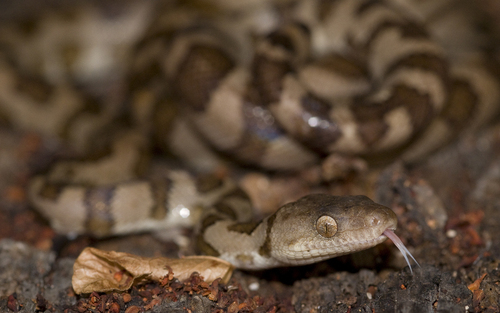 Virgin Islands boaChilabothrus granti
 Abaco Island BoaChilabothrus exsul
Classification
How scientists group this snake, from the broadest category down to the exact species. Each step narrows to its closest relatives.
- OrderThe broad group of scaled reptiles: all snakes and lizards
- Squamata
- FamilyA group of related snakes that share key traits
- Boidae
- GenusA close-knit group of very similar species
- Chilabothrus
- SpeciesThis exact snake, named in the two-part scientific name
- Chilabothrus inornatus
Keep learning
- What to Do If You Find a SnakeFound a snake at home or on a trail? Here is how to stay calm, give it space, identify it safely, and know when to call a professional.
- Venomous vs Nonvenomous: How to Tell the DifferenceThe folk rules for telling venomous snakes apart, where each one fails, and why location-based identification beats guessing by sight.
- What Is a Snake? Anatomy and the BasicsA clear overview of what makes a snake a snake: limbless body plan, anatomy, evolution from lizards, species diversity, and why they are ectothermic.
- How to Keep Snakes Out of Your Yard and HomeA practical guide to keeping snakes out of your yard and home using habitat changes that work, plus what to skip and what to do if one shows up.
Distribution from GBIF & iNaturalist. Venom status per CDC. Background: Wikipedia. Informational only. Never handle a snake to identify it.