
Boidae
Jamaican Boa
HarmlessChilabothrus subflavus
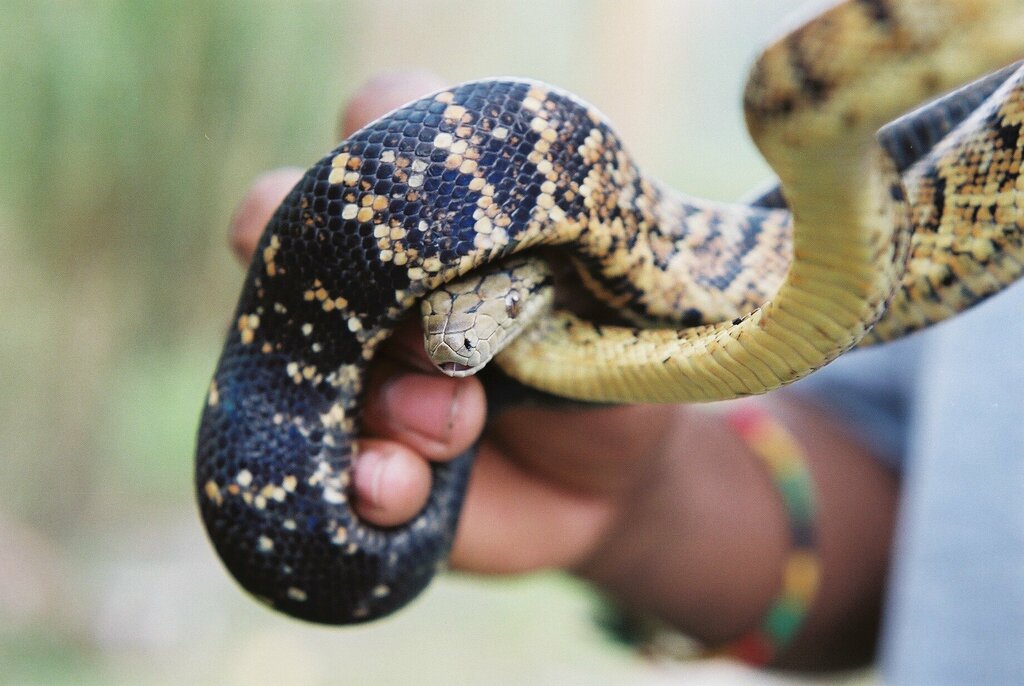
The Jamaican Boa (Chilabothrus subflavus) is a non-venomous snake in the Boidae family, recorded in 5 countries.
- Family
- Boidae
About the Jamaican Boa
The Jamaican boa, Jamaican yellow boa, yellow snake or Jamaican green snake (Chilabothrus subflavus); in Jamaican Patois: nanka) is a boa species endemic to Jamaica. No subspecies are recognized. Like all other boas, it is not venomous.
Description
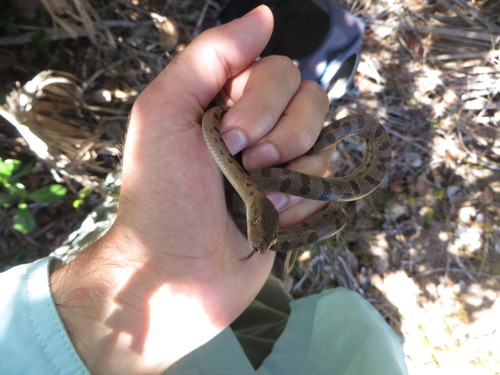
The Jamaican boa is golden-green around the head and along the anterior section of the body, with black zigzag crossbars, becoming black toward the posterior end of its body. The snake's body is quite long, up to 2 metres (6 feet 7 inches) in total length.
Behavior
The Jamaican boa is primarily nocturnal and arboreal. The species may also display crepuscular activity, influenced by factors such as environmental conditions, prey availability, and seasonal activities. During daytime, this species seeks shelter in various locations such as epiphytes, trees, rock crevices, termite nests, or caves. It has been observed at the far end of Portland Cave. This species is also known to bask on rocks following heavy rains and to rest on roads and trails during the evening, suggesting crepuscular behavior under certain conditions.
Distribution and habitat
Found in Jamaica in the Cockpit Country, historically once prevalent throughout much of Jamaica, notably in rural areas, as well as some smaller adjacent islands, such as Goat Islands. However, after the introduction of the small Indian mongoose (Herpestes auropunctatus) in 1872, sightings of the snake on the mainland dropped. The snake is known to be elusive, which further complicates its detection.
Recent surveys have failed to confirm the snake's presence on Great Goat Island, an area dominated by dry limestone forest. Comprehensive island-wide surveys have been conducted, indicating the snake's presence in various parishes such as Trelawny, St. Anne, Westmoreland, and Hanover.
The Jamaican boa is now confined to approximately 1,000.6 km2, about 9% of Jamaica's land area. Habitat fragmentation and human activities have localized and severely fragmented the population. Major strongholds for the boa now appear to be Cockpit Country, Blue Mountains, Yallah Mountains, Hellshire Hills, and Portland Bight, which together account for 93% of the known habitat of the species.
Foraging and diet
The foraging behavior of the Jamaican boa is not extensively studied, but the species is known to be an ecological generalist. It employs constriction to subdue and consume a diverse range of prey. The snake utilizes both active and ambush foraging strategies, which vary depending on the habitat structure, available food resources, and its life stage. For instance, it has been observed hanging from branches and vines to prey on emerging bats in the evening.
Adapted from Wikipedia, available under CC BY-SA.
Frequently asked: Jamaican Boa
- Is the Jamaican Boa venomous?
- No. The Jamaican Boa (Chilabothrus subflavus) is non-venomous and is not considered dangerous to humans. Like most snakes, it will retreat rather than bite when given the chance.
- Is the Jamaican Boa poisonous?
- Snakes are venomous, not poisonous. "Poisonous" means harmful to eat or touch; "venomous" means injecting toxins through a bite. The Jamaican Boa is neither poisonous nor venomous.
- Is the Jamaican Boa dangerous?
- The Jamaican Boa is not dangerous to humans. It has no medically significant venom and bites only defensively if cornered or handled.
- Where does the Jamaican Boa live?
- The Jamaican Boa has verified records in 5 countries, including Jamaica, Cuba, Bahamas. See the distribution section below for its full range.
- What does the Jamaican Boa eat?
- The foraging behavior of the Jamaican boa is not extensively studied, but the species is known to be an ecological generalist. It employs constriction to subdue and consume a diverse range of prey. The snake utilizes both active and ambush foraging strategies, which vary depending on the habitat structure, available food resources, and its life stage. For instance, it has been observed hanging from branches and vines to prey on emerging bats in the evening.
Where it is found
More Boidae snakes
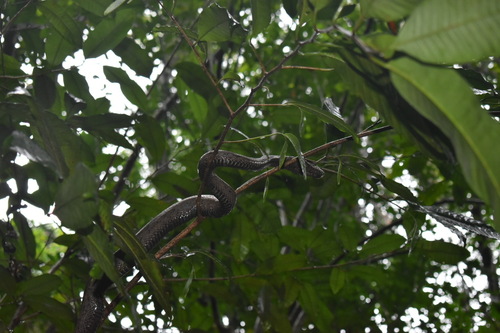 Puerto Rican BoaChilabothrus inornatus
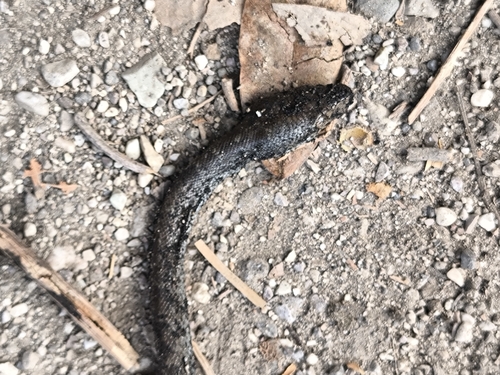 Hispaniolan BoaChilabothrus striatus
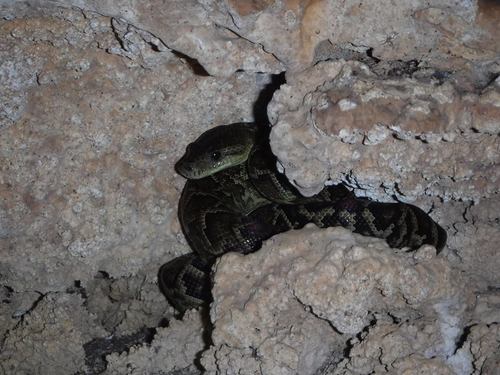 Cuban Tree BoaChilabothrus angulifer
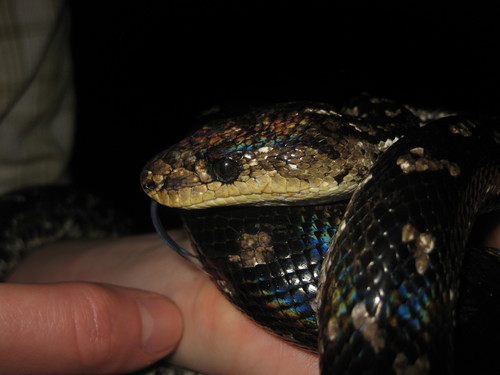 Bahamian BoaChilabothrus strigilatus
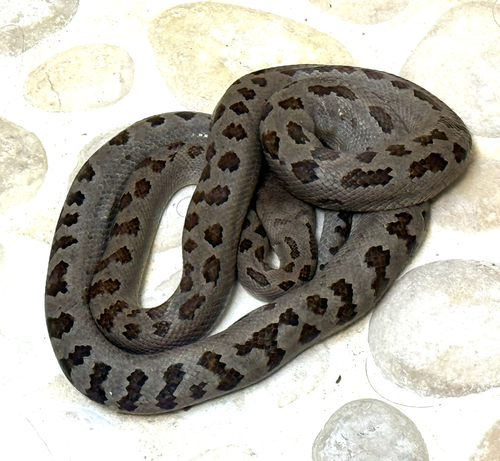 Southern Bahamas boaChilabothrus chrysogaster
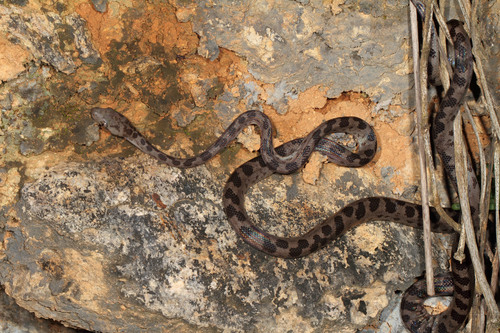 Hispaniolan Gracile BoaChilabothrus gracilis
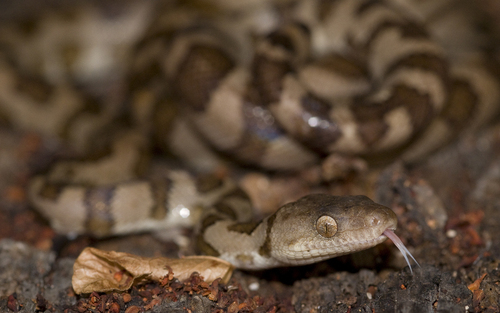 Virgin Islands boaChilabothrus granti
 Abaco Island BoaChilabothrus exsul
Classification
How scientists group this snake, from the broadest category down to the exact species. Each step narrows to its closest relatives.
- OrderThe broad group of scaled reptiles: all snakes and lizards
- Squamata
- FamilyA group of related snakes that share key traits
- Boidae
- GenusA close-knit group of very similar species
- Chilabothrus
- SpeciesThis exact snake, named in the two-part scientific name
- Chilabothrus subflavus
Keep learning
- What to Do If You Find a SnakeFound a snake at home or on a trail? Here is how to stay calm, give it space, identify it safely, and know when to call a professional.
- Venomous vs Nonvenomous: How to Tell the DifferenceThe folk rules for telling venomous snakes apart, where each one fails, and why location-based identification beats guessing by sight.
- What Is a Snake? Anatomy and the BasicsA clear overview of what makes a snake a snake: limbless body plan, anatomy, evolution from lizards, species diversity, and why they are ectothermic.
- How to Keep Snakes Out of Your Yard and HomeA practical guide to keeping snakes out of your yard and home using habitat changes that work, plus what to skip and what to do if one shows up.
Distribution from GBIF & iNaturalist. Venom status per CDC. Background: Wikipedia. Informational only. Never handle a snake to identify it.