
Boidae
Cuban Tree Boa
HarmlessChilabothrus angulifer
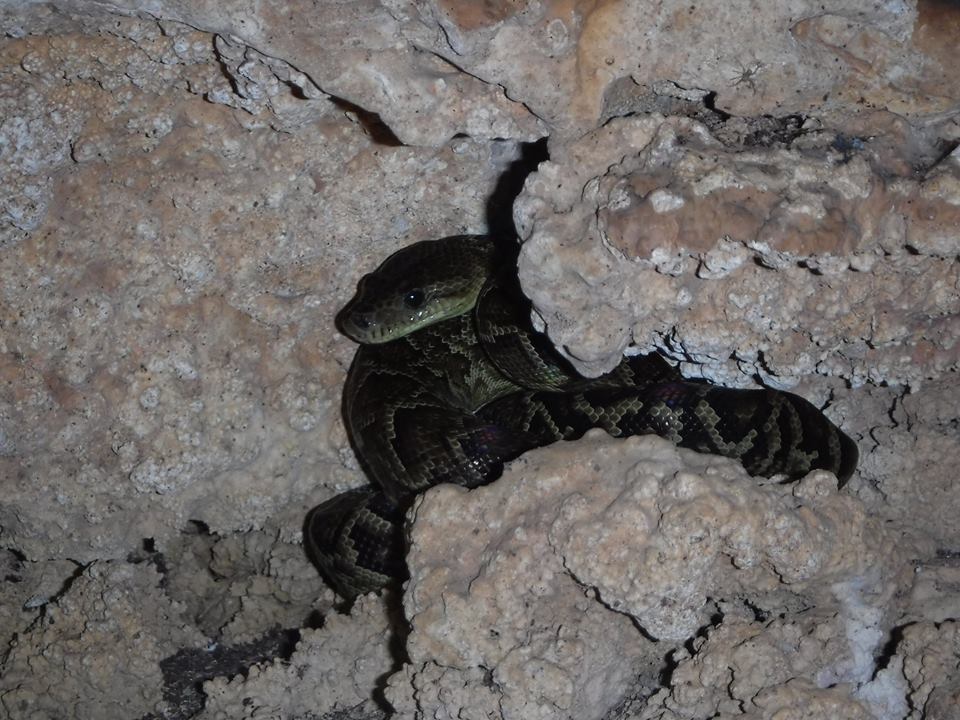
The Cuban Tree Boa (Chilabothrus angulifer) is a non-venomous snake in the Boidae family, recorded in 6 countries.
- Family
- Boidae
About the Cuban Tree Boa
The Cuban boa (Chilabothrus angulifer), also known as the Cuban tree boa and by locals as Majá de Santa María, is a very large species of snake in the family Boidae. With lengths exceeding 5 m (16 ft) and a relatively heavy build, the Cuban boa is one of the largest snakes in North America. The species is native to Cuba and some nearby islands. No subspecies are currently recognized.
Etymology
The genus name Chilabothrus is from the Greek cheilos, meaning "lip", á "without" and bothros "pits". The specific name originates from the Latin word angirlus, meaning "angle", probably in reference to the angular shapes of the main elements of the dorsal pattern.
Geographic range
Chilabothrus angulifer is found in Cuba and on adjacent islands, including Isla de la Juventud (formerly called the Isle of Pines), the Canarreos Archipelago (the Cayo Cantiles), the Colorados Archipelago off the northern coast of Pinar del Río, the Sabana-Camagüey Archipelago (Cayo Guajaba and Cayo Sant María). The type locality given is "Cuba".
Habitat
The preferred natural habitat of Chilabothrus angulifer is forest of several varieties (rainforest, cloud forest, evergreen forest, semi-deciduous forest, thorn forest, coastal scrub forest), at altitudes from sea level to 1,214 m (3,983 ft). It has also been found in sugar cane plantations.
Description
The presence of labial pits, the shortest tail of the entire genus and supralabials separated from the eye result in the Cuban boa being the least derived species of the genus Chilabothrus. It is also the largest member of Chilabothrus. The Cuban boa has a quite massive body, of a size typical for a boa or python of far greater length.
Size
C. angulifer is the largest snake in Cuba and the West Indies, with specimens exceeding 5 m (16 ft) in total length (tail included) and 30 kg (66 lb) in weight. The largest individual measured 5.65 m (18.5 ft) long and was estimated at more than 40 kg (88 lb) in mass. Gundlach (1875, 1880) stated that he had seen individuals of about 6.4 m (21 ft) in total length. He also mentioned one large individual kept in captivity by him that had a length of 4.57 m (15.0 ft) and was collected at the Zapata Swamp, Matanzas Province. Rodríguez (1876) commented that the largest specimens are able grow up to 5.49 m (18.0 ft) long and 25–28 cm (9.8–11.0 in) in diameter. However, on average C. angulifer reaches 3.66 m (12.0 ft) in total length.
Coloring
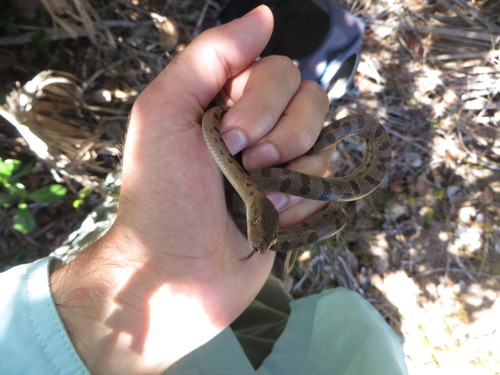
Coloration brown with a pattern of staggered dark brown rhombic spots.
Dorsal pattern of 42–65 appressed, angulate, dark brown to black markings on a yellowish to yellow-tan ground, but often (western Cuba) without any dark colors in dorsal pattern, and pattern composed of indeterminate number of medium brown to pale tan, much-fused markings; tail patternless above, or with up to 12 darker dorsal markings.
Scalation
Adapted from Wikipedia, available under CC BY-SA.
Frequently asked: Cuban Tree Boa
- Is the Cuban Tree Boa venomous?
- No. The Cuban Tree Boa (Chilabothrus angulifer) is non-venomous and is not considered dangerous to humans. Like most snakes, it will retreat rather than bite when given the chance.
- Is the Cuban Tree Boa poisonous?
- Snakes are venomous, not poisonous. "Poisonous" means harmful to eat or touch; "venomous" means injecting toxins through a bite. The Cuban Tree Boa is neither poisonous nor venomous.
- Is the Cuban Tree Boa dangerous?
- The Cuban Tree Boa is not dangerous to humans. It has no medically significant venom and bites only defensively if cornered or handled.
- Where does the Cuban Tree Boa live?
- The Cuban Tree Boa has verified records in 6 countries, including Cuba, United States of America, Bolivia (Plurinational State of). See the distribution section below for its full range.
- What does the Cuban Tree Boa eat?
- Chilabothrus angulifer is a terrestrial apex predator in Cuba along with the Cuban crocodile and carnivorous birds. Depending on age, size and health, prey can range from anurans, lizards, giant tropes, Cuban sliders, aquatic birds (purple gallinules), free-ranging raptors (red-tailed hawks, turkey vultures), forest birds (Columbiformes, Cuculiformes, Passeriformes), caged birds (Columbiformes, Galliformes, crested caracaras, Passeriformes, Psittaciformes), free-ranging poultry (Muscovy ducks, Galliformes), bats, goats, sheep, pigs, dogs, cats, European rabbits, hutias and rats.
- Why is it called the Cuban Tree Boa?
- The genus name Chilabothrus is from the Greek cheilos, meaning "lip", á "without" and bothros "pits". The specific name originates from the Latin word angirlus, meaning "angle", probably in reference to the angular shapes of the main elements of the dorsal pattern.
Where it is found
More Boidae snakes
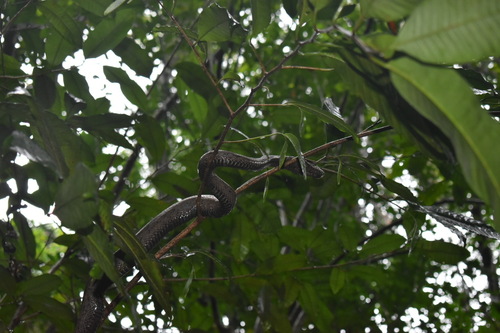 Puerto Rican BoaChilabothrus inornatus
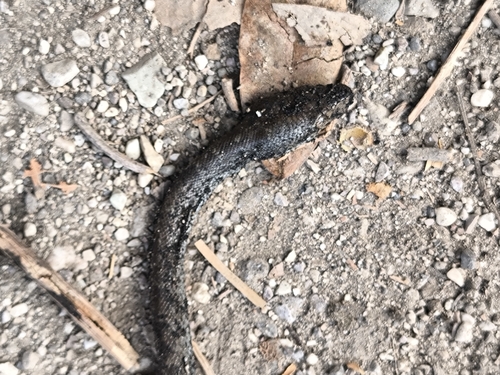 Hispaniolan BoaChilabothrus striatus
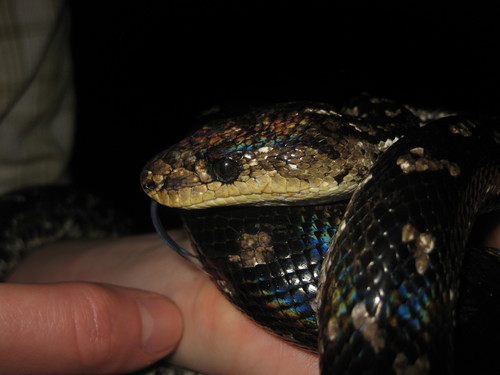 Bahamian BoaChilabothrus strigilatus
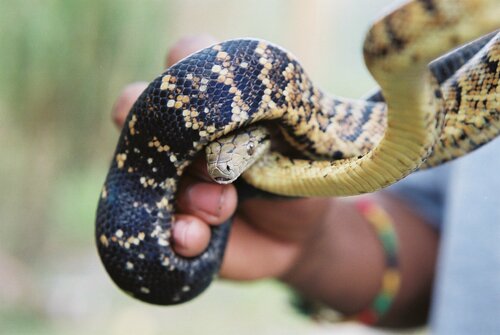 Jamaican BoaChilabothrus subflavus
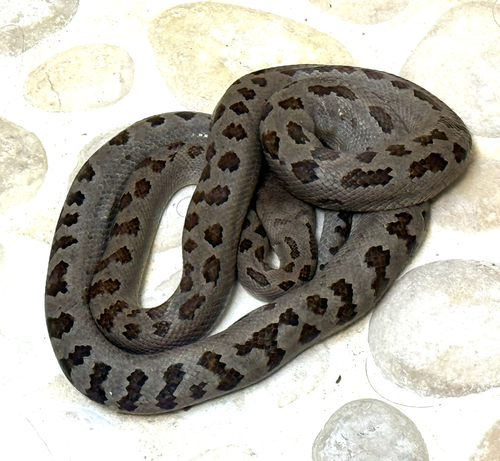 Southern Bahamas boaChilabothrus chrysogaster
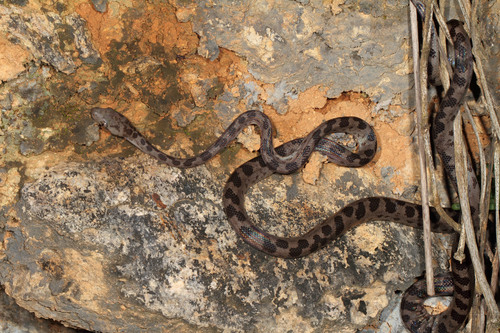 Hispaniolan Gracile BoaChilabothrus gracilis
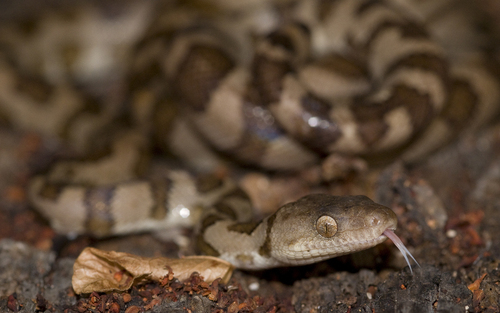 Virgin Islands boaChilabothrus granti
 Abaco Island BoaChilabothrus exsul
Classification
How scientists group this snake, from the broadest category down to the exact species. Each step narrows to its closest relatives.
- OrderThe broad group of scaled reptiles: all snakes and lizards
- Squamata
- FamilyA group of related snakes that share key traits
- Boidae
- GenusA close-knit group of very similar species
- Chilabothrus
- SpeciesThis exact snake, named in the two-part scientific name
- Chilabothrus angulifer
Keep learning
- What to Do If You Find a SnakeFound a snake at home or on a trail? Here is how to stay calm, give it space, identify it safely, and know when to call a professional.
- Venomous vs Nonvenomous: How to Tell the DifferenceThe folk rules for telling venomous snakes apart, where each one fails, and why location-based identification beats guessing by sight.
- What Is a Snake? Anatomy and the BasicsA clear overview of what makes a snake a snake: limbless body plan, anatomy, evolution from lizards, species diversity, and why they are ectothermic.
- How to Keep Snakes Out of Your Yard and HomeA practical guide to keeping snakes out of your yard and home using habitat changes that work, plus what to skip and what to do if one shows up.
Distribution from GBIF & iNaturalist. Venom status per CDC. Background: Wikipedia. Informational only. Never handle a snake to identify it.