
Boidae
Southern Bahamas boa
HarmlessChilabothrus chrysogaster
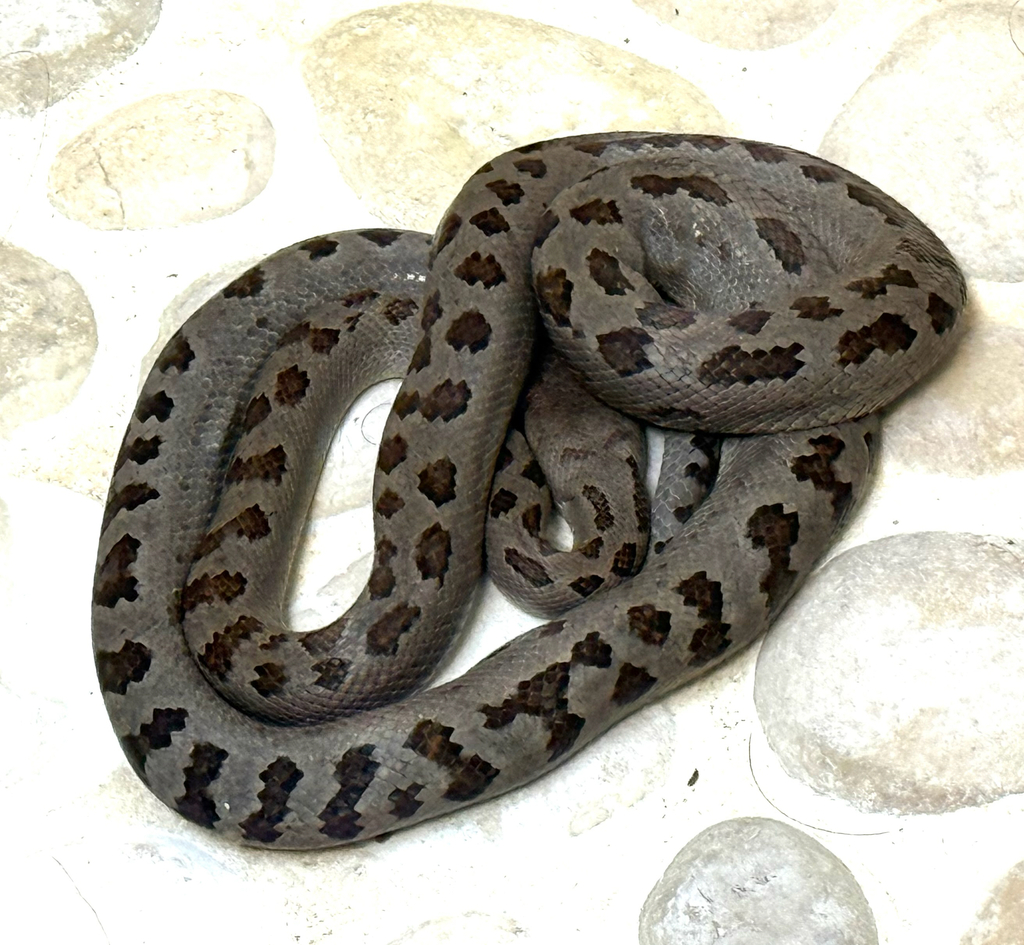
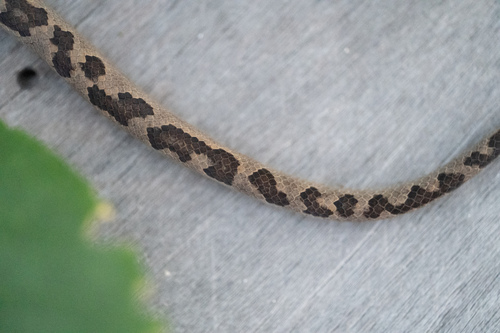
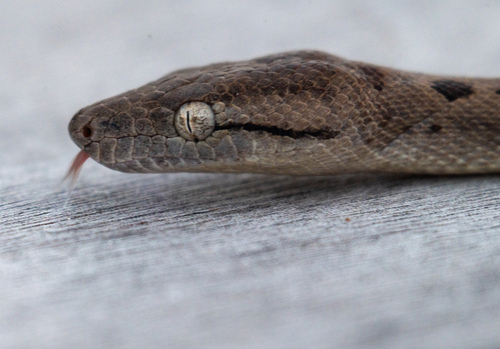
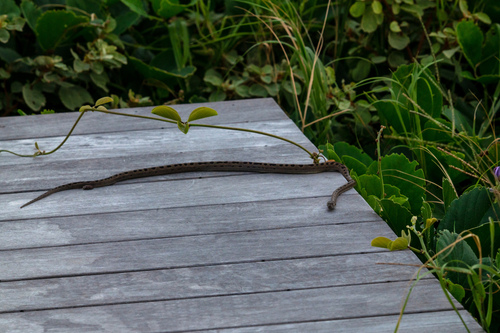
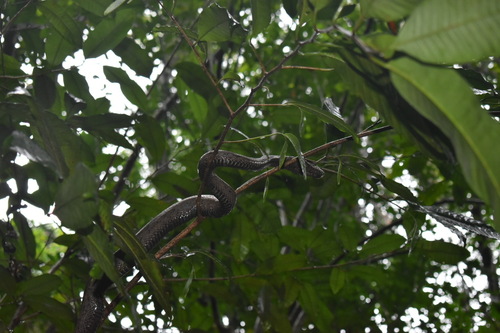
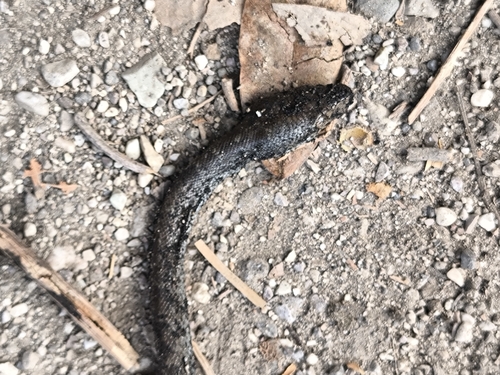
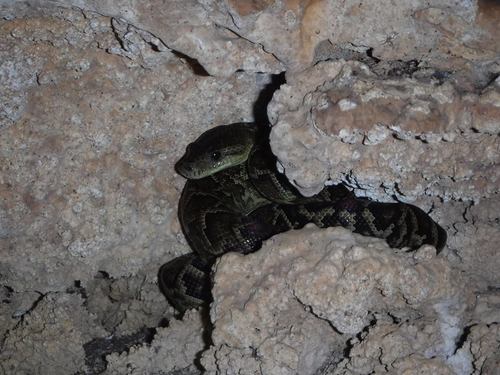
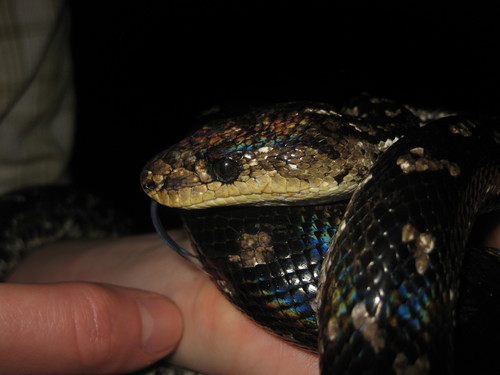
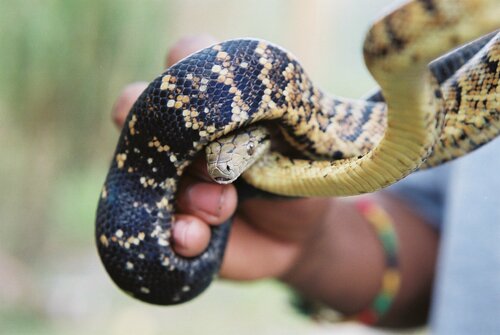
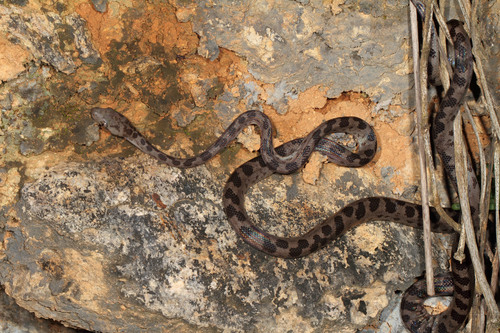
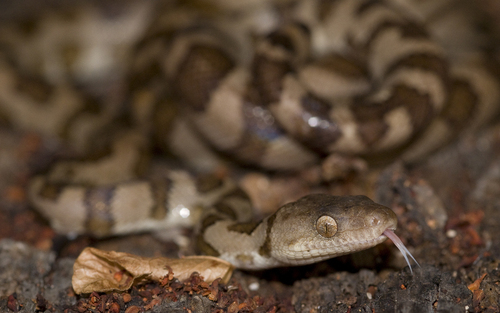
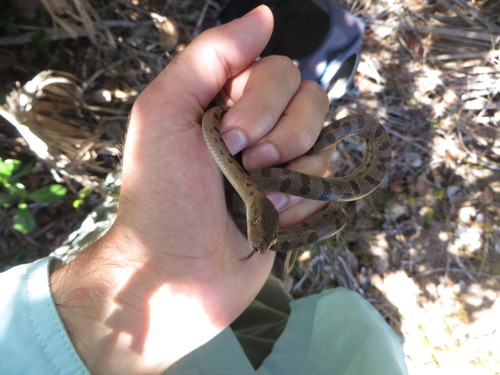
4 photographs of the Southern Bahamas boa. © gwar.
The Southern Bahamas boa (Chilabothrus chrysogaster) is a non-venomous snake in the Boidae family, recorded in 2 countries.
- Family
- Boidae
About the Southern Bahamas boa
Chilabothrus chrysogaster, commonly known as the Turks and Caicos Islands boa or the Southern Bahamas boa, is a species of snake found in the Southern Bahamas (Great Inagua, Sheep Cay) and the Turks and Caicos Islands. Local names include the rainbow boa (not to be confused with Epicrates cenchria, the "real" rainbow boa), the Bahamas cat boa, the rainbow snake, and the fowl snake. Like all boids, it is not a venomous species.
Subspecies
Two subspecies are recognized:
Chilabothrus chrysogaster chrysogaster (Cope, 1871) – Turks and Caicos Islands boa – the Turks and Caicos Islands
Chilabothrus chrysogaster relicquus (Barbour & Shreve, 1935) – Great Inagua boa – the Bahamas (Great Inagua and Sheep Cay)
A third subspecies, Chilabothrus chrysogaster schwartzi (Buden, 1975) from the Bahamas (Crooked Island and Acklins), was formerly recognized, but is now elevated to full species status (i.e., Chilabothrus schwartzi).
Nota bene: A trinomial authority in parentheses indicates that the subspecies was originally described in a genus other than Chilabothrus.
Description
Turks and Caicos Islands boas are nocturnal, and actively forage for lizards, birds, and rodents. They prefer either tropical dry forest habitat or scrub vegetation with plenty of large, flat rocks. Adults reach a maximum size of over 70 inches (180 cm) or more, but more often they are around 32 inches (81 cm) long.
There are three color morphs of this species: spotted, striped, and no-pattern. The spotted version seems to be the most common, followed by striped and finally the very uncommon no-pattern snakes, which are mostly solid gray with a few dark markings. Juveniles are orange or red and long and thin. Rarely, some adults will retain the juvenile coloration.
Threats
There are three primary threats to this species:
Introduced predators: Turks and Caicos Islands boas are extremely vulnerable to predation by cats and rats. Cats can likely decimate or exterminate populations of boas on small islands.
Human persecution: People are often afraid of snakes and will kill them on site, mistakenly believing that they are venomous, harmful, or demonic entities.
Habitat loss: The Turks and Caicos Islands are being rapidly developed. Boas must compete with people for habitat and suitable places to live. Because they are very slow moving, snakes are easily killed when trying to cross the roads that run through their habitat. They cannot dodge passing cars, and a road through their habitat can drastically reduce reproductive adults in a population.
Distribution and habitat
In the Bahamas, the Turks and Caicos Islands boa is found on Great Inagua and Sheep Cay. In the Turks and Caicos Islands, it is found on 10 islands, nine of which are on the Caicos Bank. Boas are occasionally still found on Providenciales, though this population has likely been decimated in the last 30 years and is in danger of extirpation. Though originally reported from Grand Turk, the Turks and Caicos Islands boa now appears to be only found on islands on the Caicos Bank and a few of the Turks Cays.
Adapted from Wikipedia, available under CC BY-SA.
Frequently asked: Southern Bahamas boa
- Is the Southern Bahamas boa venomous?
- No. The Southern Bahamas boa (Chilabothrus chrysogaster) is non-venomous and is not considered dangerous to humans. Like most snakes, it will retreat rather than bite when given the chance.
- Is the Southern Bahamas boa poisonous?
- Snakes are venomous, not poisonous. "Poisonous" means harmful to eat or touch; "venomous" means injecting toxins through a bite. The Southern Bahamas boa is neither poisonous nor venomous.
- Is the Southern Bahamas boa dangerous?
- The Southern Bahamas boa is not dangerous to humans. It has no medically significant venom and bites only defensively if cornered or handled.
- Where does the Southern Bahamas boa live?
- The Southern Bahamas boa has verified records in 2 countries, including Turks and Caicos Islands, Bahamas. See the distribution section below for its full range.
Where it is found
More Boidae snakes
Classification
How scientists group this snake, from the broadest category down to the exact species. Each step narrows to its closest relatives.
- OrderThe broad group of scaled reptiles: all snakes and lizards
- Squamata
- FamilyA group of related snakes that share key traits
- Boidae
- GenusA close-knit group of very similar species
- Chilabothrus
- SpeciesThis exact snake, named in the two-part scientific name
- Chilabothrus chrysogaster
Keep learning
- What to Do If You Find a SnakeFound a snake at home or on a trail? Here is how to stay calm, give it space, identify it safely, and know when to call a professional.
- Venomous vs Nonvenomous: How to Tell the DifferenceThe folk rules for telling venomous snakes apart, where each one fails, and why location-based identification beats guessing by sight.
- What Is a Snake? Anatomy and the BasicsA clear overview of what makes a snake a snake: limbless body plan, anatomy, evolution from lizards, species diversity, and why they are ectothermic.
- How to Keep Snakes Out of Your Yard and HomeA practical guide to keeping snakes out of your yard and home using habitat changes that work, plus what to skip and what to do if one shows up.
Distribution from GBIF & iNaturalist. Venom status per CDC. Background: Wikipedia. Informational only. Never handle a snake to identify it.