
Aniliidae
False Coral Snake
HarmlessAnilius scytale
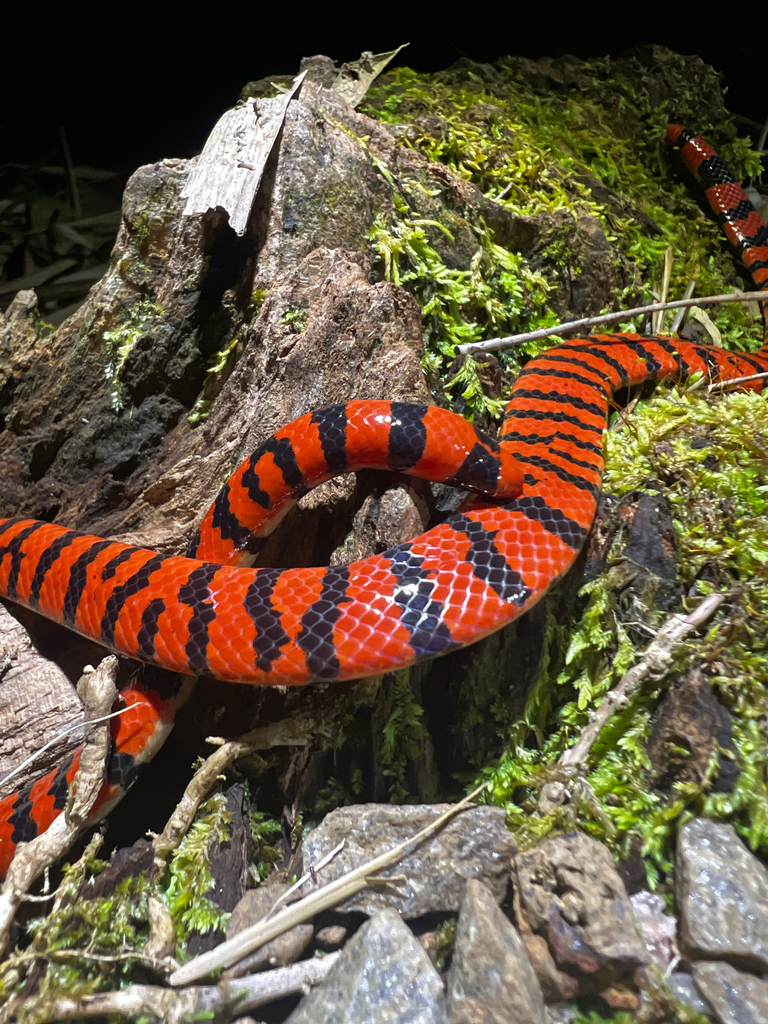
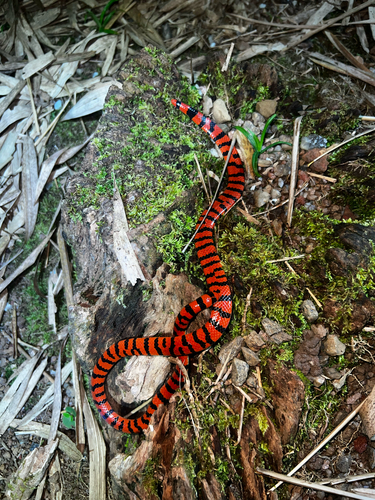
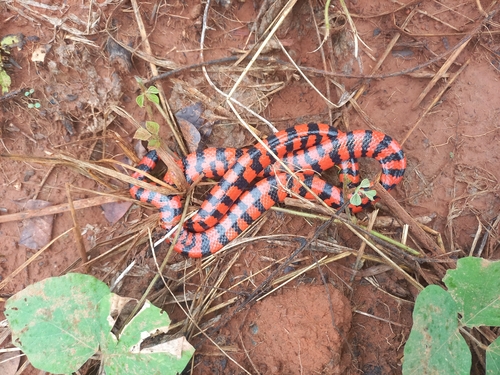
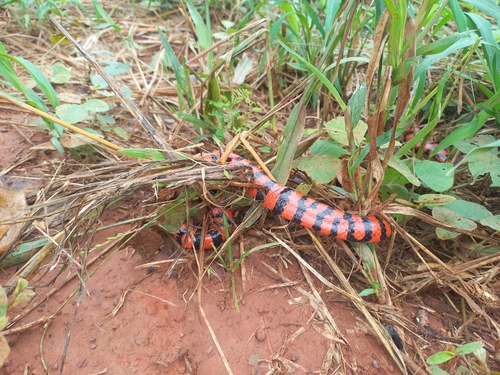
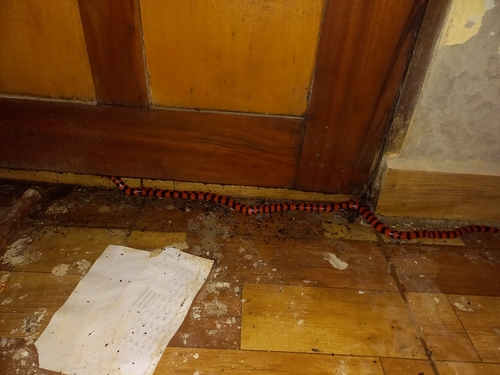
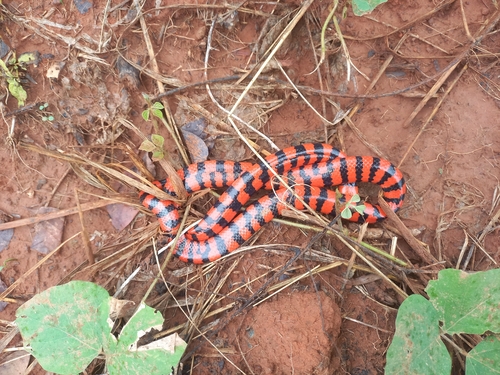
6 photographs of the False Coral Snake. © Emanuel Kern.
The False Coral Snake (Anilius scytale) is a non-venomous snake in the Aniliidae family, recorded in 12 countries.
- Family
- Aniliidae
About the False Coral Snake
The Aniliidae are a monotypic family created for the monotypic genus Anilius that contains the single species Anilius scytale. Common names include the American pipe snake and false coral snake. It is found in South America. This snake possesses a vestigial pelvic girdle that is visible as a pair of cloacal spurs. It is ovoviviparous. It is non-venomous, and its diet consists mainly of amphibians and other reptiles. Two subspecies are recognized, including the nominate subspecies described here.
Description
This species is found in the Amazon rainforest of South America, the Guianas, and Trinidad and Tobago. It is a moderate-sized snake attaining a size of about 70 cm (28 in) in length. It is fossorial and is rarely seen. It is reported to be ovoviviparous and feeds on beetles, caecilians (burrowing legless amphibians), amphisbaenids or worm lizards (legless lizards), small fossorial snakes, fish (particularly swamp eels), and frogs. It forages for food on the ground, and sometimes in the water, at night. It has a cylindrical body of uniform diameter and a very short tail; it is brightly banded in red and black and its reduced eyes lie beneath large head scales. It is considered to be the snake that most resembles the original and ancestral snake condition, such as a lizard-like skull.
Geographic range
It is found in the tropics of northern South America from southern and eastern Venezuela, Guyana, Suriname and French Guiana south through the Amazon Basin of Colombia, Ecuador, Peru, and Brazil. The type locality given is "Indiis".
Subspecies
Taxonomy
Modern classifications restrict the family to the South American pipe snake or false coral snake (Anilius scytale), with the previously included Asian genus Cylindrophis raised to a separate family, Cylindrophiidae. Anilius is not closely related to Asian pipesnakes. Instead, its closest relatives appear to be the neotropical Tropidophiidae.
Adapted from Wikipedia, available under CC BY-SA.
Frequently asked: False Coral Snake
- Is the False Coral Snake venomous?
- No. The False Coral Snake (Anilius scytale) is non-venomous and is not considered dangerous to humans. Like most snakes, it will retreat rather than bite when given the chance.
- Is the False Coral Snake poisonous?
- Snakes are venomous, not poisonous. "Poisonous" means harmful to eat or touch; "venomous" means injecting toxins through a bite. The False Coral Snake is neither poisonous nor venomous.
- Is the False Coral Snake dangerous?
- The False Coral Snake is not dangerous to humans. It has no medically significant venom and bites only defensively if cornered or handled.
- Where does the False Coral Snake live?
- The False Coral Snake has verified records in 12 countries, including Brazil, French Guiana, Peru. See the distribution section below for its full range.
Where it is found
Classification
How scientists group this snake, from the broadest category down to the exact species. Each step narrows to its closest relatives.
Keep learning
- What to Do If You Find a SnakeFound a snake at home or on a trail? Here is how to stay calm, give it space, identify it safely, and know when to call a professional.
- Venomous vs Nonvenomous: How to Tell the DifferenceThe folk rules for telling venomous snakes apart, where each one fails, and why location-based identification beats guessing by sight.
- What Is a Snake? Anatomy and the BasicsA clear overview of what makes a snake a snake: limbless body plan, anatomy, evolution from lizards, species diversity, and why they are ectothermic.
- How to Keep Snakes Out of Your Yard and HomeA practical guide to keeping snakes out of your yard and home using habitat changes that work, plus what to skip and what to do if one shows up.
Distribution from GBIF & iNaturalist. Venom status per CDC. Background: Wikipedia. Informational only. Never handle a snake to identify it.