
Typhlopidae
Diard's Blindsnake
HarmlessArgyrophis diardii
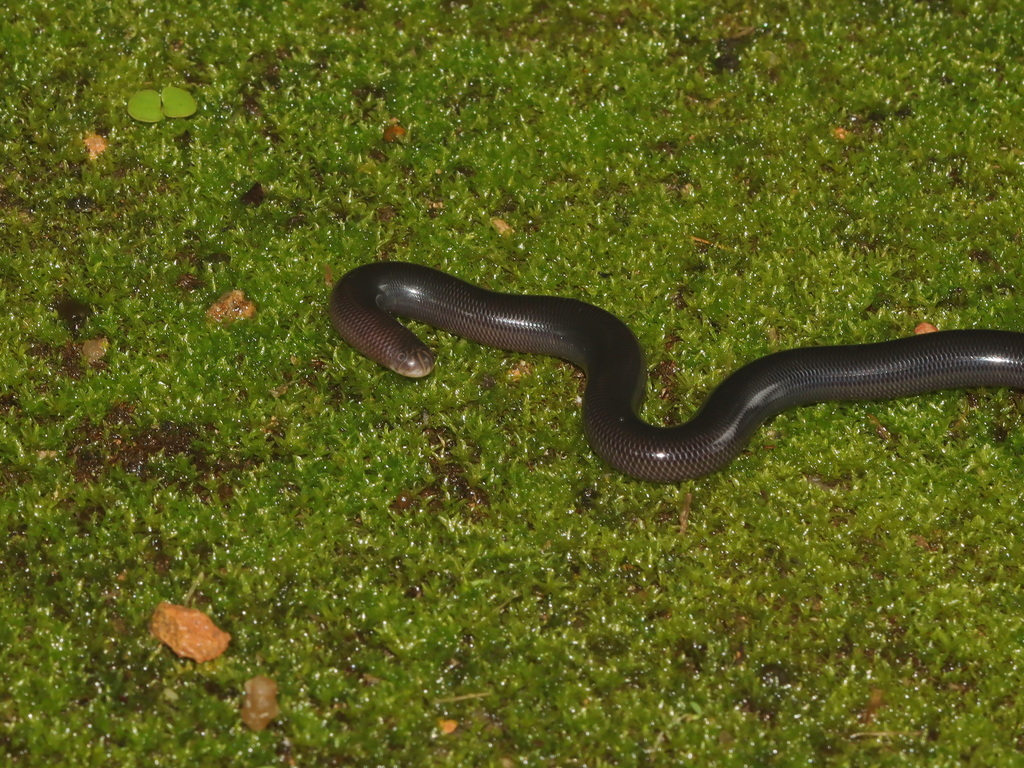
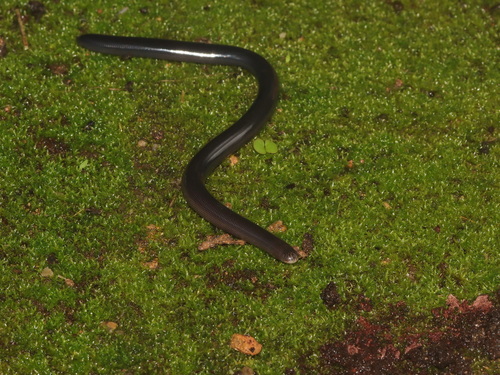
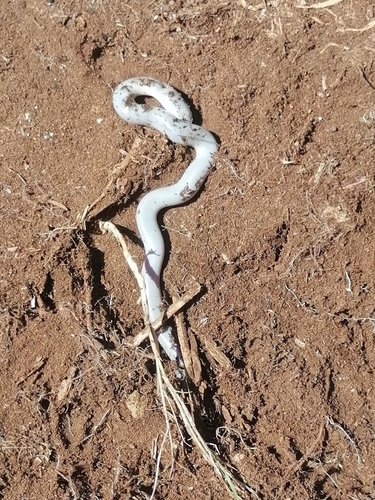
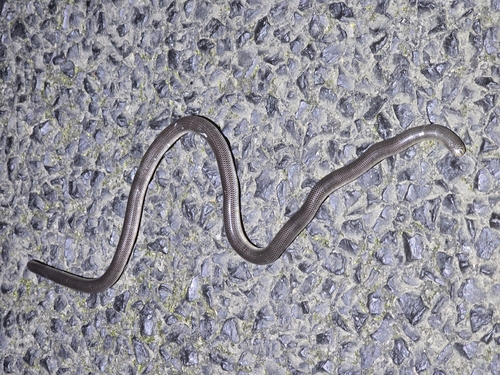
2 photographs of the Diard's Blindsnake. © Ian Dugdale.
The Diard's Blindsnake (Argyrophis diardii) is a non-venomous snake in the Typhlopidae family, recorded in 12 countries.
- Family
- Typhlopidae
About the Diard's Blindsnake
Argyrophis diardii, commonly known as Diard's blind snake, the Indochinese blind snake, the large blind snake, and the large worm snake, is a species of harmless snake in the family Typhlopidae. The species is native to South Asia and Southeast Asia. There are two recognized subspecies.
Taxonomy
Argyrophis diardii was first described by German herpetologist Hermann Schlegel in 1839, as Typhlops Diardii. The type locality of Schlegel's specimen was "Cochinchina [southern Vietnam]". Saint Girons (1972: 32) described it as "Cochinchina sans certitude [southern Vietnam without certainty]", and Hahn (1980: 56) as "East Indies".
Etymology
Both the specific name, diardii, and the common name, "Diard's blindsnake", are in honor of French naturalist Pierre-Médard Diard.
The synonym, Typhlops Mülleri Schlegel, 1839, was named in honor of German naturalist Salomon Müller.
Subspecies
Two subspecies of Argyrophis diardii are recognized as being valid, including the nominotypical subspecies:
Argyrophis diardii diardii Schlegel, 1839
Argyrophis diardii platyventris Khan, 1998
Description
Argyrophis diardii is heavy-bodied for a blindsnake. It has 22–25 scale rows around the body at midbody. The belly is distinctly flat.
Geographic distribution
Argyrophis diardii is found in India (Jalpaiguri-West Bengal, as far west as Dun Valley in Assam), Bangladesh, Myanmar, Thailand, Laos, Cambodia, Vietnam, the Malay Peninsula, Nias Island, Sumatra, Web Island (off northwest Sumatra), Bangka, and Borneo.
Habitat
The preferred natural habitats of Argyrophis diardii are forest, shrubland, and grassland, at elevations of 30–1,524 m (98–5,000 ft), and it has also been found in agricultural areas.
Diet
Argyrophis diardii preys upon earthworms, insect larvae, and adult insects.
Reproduction
The mode of reproduction of Argyrophis diardii is uncertain. The species may be either oviparous or ovoviviparous.
Adapted from Wikipedia, available under CC BY-SA.
Frequently asked: Diard's Blindsnake
- Is the Diard's Blindsnake venomous?
- No. The Diard's Blindsnake (Argyrophis diardii) is non-venomous and is not considered dangerous to humans. Like most snakes, it will retreat rather than bite when given the chance.
- Is the Diard's Blindsnake poisonous?
- Snakes are venomous, not poisonous. "Poisonous" means harmful to eat or touch; "venomous" means injecting toxins through a bite. The Diard's Blindsnake is neither poisonous nor venomous.
- Is the Diard's Blindsnake dangerous?
- The Diard's Blindsnake is not dangerous to humans. It has no medically significant venom and bites only defensively if cornered or handled.
- Where does the Diard's Blindsnake live?
- The Diard's Blindsnake has verified records in 12 countries, including Myanmar, India, Thailand. See the distribution section below for its full range.
- What does the Diard's Blindsnake eat?
- Argyrophis diardii preys upon earthworms, insect larvae, and adult insects.
- Why is it called the Diard's Blindsnake?
- Both the specific name, diardii, and the common name, "Diard's blindsnake", are in honor of French naturalist Pierre-Médard Diard. The synonym, Typhlops Mülleri Schlegel, 1839, was named in honor of German naturalist Salomon Müller.
Where it is found
More Typhlopidae snakes
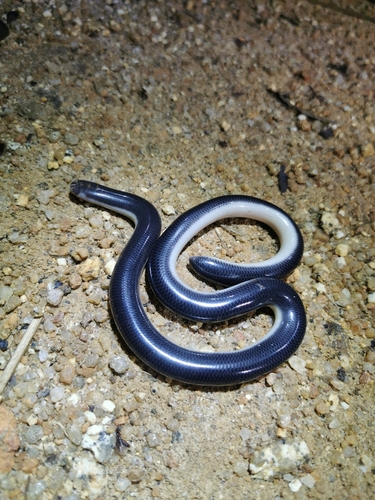 Müller's Blind SnakeArgyrophis muelleri
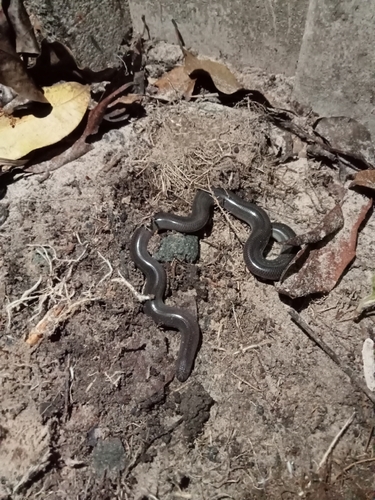 Siamese Blind SnakeArgyrophis siamensis
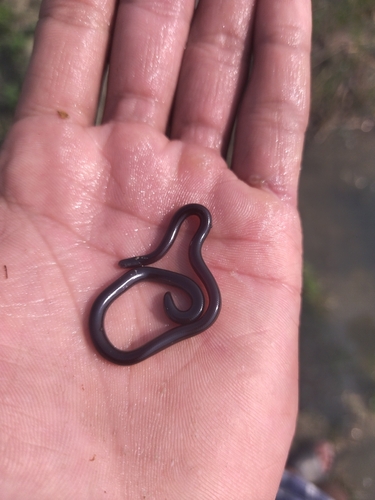 Brahminy BlindsnakeIndotyphlops braminus
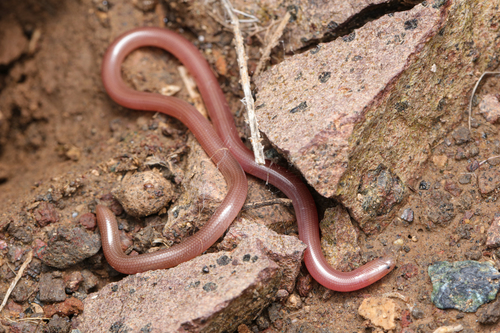 Eurasian Blind SnakeXerotyphlops vermicularis
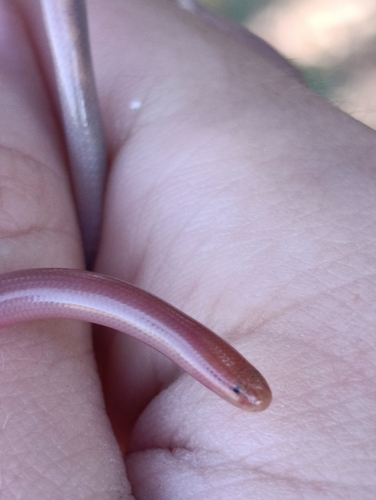 Syrian Blind SnakeXerotyphlops syriacus
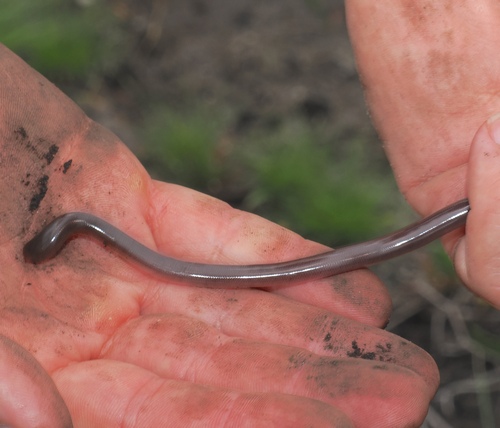 Bibron's Blind SnakeAfrotyphlops bibronii
 Delalande's Beaked Blind SnakeRhinotyphlops lalandei
 Blackish Blind SnakeAnilios nigrescens
Classification
How scientists group this snake, from the broadest category down to the exact species. Each step narrows to its closest relatives.
- OrderThe broad group of scaled reptiles: all snakes and lizards
- Squamata
- FamilyA group of related snakes that share key traits
- Typhlopidae
- GenusA close-knit group of very similar species
- Argyrophis
- SpeciesThis exact snake, named in the two-part scientific name
- Argyrophis diardii
Keep learning
- What to Do If You Find a SnakeFound a snake at home or on a trail? Here is how to stay calm, give it space, identify it safely, and know when to call a professional.
- Venomous vs Nonvenomous: How to Tell the DifferenceThe folk rules for telling venomous snakes apart, where each one fails, and why location-based identification beats guessing by sight.
- What Is a Snake? Anatomy and the BasicsA clear overview of what makes a snake a snake: limbless body plan, anatomy, evolution from lizards, species diversity, and why they are ectothermic.
- How to Keep Snakes Out of Your Yard and HomeA practical guide to keeping snakes out of your yard and home using habitat changes that work, plus what to skip and what to do if one shows up.
Distribution from GBIF & iNaturalist. Venom status per CDC. Background: Wikipedia. Informational only. Never handle a snake to identify it.