
Viperidae
Brazil's Lancehead
VenomousBothrops brazili
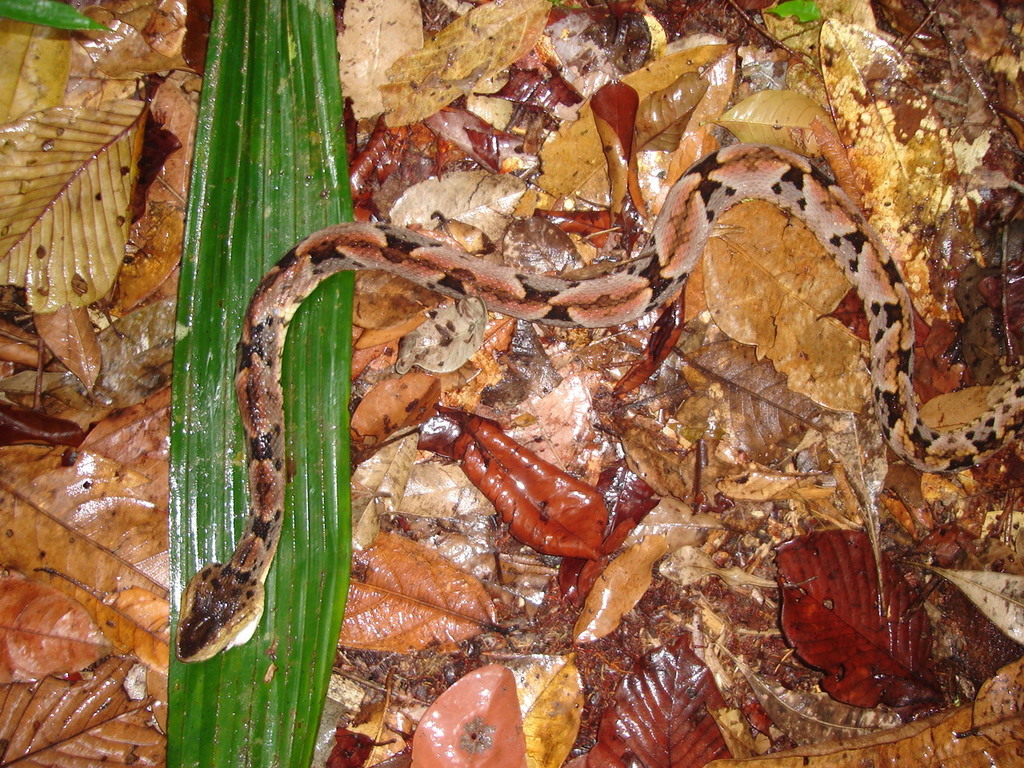
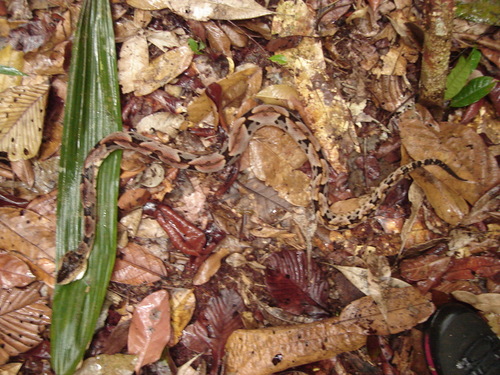
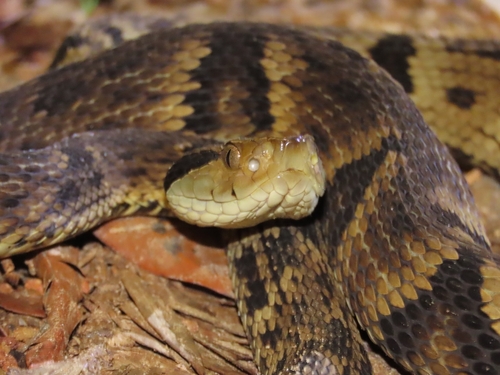
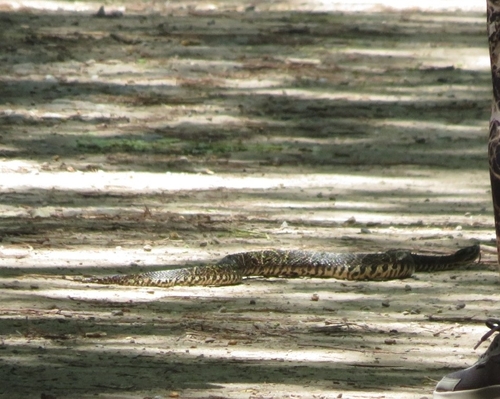
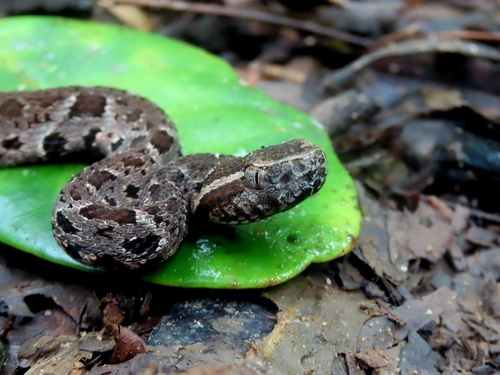
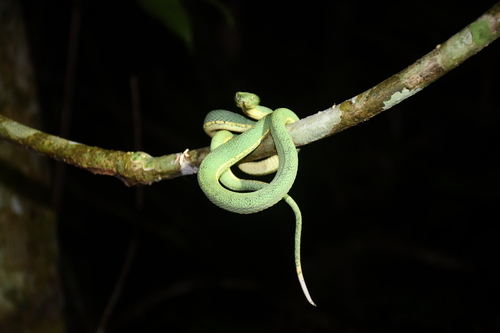
2 photographs of the Brazil's Lancehead. © Lucas Kaminski.
The Brazil's Lancehead (Bothrops brazili) is a venomous snake in the Viperidae family, recorded in 9 countries.
If you are bitten
This is a venomous snake. Treat any bite as a medical emergency: stay calm, keep the bitten limb still and roughly level with the heart, remove rings and tight clothing, and get to emergency care immediately. Do not apply a tourniquet, cut the wound, apply ice, or try to suck out venom. Call your local emergency number or poison center.
- Family
- Viperidae
- Danger
- high
About the Brazil's Lancehead
Brazil's lancehead (Bothrops brazili) is a venomous pitviper species endemic to South America. There are no subspecies that are recognized as being valid.
Etymology
The specific name, brazili, is in honor of Dr. Vital Brazil, a Brazilian physician and founder of the Instituto Butantan in São Paulo.
Description
Stoutly built and terrestrial, adults of B. brazili are usually 70–90 cm (28–35 in) in total length (including tail), but may exceed 140 cm (55 in). The largest specimen on record is 149.3 cm (58+3⁄4 in). The available evidence would indicate that, among adult specimens, females are much larger than males.
The scalation includes 23-29 (usually 25–27) rows of dorsal scales at midbody, 151-180 ventral scales in males and 159-202 (usually less than 190) in females, and 44-68/42-56 usually paired subcaudal scales in males/females. On the head there are 3-10 (usually 5–8) intersupraocular scales, 7-9 (usually 8) supralabial scales, the second of which is fused with the prelacunal, and 10-12 sublabial scales.
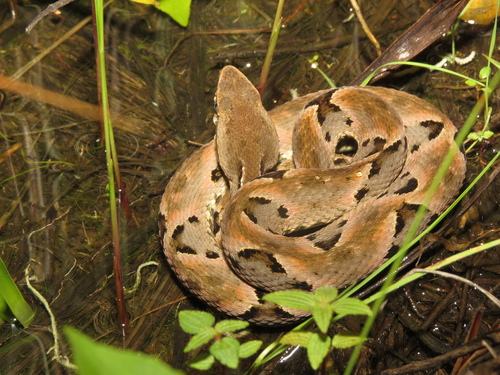
The color pattern consists of a pinkish tan to pinkish or reddish gray ground color overlaid with a series of 9-19 dark ash gray dorsolateral blotches. These may alternate or oppose across the midline of the back, sometimes looking like triangular C's or merging to form bands. The tail is the same color as the body, but may be mostly black. The belly is usually yellow or pinkish cream with mottling that is slightly darker in color. The top of the head is also the same color as the body, but usually lighter. The rostral scale and lower edges of the supralabials are paler still, while a poorly defined postocular stripe may be present, running from the eye to the angle of the mouth, pale brown in color and bordered below by a dark brown line.
Geographic range
Bothrops brazili is found in the equatorial forests of southern Colombia, eastern Peru, eastern Ecuador, southern and eastern Venezuela, Guyana, Suriname, French Guiana, Brazil, and northern Bolivia. The type locality given is "Tomé Assú, Acará Mirim River, State of Pará, Brazil".
Venom
Bothrops brazili is an uncommon species, and bites from it have not yet been recorded. However, it is greatly feared by the indigenous people of southeastern Colombia.
Reproduction
B. brazili is oviparous.
Taxonomy
As variations in scalation and color pattern are apparent in different populations of B. brazili, new taxa will likely be defined as a result of further research.
Adapted from Wikipedia, available under CC BY-SA.
Local and regional names
The Brazil's Lancehead is known by these names across the regions where it lives:
- Czech
- křovinář brazilský
- Danish
- Sydlig Fløjls-lanseslange
- French
- Grage orangé, Grage à oeil orangé
- German
- Brazils Lanzenotter
- Hungarian
- brazil lándzsakígyó
- Portuguese
- Jararaca, Jararaca-Vermelha, Jararaca-de-Brazil, Jararacuçu, Surucucu-Vermelha, Surucucurana-de-Fogo
- Russian
- Ботропс Брезила
Frequently asked: Brazil's Lancehead
- Is the Brazil's Lancehead venomous?
- Yes. The Brazil's Lancehead (Bothrops brazili) is venomous and belongs to the Viperidae family (viper). Its bite is considered high risk to people. Treat any bite as a medical emergency.
- Is the Brazil's Lancehead poisonous?
- Snakes are venomous, not poisonous. "Poisonous" means harmful to eat or touch; "venomous" means injecting toxins through a bite. The Brazil's Lancehead is venomous, delivering venom through a bite.
- Is the Brazil's Lancehead dangerous?
- This is a venomous snake. Treat any bite as a medical emergency: stay calm, keep the bitten limb still and roughly level with the heart, remove rings and tight clothing, and get to emergency care immediately. Do not apply a tourniquet, cut the wound, apply ice, or try to suck out venom. Call your local emergency number or poison center.
- Where does the Brazil's Lancehead live?
- The Brazil's Lancehead has verified records in 9 countries, including Brazil, Peru, Ecuador. See the distribution section below for its full range.
- Why is it called the Brazil's Lancehead?
- The specific name, brazili, is in honor of Dr. Vital Brazil, a Brazilian physician and founder of the Instituto Butantan in São Paulo.
If you are bitten by the Brazil's Lancehead
Do
- Get away from the snake and stay calm. Most bites worsen when people panic or try again to handle the snake.
- Call 911 or Poison Control (1-800-222-1222) right away. Antivenom works best when given early.
- Note the time of the bite and, from a safe distance, the snake's color and pattern, a phone photo is enough. Do not chase it.
- Keep the bitten limb still and at roughly heart level. Sit or lie down and limit movement.
- Remove rings, watches, and tight clothing near the bite before swelling starts.
- Gently wash the bite with soap and water and cover it with a clean, dry dressing.
Do not
- Do not cut the wound or try to suck out the venom.
- Do not apply a tourniquet or ice.
- Do not drink alcohol or caffeine.
- Do not take aspirin or ibuprofen, they can worsen bleeding. Acetaminophen is safer for pain.
- Do not try to catch or kill the snake. A dead snake can still bite by reflex.
First-aid guidance adapted from the U.S. Centers for Disease Control and Prevention (CDC NIOSH), Venomous Snakes. Educational only; always follow the instructions of emergency responders.
Where it is found
More Viperidae snakes
Classification
How scientists group this snake, from the broadest category down to the exact species. Each step narrows to its closest relatives.
Keep learning
- Are Snakes Dangerous? The Real Risk, in PerspectiveMost snakes are harmless and avoid people. Here is the honest picture of snakebite risk worldwide and how to lower your own.
- Snakebite First Aid: What to Do (and What Never to Do)A clear, CDC-based guide to snakebite first aid: the steps that help, the popular myths that hurt, and how to tell a serious bite from a minor one.
- Venomous vs Nonvenomous: How to Tell the DifferenceThe folk rules for telling venomous snakes apart, where each one fails, and why location-based identification beats guessing by sight.
- What to Do If You Find a SnakeFound a snake at home or on a trail? Here is how to stay calm, give it space, identify it safely, and know when to call a professional.
Distribution from GBIF & iNaturalist. Venom status per CDC. Background: Wikipedia. Informational only. Never handle a snake to identify it.