
Colubridae
Barred Wolf Snake
HarmlessLycodon striatus
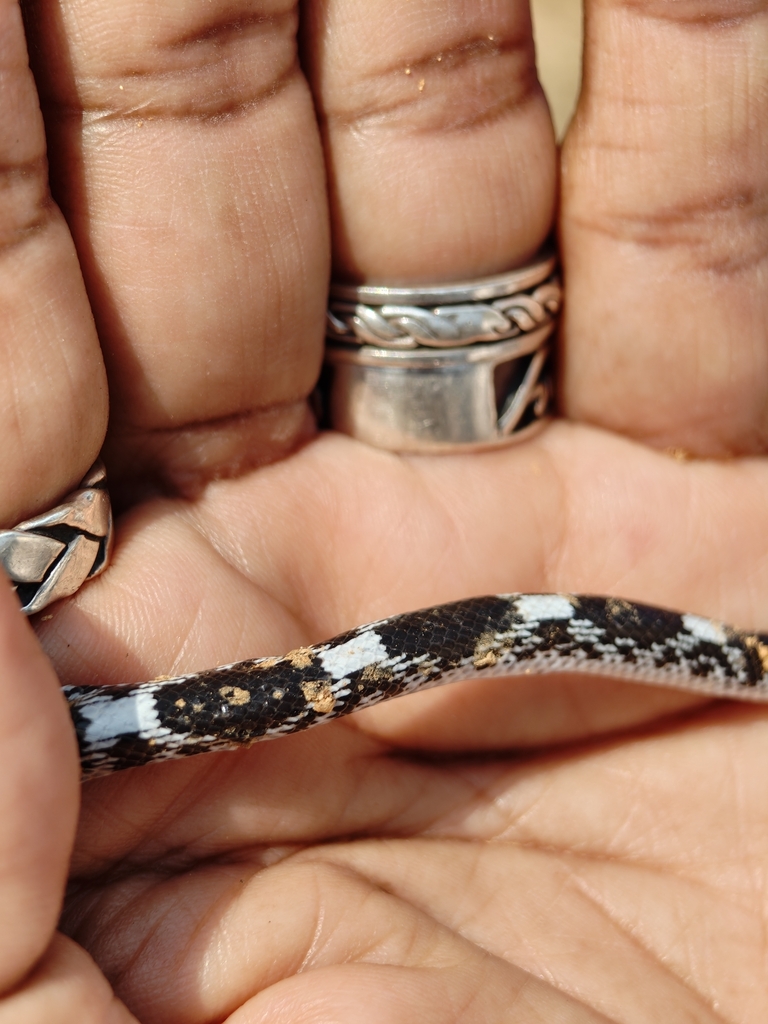
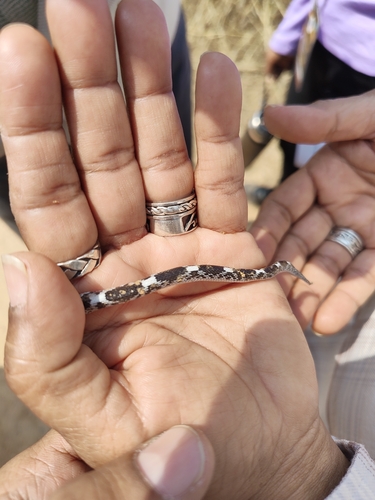
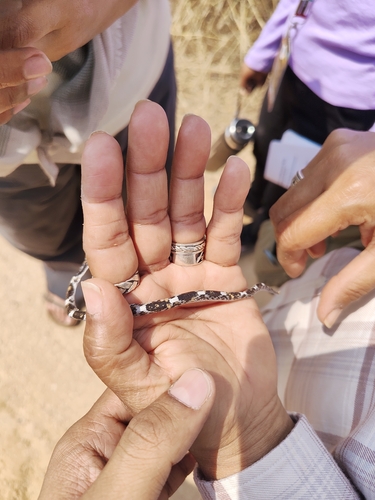
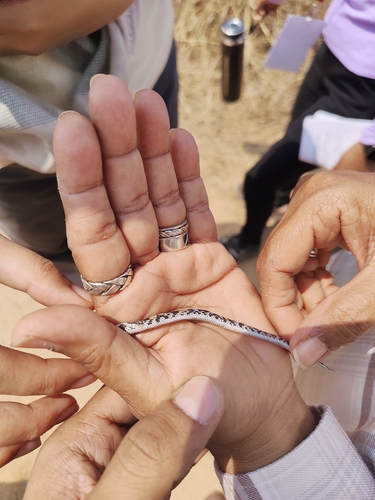
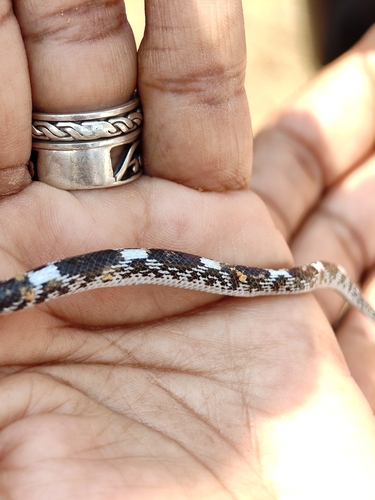
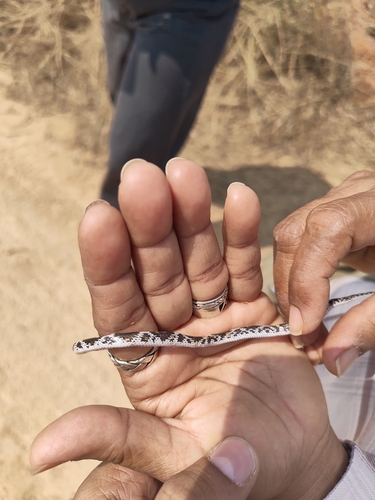
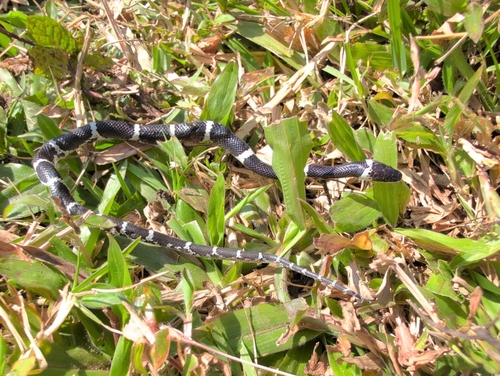
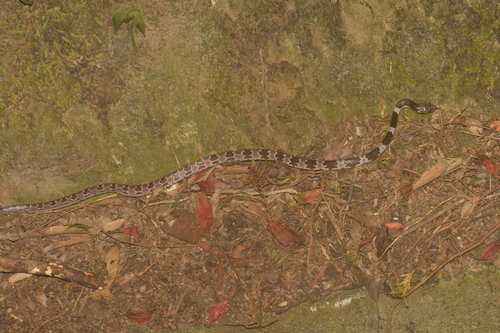
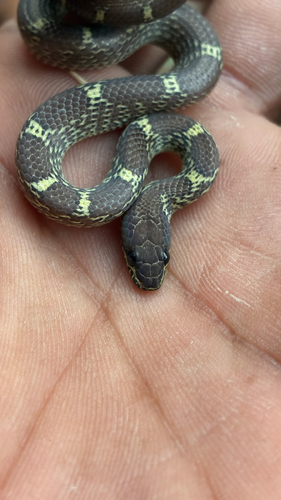
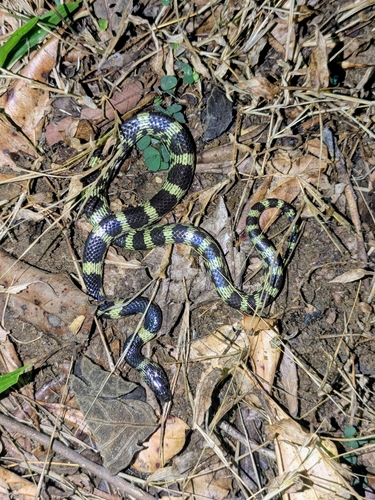
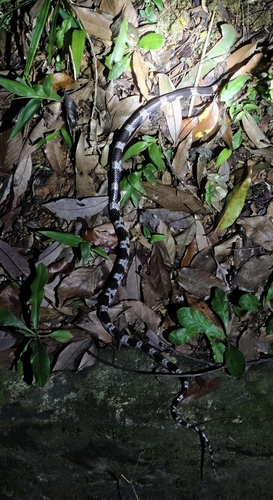
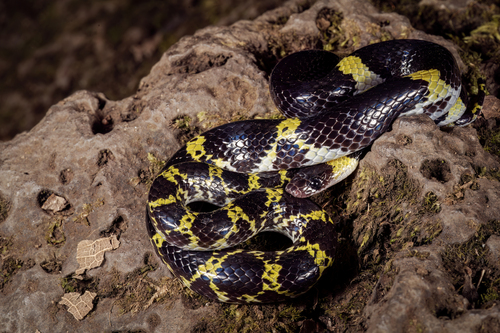
6 photographs of the Barred Wolf Snake. © Ram Dayal Vaishnav.
The Barred Wolf Snake (Lycodon striatus) is a non-venomous snake in the Colubridae family, recorded in 8 countries.
- Family
- Colubridae
About the Barred Wolf Snake
Lycodon striatus, commonly known as the northern wolf snake or the barred wolf snake, is a species of nonvenomous colubrid snake from southern Asia.
Geographical range
Lycodon striatus is found in Afghanistan, India (Andhra Pradesh, Tamil Nadu, Gujarat, Karnataka, Madhya Pradesh, Maharashtra, Punjab and Uttar Pradesh), eastern and north-eastern Iran, Nepal, Pakistan, Sri Lanka, western Tajikistan, southern Turkmenistan (Kopet Dagh) and Uzbekistan.
Description
Lycodon striatus is dark brown or black above, with white transverse spots or crossbands, which are widely separated anteriorly. The sides are lineolated with white, with a black spot corresponding to each white crossband. The upper lip and ventrum are uniform white (coloration in alcohol). The longest adult known to George Albert Boulenger in 1893 was 43 centimetres (17 in) in total length, with a tail 7.5 cm (3.0 in) long.
The head is only slightly distinct from the neck, and the snout is flattened. There are 8 upper labials, the first and second contacting the nasal scale.
Taxonomy
Lycodon striatus was first described in 1802 by George Shaw, as Coluber striatus; its type locality was "Vizagapatam and Hyderabad". Two subspecies are recognised, including the nominate race:
Lycodon striatus sinhaleyus Deraniyagala, 1955
Lycodon striatus striatus (Shaw, 1802)
Ecology
Lycodon striatus prefers dry regions such as semideserts and forest edges. Snakes of this species are nocturnal. By day they hide under stones, but after dark they emerge to hunt. Lycodon striatus feeds on skinks, geckos and other small lizards.
Reproduction
Adult females lay eggs in April (in India). Clutch size is small, at only 2–4 eggs, and the egg size is relatively large – 25–30 millimetres (1.0–1.2 in) long by 9–12 mm (0.35–0.47 in) wide. Parental care of the eggs has been observed.
Adapted from Wikipedia, available under CC BY-SA.
Frequently asked: Barred Wolf Snake
- Is the Barred Wolf Snake venomous?
- No. The Barred Wolf Snake (Lycodon striatus) is non-venomous and is not considered dangerous to humans. Like most snakes, it will retreat rather than bite when given the chance.
- Is the Barred Wolf Snake poisonous?
- Snakes are venomous, not poisonous. "Poisonous" means harmful to eat or touch; "venomous" means injecting toxins through a bite. The Barred Wolf Snake is neither poisonous nor venomous.
- Is the Barred Wolf Snake dangerous?
- The Barred Wolf Snake is not dangerous to humans. It has no medically significant venom and bites only defensively if cornered or handled.
- Where does the Barred Wolf Snake live?
- The Barred Wolf Snake has verified records in 8 countries, including India, Sri Lanka, Pakistan. See the distribution section below for its full range.
Where it is found
More Colubridae snakes
Classification
How scientists group this snake, from the broadest category down to the exact species. Each step narrows to its closest relatives.
- OrderThe broad group of scaled reptiles: all snakes and lizards
- Squamata
- FamilyA group of related snakes that share key traits
- Colubridae
- GenusA close-knit group of very similar species
- Lycodon
- SpeciesThis exact snake, named in the two-part scientific name
- Lycodon striatus
Keep learning
- What to Do If You Find a SnakeFound a snake at home or on a trail? Here is how to stay calm, give it space, identify it safely, and know when to call a professional.
- Venomous vs Nonvenomous: How to Tell the DifferenceThe folk rules for telling venomous snakes apart, where each one fails, and why location-based identification beats guessing by sight.
- What Is a Snake? Anatomy and the BasicsA clear overview of what makes a snake a snake: limbless body plan, anatomy, evolution from lizards, species diversity, and why they are ectothermic.
- How to Keep Snakes Out of Your Yard and HomeA practical guide to keeping snakes out of your yard and home using habitat changes that work, plus what to skip and what to do if one shows up.
Distribution from GBIF & iNaturalist. Venom status per CDC. Background: Wikipedia. Informational only. Never handle a snake to identify it.