
Pythonidae
Amethyst Python
HarmlessSimalia amethistina
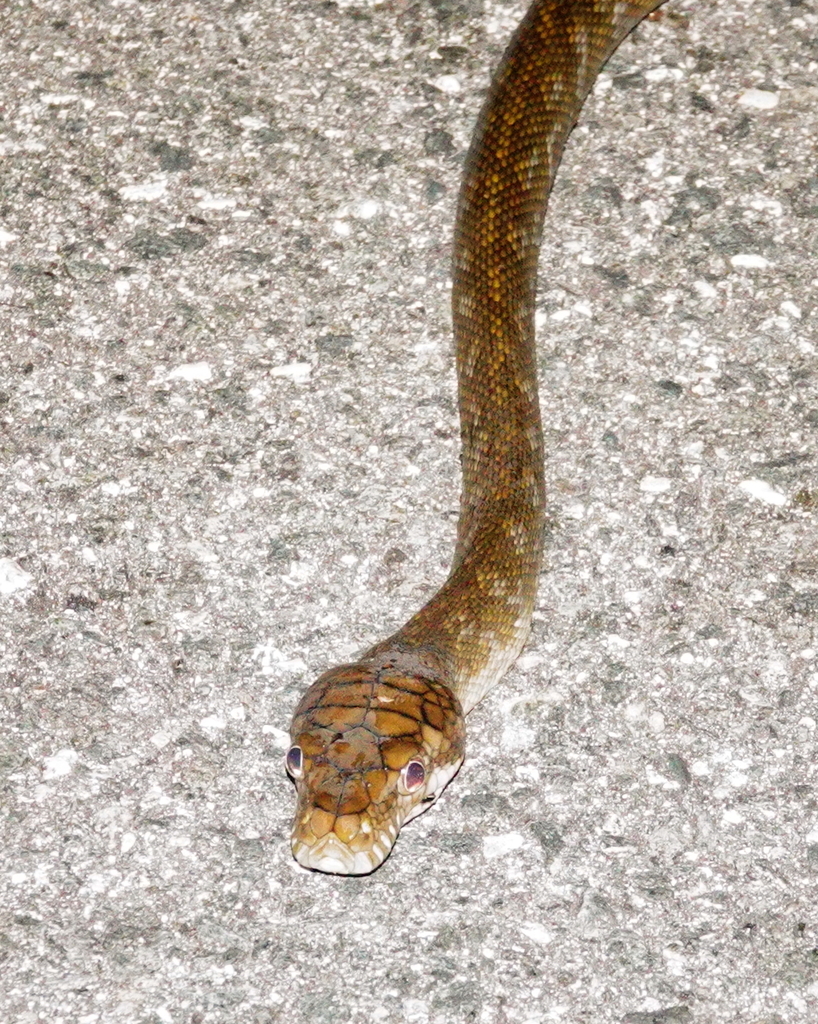
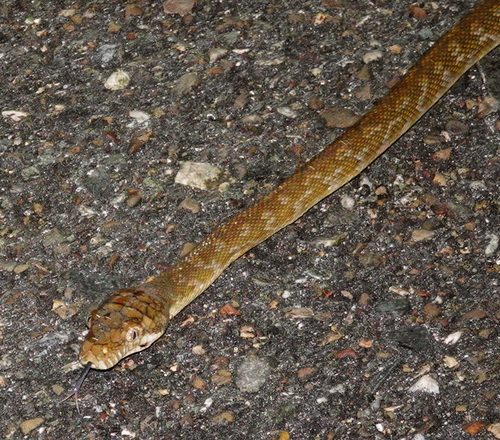
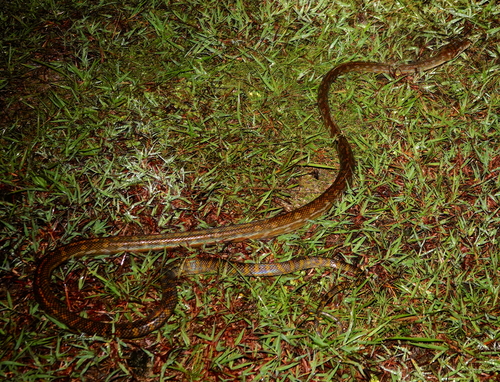
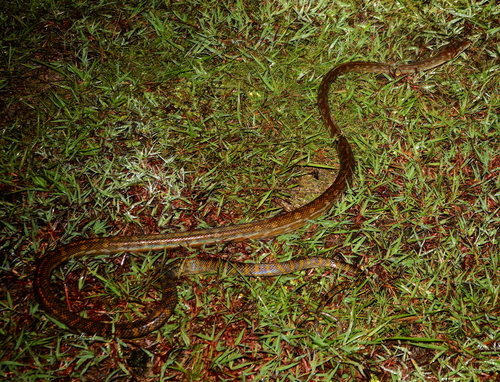
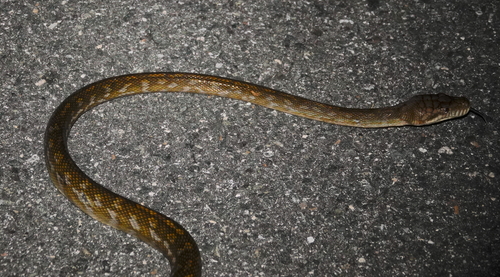
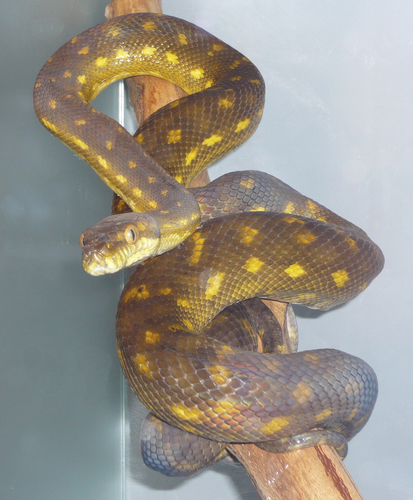
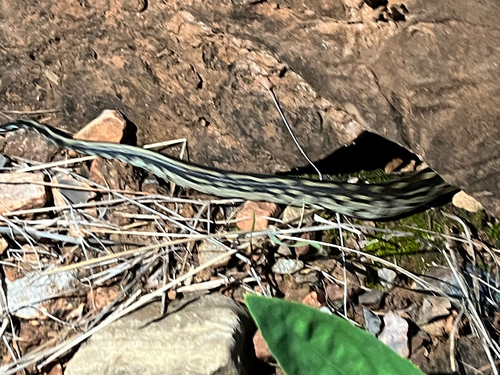
5 photographs of the Amethyst Python. © desertnaturalist.
The Amethyst Python (Simalia amethistina) is a non-venomous snake in the Pythonidae family, recorded in 6 countries.
- Family
- Pythonidae
About the Amethyst Python
The amethystine python (Simalia amethistina, formerly known as Morelia amethistina), also known as the scrub python or sanca permata in Indonesian, is a species of non-venomous snake in the family Pythonidae. The species is found in Indonesia and Papua New Guinea. Popular among reptile enthusiasts, and noted for its coloration and size, it is one of the largest snakes in the world, as measured either by length or weight, and is the largest native snake in Papua New Guinea. Until 2000, the larger Australian species S. kinghorni was generally considered a subspecies of S. amethistina, and this change of classification has still not been universally reflected in literature. Because of this issue, S. amethistina has often been described as the largest snake in Australia, but this is not accurate since under the current classification, this species does not occur in Australia.
Taxonomy
Formerly, five subspecies of Morelia amethistina, including the nominate race, M. a. amethystina, were generally recognized. The Moluccan Islands (including Halmahera, Ternate and Tidore) are home to the former M. a. tracyae. The Tanimbar Islands are home to a smaller subspecies, the former M. a. nauta. On the island of Seram, the former M. a. clastolepis can be found. On mainland of Papua New Guinea (including the Indonesian western half, once called Irian Jaya—now West Papua), and many of its nearby offshore islands, the former M. a. amethystina is quite common. In Australia, the former M. a. kinghorni is represented. American biologist Michael Harvey and colleagues investigated the amethystine python complex and recognised five separate species – Simalia amethistina, Simalia clastolepis, Simalia kinghorni, Simalia nauta, and Simalia tracyae – based on cladistic analysis of cytochrome b sequences and morphology. In 2014 cladistic analysis of nuclear and mitochondrial genes of pythons and boas, R. Graham Reynolds and colleagues supported the distinctness of M. tracyae, M. amethistina, and M. clastolepis, but were less confident of M. kinghorni and M. nauta.
According to McDiarmid et al. (1999), all cases in which the specific name was spelled with a y follow Daudin's (1803) Python amethystinus and are therefore unjustified emendations. The specific name, amethistina, is an allusion to the milky iridescent sheen on its scales, which gives it an amethyst-like colour.
Description
Specimens of S. amethistina have reportedly been measured at more than 5.5 m (18.0 ft) in total length (including tail), but this is likely due to confusion with Australian S. kinghorni specimens, as even 4 m (13 ft) specimens of S. amethistina are already considered extremely large. Although the amethystine python is smaller than the Australian scrub python, some sources claim that S. amethistina is able to reach lengths of 6 m (20 ft), with a weight up to 27 kg (60 lb) and perhaps even 30 kg (66 lb).
Adapted from Wikipedia, available under CC BY-SA.
Frequently asked: Amethyst Python
- Is the Amethyst Python venomous?
- No. The Amethyst Python (Simalia amethistina) is non-venomous and is not considered dangerous to humans. Like most snakes, it will retreat rather than bite when given the chance.
- Is the Amethyst Python poisonous?
- Snakes are venomous, not poisonous. "Poisonous" means harmful to eat or touch; "venomous" means injecting toxins through a bite. The Amethyst Python is neither poisonous nor venomous.
- Is the Amethyst Python dangerous?
- The Amethyst Python is not dangerous to humans. It has no medically significant venom and bites only defensively if cornered or handled.
- Where does the Amethyst Python live?
- The Amethyst Python has verified records in 6 countries, including Papua New Guinea, Indonesia, Australia. See the distribution section below for its full range.
- What does the Amethyst Python eat?
- The diet of the amethystine python generally consists of birds, bats, rats, possums, and other small mammals. Larger Papuan specimens catch and eat wallabies, and cuscus, waiting by creek and river banks for prey seeking drinking water. On Milman Island, potential prey of amethystine pythons include ghost crabs (Ocypode sp.), green sea turtle hatchlings, hawksbill sea turtle hatchlings, wading birds, and terns.
Where it is found
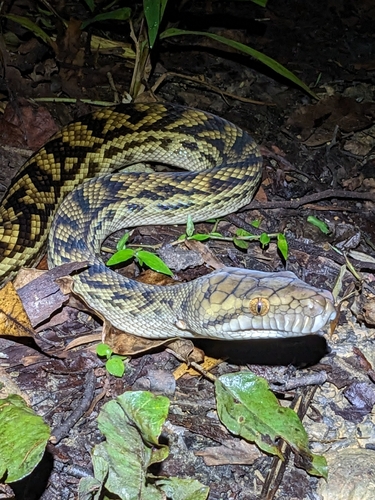
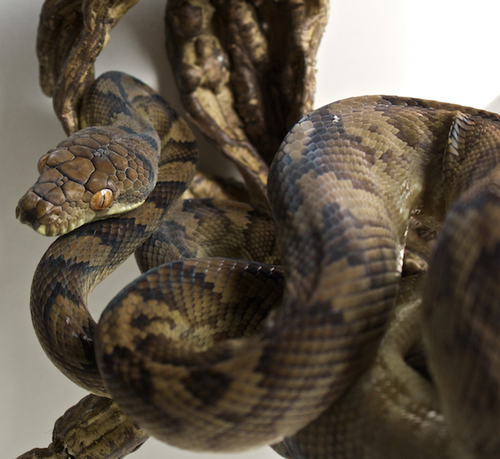
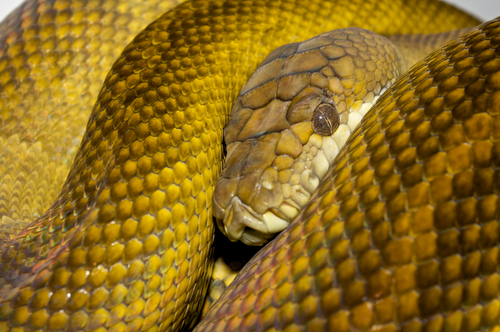
More Pythonidae snakes
Classification
How scientists group this snake, from the broadest category down to the exact species. Each step narrows to its closest relatives.
- OrderThe broad group of scaled reptiles: all snakes and lizards
- Squamata
- FamilyA group of related snakes that share key traits
- Pythonidae
- GenusA close-knit group of very similar species
- Simalia
- SpeciesThis exact snake, named in the two-part scientific name
- Simalia amethistina
Keep learning
- What to Do If You Find a SnakeFound a snake at home or on a trail? Here is how to stay calm, give it space, identify it safely, and know when to call a professional.
- Venomous vs Nonvenomous: How to Tell the DifferenceThe folk rules for telling venomous snakes apart, where each one fails, and why location-based identification beats guessing by sight.
- What Is a Snake? Anatomy and the BasicsA clear overview of what makes a snake a snake: limbless body plan, anatomy, evolution from lizards, species diversity, and why they are ectothermic.
- How to Keep Snakes Out of Your Yard and HomeA practical guide to keeping snakes out of your yard and home using habitat changes that work, plus what to skip and what to do if one shows up.
Distribution from GBIF & iNaturalist. Venom status per CDC. Background: Wikipedia. Informational only. Never handle a snake to identify it.