
Genus · Pythonidae
Types of pythons
5 species make up the genus Simalia, the snakes commonly called pythons. None are considered dangerous to humans.
About amethystine and scrub pythons
Simalia is a small genus of large, non-venomous Indo-Australian pythons that kill prey by constriction.
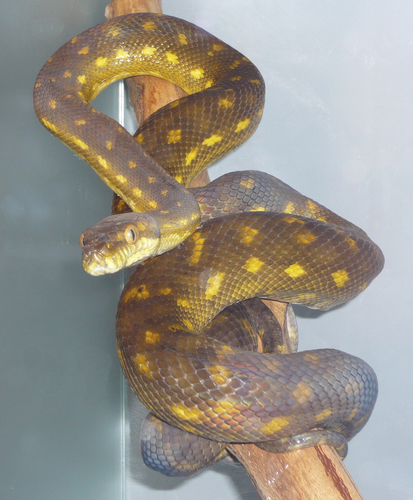
Simalia is a genus in the family Pythonidae, the true pythons. Its members were long lumped into the catch-all genus Morelia before being split out based on genetic and anatomical work, so older books may list these snakes under Morelia. The genus is currently recognized to hold a handful of species, with five represented in our database, including the Australian scrub python, the amethystine python, the Halmahera python, and the Moluccan python.
These are snakes of the wet tropics. The genus ranges across northern and northeastern Australia, New Guinea, and the islands of eastern Indonesia such as the Moluccas and Halmahera. Typical habitat is rainforest and monsoon forest, along forest edges, near water, and around rocky outcrops. Several species climb readily and are at home in trees as well as on the ground.
In general terms, Simalia pythons are heavy-bodied snakes with the python hallmarks: a row of heat-sensing pits along the lips, smooth-to-iridescent scales, and small pelvic spurs near the vent. Many are very large, and the Australian scrub python is among the longest snakes in Australia, capable of exceeding five meters. Coloration varies by species and region, from olive and brown to the prismatic, oil-slick sheen that gives the amethystine python its name. Like all pythons, they have teeth but no fangs and no venom.
Pythons in this genus are non-venomous. They are not dangerous in the medical, toxin sense, but a large constrictor is still a powerful wild animal: a big individual can deliver a deep, raking bite and is capable of strong constriction. Do not handle, restrain, or corner a wild python. If a bite causes significant injury or you are unsure, clean the wound and seek medical care; in the US you can reach Poison Control at 1-800-222-1222, or contact local emergency services. The right response to one in the wild is to give it space.
Ecologically these are ambush and active foragers that constrict their prey. Diet is broad and prey size scales with the snake: rodents, bats, birds, and other small to medium vertebrates, with the largest individuals taking sizeable mammals. Like other pythons they are egg-layers, and females coil around the clutch and brood the eggs, often shivering to generate warmth until they hatch. Behavior tends to be secretive and largely nocturnal, with most activity around dusk and after dark.
Simalia belongs to the Pythonidae family (Pythons). Old-World egg-laying constrictors, including the longest snakes on Earth. Large and heavy-bodied with blotched or banded patterns, smooth scales, and heat-sensing pits along the lips. No rattle or fangs.
Danger: Non-venomous. Only the very largest species could be a physical danger, and bites are defensive, not venomous.
All species (5)
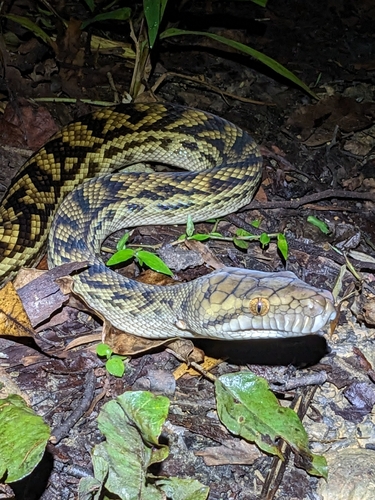
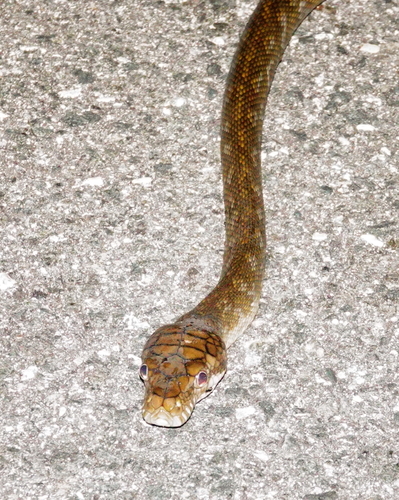
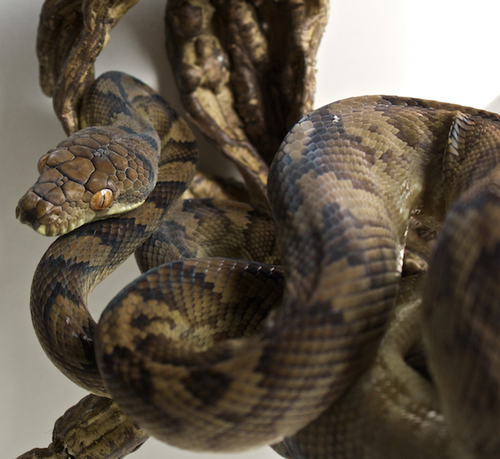
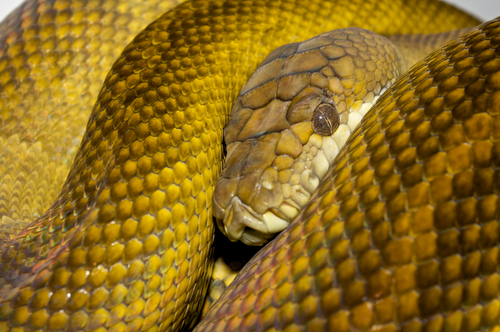
Keep learning
- What Is a Snake? Anatomy and the BasicsA clear overview of what makes a snake a snake: limbless body plan, anatomy, evolution from lizards, species diversity, and why they are ectothermic.
- How Snakes Move, Hunt, and EatHow snakes move without legs, hunt as ambushers or active foragers, kill by constriction or venom, and swallow prey wider than their head.
- What Do Snakes Eat?All snakes are carnivores. Learn what snakes eat, how diet changes with size and age, how often they feed, and how they hunt and swallow prey.
- Venomous vs Nonvenomous: How to Tell the DifferenceThe folk rules for telling venomous snakes apart, where each one fails, and why location-based identification beats guessing by sight.