
Colubridae
Adorned Graceful Brown Snake
HarmlessRhadinaea decorata
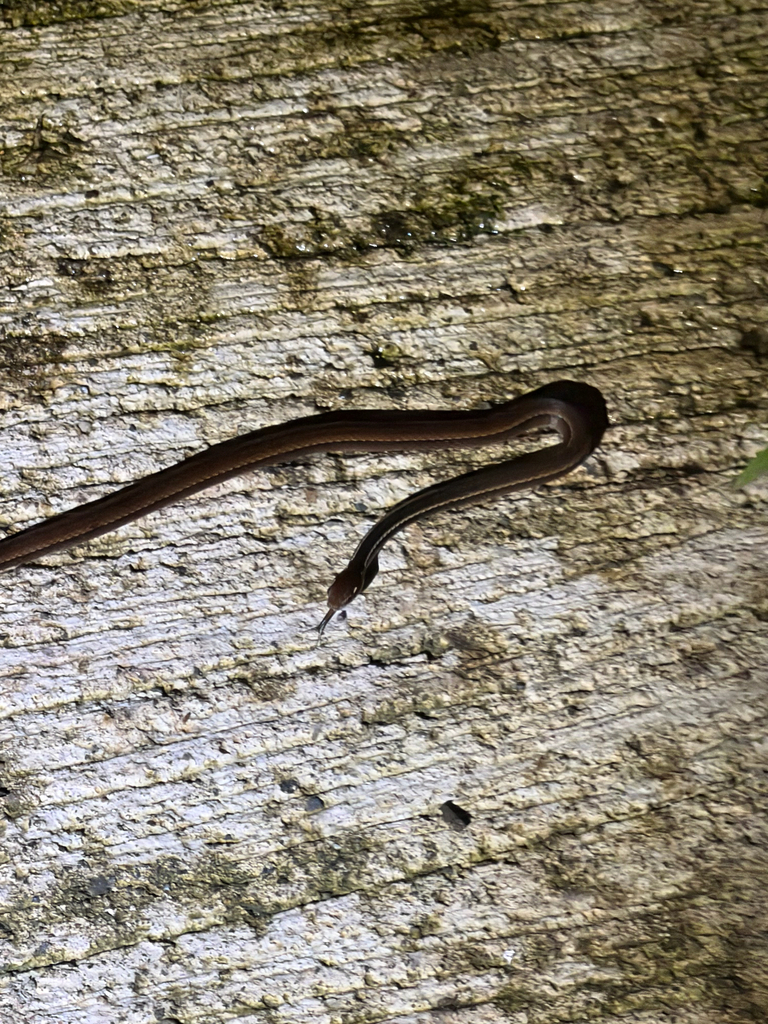
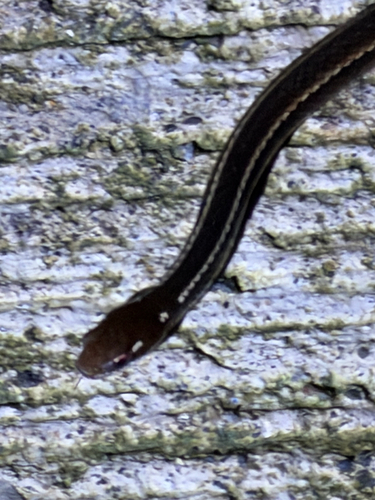
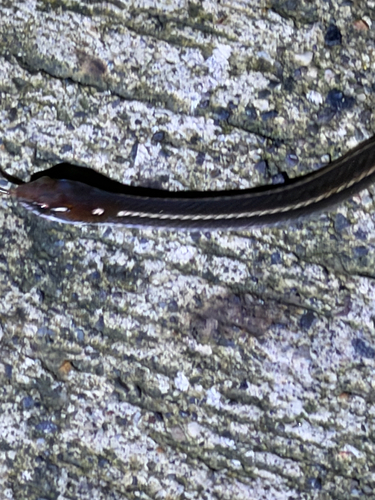
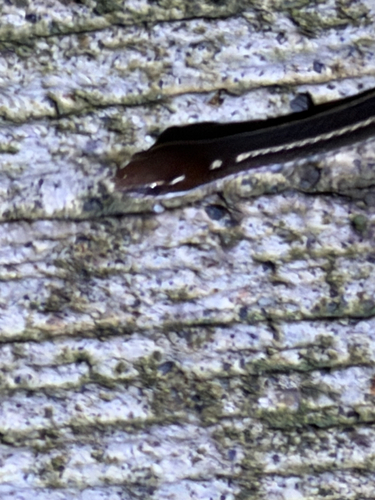
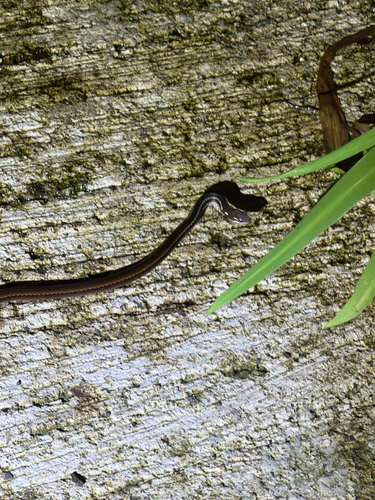
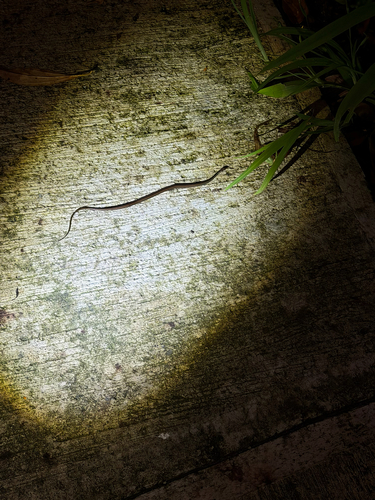
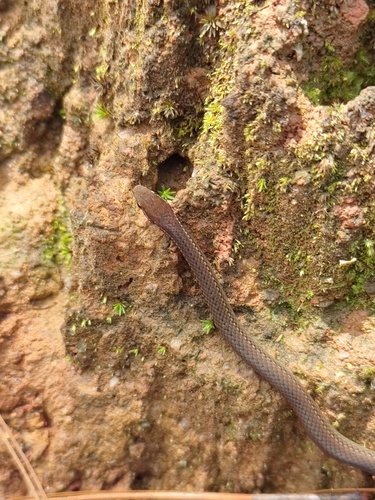
6 photographs of the Adorned Graceful Brown Snake. © Aaron Liston.
The Adorned Graceful Brown Snake (Rhadinaea decorata) is a non-venomous snake in the Colubridae family, recorded in 10 countries.
- Family
- Colubridae
About the Adorned Graceful Brown Snake
Rhadinaea decorata, the adorned graceful brown snake, is a species of snake in the family Colubridae. It is found in Central and South America.
Etymology
The name Rhadinaea comes from the greek word for slender. The species name decorata was given to the snake for the white markings on its head means "decorated or adorned".
Description
Snakes of this species are generally brown in color, with dark lines down the sides of their bodies and oftentimes another similar marking down the spine. These two dark streaks are often separated by another stripe that is tan in color. A white marking behind the eyes serve as the species' namesake. In species that are more southern in distribution, this marking is longer and continuous along the rest of the body.
Notable features of Rhadinaea decorata include a long tail, taking up a maximum of 47% of its body. They are also known to have a smaller number of ventral scales to other species, with scientists counting between 110 and 134 scales on collected specimens.
Rhadinaea decorata can get as long as 470 mm long, however lengths exceeding 400 mm are atypical.
R. decorata typically has about 20 maxillary teeth, then followed by two larger posterior teeth.
Distribution and habitat
Geographic range
R. decorata has been found from central Mexico to as far south as Ecuador. It is one of the most widely distributed species of its genus. It is mostly found in the Atlantic watershed, with a few specimens from the Pacific side in Costa Rica. Rhadinaea decorata is the only species of its group not endemic to Mexico.
Behavior and ecology
Diet
Rhadinaea decorata has been observed preying on small amphibians and their eggs, such as the salamander Bolitoglossa rufescens and the treefrog Agalychis moreletii. They have also been seen eating earthworms. There are also multiple records of the snakes preying on strawberry poison-dart frogs (Oophaga pumilio), despite their potent toxicity.
Reproduction
Through various studies, evidence has been found to suggest that R. decorata breed throughout most of the year. They do not appear, however, to lay more than one small clutch of eggs annually.
Defensive behavior
There have been at least two observations of death feigning in R. decorata. One event included the snake discharging a foul-smelling substance from its cloaca, known as musk. They have also been found to exhibit tail autonomy. Not only has this behavior been observed, but snakes have also been found portions of their tails missing.
Adapted from Wikipedia, available under CC BY-SA.
Frequently asked: Adorned Graceful Brown Snake
- Is the Adorned Graceful Brown Snake venomous?
- No. The Adorned Graceful Brown Snake (Rhadinaea decorata) is non-venomous and is not considered dangerous to humans. Like most snakes, it will retreat rather than bite when given the chance.
- Is the Adorned Graceful Brown Snake poisonous?
- Snakes are venomous, not poisonous. "Poisonous" means harmful to eat or touch; "venomous" means injecting toxins through a bite. The Adorned Graceful Brown Snake is neither poisonous nor venomous.
- Is the Adorned Graceful Brown Snake dangerous?
- The Adorned Graceful Brown Snake is not dangerous to humans. It has no medically significant venom and bites only defensively if cornered or handled.
- Where does the Adorned Graceful Brown Snake live?
- The Adorned Graceful Brown Snake has verified records in 10 countries, including Mexico, Costa Rica, Panama. See the distribution section below for its full range.
- What does the Adorned Graceful Brown Snake eat?
- Rhadinaea decorata has been observed preying on small amphibians and their eggs, such as the salamander Bolitoglossa rufescens and the treefrog Agalychis moreletii. They have also been seen eating earthworms. There are also multiple records of the snakes preying on strawberry poison-dart frogs (Oophaga pumilio), despite their potent toxicity.
- Why is it called the Adorned Graceful Brown Snake?
- The name Rhadinaea comes from the greek word for slender. The species name decorata was given to the snake for the white markings on its head means "decorated or adorned".
Where it is found
More Colubridae snakes
 Pine Woods LittersnakeRhadinaea flavilata
 Pine-Oak SnakeRhadinaea taeniata
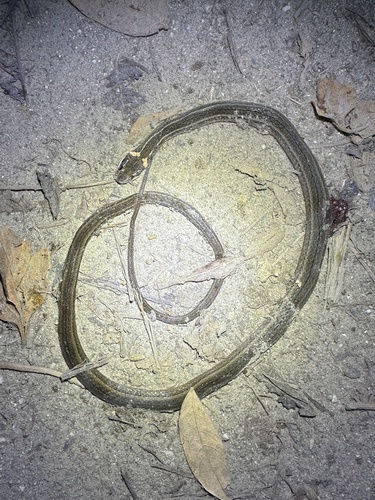 Western Graceful Brown SnakeRhadinaea hesperia
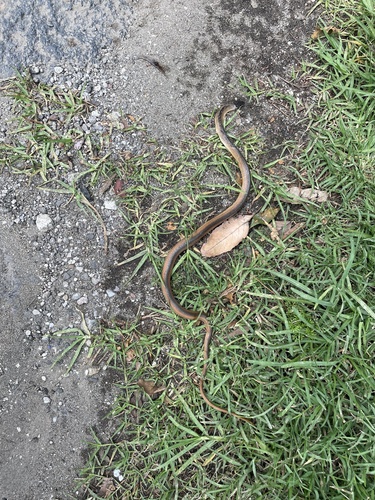 Crowned Graceful Brown SnakeRhadinaea laureata
 Gaige's Pine Forest SnakeRhadinaea gaigeae
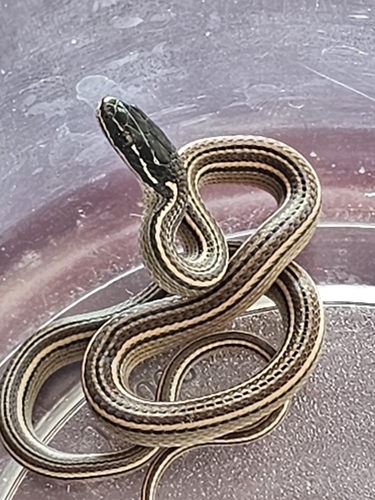 Nuevo Leon Graceful Brown SnakeRhadinaea montana
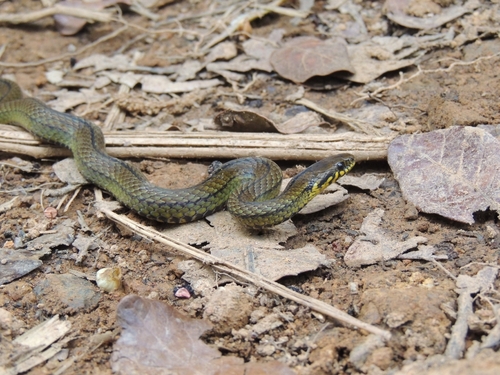 Thick Graceful Brown SnakeRhadinaea calligaster
 Myers' Graceful Brown SnakeRhadinaea myersi
Classification
How scientists group this snake, from the broadest category down to the exact species. Each step narrows to its closest relatives.
- OrderThe broad group of scaled reptiles: all snakes and lizards
- Squamata
- FamilyA group of related snakes that share key traits
- Colubridae
- GenusA close-knit group of very similar species
- Rhadinaea
- SpeciesThis exact snake, named in the two-part scientific name
- Rhadinaea decorata
Keep learning
- What to Do If You Find a SnakeFound a snake at home or on a trail? Here is how to stay calm, give it space, identify it safely, and know when to call a professional.
- Venomous vs Nonvenomous: How to Tell the DifferenceThe folk rules for telling venomous snakes apart, where each one fails, and why location-based identification beats guessing by sight.
- What Is a Snake? Anatomy and the BasicsA clear overview of what makes a snake a snake: limbless body plan, anatomy, evolution from lizards, species diversity, and why they are ectothermic.
- How to Keep Snakes Out of Your Yard and HomeA practical guide to keeping snakes out of your yard and home using habitat changes that work, plus what to skip and what to do if one shows up.
Distribution from GBIF & iNaturalist. Venom status per CDC. Background: Wikipedia. Informational only. Never handle a snake to identify it.