
Genus · Colubridae
Types of brown snakes
10+ species make up the genus Rhadinaea, the snakes commonly called brown snakes. None are considered dangerous to humans.
About leaf litter snakes
Small, secretive snakes of the forest floor that hunt through damp leaf litter from the southern United States down into South America.
Rhadinaea is a genus of small, slender snakes in the family Colubridae, the largest and most diverse family of snakes in the world. They are often called leaf litter snakes, graceful brown snakes, or pine woods snakes because of where they live and how they look. Our database tracks 10+ species. The genus belongs to a New World colubrid group whose members spend most of their lives close to the ground, and several species are quiet, easily overlooked animals that few people ever notice.
The genus ranges widely across the Americas. It reaches the southeastern United States, where the Pine Woods Littersnake is the best known member, and extends through Mexico and Central America into parts of South America. Typical habitat is moist, forested ground. Many species favor pine and pine-oak woodland, humid lowland and montane forest, and the shaded edges of streams and seeps, where they shelter under leaf litter, logs, bark, and other ground debris.
Recognizing a Rhadinaea in general terms means looking for a small, thin snake with smooth scales, a slender body, and a head only slightly distinct from the neck. Many species are some shade of brown, tan, or reddish on the back, often with a paler belly and frequently with a dark stripe through or behind the eye or fine lengthwise lines along the body. Sizes are modest, generally on the order of a foot or so in total length. Because several species look alike and their ranges overlap with other small ground snakes, reliable identification often depends on locality and fine scale detail rather than color alone.
Rhadinaea snakes are not considered dangerous to people. They are small and inoffensive, and they are not known to cause medically significant envenomation in humans. Like many colubrids in this lineage, some members are technically rear-fanged, with enlarged grooved teeth toward the back of the jaw and mild saliva used to subdue small prey, but this poses no meaningful threat to a person. As a general rule with any wild snake, the safe approach is to observe and not handle it, because field identification is unreliable and even harmless snakes can bite if grabbed. If a bite from any snake causes worrying symptoms, contact emergency services or US Poison Control at 1-800-222-1222 rather than trying to treat it yourself.
Ecologically, leaf litter snakes are ground level predators of small, soft prey. They commonly feed on amphibians such as small frogs and salamanders, along with lizards, and some take invertebrates, hunting through the moist litter where these animals are found. They are egg laying, producing small clutches, and they tend to be most active in humid conditions, after rain, and during cooler parts of the day. Their secretive, forest floor lifestyle makes them a small but real part of the food web across the woodlands they inhabit.
Rhadinaea belongs to the Colubridae family (Colubrids). The largest snake family, and the one most snakes you meet belong to. Typically round pupils, a head only slightly wider than the neck, and no heat-sensing facial pit or rattle. Scales may be smooth and glossy or keeled and matte depending on the species.
Danger: Almost all colubrids are harmless. A small number are rear-fanged with medically significant venom, the boomslang and the twig (vine) snakes of Africa being the dangerous exceptions. Most colubrids will flee or bluff rather than bite.
All species (18)
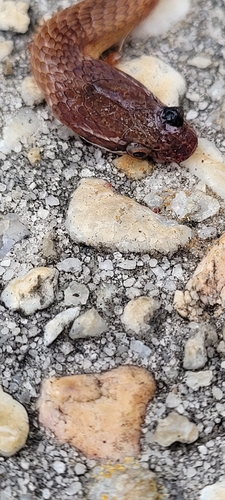 Pine Woods LittersnakeRhadinaea flavilataHarmless
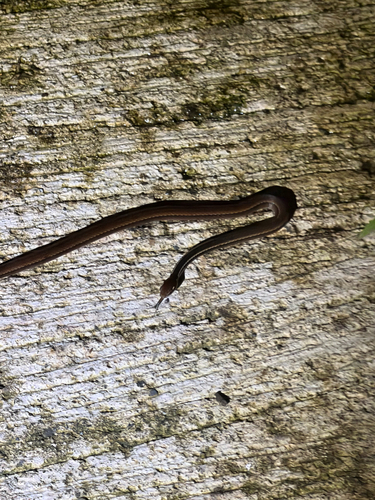 Adorned Graceful Brown SnakeRhadinaea decorataHarmless
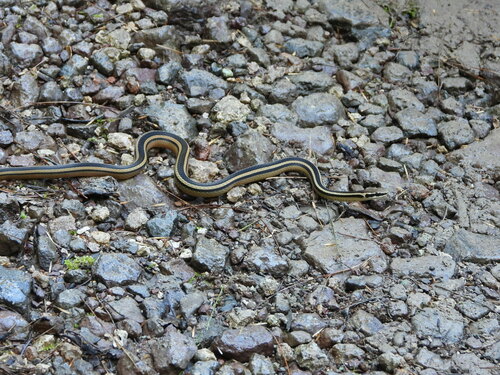 Pine-Oak SnakeRhadinaea taeniataHarmless
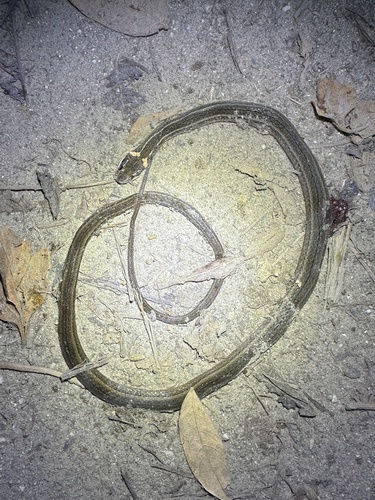 Western Graceful Brown SnakeRhadinaea hesperiaHarmless
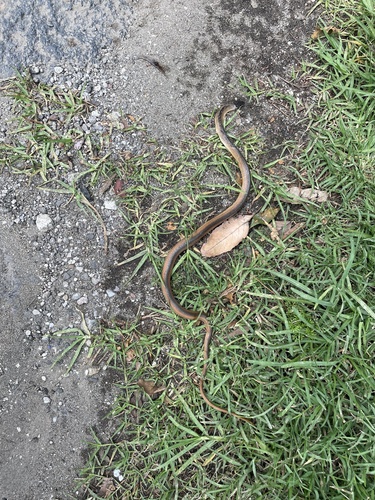 Crowned Graceful Brown SnakeRhadinaea laureataHarmless
 Gaige's Pine Forest SnakeRhadinaea gaigeaeHarmless
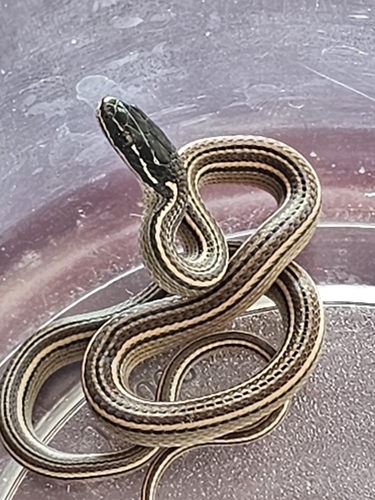 Nuevo Leon Graceful Brown SnakeRhadinaea montanaHarmless
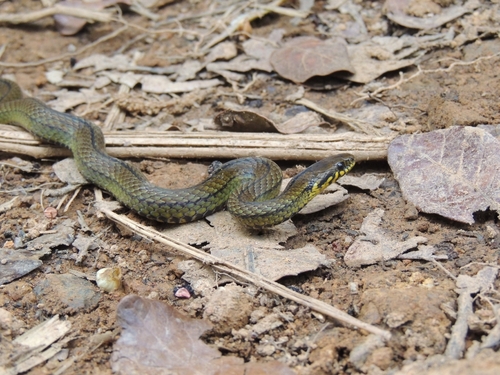 Thick Graceful Brown SnakeRhadinaea calligasterHarmless
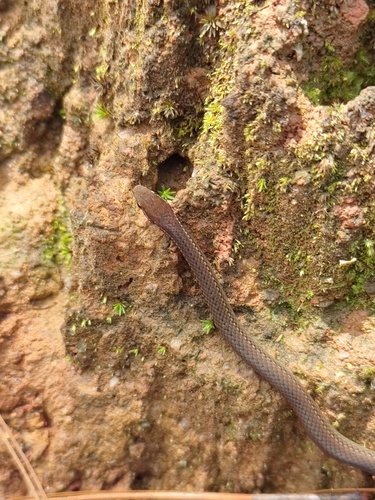 Myers' Graceful Brown SnakeRhadinaea myersiHarmless
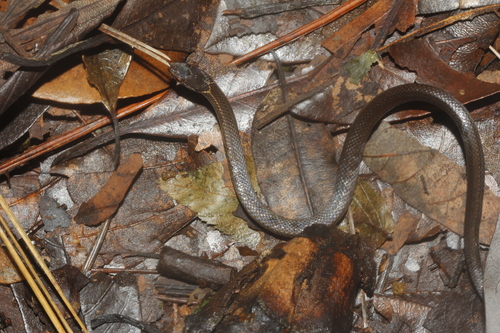 Marcella's Graceful Brown SnakeRhadinaea marcellaeHarmless
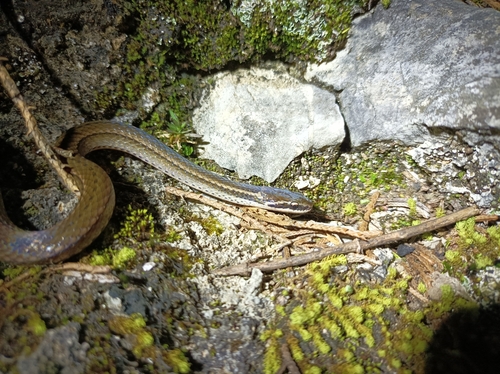 Forbes' Graceful Brown SnakeRhadinaea forbesiHarmless
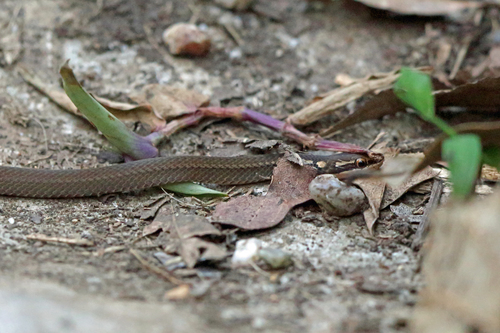 Veracruz Graceful Brown SnakeRhadinaea cuneataHarmless
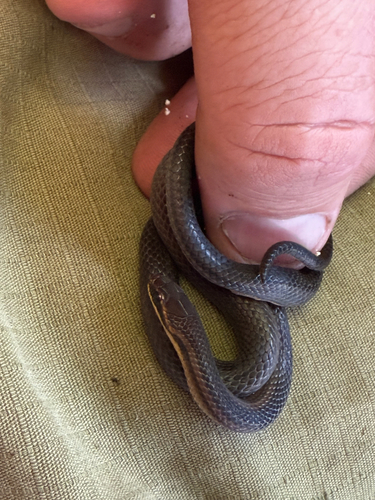 Oaxacan Graceful Brown SnakeRhadinaea bogertorumHarmless
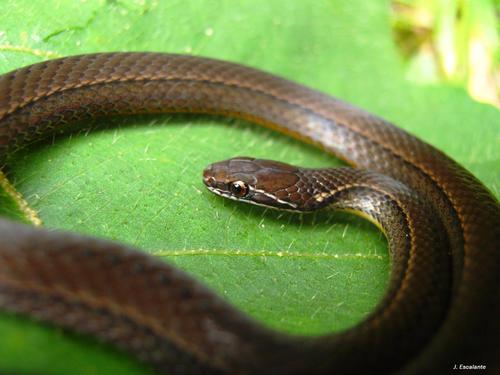 MacDougall's Graceful Brown SnakeRhadinaea macdougalliHarmless
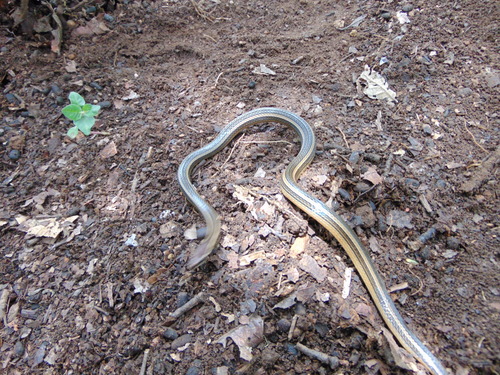 Ribbon Graceful Brown SnakeRhadinaea fulvivittisHarmless
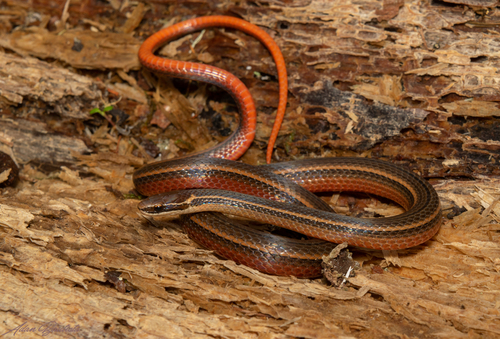 Guerreran Pine Woods SnakeRhadinaea omiltemanaHarmless
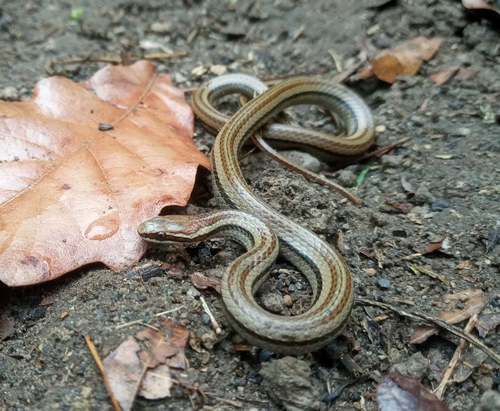 Pueblan Graceful Brown SnakeRhadinaea quinquelineataHarmless
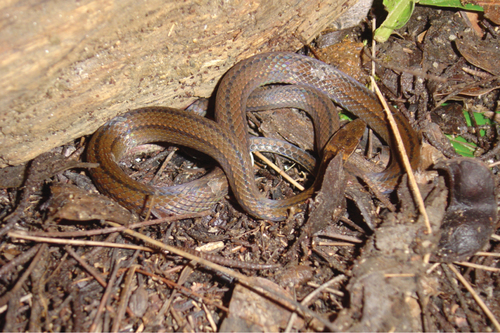 Rhadinaea nuchalisHarmless
Keep learning
- What Is a Snake? Anatomy and the BasicsA clear overview of what makes a snake a snake: limbless body plan, anatomy, evolution from lizards, species diversity, and why they are ectothermic.
- How Snakes Move, Hunt, and EatHow snakes move without legs, hunt as ambushers or active foragers, kill by constriction or venom, and swallow prey wider than their head.
- What Do Snakes Eat?All snakes are carnivores. Learn what snakes eat, how diet changes with size and age, how often they feed, and how they hunt and swallow prey.
- Venomous vs Nonvenomous: How to Tell the DifferenceThe folk rules for telling venomous snakes apart, where each one fails, and why location-based identification beats guessing by sight.