
Colubridae
Pine Woods Littersnake
HarmlessRhadinaea flavilata
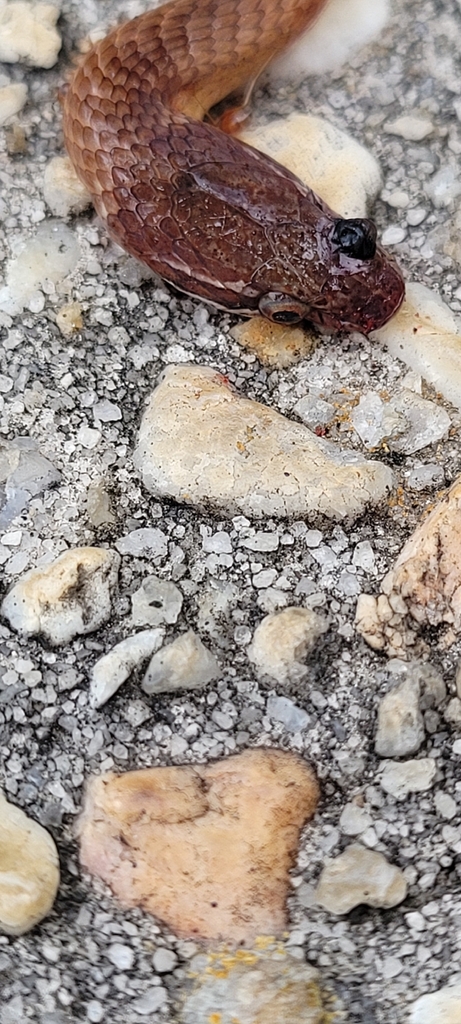
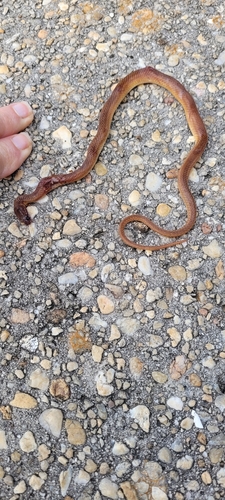
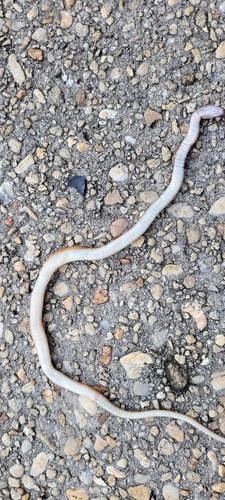
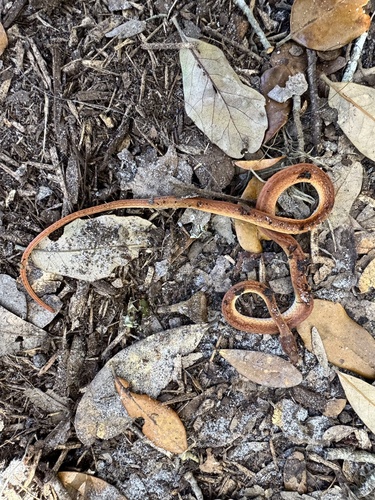
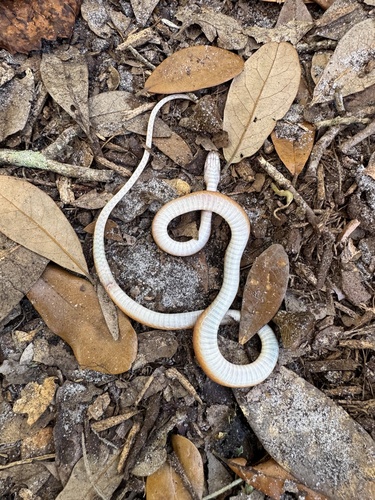
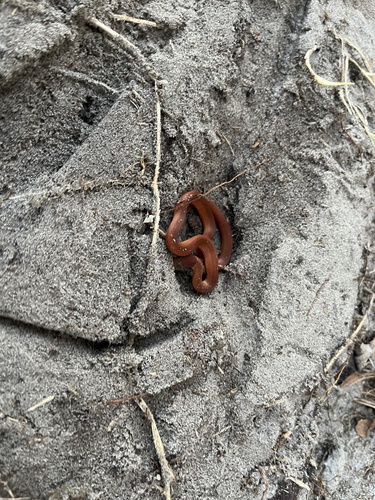
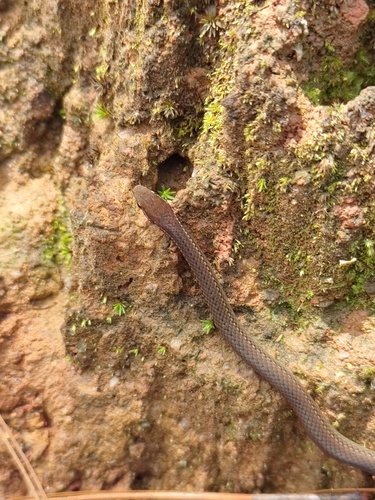
6 photographs of the Pine Woods Littersnake. © cft.
The Pine Woods Littersnake (Rhadinaea flavilata) is a non-venomous snake in the Colubridae family, recorded in 1 country.
- Family
- Colubridae
About the Pine Woods Littersnake
The pine woods snake (Rhadinaea flavilata), also commonly known as the yellow-lipped snake and the brown-headed snake, is a secretive species of snake in the subfamily Dipsadinae of the family Colubridae. The species is native to scattered locations across the southeastern United States. Rhadinaea flavilata is rear-fanged and mildly venomous, but not dangerous to humans.
Description
Rhadinaea flavilata is a small reddish brown to yellowish brown or dark orange snake with a whitish to yellowish, unmarked underside. A dark stripe runs through the eye. A light stripe may be present along the middle of the back. The upper labial scales (lip scales) are a whitish or pale yellow color which led to one of its common names, the yellow-lipped snake.
The pine woods snake averages between 10 and 13 inches (25–33 cm) in total length (tail included) at adult size.
Geographic range
Rhadinaea flavilata is found in scattered localities in coastal North Carolina and South Carolina, most of peninsular Florida, and small portions of Georgia, Alabama, Mississippi, and Louisiana.
Habitat
The pine woods snake inhabits pine and mixed-pine hardwood forests. It can be found in damp woodlands, under bark and in rotten logs and stumps. The species has a scattered geographic distribution with large expanses occurring between known populations.
Behavior and diet
Because Rhadinaea flavilata is mainly found in warm coastal areas, it is active for most of the year. It will hibernate underground or in logs in cold winter conditions. There is little information about the diet of R. flavilata. Captive specimens will eat small frogs, salamanders and small lizards.
Reproduction
The pine woods snake lays eggs. There is little information about reproduction. Mating probably occurs in the spring and one to four eggs are laid during the summer months. Some females lay two clutches of eggs each year. The incubation period is six to eight weeks.
Predators
Natural predators of Rhadinaea flavilata include the southern black racer and kingsnakes, as well as carnivorous pine forest animals. Shrews, birds and toads are likely predators. The woods snake does not bite when picked up, but it can release a foul-smelling odor.
Adapted from Wikipedia, available under CC BY-SA.
Frequently asked: Pine Woods Littersnake
- Is the Pine Woods Littersnake venomous?
- No. The Pine Woods Littersnake (Rhadinaea flavilata) is non-venomous and is not considered dangerous to humans. Like most snakes, it will retreat rather than bite when given the chance.
- Is the Pine Woods Littersnake poisonous?
- Snakes are venomous, not poisonous. "Poisonous" means harmful to eat or touch; "venomous" means injecting toxins through a bite. The Pine Woods Littersnake is neither poisonous nor venomous.
- Is the Pine Woods Littersnake dangerous?
- The Pine Woods Littersnake is not dangerous to humans. It has no medically significant venom and bites only defensively if cornered or handled.
- Where does the Pine Woods Littersnake live?
- The Pine Woods Littersnake has verified records in 1 country, including United States of America. See the distribution section below for its full range.
- What does the Pine Woods Littersnake eat?
- Because Rhadinaea flavilata is mainly found in warm coastal areas, it is active for most of the year. It will hibernate underground or in logs in cold winter conditions. There is little information about the diet of R. flavilata. Captive specimens will eat small frogs, salamanders and small lizards.
Where it is found
More Colubridae snakes
 Adorned Graceful Brown SnakeRhadinaea decorata
 Pine-Oak SnakeRhadinaea taeniata
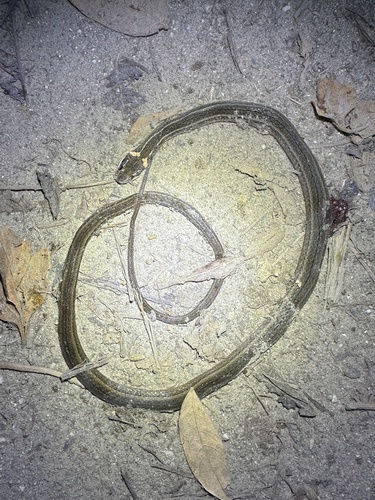 Western Graceful Brown SnakeRhadinaea hesperia
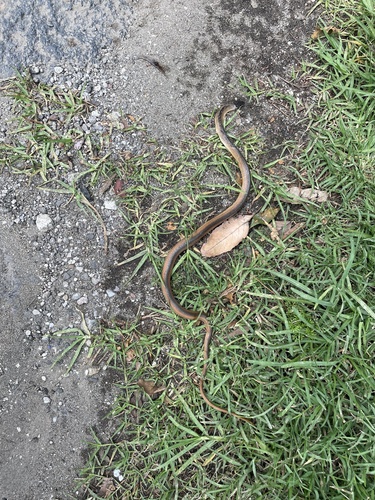 Crowned Graceful Brown SnakeRhadinaea laureata
 Gaige's Pine Forest SnakeRhadinaea gaigeae
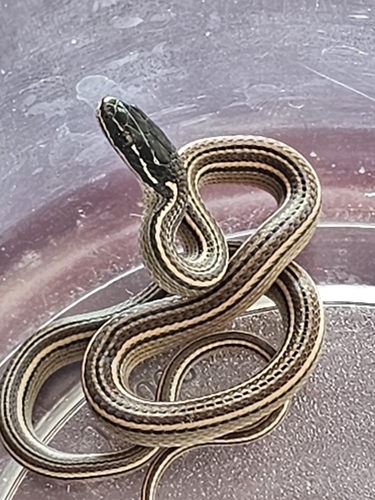 Nuevo Leon Graceful Brown SnakeRhadinaea montana
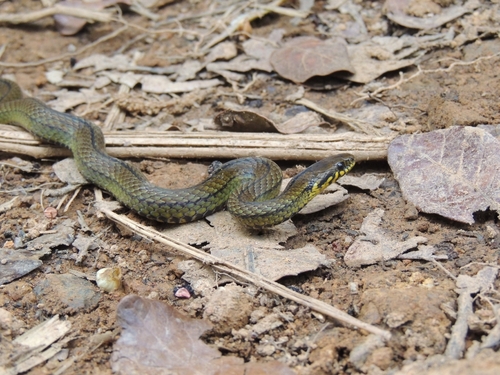 Thick Graceful Brown SnakeRhadinaea calligaster
 Myers' Graceful Brown SnakeRhadinaea myersi
Classification
How scientists group this snake, from the broadest category down to the exact species. Each step narrows to its closest relatives.
- OrderThe broad group of scaled reptiles: all snakes and lizards
- Squamata
- FamilyA group of related snakes that share key traits
- Colubridae
- GenusA close-knit group of very similar species
- Rhadinaea
- SpeciesThis exact snake, named in the two-part scientific name
- Rhadinaea flavilata
Keep learning
- What to Do If You Find a SnakeFound a snake at home or on a trail? Here is how to stay calm, give it space, identify it safely, and know when to call a professional.
- Venomous vs Nonvenomous: How to Tell the DifferenceThe folk rules for telling venomous snakes apart, where each one fails, and why location-based identification beats guessing by sight.
- What Is a Snake? Anatomy and the BasicsA clear overview of what makes a snake a snake: limbless body plan, anatomy, evolution from lizards, species diversity, and why they are ectothermic.
- How to Keep Snakes Out of Your Yard and HomeA practical guide to keeping snakes out of your yard and home using habitat changes that work, plus what to skip and what to do if one shows up.
Distribution from GBIF & iNaturalist. Venom status per CDC. Background: Wikipedia. Informational only. Never handle a snake to identify it.