
Viperidae
Russell's Viper
VenomousDaboia russelii
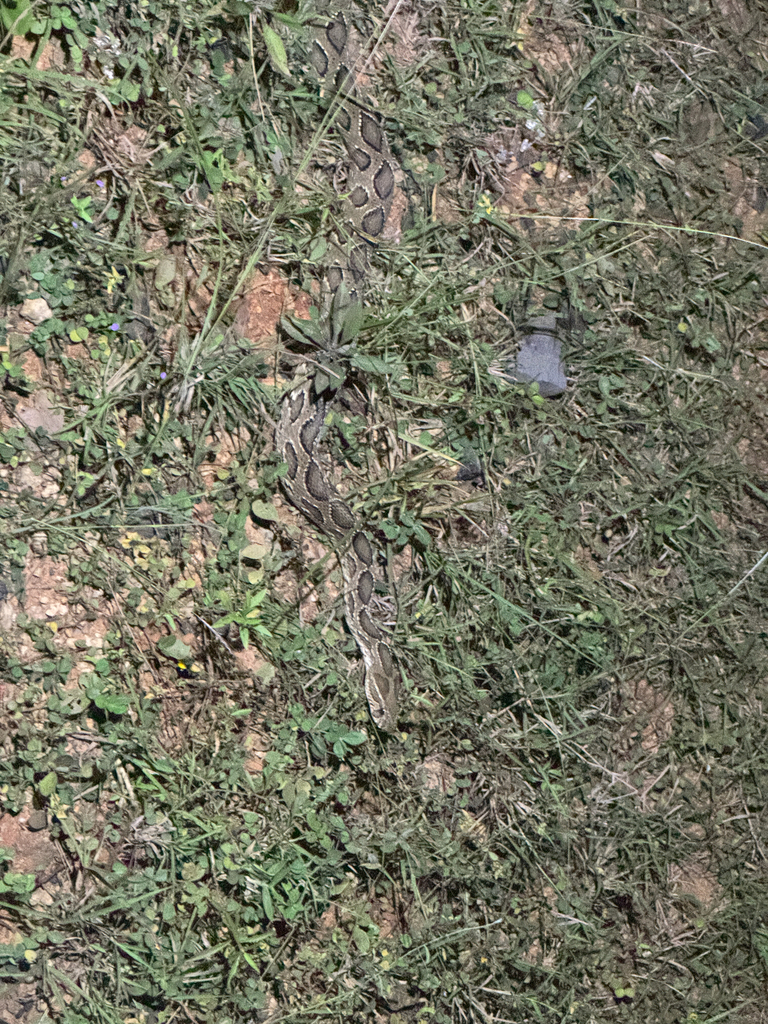
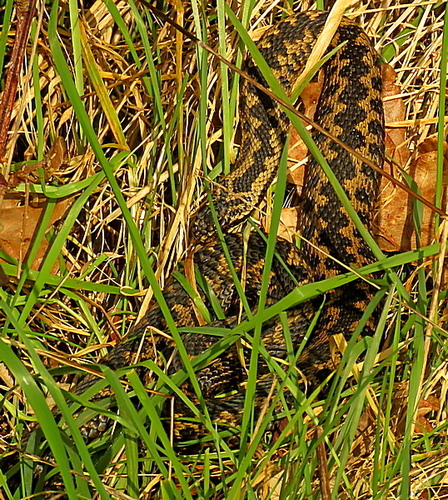
The Russell's Viper (Daboia russelii) is a venomous snake in the Viperidae family, recorded in 10 countries.
If you are bitten
This is a venomous snake. Treat any bite as a medical emergency: stay calm, keep the bitten limb still and roughly level with the heart, remove rings and tight clothing, and get to emergency care immediately. Do not apply a tourniquet, cut the wound, apply ice, or try to suck out venom. Call your local emergency number or poison center.
- Family
- Viperidae
- Danger
- high
About the Russell's Viper
Russell's viper (Daboia russelii) is a species of highly venomous snake in the family Viperidae. The species is native to South Asia. It was described in 1797 by George Shaw and Frederick Polydore Nodder. It is named after Patrick Russell. Known for its extremely painful bite, it is considered one of the "Big Four" venomous snake species in the region.
Taxonomy
Coluber russelii was the name proposed by George Shaw who described the species in 1797 based on a specimen presented to the British Museum by Patrick Russell. Russell described the species in 1796 and confirmed its highly venomous nature by experimenting on chickens and dogs. He added the native people called it katuka retula poda.
Analysis of morphological and mitochondrial DNA data shows that the eastern subspecies of Russell's viper should be considered a separate species, Daboia siamensis.
A number of other subspecies may be encountered in literature. including:
D. s. formosensis (Maki, 1931) occurs in Thailand and is considered a synonym of D. siamensis.
D. s. limitis (Mertens, 1927) occurs in Indonesia and is considered a synonym of D. siamensis.
D. r. pulchella (Gray, 1842) occurs in Sri Lanka and is considered a synonym of D. russelii.
D. r. nordicus (Deraniyagala, 1945) occurs in northern India and is considered a synonym of D. russelii.
The correct spelling of the species, D. russelii, has been, and still is, a matter of debate. Shaw and Nodder (1797), in their account of the species Coluber russelii, named it after Patrick Russell, but apparently misspelled his name, using only one "L" instead of two. McDiarmid et al. (1999) are among those who favor the original misspelling, citing Article 32c (ii) of the International Code of Zoological Nomenclature. Others, such as Zhao and Adler (1993) favor russellii.
Etymology
The species is named after Patrick Russell. The genus name is thought to be a latinisation of the Hindi word daboyā meaning "that lies hid", or "the lurker".
English common names of the Russell's viper include chain viper, Indian Russell's viper, seven pacer, chain snake, and scissors snake.
Description
The head is flattened, triangular, and distinct from the neck. The snout is blunt, rounded, and raised. The nostrils are large, each in the middle of a large, single nasal scale. The lower edge of the nasal scale touches the nasorostral scale. The supranasal scale has a strong crescent shape and separates the nasal from the nasorostral scale anteriorly. The rostral scale is as broad as it is high.
The crown of the head is covered with irregular, strongly fragmented scales. The supraocular scales are narrow, single, and separated by six to nine scales across the head. The eyes are large, flecked with yellow or gold, and surrounded by 10–15 circumorbital scales. The snake has 10–12 supralabials, the fourth and fifth of which are significantly larger. The eye is separated from the supralabials by three or four rows of suboculars. Of the two pairs of chin shields, the front pair is notably enlarged. The two maxillary bones support at least two, and at the most five or six, pairs of fangs at a time: the first are active and the rest replacements. The fangs attain a length of 16.5 mm (0.65 in) in the average specimen.
Adapted from Wikipedia, available under CC BY-SA.
Local and regional names
The Russell's Viper is known by these names across the regions where it lives:
- English
- Russel's Viper
- German
- Kettenviper
Frequently asked: Russell's Viper
- Is the Russell's Viper venomous?
- Yes. The Russell's Viper (Daboia russelii) is venomous and belongs to the Viperidae family (viper). Its bite is considered high risk to people. Treat any bite as a medical emergency.
- Is the Russell's Viper poisonous?
- Snakes are venomous, not poisonous. "Poisonous" means harmful to eat or touch; "venomous" means injecting toxins through a bite. The Russell's Viper is venomous, delivering venom through a bite.
- Is the Russell's Viper dangerous?
- This is a venomous snake. Treat any bite as a medical emergency: stay calm, keep the bitten limb still and roughly level with the heart, remove rings and tight clothing, and get to emergency care immediately. Do not apply a tourniquet, cut the wound, apply ice, or try to suck out venom. Call your local emergency number or poison center.
- Where does the Russell's Viper live?
- The Russell's Viper has verified records in 10 countries, including India, Pakistan, Sri Lanka. See the distribution section below for its full range.
- What does the Russell's Viper eat?
- Russell's viper feeds primarily on rodents, although it will also eat small reptiles, land crabs, scorpions, and other arthropods. Juveniles are crepuscular, feeding on lizards and foraging actively. As they grow and become adults, they begin to specialize in rodents. Indeed, the presence of rodents and lizards is the main reason they are attracted to human habitation. Juveniles are known to be cannibalistic.
- Why is it called the Russell's Viper?
- The species is named after Patrick Russell. The genus name is thought to be a latinisation of the Hindi word daboyā meaning "that lies hid", or "the lurker". English common names of the Russell's viper include chain viper, Indian Russell's viper, seven pacer, chain snake, and scissors snake.
If you are bitten by the Russell's Viper
Do
- Get away from the snake and stay calm. Most bites worsen when people panic or try again to handle the snake.
- Call 911 or Poison Control (1-800-222-1222) right away. Antivenom works best when given early.
- Note the time of the bite and, from a safe distance, the snake's color and pattern, a phone photo is enough. Do not chase it.
- Keep the bitten limb still and at roughly heart level. Sit or lie down and limit movement.
- Remove rings, watches, and tight clothing near the bite before swelling starts.
- Gently wash the bite with soap and water and cover it with a clean, dry dressing.
Do not
- Do not cut the wound or try to suck out the venom.
- Do not apply a tourniquet or ice.
- Do not drink alcohol or caffeine.
- Do not take aspirin or ibuprofen, they can worsen bleeding. Acetaminophen is safer for pain.
- Do not try to catch or kill the snake. A dead snake can still bite by reflex.
First-aid guidance adapted from the U.S. Centers for Disease Control and Prevention (CDC NIOSH), Venomous Snakes. Educational only; always follow the instructions of emergency responders.
Where it is found
More Viperidae snakes
Classification
How scientists group this snake, from the broadest category down to the exact species. Each step narrows to its closest relatives.
Keep learning
- Are Snakes Dangerous? The Real Risk, in PerspectiveMost snakes are harmless and avoid people. Here is the honest picture of snakebite risk worldwide and how to lower your own.
- Snakebite First Aid: What to Do (and What Never to Do)A clear, CDC-based guide to snakebite first aid: the steps that help, the popular myths that hurt, and how to tell a serious bite from a minor one.
- Venomous vs Nonvenomous: How to Tell the DifferenceThe folk rules for telling venomous snakes apart, where each one fails, and why location-based identification beats guessing by sight.
- What to Do If You Find a SnakeFound a snake at home or on a trail? Here is how to stay calm, give it space, identify it safely, and know when to call a professional.
Distribution from GBIF & iNaturalist. Venom status per CDC. Background: Wikipedia. Informational only. Never handle a snake to identify it.