
Genus · Viperidae
Types of vipers
4 species make up the genus Daboia, the snakes commonly called vipers. All of them are venomous.
About Russell's vipers
Heavy-bodied Old World true vipers whose best-known member, Russell's viper, ranks among the deadliest snakes to humans on Earth.
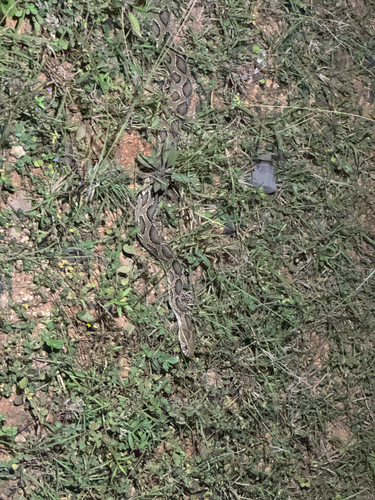
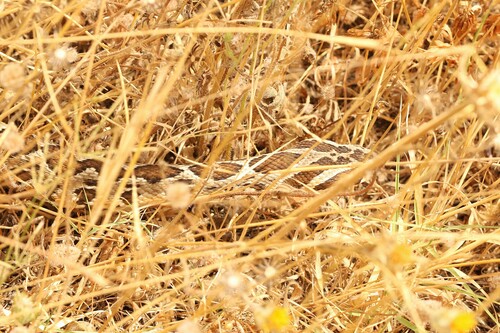
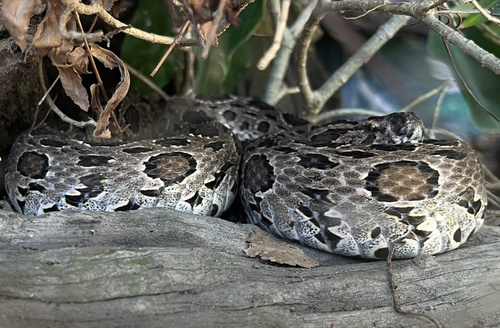
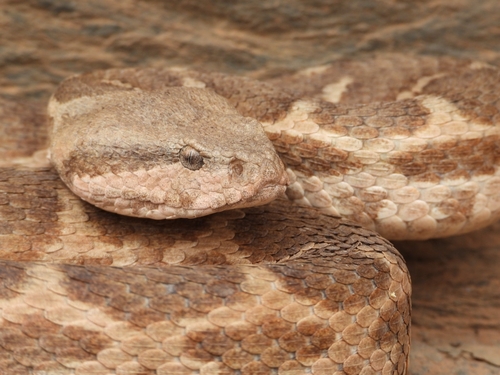
Daboia is a small genus of true vipers (family Viperidae) native to the Old World. Our database lists four species, all four of them venomous. These are stout, thick-bodied snakes built around a broad, triangular head set off from a narrow neck. The standout member is Russell's viper (Daboia russelii), instantly recognizable by the chain of dark, oval blotches running down its back, often ringed with black and white. That bold pattern, the stocky build, and a famously loud, sustained hiss are the field marks that set the genus apart from the slimmer, faster snakes that share its habitat.
Russell's viper is one of India's so-called Big Four, the group of snakes responsible for the bulk of serious snakebite in the region. Globally, it is among the snakes that cause the most human deaths, and it is a severe public-health problem for farmers and rural workers across South and Southeast Asia. Bites happen most often where people and snakes overlap in agricultural land, which makes this far more than a wildlife curiosity. It is a leading cause of death and lifelong disability in some of the most populous rural areas in the world.
The genus ranges across the Indian subcontinent and into Southeast Asia, with related members occurring around the eastern Mediterranean, including the Palestine viper. Within this broad range the snakes favor open country, scrub, grassland, and the edges of farms and villages. Their ecology ties them tightly to people: they hunt rodents, and rodents thrive around stored grain, fields, and human settlement. That draws the snakes into exactly the places where people walk, work, and sleep, which is the root of the conflict. Daboia gives live birth, and Russell's viper in particular can produce large litters of young that are dangerous from the moment they are born.
The venom is potent and biochemically complex. A bite can cause heavy bleeding, failure of the blood to clot, intense pain and swelling, drops in blood pressure, and damage to the kidneys. Survivors frequently face serious long-term effects, including lasting kidney problems and hormonal damage. Russell's viper is also known to be irritable and quick to strike when disturbed, which compounds the risk in farmland settings. None of this is something to test or approach.
A bite from any Daboia is a major medical emergency. No wild venomous snake is safe to handle, regardless of how slow or sluggish it may appear. If a bite occurs, the only correct response is to get the person to a hospital as fast as possible, where trained clinicians can give antivenom and manage complications, often including treatment for kidney failure. Do not attempt field remedies or wait to see how symptoms develop. Defer entirely to emergency medical care.
Daboia belongs to the Viperidae family (Vipers & pit vipers). Heavy-bodied venomous snakes with long, hinged, hollow fangs. Broad, triangular head distinct from a narrow neck, heavy body, and (usually) vertical, cat-like pupils. Pit vipers also have a heat-sensing pit; true vipers do not.
Danger: Every viper is venomous, and the family includes some of the world's most medically important snakes. Venom is typically hemotoxic, causing pain, swelling, tissue damage, and bleeding. Treat any viper bite as a medical emergency.
All species (4)
Keep learning
- Venomous vs Nonvenomous: How to Tell the DifferenceThe folk rules for telling venomous snakes apart, where each one fails, and why location-based identification beats guessing by sight.
- Are Snakes Dangerous? The Real Risk, in PerspectiveMost snakes are harmless and avoid people. Here is the honest picture of snakebite risk worldwide and how to lower your own.
- Snake Venom Explained: How It Works and WhyWhat snake venom actually is, why it evolved, the main venom types, fang delivery, how antivenom works, and why ranking the most venomous snake is hard.
- How Snakes Move, Hunt, and EatHow snakes move without legs, hunt as ambushers or active foragers, kill by constriction or venom, and swallow prey wider than their head.