
Colubridae
Green Rat Snake
HarmlessPtyas nigromarginata
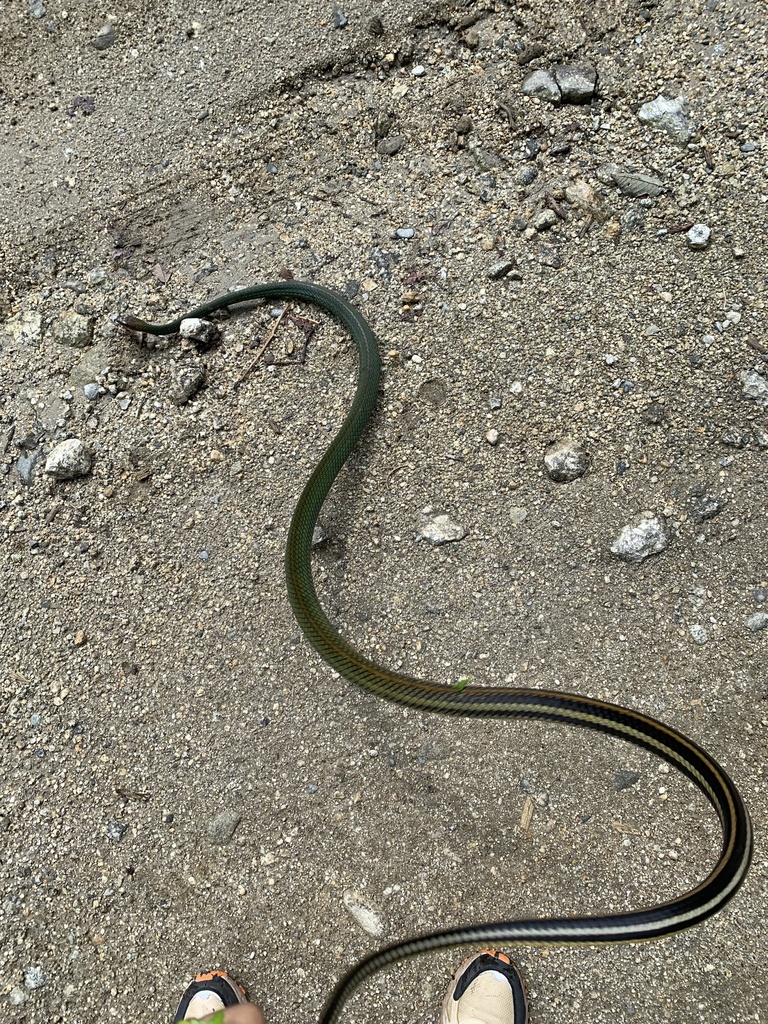
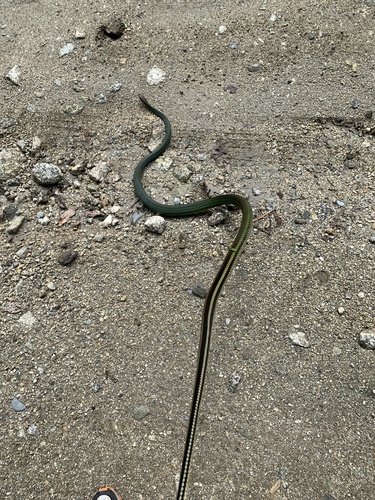
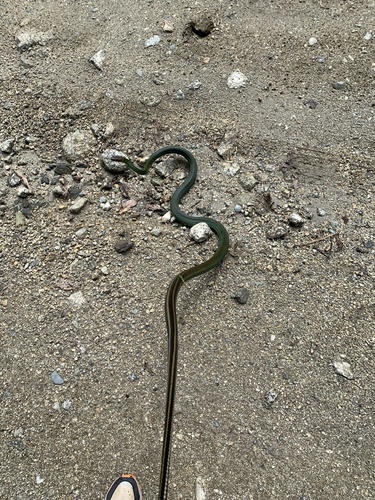
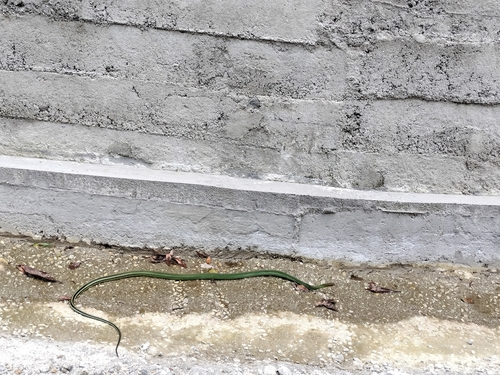
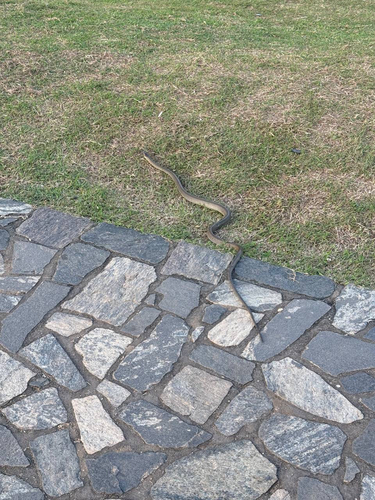
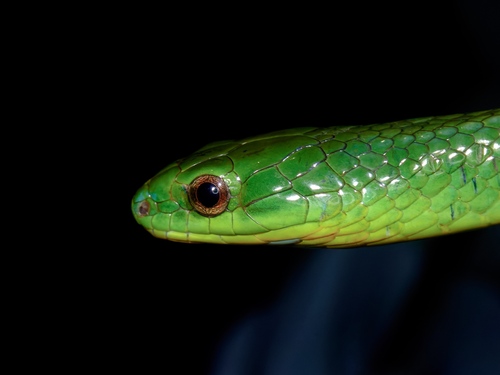
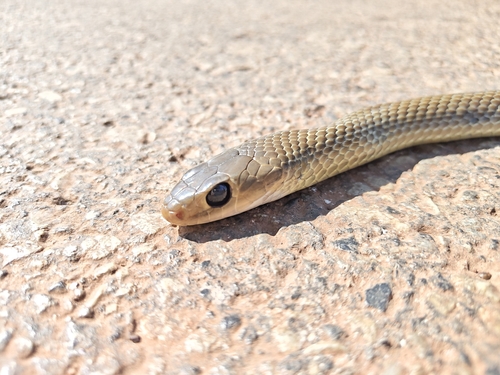
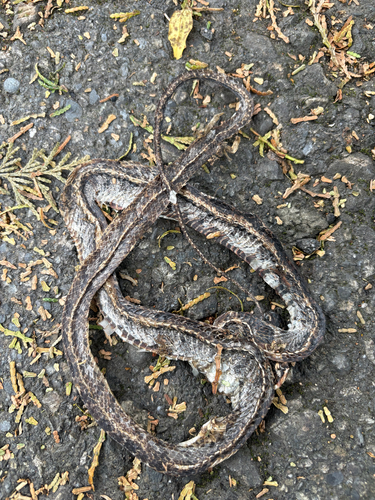
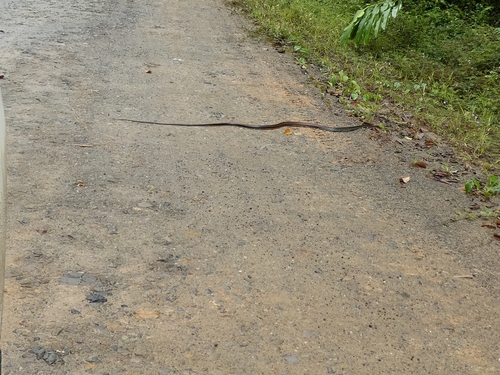
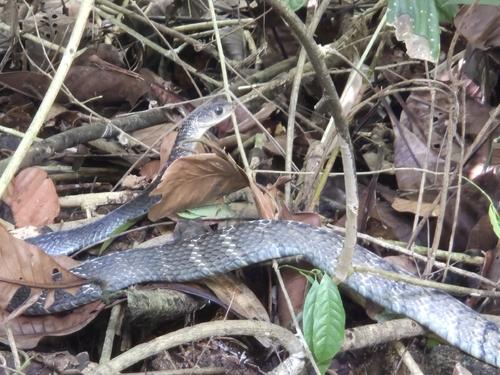
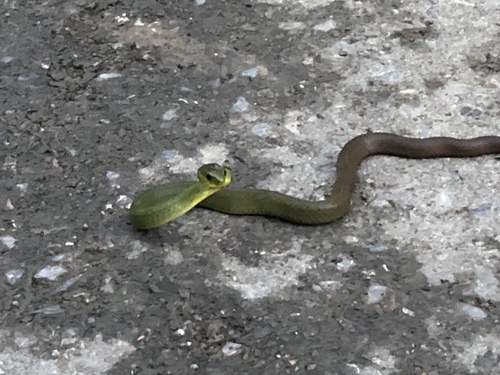
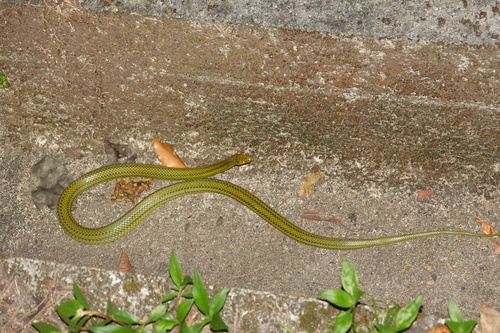
4 photographs of the Green Rat Snake. © 灯管儿.
The Green Rat Snake (Ptyas nigromarginata) is a non-venomous snake in the Colubridae family, recorded in 9 countries.
- Family
- Colubridae
About the Green Rat Snake
Ptyas nigromarginata, commonly known as the green rat snake or black-bordered rat snake, is a species of snake in the family Colubridae. The species is endemic to parts of Southeast Asia, including regions of China, India, Myanmar, and Vietnam. This slender, agile snake is characterized by its striking green coloration, often accompanied by a distinctive black border along its dorsal scales.
Geographic range
P. nigromarginata is found in Bhutan, Nepal, India (Darjeeling, Sikkim, Assam, Arunachal Pradesh, Nagaland), northern Bangladesh, northern Myanmar (Burma), China (Guizhou, Yunnan, southwestern Sichuan, southeastern Xizang (Tibet]), and possibly northern Vietnam. The type locality is Darjeeling, India.
It has been recorded from elevations between 500m to 2300m.
Description
A large snake, P. nigromarginata may attain a total length of 2.26 m (7.4 ft), which includes a tail 0.65 m (2.1 ft) long. Dorsally, it is green, with each dorsal scale edged in black. The top of the head is brownish. In adults, there are four broad black stripes on the posterior third of the body and on the tail. In juveniles the stripes extend the full length of the body and tail. Ventrally, it is greenish white. Frank Wall, a notable herpetologist, vividly described the species:
"It is difficult to realize from museum specimens the extreme beauty and brilliancy of coloring of many snakes in life, and this forcibly applies in the present instance. My specimen was a bright green of so soft a hue that the skin looked like velvet. This merged into a yellowish green anteriorly, and yellow posteriorly, the latter merging into a rich black on the tail. The black margins to the scales served to enhance the beauty of the dorsal green. The head was olive-brown with a bright yellow patch low on the temporal region. The chin and throat were white, sparsely speckled at first, more heavily later, with light caerulean blue, which merged to blue-green, then pale greenish, and finally, yellow in the length of the snake. Some gray speckling was seen beneath the tail."
Ptyas nigromarginata has often been confused with other species, particularly Ptyas dhumnades (Cantor, 1842). This misidentification is further complicated by the striking resemblance between juveniles of the two species. Both exhibit a similar black and whitish striped pattern across much of their bodies, leading to frequent errors in identification.
The secretion from the anal glands has been described as having a blackish coloration, resembling that of kraits.
Scalation
The dorsal scales are arranged in 16 to 18 rows at the midbody, reducing to 14 or 16 rows posteriorly, with the upper rows being keeled. The ventral scales range from 189 to 209, and the anal scale is divided. The subcaudal scales, numbering between 120 and 142, are paired.
Adapted from Wikipedia, available under CC BY-SA.
Frequently asked: Green Rat Snake
- Is the Green Rat Snake venomous?
- No. The Green Rat Snake (Ptyas nigromarginata) is non-venomous and is not considered dangerous to humans. Like most snakes, it will retreat rather than bite when given the chance.
- Is the Green Rat Snake poisonous?
- Snakes are venomous, not poisonous. "Poisonous" means harmful to eat or touch; "venomous" means injecting toxins through a bite. The Green Rat Snake is neither poisonous nor venomous.
- Is the Green Rat Snake dangerous?
- The Green Rat Snake is not dangerous to humans. It has no medically significant venom and bites only defensively if cornered or handled.
- Where does the Green Rat Snake live?
- The Green Rat Snake has verified records in 9 countries, including China, India, Bhutan. See the distribution section below for its full range.
- What does the Green Rat Snake eat?
- It has been reported to feed on lizards and frogs.
Where it is found
More Colubridae snakes
Classification
How scientists group this snake, from the broadest category down to the exact species. Each step narrows to its closest relatives.
- OrderThe broad group of scaled reptiles: all snakes and lizards
- Squamata
- FamilyA group of related snakes that share key traits
- Colubridae
- GenusA close-knit group of very similar species
- Ptyas
- SpeciesThis exact snake, named in the two-part scientific name
- Ptyas nigromarginata
Keep learning
- What to Do If You Find a SnakeFound a snake at home or on a trail? Here is how to stay calm, give it space, identify it safely, and know when to call a professional.
- Venomous vs Nonvenomous: How to Tell the DifferenceThe folk rules for telling venomous snakes apart, where each one fails, and why location-based identification beats guessing by sight.
- What Is a Snake? Anatomy and the BasicsA clear overview of what makes a snake a snake: limbless body plan, anatomy, evolution from lizards, species diversity, and why they are ectothermic.
- How to Keep Snakes Out of Your Yard and HomeA practical guide to keeping snakes out of your yard and home using habitat changes that work, plus what to skip and what to do if one shows up.
Distribution from GBIF & iNaturalist. Venom status per CDC. Background: Wikipedia. Informational only. Never handle a snake to identify it.