
Genus · Colubridae
Types of rat snakes
10+ species make up the genus Ptyas, the snakes commonly called rat snakes. None are considered dangerous to humans.
About Asian rat snakes
Ptyas are the big, fast, day-active rat snakes of South and East Asia, harmless to people but quick to bolt or bluff when cornered.
Ptyas is a genus of large colubrid snakes in the family Colubridae, the same vast family that contains most of the world's non-front-fanged snakes. Members are commonly called Asian rat snakes because they hunt rodents, frogs, and other small animals across farms, forests, and villages. Our database holds 10+ species in the genus, including the widespread Oriental Rat Snake, the Chinese Green Snake, the Indo-Chinese Rat Snake, and the Big-Eyed Ratsnake.
The genus is centered on Asia. Different species range from India, Sri Lanka, and Southeast Asia through southern China and into the Indonesian and Philippine islands. They occupy a wide spread of habitats, from rice paddies, grasslands, and farmland to forest edges and the margins of towns. Because they tolerate human-modified land and follow the rodents that gather there, several Ptyas species are among the snakes people encounter most often in rural Asia.
In general terms, Ptyas are long, slender, and athletic, with some species among the longest colubrids in the world, reaching well over two meters. They have large eyes, smooth to weakly keeled scales, and a streamlined head only slightly distinct from the neck. Color varies by species, from the olive and brown tones of the Oriental Rat Snake to the bright green of the Chinese Green Snake. The combination of large size, big eyes, and obvious daytime activity is a useful first clue, though confident identification of any wild snake should rely on local references.
On safety: Ptyas are non-venomous and not considered dangerous to people. They have no functional venom delivery and are not classed as rear-fanged in a medically meaningful way, so a bite is a mechanical wound rather than an envenomation. That said, they are large, strong, and fast, and a frightened individual may hiss, inflate the neck, flatten the body, or bite to defend itself. The safe and respectful response to any wild snake is to give it space and let it move on rather than handle it, especially since large harmless snakes are easy to confuse with dangerous look-alikes such as cobras.
Ecologically, Ptyas are active daytime hunters that rely on speed and sharp vision rather than constriction-heavy ambush. Their diet leans on rodents, frogs, lizards, birds, and eggs, which makes them valuable natural controls on agricultural pests. They are egg-laying snakes, with females depositing clutches that hatch into independent young. Alert, fast-moving, and quick to flee, they are far more likely to disappear into cover than to stand their ground. If you are ever bitten by a snake you cannot positively identify, treat it as a medical matter and contact emergency services or, in the US, Poison Control at 1-800-222-1222.
Ptyas belongs to the Colubridae family (Colubrids). The largest snake family, and the one most snakes you meet belong to. Typically round pupils, a head only slightly wider than the neck, and no heat-sensing facial pit or rattle. Scales may be smooth and glossy or keeled and matte depending on the species.
Danger: Almost all colubrids are harmless. A small number are rear-fanged with medically significant venom, the boomslang and the twig (vine) snakes of Africa being the dangerous exceptions. Most colubrids will flee or bluff rather than bite.
All species (12)
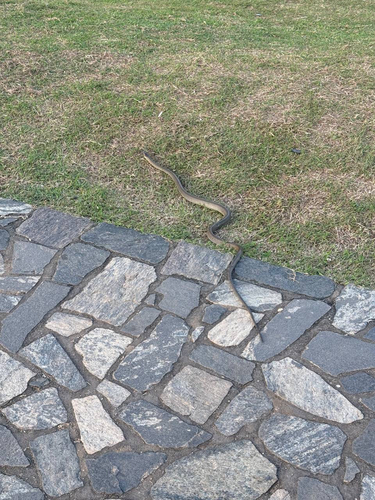 Oriental Rat SnakePtyas mucosaHarmless
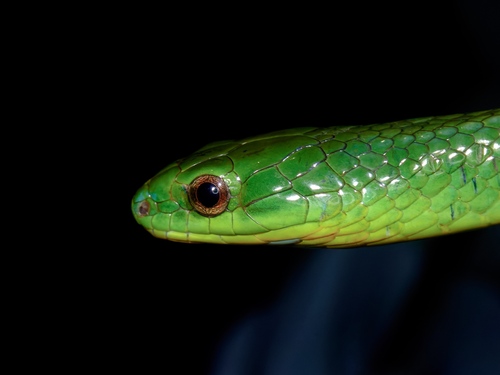 Chinese Green SnakePtyas majorHarmless
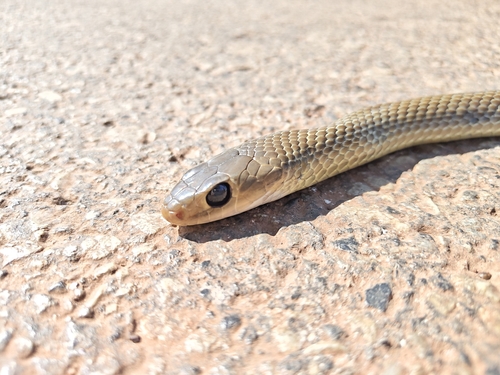 Indo-Chinese Rat SnakePtyas korrosHarmless
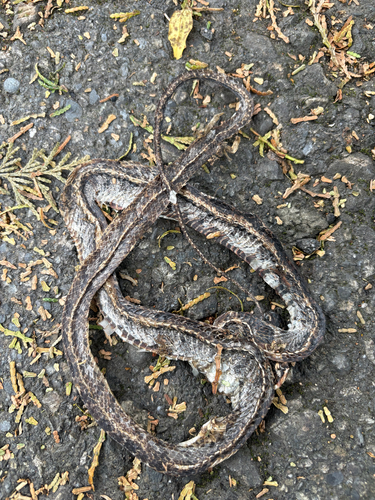 Big-Eyed RatsnakePtyas dhumnadesHarmless
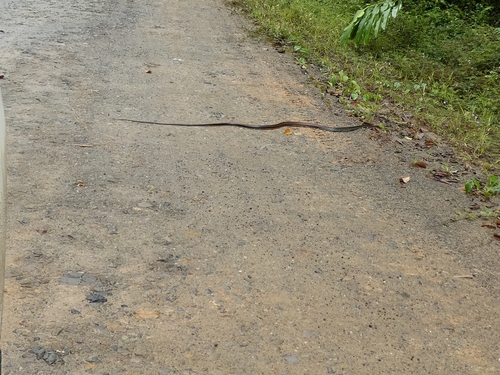 Brown Rat SnakePtyas fuscaHarmless
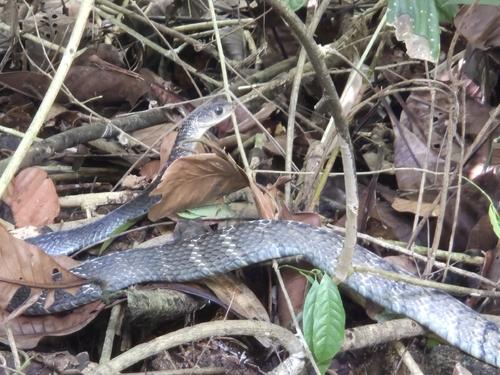 Keeled Rat SnakePtyas carinataHarmless
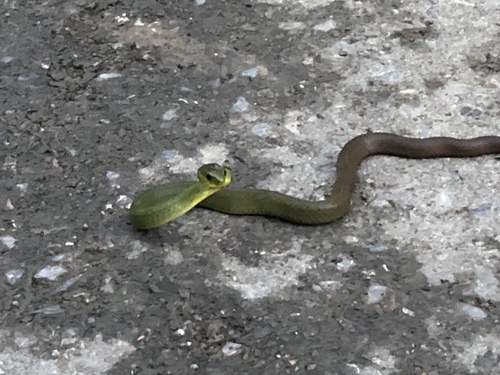 South China Green SnakePtyas multicinctaHarmless
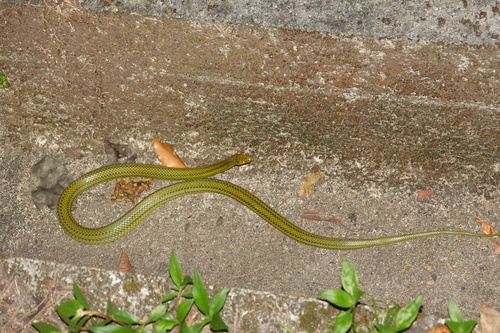 Ryukyu Green SnakePtyas semicarinataHarmless
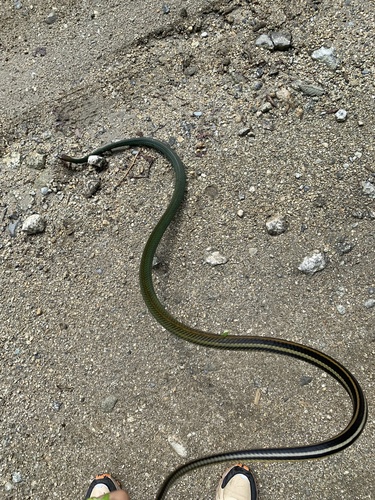 Green Rat SnakePtyas nigromarginataHarmless
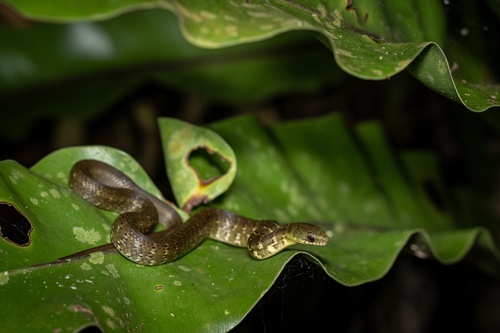 Sakashima green snakePtyas herminaeHarmless
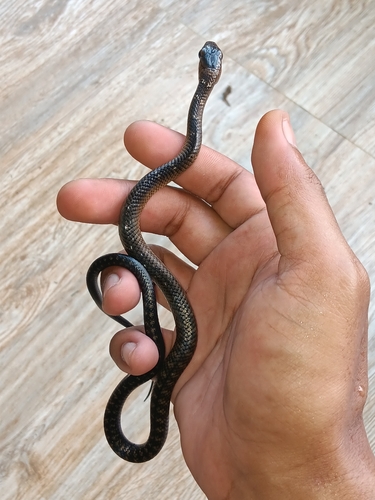 Smooth-scaled Mountain Rat SnakePtyas luzonensisHarmless
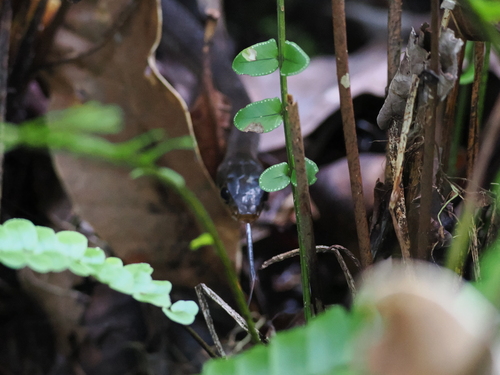 Sulawesi Black RacerPtyas dipsasHarmless
Keep learning
- What Is a Snake? Anatomy and the BasicsA clear overview of what makes a snake a snake: limbless body plan, anatomy, evolution from lizards, species diversity, and why they are ectothermic.
- How Snakes Move, Hunt, and EatHow snakes move without legs, hunt as ambushers or active foragers, kill by constriction or venom, and swallow prey wider than their head.
- What Do Snakes Eat?All snakes are carnivores. Learn what snakes eat, how diet changes with size and age, how often they feed, and how they hunt and swallow prey.
- Venomous vs Nonvenomous: How to Tell the DifferenceThe folk rules for telling venomous snakes apart, where each one fails, and why location-based identification beats guessing by sight.