
Gophersnake / Bullsnake
Pine Snake
HarmlessPituophis melanoleucus
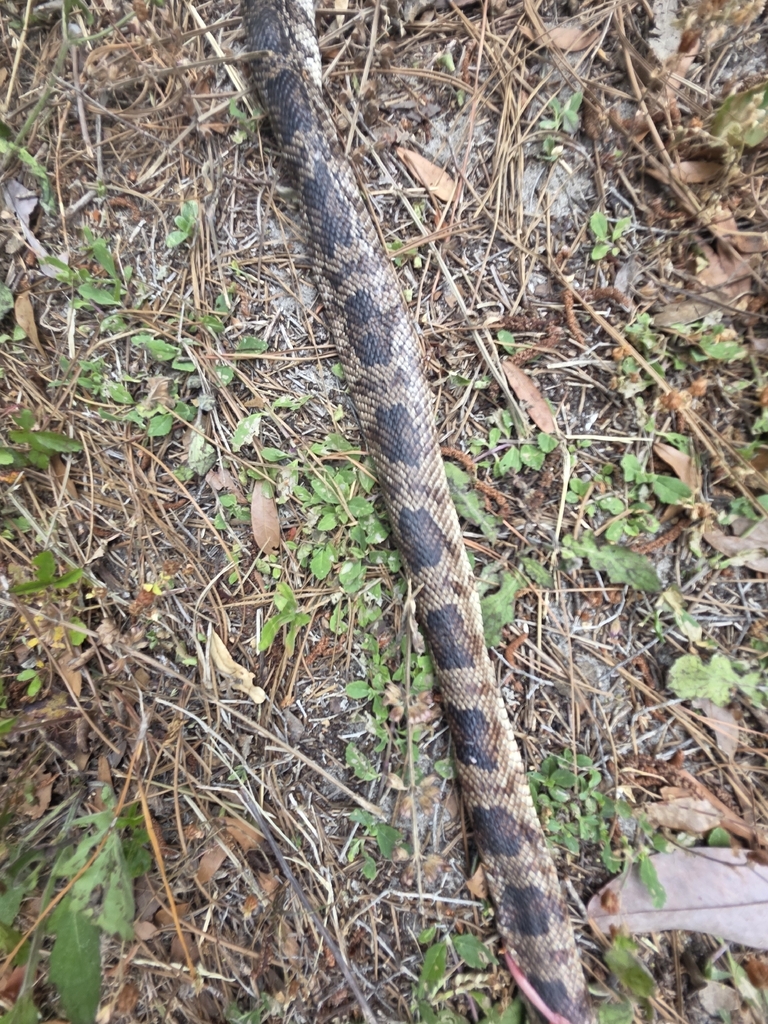
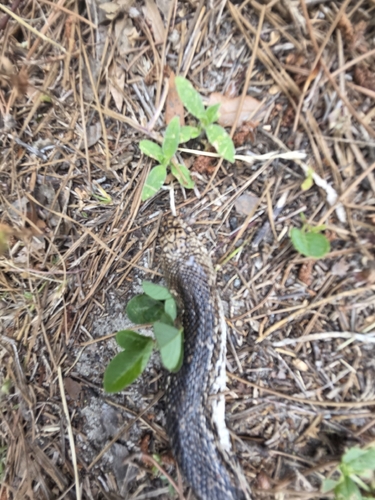
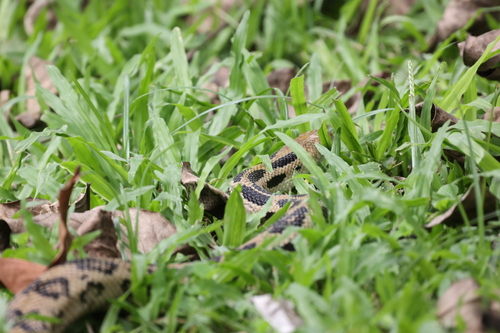
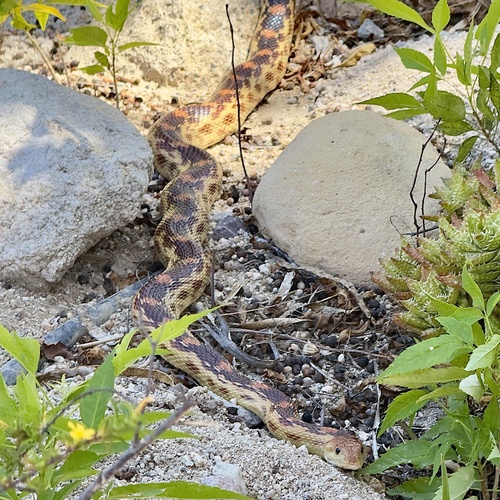
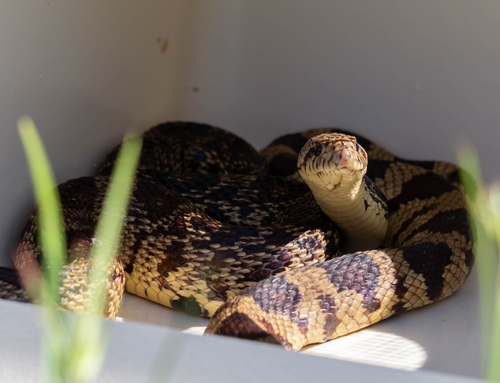
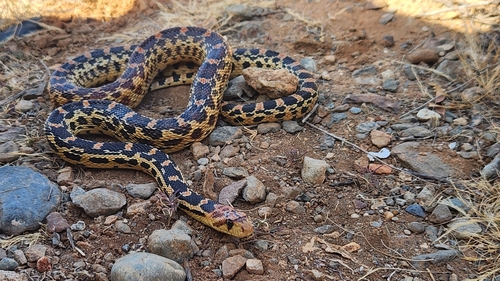
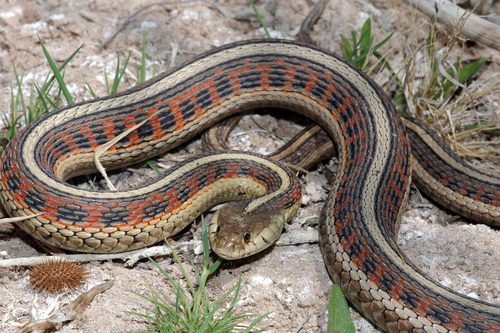
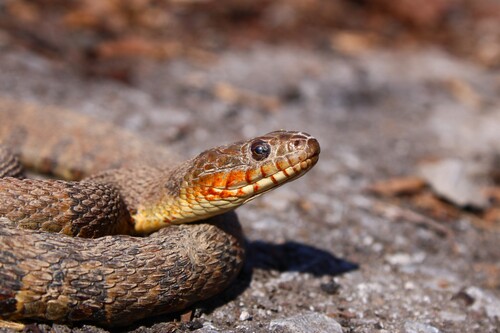
2 photographs of the Pine Snake. © Scott Allen Davis.
The Pine Snake (Pituophis melanoleucus) is a non-venomous snake in the Colubridae family, recorded in 4 countries.
- Also called
- Gophersnake / Bullsnake
- Family
- Colubridae
- Size
- Large, 4–7 ft.
- Habitat
- Grasslands, deserts, and farmland.
- Behavior
- Loud hissers that mimic rattlesnakes by vibrating the tail; valuable rodent predators, but harmless.
- Identify
- Large, blotched, with a slightly pointed snout and keeled scales — no rattle.
About the Pine Snake
Pituophis melanoleucus, commonly known as the eastern pine snake, is a species of nonvenomous snake in the family Colubridae. The species is native to the southeastern United States. Three subspecies are traditionally recognized as being valid, though taxonomic changes may be occurring.
Taxonomy and etymology
The pine snake, Pituophis melanoleucus, gets its specific name from the Latin roots melano- meaning black and leucus meaning white. This is in reference to its black-and-white body. Following an influential study that occurred in 2000, three subspecies of Pituophis melanoleucus have been recognized:
Nominate subspecies P. m. melanoleucus (Daudin, 1803), the northern pine snake;
P. m. lodingi Blanchard, 1924, the black pine snake; and
P. m. mugitus Barbour, 1921, the Florida pine snake.
The subspecific name lodingi is in honor of Danish-born amateur herpetologist Peder Henry Löding (1869–1942), who lived in Alabama.
The species has a variety of common names, including: pine snake, pinesnake, common pine snake, bullsnake, black and white snake, carpet snake, chicken snake, common bullsnake, eastern bullsnake, eastern pine snake, horn(ed) snake, New Jersey pine snake, North American pine snake, northern pine snake, pilot snake, and white gopher snake.
Taxonomic challenges
By the nature of the field, taxonomists — those who study taxonomy — often disagree on specific classifications of species. These disagreements extend to Pituophis melanoleucus, whose taxonomic status - specifically, the differentiation of three subspecies - has been challenged. One proponent of a taxonomic revision to eliminate the subspecies classifications is the Society for the Study of Amphibians and Reptiles, whose list of amphibians and reptiles was updated in the 9th edition to eliminate the subspecies distinction following a 2021 study "that showed P. melanoleucus to consist of continuous populations that did not correspond to previously recognized subspecies." Another review of scientific literature found that two genomic analyses in 2022 and 2023 showed that "subspecific taxonomy does not reflect the evolutionary history of the species." While this could suggest that the taxonomical classification of Pituophis melanoleucus is changing or will imminently change, the subspecies classification developed in 2000 was used in scientific literature as recently as May 2025.
Description
Adults of Pituophis melanoleucus are large, growing to 48–90 in (120–230 cm) in total length (tail included) and are powerfully built. The head is small and somewhat pointed with an enlarged rostral scale that extends upward between the internasal scales. Usually, four prefrontal scales are seen. At midbody are 27–37 rows of keeled dorsal scales. The anal plate is single. The color pattern consists of a light ground color overlaid with black, brown, or reddish-brown blotches.
Geographic range and habitat
Adapted from Wikipedia, available under CC BY-SA.
Frequently asked: Pine Snake
- Is the Pine Snake venomous?
- No. The Pine Snake (Pituophis melanoleucus) is non-venomous and is not considered dangerous to humans. Like most snakes, it will retreat rather than bite when given the chance.
- Is the Pine Snake poisonous?
- Snakes are venomous, not poisonous. "Poisonous" means harmful to eat or touch; "venomous" means injecting toxins through a bite. The Pine Snake is neither poisonous nor venomous.
- Is the Pine Snake dangerous?
- The Pine Snake is not dangerous to humans. It has no medically significant venom and bites only defensively if cornered or handled.
- Where does the Pine Snake live?
- The Pine Snake has verified records in 4 countries, including United States of America, Mexico, Canada. See the distribution section below for its full range.
- How do I identify the Pine Snake?
- Large, blotched, with a slightly pointed snout and keeled scales — no rattle.
- How big does the Pine Snake get?
- Large, 4–7 ft.
- Why is it called the Pine Snake?
- The pine snake, Pituophis melanoleucus, gets its specific name from the Latin roots melano- meaning black and leucus meaning white. This is in reference to its black-and-white body. Following an influential study that occurred in 2000, three subspecies of Pituophis melanoleucus have been recognized: Nominate subspecies P. m. melanoleucus (Daudin, 1803), the northern pine snake; P. m. lodingi Blanchard, 1924, the black pine snake; and P. m. mugitus Barbour, 1921, the Florida pine snake.
Where it is found
Snakes it is confused with
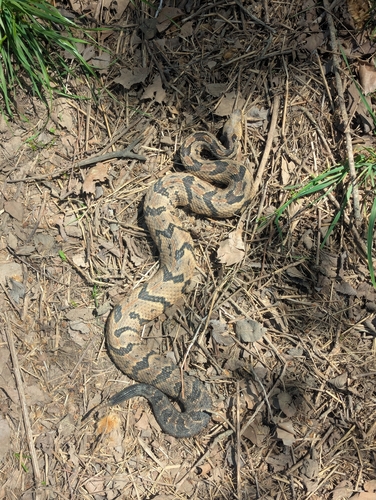
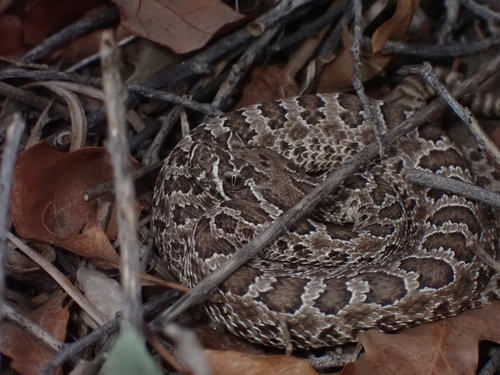
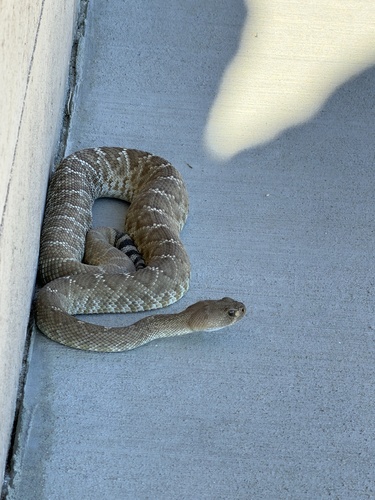
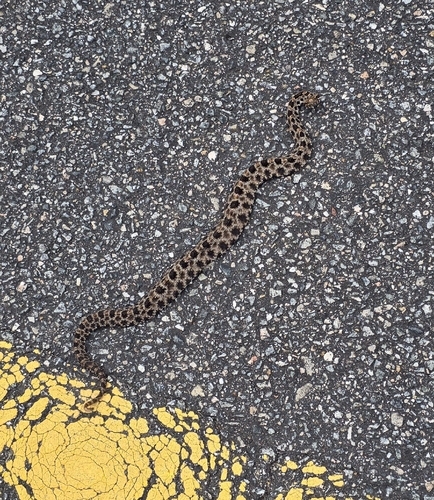
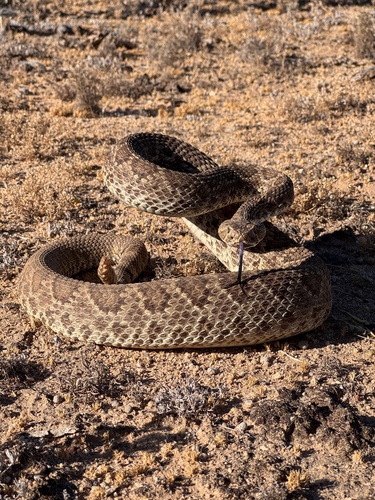
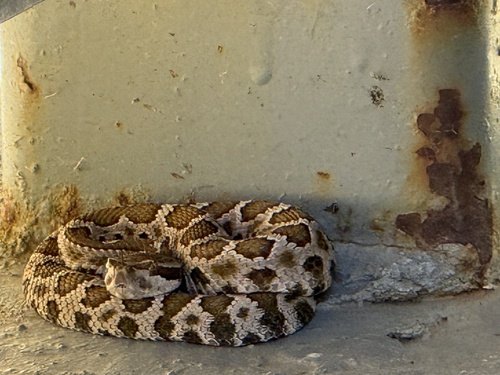 Western RattlesnakeVenomous
Gophersnakes and bullsnakes mimic rattlesnakes by hissing and vibrating the tail, but they are harmless and have no rattle.
Pine Snake vs Western Rattlesnake→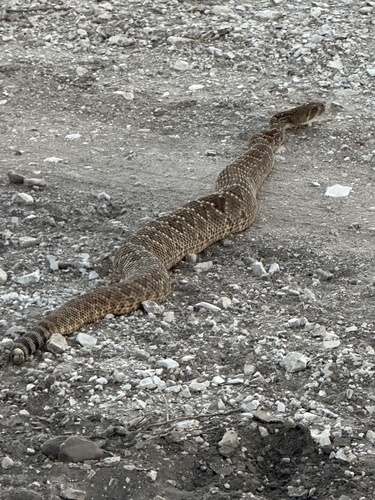
More Colubridae snakes
Classification
How scientists group this snake, from the broadest category down to the exact species. Each step narrows to its closest relatives.
- OrderThe broad group of scaled reptiles: all snakes and lizards
- Squamata
- FamilyA group of related snakes that share key traits
- Colubridae
- GenusA close-knit group of very similar species
- Pituophis
- SpeciesThis exact snake, named in the two-part scientific name
- Pituophis melanoleucus
Keep learning
- What to Do If You Find a SnakeFound a snake at home or on a trail? Here is how to stay calm, give it space, identify it safely, and know when to call a professional.
- Venomous vs Nonvenomous: How to Tell the DifferenceThe folk rules for telling venomous snakes apart, where each one fails, and why location-based identification beats guessing by sight.
- What Is a Snake? Anatomy and the BasicsA clear overview of what makes a snake a snake: limbless body plan, anatomy, evolution from lizards, species diversity, and why they are ectothermic.
- How to Keep Snakes Out of Your Yard and HomeA practical guide to keeping snakes out of your yard and home using habitat changes that work, plus what to skip and what to do if one shows up.
Distribution from GBIF & iNaturalist. Venom status per CDC. Background: Wikipedia. Informational only. Never handle a snake to identify it.