
Gophersnake / Bullsnake
Louisiana Pinesnake
HarmlessPituophis ruthveni
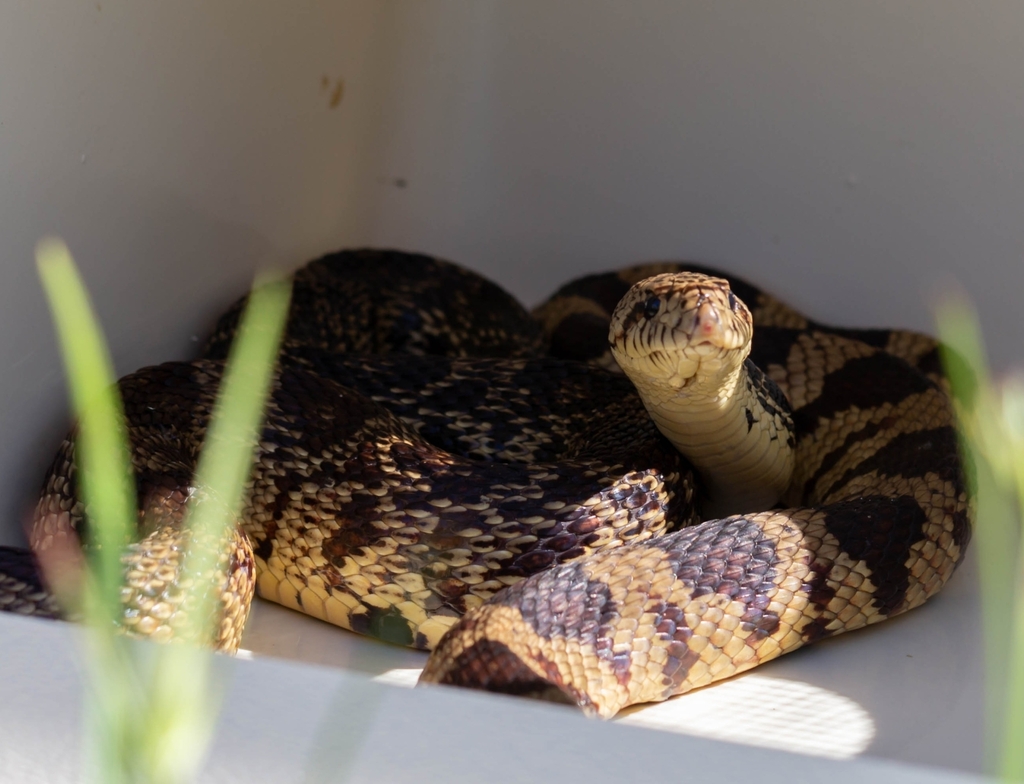
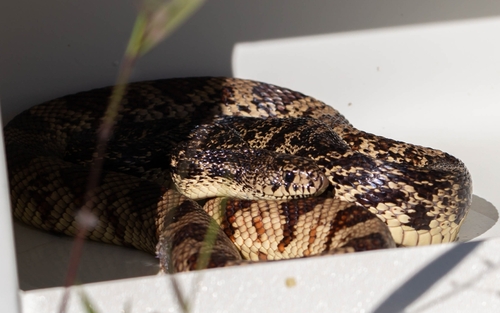
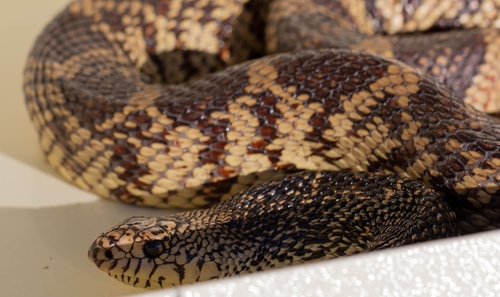
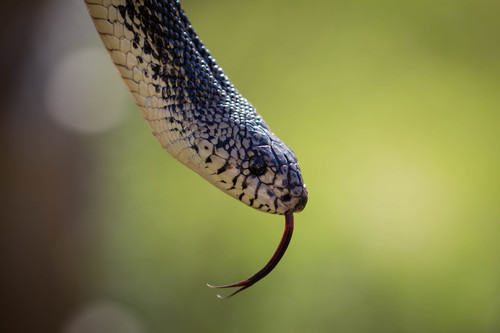
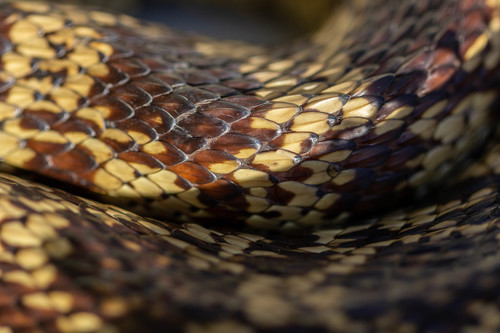
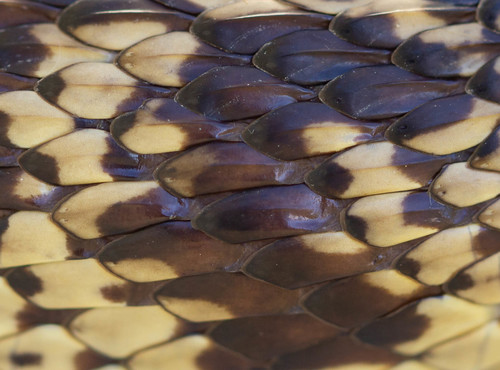
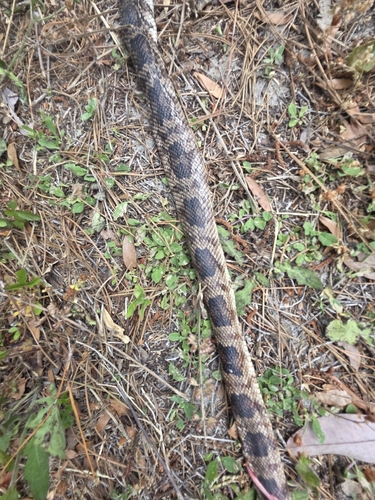
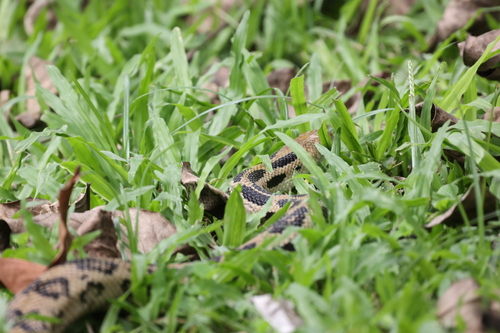
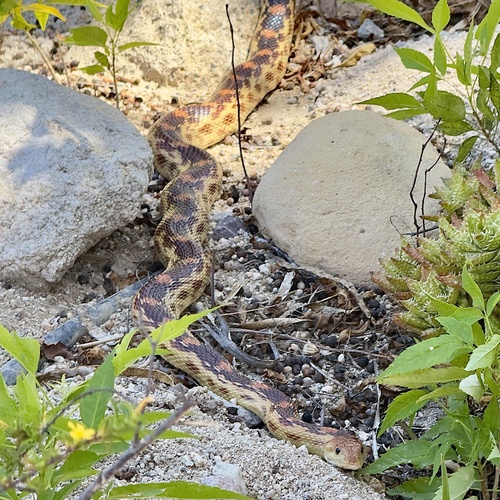
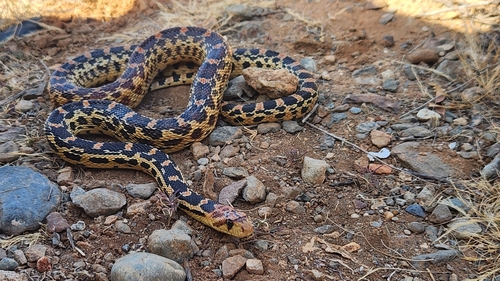
6 photographs of the Louisiana Pinesnake. © kirk gardner.
The Louisiana Pinesnake (Pituophis ruthveni) is a non-venomous snake in the Colubridae family, recorded in 1 country.
- Also called
- Gophersnake / Bullsnake
- Family
- Colubridae
- Size
- Large, 4–7 ft.
- Habitat
- Grasslands, deserts, and farmland.
- Behavior
- Loud hissers that mimic rattlesnakes by vibrating the tail; valuable rodent predators, but harmless.
- Identify
- Large, blotched, with a slightly pointed snout and keeled scales — no rattle.
About the Louisiana Pinesnake
The Louisiana pine snake (Pituophis ruthveni) is a species of large, non-venomous, constrictor in the family Colubridae. This powerful snake is notable because of its large eggs and small clutch sizes. The Louisiana pine snake is indigenous to west-central Louisiana and East Texas, where it relies strongly on Baird's pocket gophers for its burrow system and as a food source. The Louisiana pine snake is rarely seen in the wild, and is considered to be one of the rarest snakes in North America. The demise of the species is due to its low fecundity coupled with the extensive loss of suitable habitat - the longleaf pine savannas in the Gulf Coastal Plain of the southeastern United States. Management activities are being conducted to promote the species' recovery.
Recovery efforts to counter extirpation resulted in around 300 snakes having been reintroduced into the wild. In 2018 the snake was added to the List of Endangered and Threatened Wildlife. A species-specific rule on 27 February 2020, means interfering with the species could result in criminal charges.
Taxonomy and etymology
The species was first described by Olive Griffith Stull in 1929 as a subspecies of P. melanoleucus. In 1940, the Louisiana pine snake was promoted to the rank of species in another of Stull's articles. Its scientific name honors Alexander Grant Ruthven, the late herpetologist of the University of Michigan Museum of Zoology.
Description
Dorsally, the color is buff or lion-like yellow with dark brown blotches and spots that are very similar throughout the body. The marking patterns are visibly different from one end to another. The neck region is "busier", the dark reticulates and blends more with the lighter coloration. Towards midbody, the dark markings become more distinct and contrasting, and continue to be more distinct toward the tail, yet reduced in marking thickness. These markings number 28-42 middorsally. Furthermore, the very pointed head may only be marked slightly with some small dots and a faded bar in front and between the orbitals above. The ventrals never appear to be immaculate, but are intermediately blotched with brown. Nevertheless, there usually is no true checkered pattern. The rostral scale is exceptionally large, and usually 8 or 9 supralabials and from about 10-15 (generally 14) infralabials are present.
Growth and reproduction
Growth is rapid; snakes may reach 2–3 ft (61–91 cm) in total length at 1 year and 3–4 ft (91–122 cm) at 2 years. The largest reported specimen was 5.8 ft (180 cm) in total length. Sexual maturity may be attained at a minimal total length of 4 ft (120 cm) and an age of at least 3 years. The species is oviparous, with a gestation period around 21 days, followed by 60 days of incubation. This species exhibits a remarkably low reproductive rate, which magnifies other threats to the Louisiana pine snake. It has the smallest clutch size (three to five) of any North American colubrid and the largest eggs, generally 5 in (13 cm) long by 2 in (5.1 cm) wide, of any snake in the United States. It also produces the largest hatchlings reported for any North American snake, ranging 18–22 in (46–56 cm) in total length, and up to 0.8 oz (23 g) in weight. The large size of the pine snake hatchlings may be an adaptation to enable young to feed relatively early.
Behavior
Adapted from Wikipedia, available under CC BY-SA.
Frequently asked: Louisiana Pinesnake
- Is the Louisiana Pinesnake venomous?
- No. The Louisiana Pinesnake (Pituophis ruthveni) is non-venomous and is not considered dangerous to humans. Like most snakes, it will retreat rather than bite when given the chance.
- Is the Louisiana Pinesnake poisonous?
- Snakes are venomous, not poisonous. "Poisonous" means harmful to eat or touch; "venomous" means injecting toxins through a bite. The Louisiana Pinesnake is neither poisonous nor venomous.
- Is the Louisiana Pinesnake dangerous?
- The Louisiana Pinesnake is not dangerous to humans. It has no medically significant venom and bites only defensively if cornered or handled.
- Where does the Louisiana Pinesnake live?
- The Louisiana Pinesnake has verified records in 1 country, including United States of America. See the distribution section below for its full range.
- How do I identify the Louisiana Pinesnake?
- Large, blotched, with a slightly pointed snout and keeled scales — no rattle.
- How big does the Louisiana Pinesnake get?
- Large, 4–7 ft.
- Why is it called the Louisiana Pinesnake?
- The species was first described by Olive Griffith Stull in 1929 as a subspecies of P. melanoleucus. In 1940, the Louisiana pine snake was promoted to the rank of species in another of Stull's articles. Its scientific name honors Alexander Grant Ruthven, the late herpetologist of the University of Michigan Museum of Zoology.
Where it is found
Snakes it is confused with
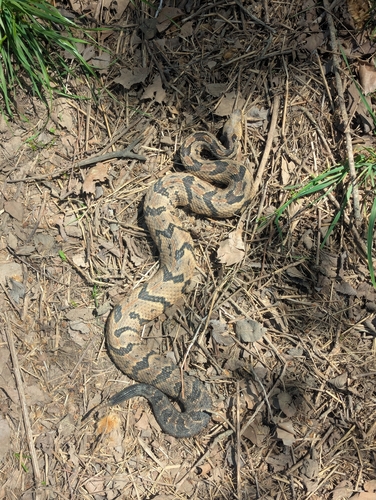
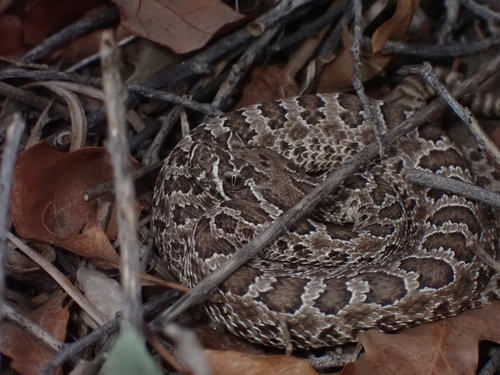
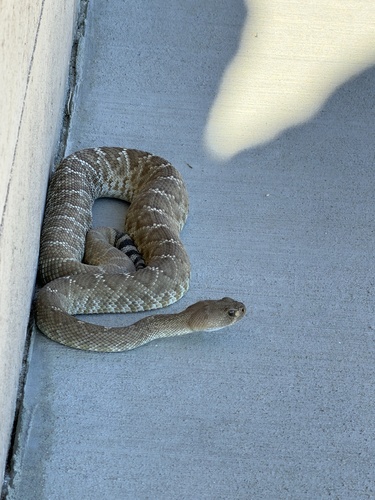
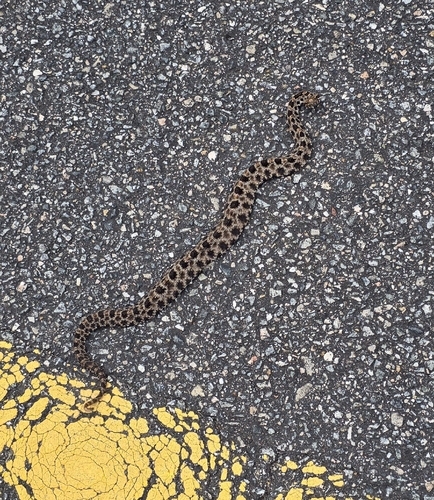
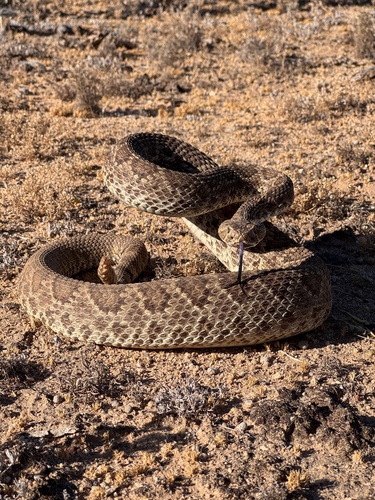
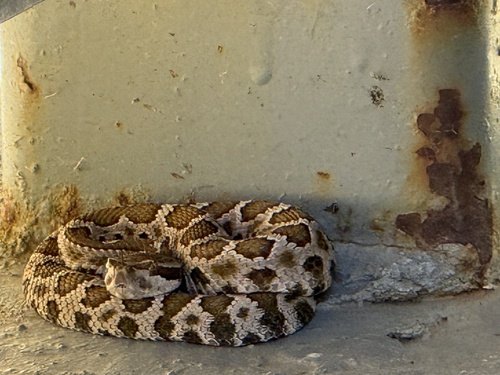 Western RattlesnakeVenomous
Gophersnakes and bullsnakes mimic rattlesnakes by hissing and vibrating the tail, but they are harmless and have no rattle.
Louisiana Pinesnake vs Western Rattlesnake→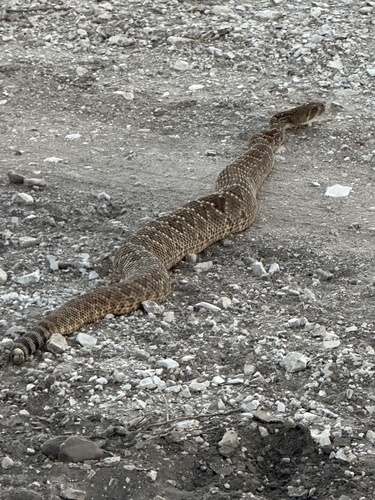
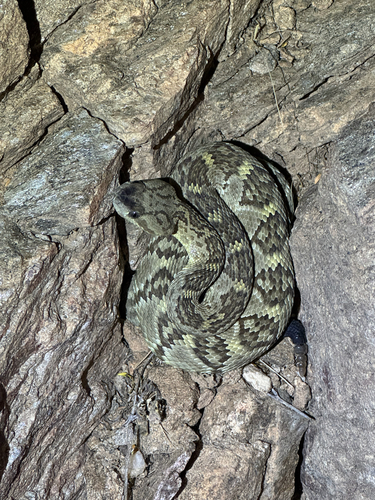
More Colubridae snakes
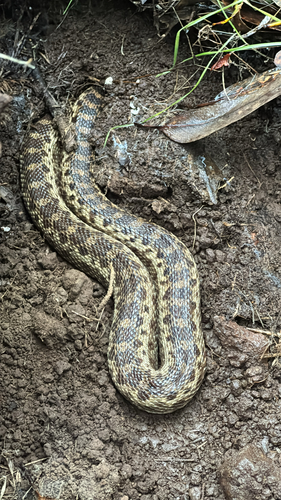
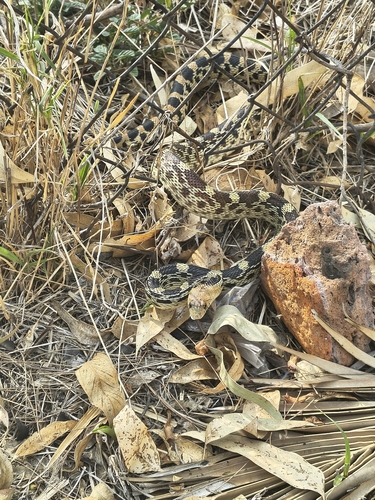
Classification
How scientists group this snake, from the broadest category down to the exact species. Each step narrows to its closest relatives.
- OrderThe broad group of scaled reptiles: all snakes and lizards
- Squamata
- FamilyA group of related snakes that share key traits
- Colubridae
- GenusA close-knit group of very similar species
- Pituophis
- SpeciesThis exact snake, named in the two-part scientific name
- Pituophis ruthveni
Keep learning
- What to Do If You Find a SnakeFound a snake at home or on a trail? Here is how to stay calm, give it space, identify it safely, and know when to call a professional.
- Venomous vs Nonvenomous: How to Tell the DifferenceThe folk rules for telling venomous snakes apart, where each one fails, and why location-based identification beats guessing by sight.
- What Is a Snake? Anatomy and the BasicsA clear overview of what makes a snake a snake: limbless body plan, anatomy, evolution from lizards, species diversity, and why they are ectothermic.
- How to Keep Snakes Out of Your Yard and HomeA practical guide to keeping snakes out of your yard and home using habitat changes that work, plus what to skip and what to do if one shows up.
Distribution from GBIF & iNaturalist. Venom status per CDC. Background: Wikipedia. Informational only. Never handle a snake to identify it.