
Genus · Colubridae
Types of gopher snakes
7 species make up the genus Pituophis, the snakes commonly called gopher snakes. None are considered dangerous to humans.
About gopher, bull and pine snakes
Pituophis is a genus of large, powerful, non-venomous North American snakes that includes the gopher snakes, the bull snakes, and the pine snakes. They are among the biggest snakes found in the United States and Canada, and they are famous for putting on a dramatic but entirely harmless rattlesnake impression when threatened.
Pituophis belongs to the family Colubridae, the largest snake family and the one that holds most of the world's harmless snakes. The genus brings together three familiar groups that share the same heavy, muscular build: the gopher snakes, the bull snakes, and the pine snakes. These are constrictors, meaning they overpower prey by coiling around it and squeezing rather than by any kind of venom. They rank among the largest snakes native to the United States and Canada, with big individuals growing well past the length of most other snakes a person is likely to meet in those regions. Our database lists 7 species, and none of them are venomous.
The standout fact about this genus is its talent for bluffing. When a Pituophis snake feels threatened, it puts on one of the most convincing threat displays in the snake world. It hisses very loudly, far louder than most snakes, helped by a small flap of tissue in the windpipe that buzzes as air is forced past it. At the same time it may flatten and widen its head, vibrate the tip of its tail rapidly, and strike forward. If that tail is sitting in dry leaves or grass, the vibration produces a buzzing, rattle-like sound. The whole performance is designed to make the snake seem far more dangerous than it is. The unfortunate side effect is that harmless gopher and bull snakes are constantly mistaken for rattlesnakes and killed for no reason, which is one of the most common and avoidable cases of mistaken identity involving North American snakes.
Learning to tell a bluffing Pituophis from a real rattlesnake is the single most useful thing a person can know about this genus, and the differences are clear once you know what to look for. A gopher, bull, or pine snake has no rattle on the end of its tail; the tail simply tapers smoothly to a point. It has round pupils rather than the vertical, cat-like slits of a rattlesnake, and a narrower head that is not the broad, blunt, triangular shape of a pit viper. So the loud hiss and the buzzing tail can sound alarming, but the snake itself carries none of a rattlesnake's actual identifying features. None of this requires picking the snake up; these are details you can check from a safe distance.
These snakes range across much of North America, from Canada down through the United States and into Mexico. They are habitat generalists, turning up in deserts, prairies and grasslands, open pine forests, and agricultural farmland. As predators they are skilled constrictors that feed mainly on rodents, including the gophers and ground squirrels that give some of them their name, and they will also take eggs and birds. Unlike the live-bearing vipers, Pituophis snakes lay eggs. Because they hunt burrowing rodents so effectively, they provide excellent natural pest control and are genuinely valued by many farmers, who benefit from having one of these snakes patrolling a barn or a field.
On the honest safety question: Pituophis snakes are non-venomous and harmless to people. The hissing, head-flattening, tail-buzzing, and striking are all bluff, a show meant to scare off a larger animal so the snake can be left alone. The display works against predators, but it also fools people into thinking they are facing a rattlesnake, and that misunderstanding gets a lot of beneficial, harmless snakes needlessly killed. Knowing the difference, no rattle, round pupils, a narrower head, and a tail that tapers to a point, is what prevents that. As with any wild snake, the right response to an encounter is simply to give it room and let it move on.
Pituophis belongs to the Colubridae family (Colubrids). The largest snake family, and the one most snakes you meet belong to. Typically round pupils, a head only slightly wider than the neck, and no heat-sensing facial pit or rattle. Scales may be smooth and glossy or keeled and matte depending on the species.
Danger: Almost all colubrids are harmless. A small number are rear-fanged with medically significant venom, the boomslang and the twig (vine) snakes of Africa being the dangerous exceptions. Most colubrids will flee or bluff rather than bite.
All species (7)
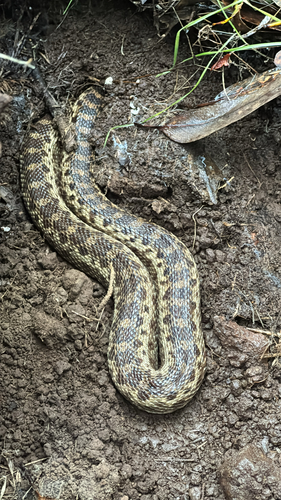 Gopher SnakePituophis cateniferHarmless
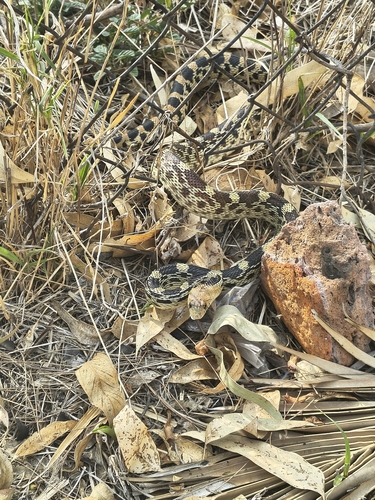 Mexican Bull SnakePituophis deppeiHarmless
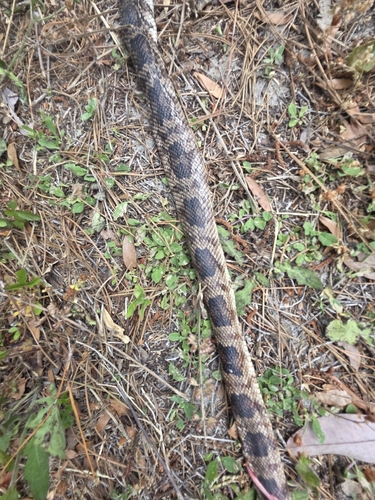 Pine SnakePituophis melanoleucusHarmless
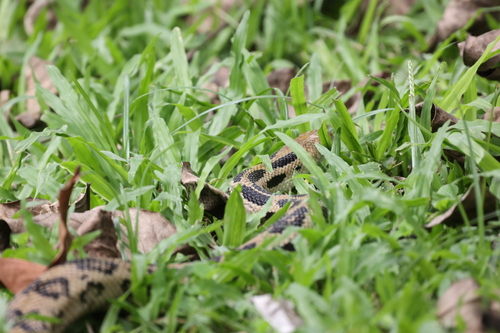 Middle American Gopher SnakePituophis lineaticollisHarmless
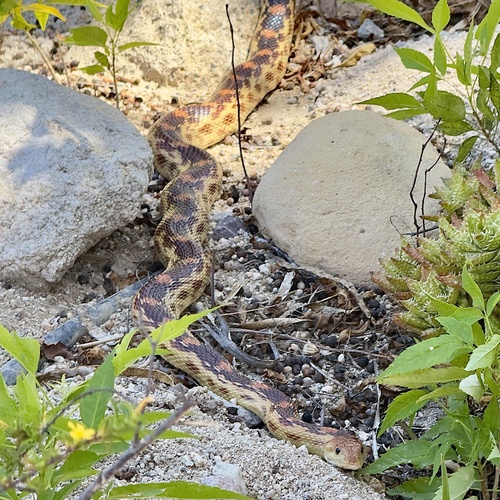 Cape Gopher SnakePituophis vertebralisHarmless
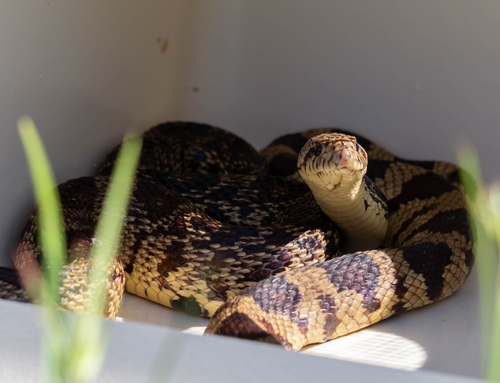 Louisiana PinesnakePituophis ruthveniHarmless
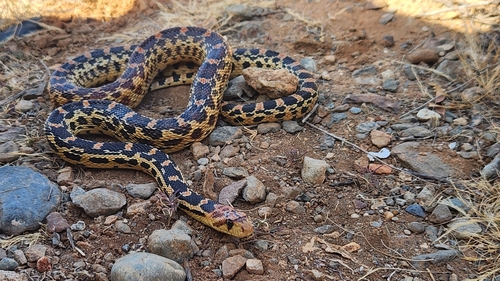 Cedros Gopher SnakePituophis insulanusHarmless
Keep learning
- What Is a Snake? Anatomy and the BasicsA clear overview of what makes a snake a snake: limbless body plan, anatomy, evolution from lizards, species diversity, and why they are ectothermic.
- How Snakes Move, Hunt, and EatHow snakes move without legs, hunt as ambushers or active foragers, kill by constriction or venom, and swallow prey wider than their head.
- What Do Snakes Eat?All snakes are carnivores. Learn what snakes eat, how diet changes with size and age, how often they feed, and how they hunt and swallow prey.
- Venomous vs Nonvenomous: How to Tell the DifferenceThe folk rules for telling venomous snakes apart, where each one fails, and why location-based identification beats guessing by sight.