
Rattlesnake
Prairie Rattlesnake
VenomousCrotalus viridis
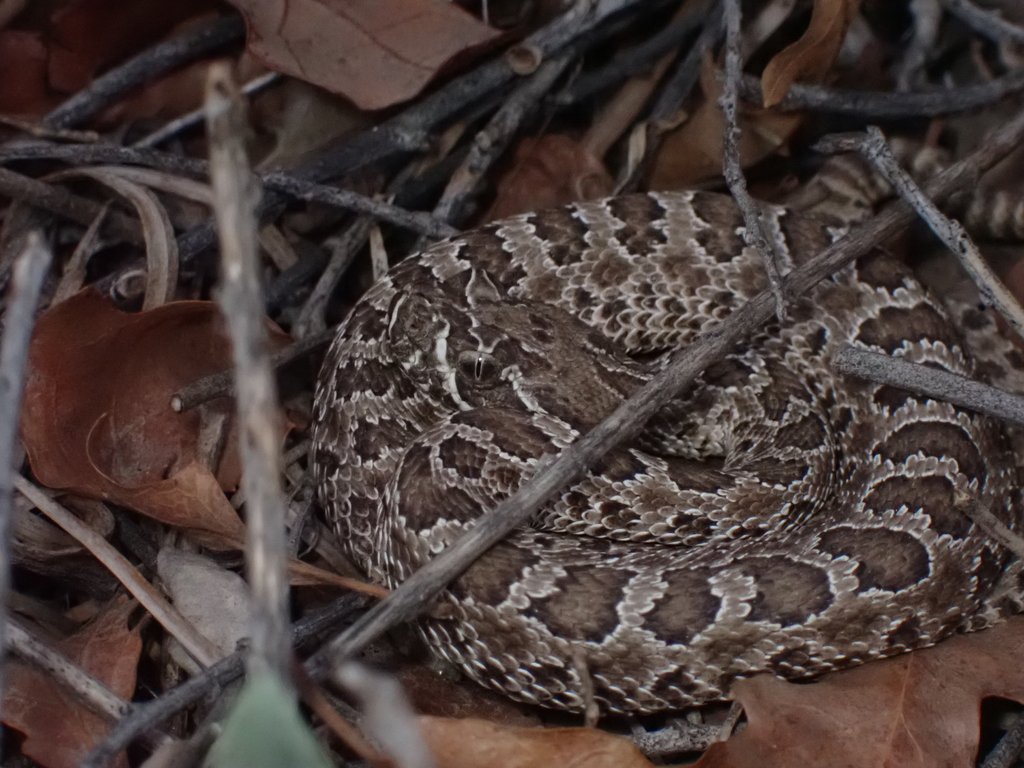
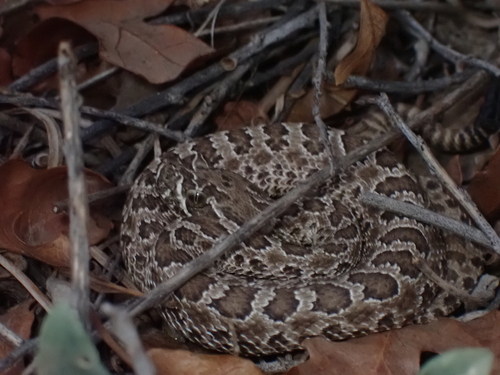
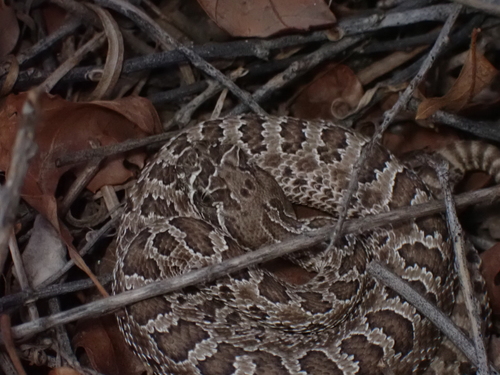
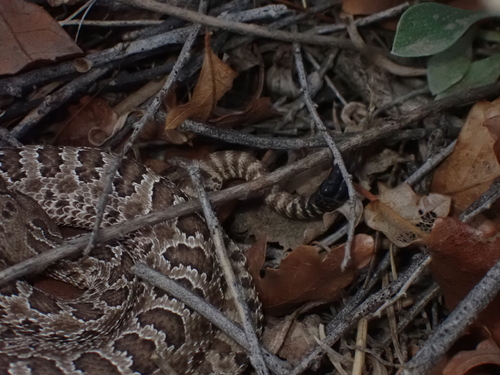
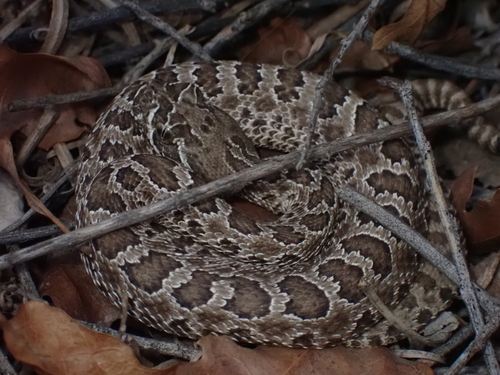
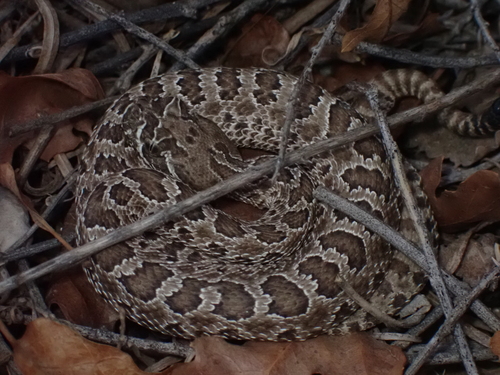
6 photographs of the Prairie Rattlesnake. © Jared Shorma.
The Prairie Rattlesnake (Crotalus viridis) is a venomous snake in the Viperidae family, recorded in 3 countries.
If you are bitten
Rattlesnake bites are medically serious. Expect intense pain, rapid swelling, and bruising. Stay calm, keep the bitten limb still and roughly level with the heart, remove rings and tight clothing, and get to an emergency room immediately. Do NOT apply a tourniquet, cut the wound, apply ice, or try to suck out venom. Call Poison Control at 1-800-222-1222 or 911 in the US, or your local emergency number. (Source: CDC.)
- Also called
- Rattlesnake
- Family
- Viperidae
- Size
- Typically 2–5 ft; some species exceed 6 ft.
- Habitat
- Deserts, rocky outcrops, grasslands, and woodland edges, depending on species.
- Behavior
- Ambush predators that buzz the tail as a warning; mostly active in warm months and often crepuscular in summer heat.
- Identify
- Heavy body, broad triangular head, vertical (cat-like) pupils, and a segmented keratin rattle at the tail tip.
- Danger
- high
About the Prairie Rattlesnake
The prairie rattlesnake or Great Plains rattlesnake (Crotalus viridis) is a venomous pit viper species native to the western United States, southwestern Canada, and northern Mexico. Currently, two subspecies are recognized, including the prairie rattlesnake (C. v. viridis), the nominate subspecies, and the Hopi rattlesnake (C. v. nuntius).
Taxonomy
The taxonomic history of this species is convoluted. Previously, seven other C. viridis subspecies were also recognized, including C. v. abyssus, C. v. caliginis, C. v. cerberus, C. v. concolor, C. v. helleri, C. v. lutosus, and C. v. oreganus In 2001, though, Ashton and de Queiroz described their analysis of the variation of mitochondrial DNA across the range of this species. Their results agreed broadly with those obtained by Pook et al. (2000). Two main clades were identified, east and west of the Rocky Mountains, which they argued were actually two different species: C. viridis, including the conventional subspecies C. v. viridis and C. v. nuntius, and C. oreganus, including all the other traditional subspecies of C. viridis. The authors retained the names of the traditional subspecies, but emphasized the need for more work to be done on the systematics of C. oreganus.
Description
This species commonly grows to more than 100 cm (3.3 ft) in length. The maximum recorded size is 151.5 cm (4.97 ft). In Montana, specimens occasionally exceed 120 cm (3.9 ft) in length; the species reaches its maximum size in this region. One of the most characteristic features is the presence of three or more, usually four, internasal scales.
Identification characteristics vary depending on which subspecies is encountered. Generally, prairie rattlesnakes are usually lightly colored in hues of brown. Patches of dark brown are often distributed in a dorsal pattern. A color band may be seen at the back of the eye. The prairie rattlesnake group carries the distinctive triangle-shaped head and pit sensory organs on either side of the head. A key characteristic that can help differentiate a prairie rattlesnake from other rattlesnakes is the presence of two internasals contacting the rostral.
Distribution and habitat
Prairie rattlesnakes are found in North America over much of the Great Plains, the eastern foothills and some intermontane valleys of the Rocky Mountains, and from southwestern Canada through the United States to northern Mexico. In Canada, they occur in Alberta and Saskatchewan; in the US, they are found in eastern Idaho, most of Montana, North Dakota, South Dakota, Wyoming, Nebraska, Colorado, Kansas, Oklahoma, Texas, New Mexico, northeastern Arizona, and extreme western Iowa, and in Mexico in northern Coahuila and northwestern Chihuahua. Its vertical range is from 100 m (330 ft) near the Rio Grande to over 2,775 m (9,104 ft) in elevation in Wyoming.
Adapted from Wikipedia, available under CC BY-SA.
Local and regional names
The Prairie Rattlesnake is known by these names across the regions where it lives:
- Chinese
- 草原響尾蛇
- Czech
- chřestýš zelený
- Danish
- Prærieklapperslange
- English
- Green Prairie Rattlesnake, Viridis, Western Rattlesnake
- French
- crotale des prairies
- German
- Prärie-Klapperschlange
- Italian
- Crotalo delle Grandi Pianure, Crotalo verde di prateria, Serpente a sonagli delle Grandi Pianure, Serpente a sonagli verde di prateria
- Japanese
- プレーリーガラガラヘビ
- Polish
- grzechotnik preriowy
- Portuguese
- Cascavel-das-pradarias
- Russian
- Зелёный гремучник
- Spanish
- Cascabel de pradera, Serpiente de Cascabel de la Pradera, Víbora de cascabel de pradera, Víbora-cascabel occidental
- Turkish
- Bozkır çıngıraklı yılanı
Frequently asked: Prairie Rattlesnake
- Is the Prairie Rattlesnake venomous?
- Yes. The Prairie Rattlesnake (Crotalus viridis) is venomous and belongs to the Viperidae family (rattlesnake). Its bite is considered high risk to people. Treat any bite as a medical emergency.
- Is the Prairie Rattlesnake poisonous?
- Snakes are venomous, not poisonous. "Poisonous" means harmful to eat or touch; "venomous" means injecting toxins through a bite. The Prairie Rattlesnake is venomous, delivering venom through a bite.
- Is the Prairie Rattlesnake dangerous?
- Rattlesnake bites are medically serious. Expect intense pain, rapid swelling, and bruising. Stay calm, keep the bitten limb still and roughly level with the heart, remove rings and tight clothing, and get to an emergency room immediately. Do NOT apply a tourniquet, cut the wound, apply ice, or try to suck out venom. Call Poison Control at 1-800-222-1222 or 911 in the US, or your local emergency number. (Source: CDC.)
- Where does the Prairie Rattlesnake live?
- The Prairie Rattlesnake has verified records in 3 countries, including United States of America, Canada, Mexico. See the distribution section below for its full range.
- How do I identify the Prairie Rattlesnake?
- Heavy body, broad triangular head, vertical (cat-like) pupils, and a segmented keratin rattle at the tail tip.
- How big does the Prairie Rattlesnake get?
- Typically 2–5 ft; some species exceed 6 ft.
- What does the Prairie Rattlesnake eat?
- Prairie rattlesnakes, because of their expansive distribution, have a wide array of prey. Generally, this species prefers small mammals, such as ground squirrels, ground-nesting birds, mice, rats, small rabbits, and prairie dogs. They occasionally feed on amphibians and reptiles, and sometimes even other snakes, more commonly seen in juveniles.
If you are bitten by the Prairie Rattlesnake
Do
- Get away from the snake and stay calm. Most bites worsen when people panic or try again to handle the snake.
- Call 911 or Poison Control (1-800-222-1222) right away. Antivenom works best when given early.
- Note the time of the bite and, from a safe distance, the snake's color and pattern, a phone photo is enough. Do not chase it.
- Keep the bitten limb still and at roughly heart level. Sit or lie down and limit movement.
- Remove rings, watches, and tight clothing near the bite before swelling starts.
- Gently wash the bite with soap and water and cover it with a clean, dry dressing.
Do not
- Do not cut the wound or try to suck out the venom.
- Do not apply a tourniquet or ice.
- Do not drink alcohol or caffeine.
- Do not take aspirin or ibuprofen, they can worsen bleeding. Acetaminophen is safer for pain.
- Do not try to catch or kill the snake. A dead snake can still bite by reflex.
First-aid guidance adapted from the U.S. Centers for Disease Control and Prevention (CDC NIOSH), Venomous Snakes. Educational only; always follow the instructions of emergency responders.
Where it is found
Snakes it is confused with
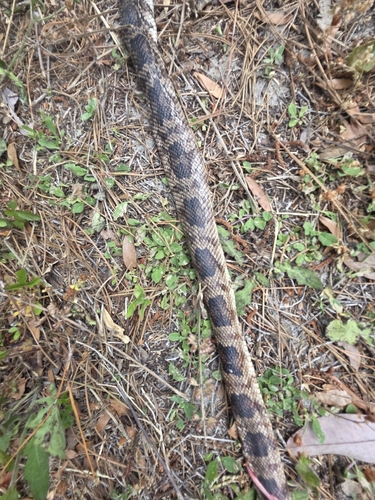
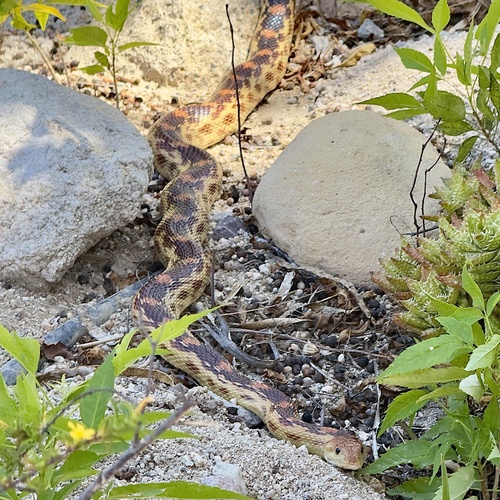
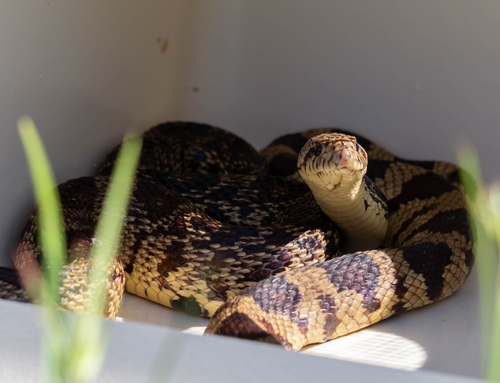
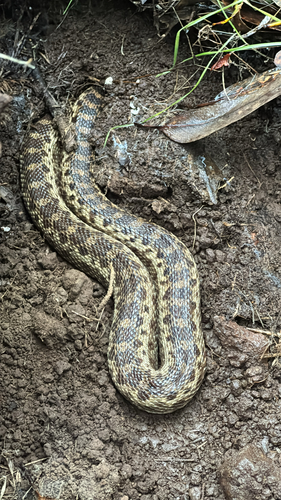 Gopher SnakeHarmless
Rattlesnakes are sometimes confused with harmless gophersnakes/bullsnakes; only rattlesnakes have a true segmented rattle and a facial pit.
Prairie Rattlesnake vs Gopher Snake→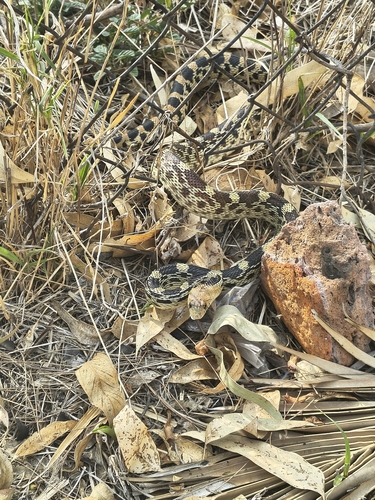
More Viperidae snakes
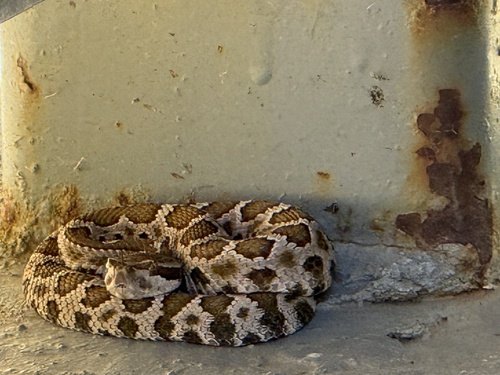 Western RattlesnakeCrotalus oreganus
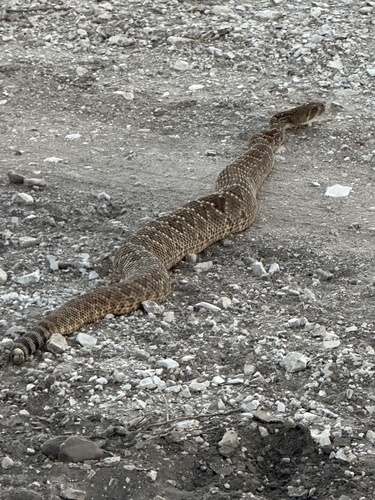 Western Diamond-backed RattlesnakeCrotalus atrox
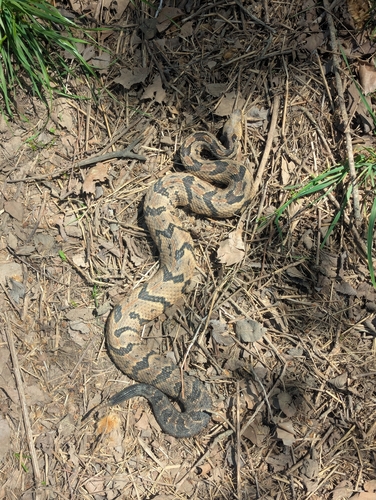 Timber RattlesnakeCrotalus horridus
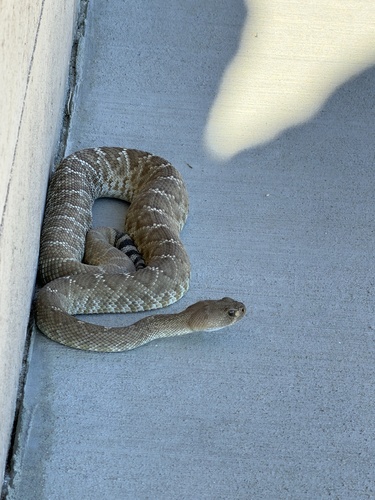 Red Diamond RattlesnakeCrotalus ruber
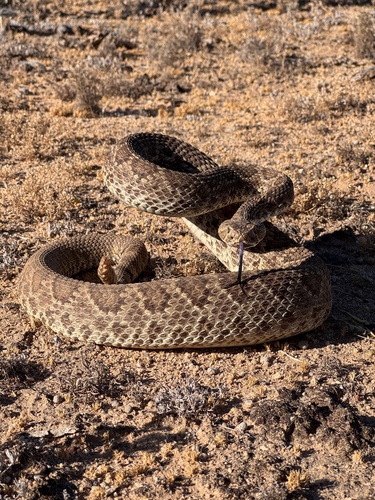 Mojave RattlesnakeCrotalus scutulatus
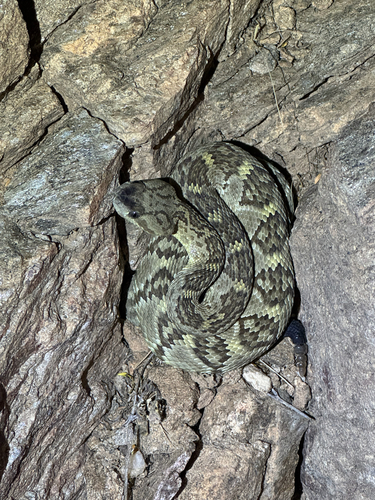 Western Black-tailed RattlesnakeCrotalus molossus
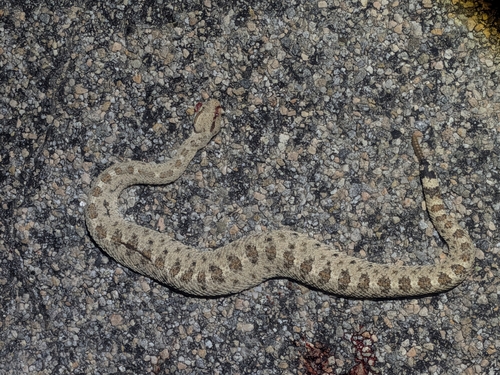 SidewinderCrotalus cerastes
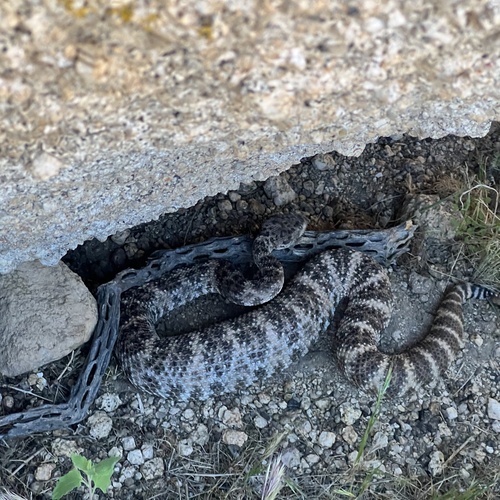 Southwestern Speckled RattlesnakeCrotalus pyrrhus
Classification
How scientists group this snake, from the broadest category down to the exact species. Each step narrows to its closest relatives.
Keep learning
- Are Snakes Dangerous? The Real Risk, in PerspectiveMost snakes are harmless and avoid people. Here is the honest picture of snakebite risk worldwide and how to lower your own.
- Snakebite First Aid: What to Do (and What Never to Do)A clear, CDC-based guide to snakebite first aid: the steps that help, the popular myths that hurt, and how to tell a serious bite from a minor one.
- Venomous vs Nonvenomous: How to Tell the DifferenceThe folk rules for telling venomous snakes apart, where each one fails, and why location-based identification beats guessing by sight.
- What to Do If You Find a SnakeFound a snake at home or on a trail? Here is how to stay calm, give it space, identify it safely, and know when to call a professional.
Distribution from GBIF & iNaturalist. Venom status per CDC. Background: Wikipedia. Informational only. Never handle a snake to identify it.