
Rubber boa
Southern Rubber Boa
HarmlessCharina umbratica
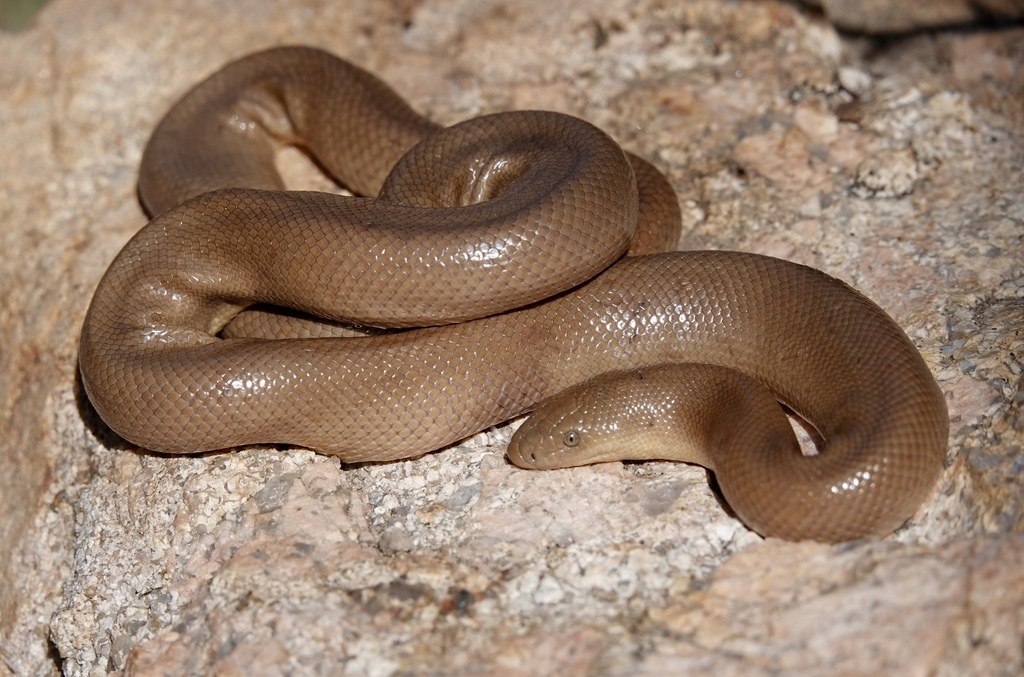
The Southern Rubber Boa (Charina umbratica) is a non-venomous snake in the Boidae family, recorded in 1 country.
- Also called
- Rubber boa
- Family
- Boidae
- Size
- Stout, 1.5–2.5 ft.
- Habitat
- Cool, moist forests and meadows.
- Behavior
- Slow, gentle constrictors that are active in surprisingly cool weather.
- Identify
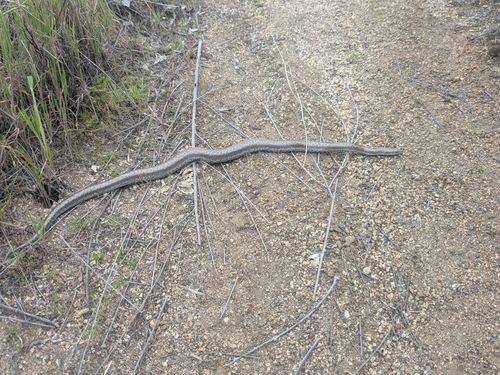
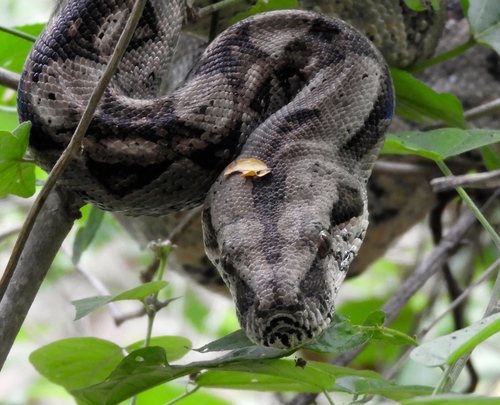
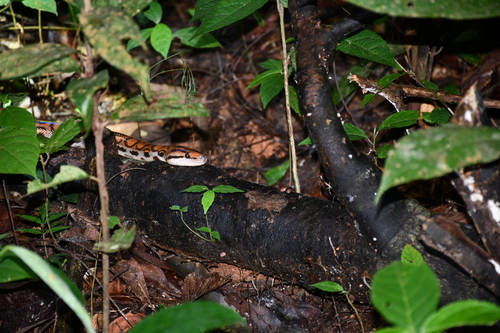
- Thick, blunt, rubbery-looking body with a blunt tail that mimics the head.
About the Southern Rubber Boa
Charina umbratica, known commonly as the southern rubber boa, is a species of snake in the family Boidae. The species is endemic to the United States, in southern California.
Taxonomy
The southern rubber boa, also known as Charina umbratica, has been proposed as an independent species because of its morphological and geographic differences. A study published in 2001 concluded that Charina umbratica is separated from its subclade. This means that the southern rubber boa and its subclades have allopatric distributions. All evidence gathered from the mitochondrial DNA study points to consider Charina umbratic as a distinct species. Despite the distinction of the two subclades, a more recent study suggests that grounds for distinction of clades may be invalid as range movements may not be as thoroughly studied and contextualized as previously considered.
Conservation status
As of April 2017, the southern rubber boa was listed as a state threatened species in the California Natural Diversity Database.
Description
The southern rubber boa is a small snake with a blunt tail. Due to its secretive nature, it makes it very difficult to collect these snakes for data. However, a five-year study done in the San Bernardino Mountains of southern California has been able to provide information on this reptile. The study was published in the Journal of Herpetology, and concluded that the female boas' length and weight out-performed the male boas. In addition, adult female boas were found to have greater percentages of tail tip scarring and tail shortening when compared to males. Furthermore, this study also explored the weight loss that happens during gestation for female boas and determined that female boas lose 47% of their weight during gestation.
Habitat
The southern rubber boa is known to typically inhabit areas such woodlands and coniferous forests characterized by their developed soils and great vegetative productivity. These areas are typically moist and may contain accumulated organic debris that are largely-responsible for the moisture levels of inhabited sites. The southern rubber boa makes use of outcrops, loose and developed soils, as well as tree-debris to burrow and seek refuge.
Distribution
The southern rubber boa is distributed across the San Bernardino and San Jacinto Mountains east of Los Angeles in southern California, at elevations between 4,900 and 7,900 feet. Phylogenetic analyses have conclusively distinguished northern and southern boas and identified an area in Northeastern California containing populations of both subspecies. Some intergrades between northern and southern boas have been located in isolated populations in the Southern Los Padres Ranges.
Behavior
Adapted from Wikipedia, available under CC BY-SA.
Frequently asked: Southern Rubber Boa
- Is the Southern Rubber Boa venomous?
- No. The Southern Rubber Boa (Charina umbratica) is non-venomous and is not considered dangerous to humans. Like most snakes, it will retreat rather than bite when given the chance.
- Is the Southern Rubber Boa poisonous?
- Snakes are venomous, not poisonous. "Poisonous" means harmful to eat or touch; "venomous" means injecting toxins through a bite. The Southern Rubber Boa is neither poisonous nor venomous.
- Is the Southern Rubber Boa dangerous?
- The Southern Rubber Boa is not dangerous to humans. It has no medically significant venom and bites only defensively if cornered or handled.
- Where does the Southern Rubber Boa live?
- The Southern Rubber Boa has verified records in 1 country, including United States of America. See the distribution section below for its full range.
- How do I identify the Southern Rubber Boa?
- Thick, blunt, rubbery-looking body with a blunt tail that mimics the head.
- How big does the Southern Rubber Boa get?
- Stout, 1.5–2.5 ft.
Where it is found
By U.S. state
More Boidae snakes
Classification
How scientists group this snake, from the broadest category down to the exact species. Each step narrows to its closest relatives.
Keep learning
- What to Do If You Find a SnakeFound a snake at home or on a trail? Here is how to stay calm, give it space, identify it safely, and know when to call a professional.
- Venomous vs Nonvenomous: How to Tell the DifferenceThe folk rules for telling venomous snakes apart, where each one fails, and why location-based identification beats guessing by sight.
- What Is a Snake? Anatomy and the BasicsA clear overview of what makes a snake a snake: limbless body plan, anatomy, evolution from lizards, species diversity, and why they are ectothermic.
- How to Keep Snakes Out of Your Yard and HomeA practical guide to keeping snakes out of your yard and home using habitat changes that work, plus what to skip and what to do if one shows up.
Distribution from GBIF & iNaturalist. Venom status per CDC. Background: Wikipedia. Informational only. Never handle a snake to identify it.