
Genus · Viperidae
Types of cantils
8 species make up the genus Agkistrodon, the snakes commonly called cantils. All of them are venomous.
About copperheads and cottonmouths
Agkistrodon is a genus of New World pit vipers from North and Central America that includes the copperheads, the cottonmouths or water moccasins, and the cantils.
Agkistrodon belongs to the viper family, Viperidae, and sits within the group known as pit vipers. The defining pit-viper trait is a pair of heat-sensing pits, one on each side of the face between the eye and the nostril, that detect the body warmth of nearby prey. Unlike their rattlesnake relatives, Agkistrodon species do not have a rattle. The genus brings together several familiar North and Central American snakes: the copperheads, the cottonmouths that are also called water moccasins, and the cantils of Mexico and Central America. Our database lists 8 species, and all 8 are venomous.
The genus is centered in the eastern and central United States and extends south into Mexico and Central America. Copperheads are largely woodland and forest-edge snakes, often found in leaf litter and rocky terrain where their coloring blends in. Cottonmouths are semi-aquatic and live near water, including swamps, marshes, slow rivers, and pond edges, which is why the name water moccasin is also used for them. The cantils occupy warmer habitats farther south. Because the genus spans so many environments, encounters can happen both in dry upland woods and along the water.
In general terms, copperheads can often be recognized by crossbands shaped like an hourglass or a Hershey's Kiss, wider on the sides of the body and narrow across the back, set against a tan to coppery ground color that suits a woodland floor. Cottonmouths are heavier-bodied snakes near water that may stand their ground and gape, opening the mouth wide to show a pale, cotton-white lining as a threat display, which is the source of their name. These are useful clues, but they are not a substitute for careful identification. Patterns vary between and within species, lighting and age change how a snake looks, and harmless snakes can resemble venomous ones. Treat identification as something that takes care and expertise.
Agkistrodon venom is primarily hemotoxic, meaning it acts on tissue and blood and can cause local swelling, pain, and damage around the bite. Copperhead bites are among the more common venomous snakebites in the United States, and while they are painful they are rarely life-threatening. Cottonmouth bites tend to be more serious. Severity varies with the snake, the bite, and the person, so every bite from this genus needs prompt medical evaluation. The priority is always to reach professional emergency care quickly, where serious bites can be assessed and treated, including with antivenom when appropriate. In the United States, Poison Control can be reached at 1-800-222-1222 for guidance while seeking care.
Ecologically, these are ambush predators that often wait in cover and strike passing prey, and they help control rodent and other small-animal populations. Like many pit vipers, Agkistrodon species give live birth rather than laying eggs. Copperheads are among the most commonly encountered venomous snakes in the eastern United States, and cottonmouths are frequently confused with harmless watersnakes that share the same wet habitats. That confusion is one reason you should never pick up or handle a snake to identify it. If you see one, give it distance and let it move on, and keep pets and children back. Never attempt to handle, catch, or kill a wild venomous snake.
Agkistrodon belongs to the Viperidae family (Vipers & pit vipers). Heavy-bodied venomous snakes with long, hinged, hollow fangs. Broad, triangular head distinct from a narrow neck, heavy body, and (usually) vertical, cat-like pupils. Pit vipers also have a heat-sensing pit; true vipers do not.
Danger: Every viper is venomous, and the family includes some of the world's most medically important snakes. Venom is typically hemotoxic, causing pain, swelling, tissue damage, and bleeding. Treat any viper bite as a medical emergency.
All species (8)
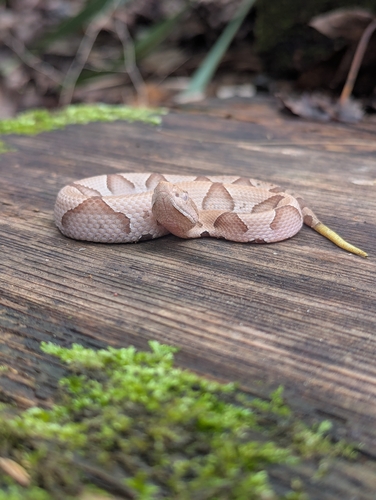 Eastern CopperheadAgkistrodon contortrixVenomous
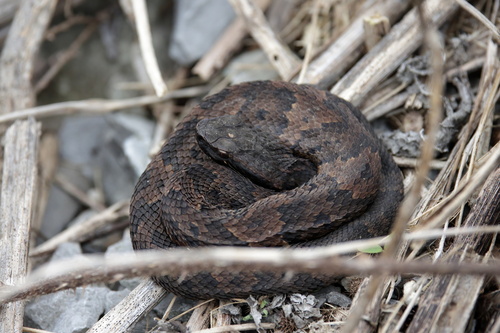 Northern CottonmouthAgkistrodon piscivorusVenomous
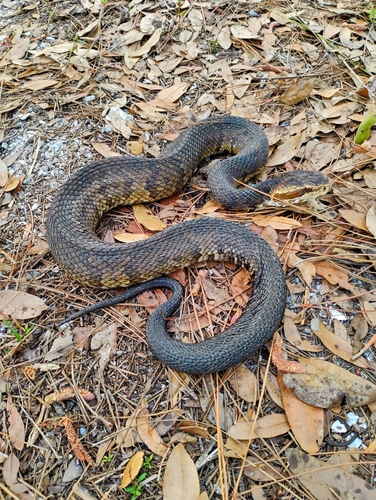 Florida CottonmouthAgkistrodon conantiVenomous
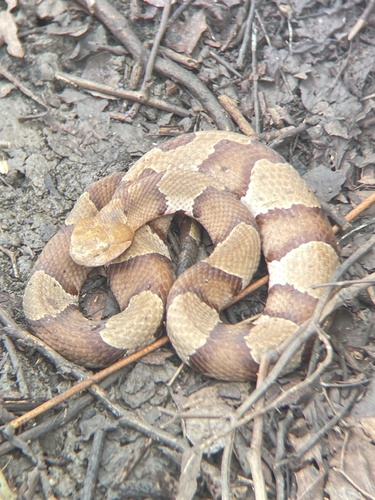 Broad-banded CopperheadAgkistrodon laticinctusVenomous
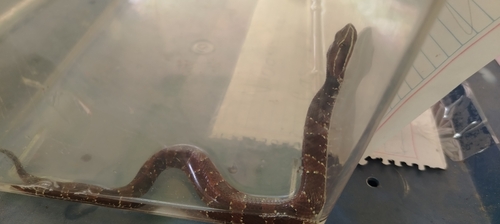 Mexican CantilAgkistrodon bilineatusVenomous
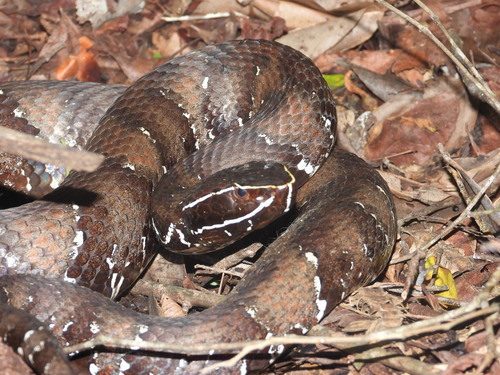 Yucatecan CantilAgkistrodon russeolusVenomous
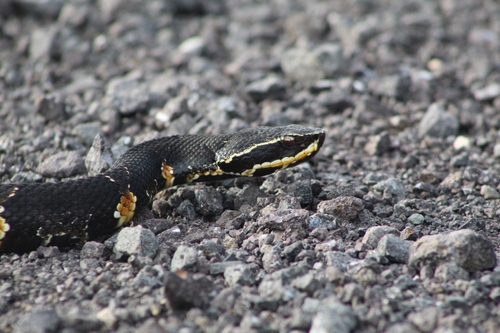 Taylor's CantilAgkistrodon tayloriVenomous
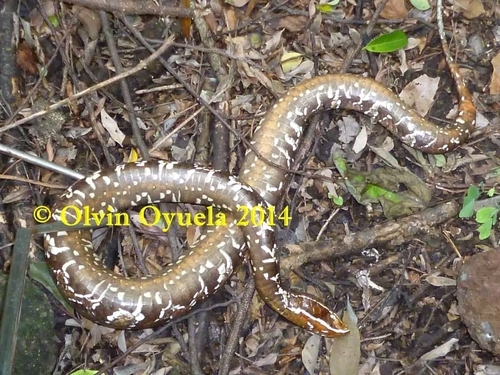 Southern CantilAgkistrodon howardgloydiVenomous
Keep learning
- Venomous vs Nonvenomous: How to Tell the DifferenceThe folk rules for telling venomous snakes apart, where each one fails, and why location-based identification beats guessing by sight.
- Are Snakes Dangerous? The Real Risk, in PerspectiveMost snakes are harmless and avoid people. Here is the honest picture of snakebite risk worldwide and how to lower your own.
- Snake Venom Explained: How It Works and WhyWhat snake venom actually is, why it evolved, the main venom types, fang delivery, how antivenom works, and why ranking the most venomous snake is hard.
- How Snakes Move, Hunt, and EatHow snakes move without legs, hunt as ambushers or active foragers, kill by constriction or venom, and swallow prey wider than their head.