
Viperidae
Jararaca Pintada
VenomousBothrops neuwiedi
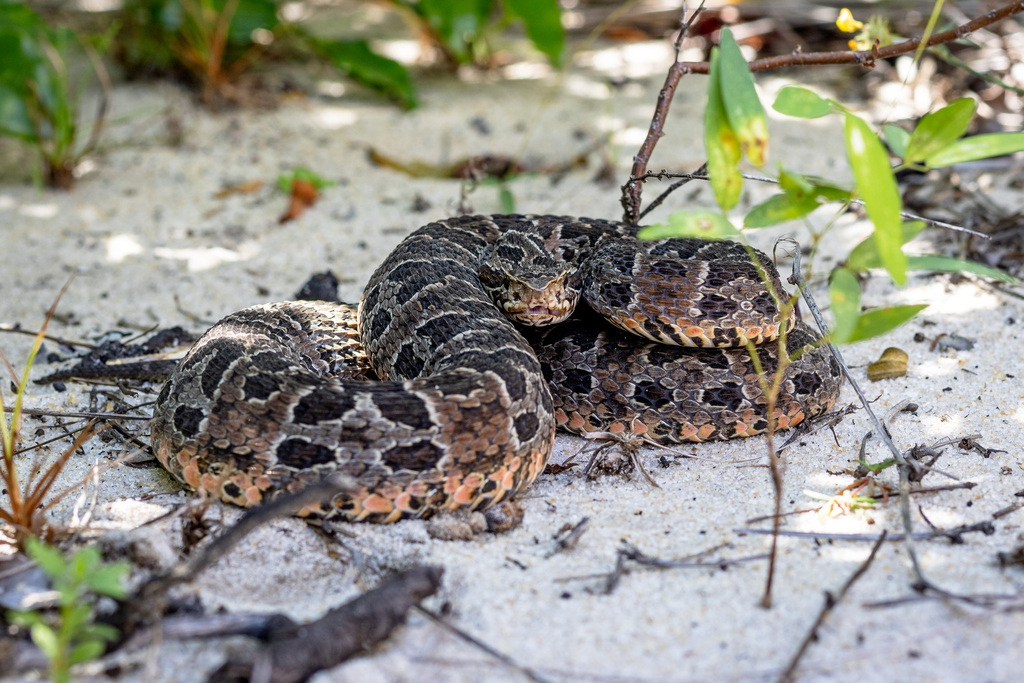
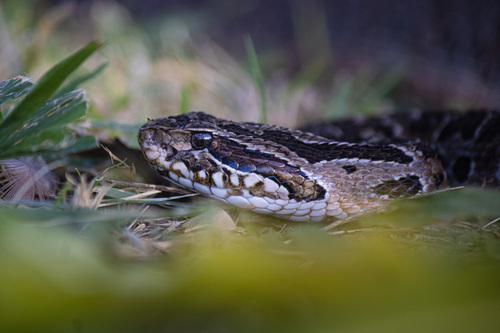
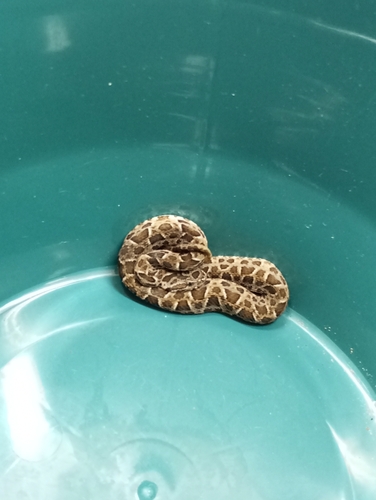
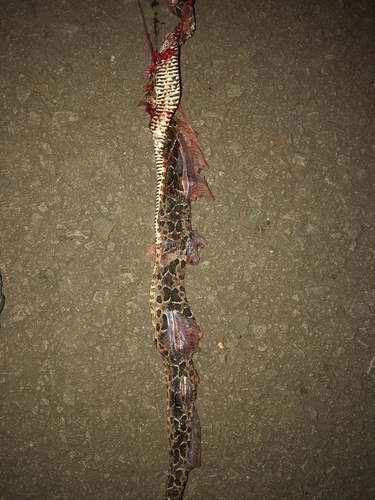
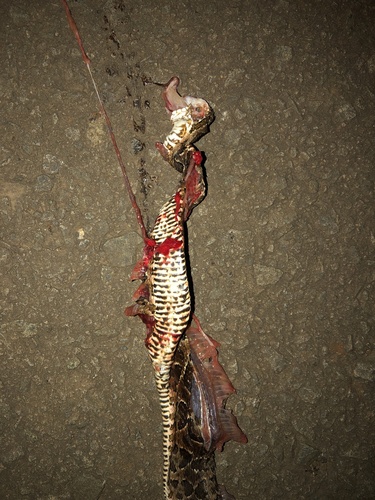
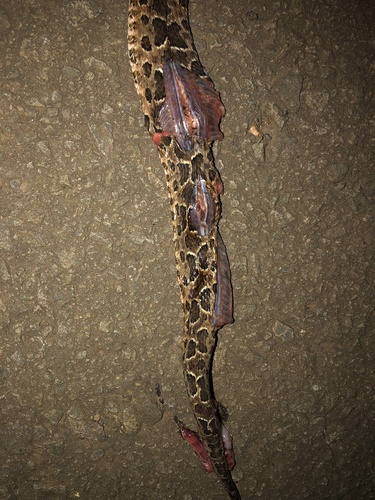
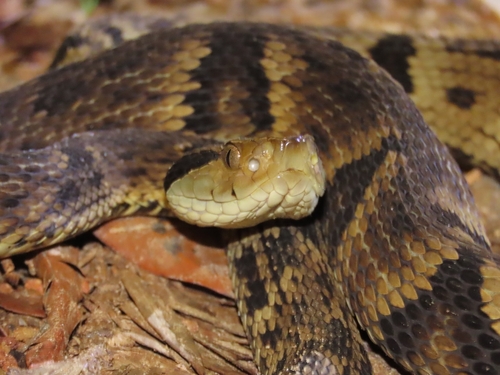
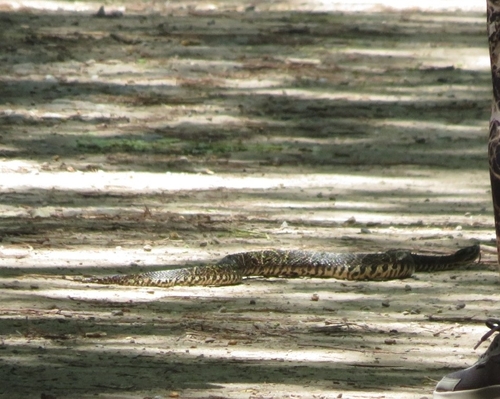
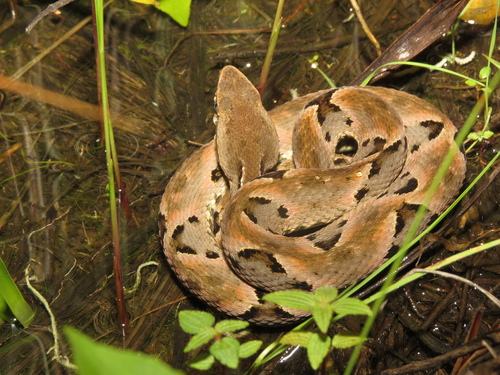
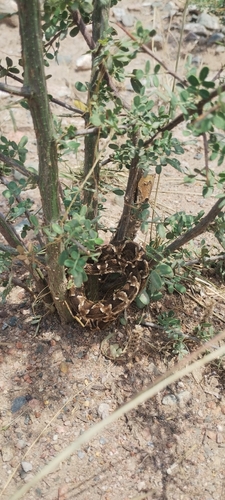
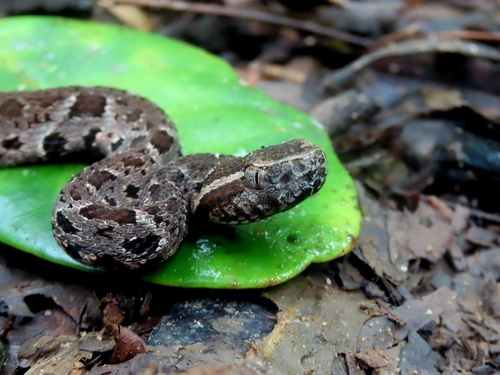
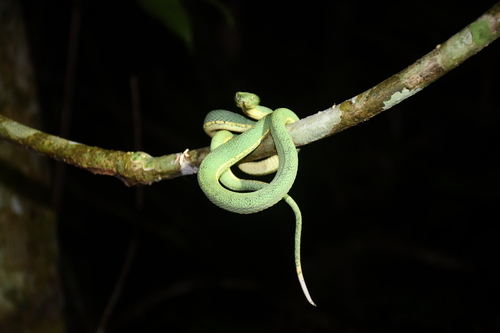
6 photographs of the Jararaca Pintada. © Henrique Nogueira.
The Jararaca Pintada (Bothrops neuwiedi) is a venomous snake in the Viperidae family, recorded in 6 countries.
If you are bitten
This is a venomous snake. Treat any bite as a medical emergency: stay calm, keep the bitten limb still and roughly level with the heart, remove rings and tight clothing, and get to emergency care immediately. Do not apply a tourniquet, cut the wound, apply ice, or try to suck out venom. Call your local emergency number or poison center.
- Family
- Viperidae
- Danger
- high
About the Jararaca Pintada
Common names: Neuwied's lancehead, jararaca pintada.
Bothrops neuwiedi is a highly venomous pit viper species endemic to South America. This relatively small snake has a wide geographic range and is a major source of snakebite in Argentina. It was named after German naturalist Prince Maximilian of Wied-Neuwied (1782–1867), who made important collections in Brazil (1815–1817). Seven subspecies are currently recognized, including the nominate subspecies described here.
Description
Adults of Bothrops neuwiedi average 60–70 centimetres (23+1⁄2–27+1⁄2 in) in total length (tail included), but may grow to as long as 100 cm (39+1⁄2 in).
Head scalation includes 7–11 keeled intrasupraoculars (rarely 12 or as few as five), 9–13 sublabials (usually 10–11) and seven to eight supralabials (rarely seven or 10), the second of which is not fused with and usually separated from the prelacunal. Two rows of small scales usually separate the subocular and fourth supralabial scales. At midbody the 22–29 (usually 25–27) rows of dorsal scales are strongly keeled. The ventral scales number 158–179 and 164–185 in males and females, respectively, while the subcaudal scales are divided and number 39–56 or 34–51 in males or females.
The color pattern consists of a brown or dark-brown ground color overlaid with a series of 16–27 dark brown or black dorsolateral blotches. The blotches are edged in white and may be trapezoidal, triangular, subtriangular, or headphone-shaped and oppose each other middorsally. The belly is white or yellow with gray speckling. Juveniles have a white tail tip.
Geographic range
The species Bothrops neuwiedi is found in South America east of the Andes and south of approximately 5°S, including Brazil (southern Maranhão, Piauí, Ceará, Bahia, Goiás, Mato Grosso, an isolated population in Amazonas, Rondônia and all southern states), Bolivia, Paraguay, Argentina (Catamarca, Córdoba, Corrientes, Chaco, Entre Ríos, Formosa, Jujuy, La Pampa, La Rioja, Mendoza, Misiones, Salta, San Juan, San Luis, Santa Fe, Santiago del Estero and Tucumán) and Uruguay. According to Vanzolini (1981), the type locality given is "provincia Bahiae" (Bahia province, Brazil).
Habitat
Bothrops neuwiedi inhabits tropical and semitropical deciduous forest, as well as temperate forest and Atlantic Coast restingas, and is associated with dry or semiarid rocky areas in almost all cases.
Venom
Bothrops neuwiedi is one of the main causes of snakebite in Argentina: between 1960 and 1975, according to Esteso (1985), 80% of the approximately 500 cases reported each year were attributed to B. n. diporus.
In a review of the symptoms in all 18 bite cases for this species admitted to the hospital in São Paulo between 1975 and 1992, Jorge and Ribeiro (2000) found all suffered pain, 83% had swelling, 50% had bruising, 17% had necrosis, 12% developed coagulopathy and 5% had abscesses, can also cause high blood pressure and collapse. In a case in Germany, a 36-year-old snake keeper was bitten on the finger and developed hemorrhagic "necrosis" of the afflicted digit and swelling that extended onto the hand. Five hours after being bitten, his blood had a normal platelet count, but was incoagulable with a reduced fibrinogen concentration, elevated fibrin degradation products and D-dimer. B. neuwiedi venom directly activates factor II and factor X, but doesn't activate factor XIII. At low venom concentrations clotting is initiated by the activation of prothrombin by the venom either directly or via factor X activation. Treatment with heparin might be beneficial in coagulopathy secondary to snake bite by reducing the circulating active thrombin. The venom has thrombin-like proteases which causes slow clotting fibrinogen, and plasmin-like components causing further proteolysis of fibrinogen and fibrin. The average venom yield ranges from 25 to 40 mg (0.39 to 0.62 gr) (dry weight).
Adapted from Wikipedia, available under CC BY-SA.
Local and regional names
The Jararaca Pintada is known by these names across the regions where it lives:
- Chinese
- 諾維特矛頭蝮
- Czech
- křovinář Neuwiedův
- English
- Neuwied's Lancehead
- German
- Lanzenotter
- Portuguese
- Boca-de-Sapo, Bocuda, Jararaca, Jararaca-Cruzeira, Jararaca-Pintada, Jararaca-Pintada-Rabo-de-Osso, Jararaca-do-Rabo-Branco, Malha-de-Sapo, Rabo-de-Osso, Tire-Peia
- Russian
- Пятнистая жарарака
Frequently asked: Jararaca Pintada
- Is the Jararaca Pintada venomous?
- Yes. The Jararaca Pintada (Bothrops neuwiedi) is venomous and belongs to the Viperidae family (viper). Its bite is considered high risk to people. Treat any bite as a medical emergency.
- Is the Jararaca Pintada poisonous?
- Snakes are venomous, not poisonous. "Poisonous" means harmful to eat or touch; "venomous" means injecting toxins through a bite. The Jararaca Pintada is venomous, delivering venom through a bite.
- Is the Jararaca Pintada dangerous?
- This is a venomous snake. Treat any bite as a medical emergency: stay calm, keep the bitten limb still and roughly level with the heart, remove rings and tight clothing, and get to emergency care immediately. Do not apply a tourniquet, cut the wound, apply ice, or try to suck out venom. Call your local emergency number or poison center.
- Where does the Jararaca Pintada live?
- The Jararaca Pintada has verified records in 6 countries, including Brazil, Argentina, Bolivia (Plurinational State of). See the distribution section below for its full range.
If you are bitten by the Jararaca Pintada
Do
- Get away from the snake and stay calm. Most bites worsen when people panic or try again to handle the snake.
- Call 911 or Poison Control (1-800-222-1222) right away. Antivenom works best when given early.
- Note the time of the bite and, from a safe distance, the snake's color and pattern, a phone photo is enough. Do not chase it.
- Keep the bitten limb still and at roughly heart level. Sit or lie down and limit movement.
- Remove rings, watches, and tight clothing near the bite before swelling starts.
- Gently wash the bite with soap and water and cover it with a clean, dry dressing.
Do not
- Do not cut the wound or try to suck out the venom.
- Do not apply a tourniquet or ice.
- Do not drink alcohol or caffeine.
- Do not take aspirin or ibuprofen, they can worsen bleeding. Acetaminophen is safer for pain.
- Do not try to catch or kill the snake. A dead snake can still bite by reflex.
First-aid guidance adapted from the U.S. Centers for Disease Control and Prevention (CDC NIOSH), Venomous Snakes. Educational only; always follow the instructions of emergency responders.
Where it is found
More Viperidae snakes
Classification
How scientists group this snake, from the broadest category down to the exact species. Each step narrows to its closest relatives.
Keep learning
- Are Snakes Dangerous? The Real Risk, in PerspectiveMost snakes are harmless and avoid people. Here is the honest picture of snakebite risk worldwide and how to lower your own.
- Snakebite First Aid: What to Do (and What Never to Do)A clear, CDC-based guide to snakebite first aid: the steps that help, the popular myths that hurt, and how to tell a serious bite from a minor one.
- Venomous vs Nonvenomous: How to Tell the DifferenceThe folk rules for telling venomous snakes apart, where each one fails, and why location-based identification beats guessing by sight.
- What to Do If You Find a SnakeFound a snake at home or on a trail? Here is how to stay calm, give it space, identify it safely, and know when to call a professional.
Distribution from GBIF & iNaturalist. Venom status per CDC. Background: Wikipedia. Informational only. Never handle a snake to identify it.